The Amalfi Coast covers about 40 kilometers of coastline and the difference between staying at the western end versus the center versus the eastern fringe is not minor. It changes your daily commute, your budget, what you can realistically day-trip, and how much of your trip you spend sitting on a crowded bus going somewhere versus being somewhere. Before any hotel search, it is worth settling the base question first.
The Main Options in One Sentence Each
Amalfi town: The best base for most first-timers — central, well-connected, more affordable than Positano, and with its own things to see.
Positano: The most beautiful and the most expensive. Worth it for a splurge or a short stay. Logistically awkward for exploring the rest of the coast.
Praiano: The smart alternative to Positano. Similar views and slower pace at 30-50% lower rates. Less infrastructure, but that is the point.
Sorrento: The practical budget base. Not technically on the Amalfi Coast but excellent transport links. Makes sense if you also want to visit Naples and Pompeii.
Ravello: For people who want views, quiet, and cultural depth more than beaches and restaurants.
Maiori and Minori: For families or anyone who wants a proper sandy beach and genuinely lower prices.
Amalfi Town: Best Overall Base
Amalfi is the town at the geographic center of the coast. Ferries and SITA buses go both east and west from here, which makes it the strongest base for exploring widely. Want to spend Tuesday in Positano and Wednesday in Cetara? You can do both without long detours.
The waterfront piazza with the cathedral is the social center of the whole coast — not just of the town. It is also one of the few places on the coast with a flat, walkable center. Positano is, in plain terms, a staircase. Amalfi has actual pavement.
Accommodation is more varied here than people expect. Budget guesthouses and small B&Bs cluster in the old town. Mid-range hotels line the waterfront. The Cathedral Hotel, the Amalfi Hotel, and a few others offer sea-view rooms at prices well below comparable Positano properties. Expect to pay roughly €80-150 per night for a decent double in shoulder season, €120-220 in July-August.
Food and drink is meaningfully cheaper in Amalfi than in Positano. A pasta lunch at a non-waterfront restaurant in Amalfi runs €12-18. The same in Positano is €18-28 at equivalent quality.
Honest downside: Amalfi town is popular and busy in high season. The harbor and cathedral piazza fill with day-trippers from 10am onward. The town does not have the photogenic cliffside drama of Positano. If your whole trip is about the iconic coastal aesthetic, Amalfi will not quite scratch that itch.
Suggested topic — 3 Days in Amalfi Coast
Positano: The Famous One
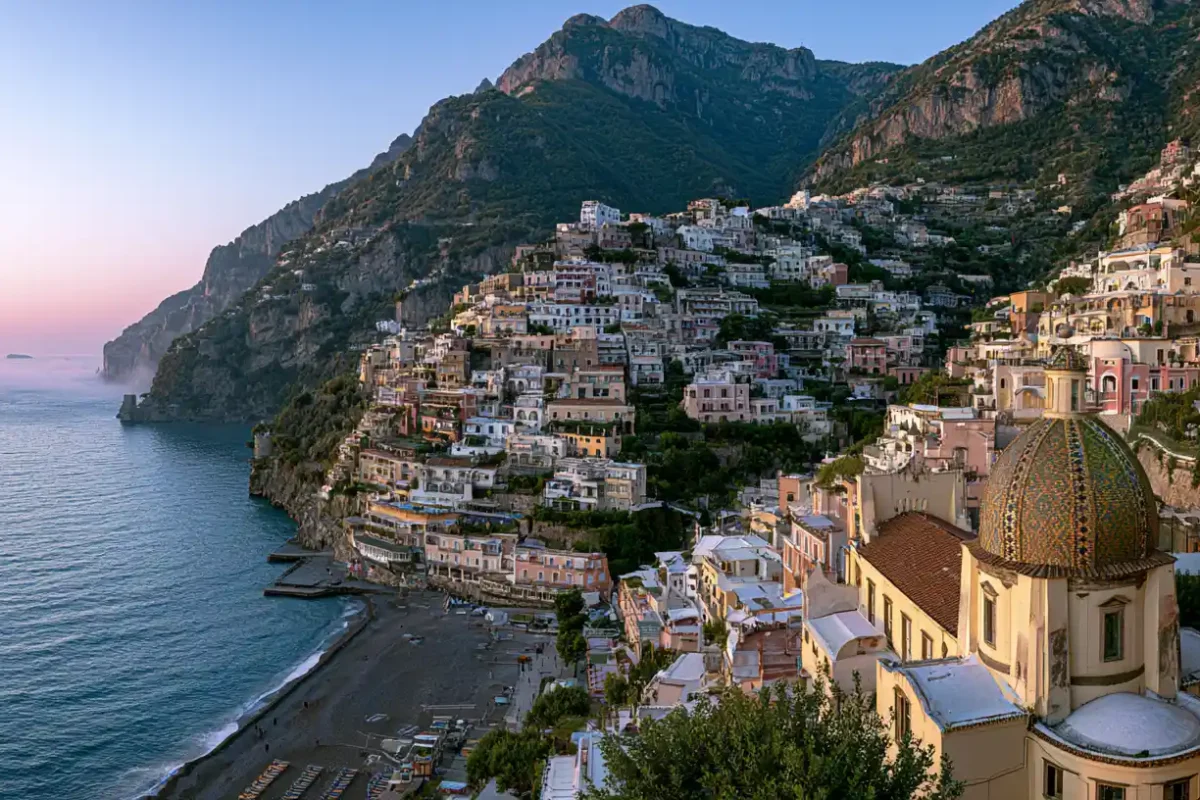
Positano is stunning. Nobody who has arrived by ferry from the sea and watched the village reveal itself in layers — pastel dome, cascading houses, cerulean water — will argue otherwise. It is a genuinely special place. The photos do not lie.
The practical realities: Positano is expensive, Positano is steep, and Positano makes it harder to explore the rest of the coast.
On price: a mid-range hotel in Positano in July-August typically runs €200-400 per night. Budget options exist, particularly higher up the hillside, but they involve significant stairs. A pasta dinner at a mid-tier restaurant on the main strip costs €20-35 per person. Nothing about Positano is cheap.
On the stairs: the village is vertical. From the main road (where the SITA bus stops) to Spiaggia Grande beach is about 300 steps or a 2.50 EUR minibus ride. If you are making that journey multiple times a day with beach bags and small children, you feel it. The village is genuinely not suitable for travelers with significant mobility limitations.
On day-tripping: ferries from Positano go to Amalfi and Capri. That part is good. But getting to Ravello from Positano requires a bus to Amalfi and then another bus up the mountain. It adds an hour each way. If your plan includes Ravello, basing in Positano adds real friction.
When Positano makes perfect sense: honeymoon or anniversary trip. Special occasion where the atmosphere is the point and the budget is not a constraint. A two-night stay mid-trip after basing elsewhere for the rest.
Praiano: The Best-Kept Secret on the Coast
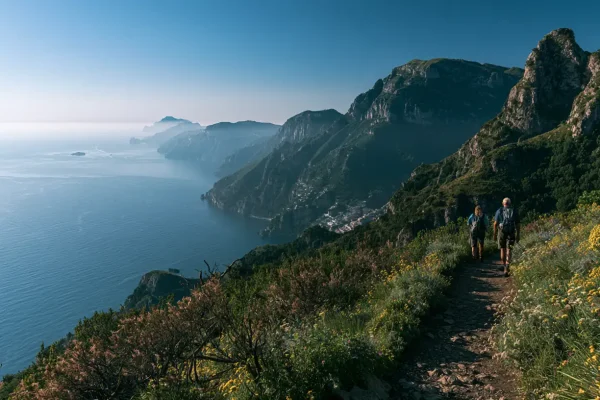
Twenty minutes east of Positano by bus, Praiano sits along the coast road with the same sunset-facing views, a hidden cove at Marina di Praia with a small beach and a couple of restaurants, and rates that run 30-50% lower than comparable Positano accommodation.
It is not quite as dramatic as Positano. But it is genuinely lovely, considerably quieter, and the west-facing orientation means extraordinary evenings — the sun drops into the sea right in front of you.
The main SITA bus stops through Praiano, so getting to Positano or Amalfi is a 20-30 minute bus ride each way. For couples who want a slower pace and do not need every meal to be in a famous village, Praiano works extremely well.
Mid-range hotels here run around €90-160 per night in peak season. That is real money saved for the same quality of view. One specific note: Marina di Praia, the small cove down a steep lane from the main Praiano road, has two or three restaurants and a tiny beach that feels completely local. On a Tuesday in September it is almost deserted. Worth knowing.
Sorrento: The Practical Gateway
Sorrento is technically on the Sorrentine Peninsula rather than the Amalfi Coast proper, but the transport connections make it a legitimate base for visiting the coast.
What Sorrento offers: a flat, walkable town center (unusual in this region), a much wider range of accommodation at lower prices, direct ferry connections to Positano and Capri, train connections to Naples and Pompeii, and a reasonable nightlife scene. Budget travelers can find decent doubles for €60-100 per night.
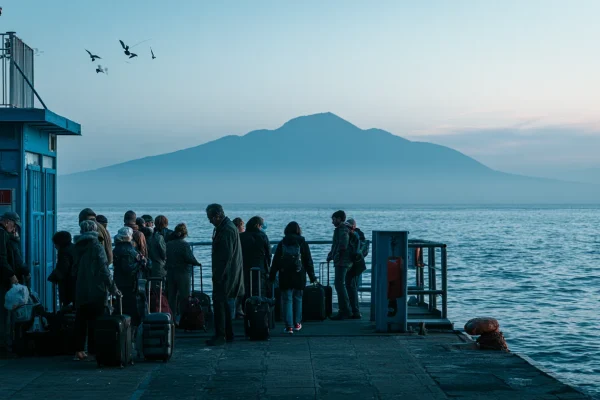
The trade-off: every day you want to see the Amalfi Coast, you are commuting. A ferry to Positano takes about 35-40 minutes each way and costs roughly €15 per person each direction. A bus to Amalfi takes over an hour. Over three days, you spend real time in transit.
Sorrento makes the most sense if your trip includes Naples, Pompeii, or Herculaneum — the train from Sorrento to Naples takes about an hour on the Circumvesuviana line. If the Amalfi Coast is your only destination, basing there is more efficient.
Suggested topic — Best Time to Visit Amalfi Coast
Ravello: For Culture and Views
Ravello sits about 350 meters above the coast, reachable by bus from Amalfi town (25-30 minutes, roughly €1.50). It has no beach, no ferry, and fewer restaurants than the coastal towns. What it does have is spectacular views, the Villa Cimbrone and Villa Rufolo gardens, and a genuinely peaceful atmosphere even in high season.
Staying in Ravello makes sense if you are here for the Ravello Festival (July-early September), if you are specifically interested in the gardens and music, or if you want a quieter base with a dramatically different perspective on the coast compared to sea-level towns.
Hotels in Ravello are lovely but not budget destinations. The Palazzo Avino and Hotel Caruso represent the luxury end. Mid-range options exist but are limited.
Maiori and Minori: Family-Friendly Value
On the eastern side of the coast, Maiori has the longest sandy beach on the Amalfi Coast — a real flat beach, not a pebbled cove. Minori, just next door, is small and quiet with a pasta museum (genuinely) and a Roman villa.
Accommodation here is cheaper than anywhere on the western coast. A decent family hotel in Maiori runs €70-120 per night in peak season. The beach is good for children. The restaurants are local rather than tourist-facing, which means better food at lower prices.
The downside: Maiori and Minori are further from Positano and require more transit time to reach the western coast highlights.
What You Actually Pay: Realistic Budget Ranges
Accommodation prices on the Amalfi Coast vary enough that the same trip can cost twice as much depending on where you stay. Here is a realistic picture of what you will spend per night for a standard double room, based on current 2026 market rates:
Positano:
Budget guesthouses (upper village, no sea view): €120-170
Mid-range hotel (partial sea view): €180-280
Boutique hotel (full sea view, terrace): €280-500+
Amalfi town:
Simple B&B or guesthouse: €70-120
Mid-range hotel: €110-200
Sea-view hotel: €160-280
Praiano:
Simple guesthouse or apartment: €60-110
Mid-range hotel with views: €100-180
Sorrento:
Budget hotel or hostel room: €50-90
Mid-range hotel: €80-160
Good boutique hotel: €140-240
Ravello:
Mid-range: €150-250
Luxury hotels: €300-600+
Maiori/Minori:
Budget guesthouse: €55-85
Mid-range hotel: €80-140
These are per-night double room estimates for peak summer (July-August). May, September, and October rates drop by 20-40%. If budget matters, the shoulder season savings can be significant — the same Positano hotel that runs €300 in August often lists at €180 in May.
The One Thing Most Guides Get Wrong
Every “where to stay on the Amalfi Coast” guide will tell you that Positano is the iconic choice and then either recommend it or gently suggest Amalfi as the practical alternative. What they rarely say clearly: the coast road is genuinely slow in peak season, and wherever you base yourself, plan for the fact that getting from one town to another takes longer than the map suggests.
An 8-kilometer bus ride on the SS163 in August can take 45-60 minutes. The same journey on a ferry takes 15. This is not a minor detail — it changes how many places you can realistically see in a day. If you base in Positano and want to visit Ravello (which is above Amalfi, 25 km east), your day looks like: bus to Amalfi (45-60 minutes), another bus up to Ravello (30 minutes), exploration, two buses back. That is two hours of transit each way.
No guide tells you to factor ferry schedules into your accommodation decision. You should. If your base has good ferry access and the places you want to see have ferry stops, your days become much more relaxed.
Amalfi has excellent ferry access. Positano has good ferry access. Praiano does not have a ferry stop. Sorrento has a good ferry to Positano and Capri. Ravello has no ferry access.
That single variable — ferry vs. bus as your daily commute — is worth factoring in when you pick your base.
Quick Decision Guide
Choose Amalfi if: You want the best transport connections, a central base, and a practical balance between atmosphere and price.
Choose Positano if: Budget is not a constraint and you want the full romantic coastal experience concentrated in one place.
Choose Praiano if: You want Positano’s sunset views and slower pace at 30-40% lower cost.
Choose Sorrento if: You are also visiting Naples or Pompeii, or you want the widest range of affordable accommodation with easy coast access.
Choose Ravello if: You are here for the views, the music festival, and cultural sightseeing more than beach time.
Choose Maiori/Minori if: You have children, you want a flat sandy beach, and you want the lowest per-night rates on the coast.
FAQ
Is it worth staying in Positano or should I day-trip it?
Staying in Positano is worth it for at least one night if budget allows — the village changes character after the day-trippers leave. But two or three nights in Positano while trying to see the whole coast is expensive and makes logistics harder than basing elsewhere.
What is the cheapest area to stay on the Amalfi Coast?
Maiori and Minori on the eastern coast are the most affordable. Sorrento offers cheap accommodation with ferry access. On the coast itself, Praiano undercuts Positano significantly.
Is Sorrento a good base for the Amalfi Coast?
Yes, especially if you also want to visit Naples or Pompeii. Transport connections are strong. The daily commute adds up over several days but is manageable.
Can I get around the Amalfi Coast without a car from any of these bases?
Yes. Ferries (April-October) and SITA buses connect all the main towns. Car-free travel works well from Amalfi, Positano, and Sorrento. It is slightly harder from Praiano (less frequent stops) and Ravello (requires bus to Amalfi first).
When should I book accommodation on the Amalfi Coast?
For July and August, book 3-6 months ahead for any decent property, especially in Positano and Ravello. For May, June, and September, 4-8 weeks is usually sufficient. For October, you often have flexibility.