The five villages of Cinque Terre are strung along four kilometers of Ligurian coastline and connected by trail, regional train, and ferry. You can technically visit all five in a day if you move fast, eat nothing interesting, and accept that you will remember mostly the crowds. The better approach is slower: pick two or three, spend proper time in each, and let the villages work on you rather than ticking them off a list.
Here is an honest guide to each village — what it actually is like, not just what it looks like.
The Villages in Order (South to North)
The five villages run along the coast in this order: Riomaggiore, Manarola, Corniglia, Vernazza, Monterosso al Mare. All five sit on the La Spezia-Levanto regional train line, with trains running every 10-20 minutes in high season. Journey times between adjacent villages are two to four minutes. The train is the fastest way to move between them.
Ferries connect Riomaggiore, Manarola, Vernazza, and Monterosso in season (April-October). Corniglia does not have a ferry dock — it sits too high above the water.
Riomaggiore: The Southern Gateway
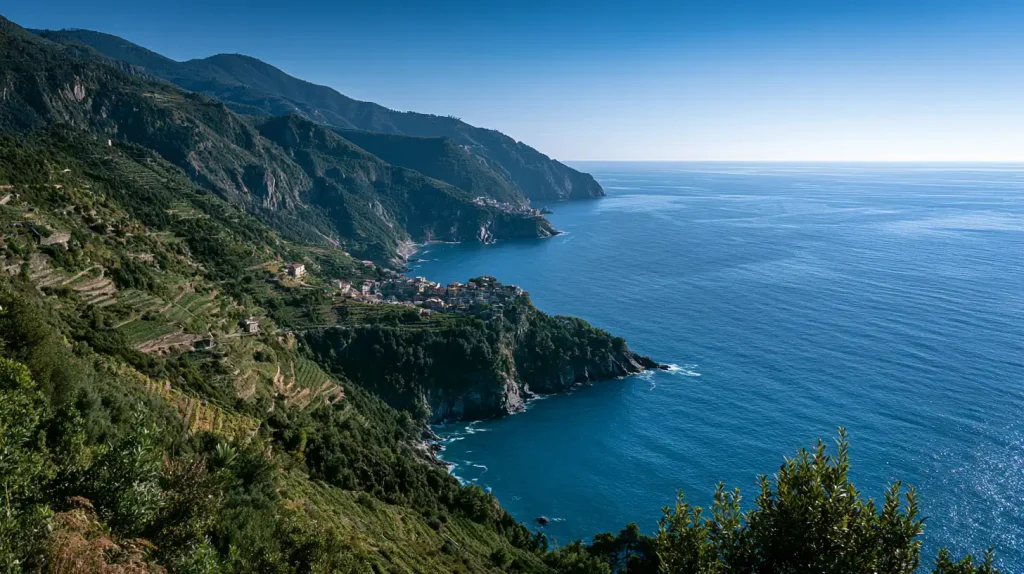
Riomaggiore is the first village you reach arriving from La Spezia and the southernmost of the five. The visual is immediately striking: tall, narrow houses in deep reds, oranges, and ochres stacked down a steep ravine to a small harbor. The boats are pulled up on a concrete ramp rather than floating in deep water. It is one of the most photographed harbors in Italy.
In person, Riomaggiore feels busier than it looks in photographs. The single main street (Via Colombo) is narrow and fills quickly with visitors moving between the train station and the harbor. The restaurants on the main street vary significantly in quality and price.
The harbor viewpoint — reached by walking down to the ramp at the bottom of Via Colombo — is the best version of Riomaggiore. Particularly around sunset, with the light on the painted facades and the fishing boats, it lives up entirely to its reputation.
The Via dell’Amore starts here. This one-kilometer cliff path to Manarola was closed for over a decade following landslides and reopened in 2024. In 2026, access is included in the Cinque Terre Card but requires a pre-booked time slot. Book well in advance in summer — slot availability sells out quickly. The walk itself takes 20-30 minutes and is considered easy.
Best for: First-time photography, the harbor viewpoint, starting the Via dell’Amore.
Manarola: The Iconic Viewpoint
Manarola has the most famous view in Cinque Terre — the vantage point above the village looking down at the colored houses and the harbor, replicated on approximately one million Instagram accounts. The viewpoint is reached via a short accessible path from the harbor.
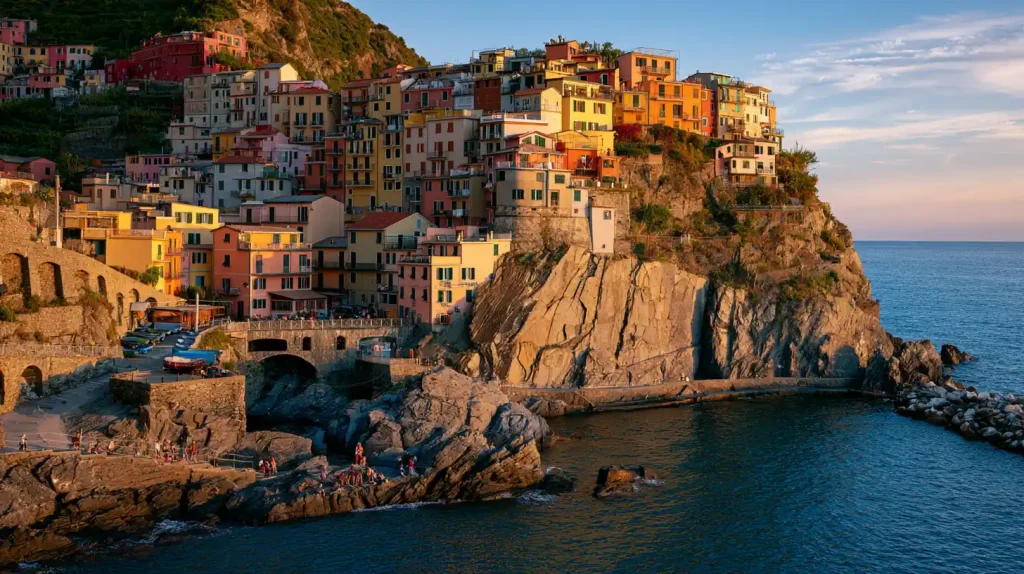
The village itself is compact and steep. The main lane runs from the train station down to the harbor, lined with restaurants, wine bars, and shops. It feels slightly more managed than Riomaggiore — smoother underfoot, easier to navigate.
The Nessun Dorma wine bar sits above Punta Buonfiglio, the rocky point at the south end of the village, with the most dramatic sea view of any bar in Cinque Terre. Order the local white wine (Cinque Terre DOC) or a Sciacchetrà (the local sweet wine made from partially dried grapes). The views make even indifferent wine taste better.
The other end of the Via dell’Amore terminates here.
Best for: The iconic viewpoint photograph, Nessun Dorma, the Via dell’Amore walk.
Corniglia: The Quiet One
Corniglia is the only Cinque Terre village without direct sea access. It sits on a headland 100 meters above the water with no harbor, no ferry dock, and no beach. To reach it from the train station, you climb approximately 370 stairs (or take a shuttle bus for a small fee).
This altitude is the reason Corniglia receives far fewer visitors than the other four villages. Day-trippers who arrive by train and do not want to climb stairs skip it entirely. This makes it the most genuinely quiet village of the five, with a population of only around 200 people living a life largely not organized around tourism.
The village has a central square, a few restaurants, a wine shop or two, and excellent views — both north toward Vernazza and south toward Manarola. On a clear day you can see both neighboring villages from the hilltop.
This is not a place to go for beach swimming or harbor views. It is a place to sit in the piazza with a glass of local white wine and eat a bowl of trofie al pesto without anyone rushing you. Which is exactly what it sounds like.
Best for: Escaping the crowds, lunch with a view, experiencing what Cinque Terre felt like before it became famous.
Vernazza: Best for First-Timers
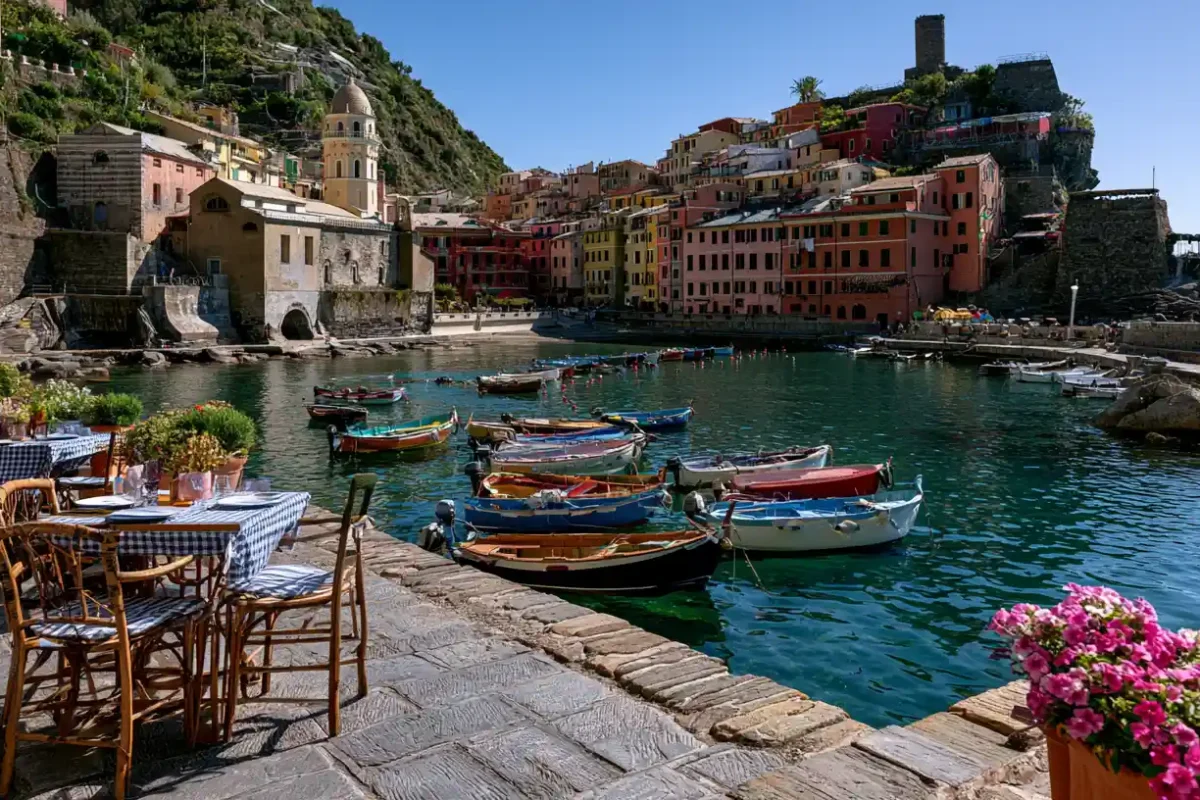
Vernazza is the most complete village of the five — the one with the most to see and the best combination of harbor, history, and restaurant quality. A ruined medieval castle (Castello Doria) sits on the headland above the village, entry €1.50, and the views from the top extend along the coast in both directions. Below it, the natural harbor — the only true harbor in Cinque Terre — faces the sea with a small beach and a cluster of outdoor restaurant tables.
Vernazza is also the busiest village after Monterosso. In July and August, the main piazza and waterfront can feel overwhelmed. The path down from the train station to the harbor fills with foot traffic. Early morning or late afternoon are when Vernazza returns to its better self.
The waterfront restaurants vary widely. The ones directly on the piazza charge a premium for the setting. One or two streets back, both quality and price improve. Ask for the daily fish at whichever restaurant you choose.
Vernazza is the best base if you are staying in Cinque Terre rather than commuting from La Spezia — central location, good ferry connections north and south, the widest choice of accommodation.
Best for: Overall experience, the castle, the natural harbor, basing yourself in Cinque Terre.
Monterosso al Mare: The Beach Village
Monterosso is the largest, flattest, and most accessible of the five villages, and the one that most feels like a beach resort rather than a fishing village. It has a proper sandy beach — the only one in Cinque Terre — lined with beach clubs, umbrellas, and sunbeds for rent. The old town (Paese Vecchio) connects via a tunnel to the newer beach district (Fegina), which has a long promenade and most of the hotels.
If your priority is a day at the beach in Cinque Terre, Monterosso is the only village that delivers it properly. Swimming off the harbor rocks in Riomaggiore or Vernazza is possible but the experience is limited. Monterosso has actual beach with sunbeds (€15-25 per pair), a clear sandy bottom, and the infrastructure to support a full beach day.
The trade-off: Monterosso is the most touristic of the five, with the strongest sense of being a destination rather than a place. The shops and restaurants cater heavily to visitors. The old-fishing-village atmosphere that defines the other four is thinner here.
Best for: Beach swimming, families, accommodation with resort amenities, the easiest walking terrain.
What to Eat in Each Village
The food of Cinque Terre is Ligurian, which means pesto (made with Genoa basil, pine nuts, garlic, Pecorino, olive oil, and nothing else), focaccia, fresh pasta, and seafood. Every village serves some version of trofie al pesto — the twisted local pasta that holds pesto sauce better than any smoother noodle. Eat it at least once.
Riomaggiore: The restaurants on the harbor terrace are expensive but the seafood is good. Try the fritto misto di mare (mixed fried seafood) — fresh, simple, served in a paper cone at some spots. Avoid the obviously tourist-oriented places on Via Colombo.
Manarola: Nessun Dorma is the obvious wine bar choice. For food, the restaurants slightly back from the main lane tend to offer better value. The view from the point is free — you pay only for what you order.
Corniglia: The smallest village has only a handful of places to eat. Pan e Vin is well regarded for local wine and simple food. The focaccia from the bread shops is as good here as anywhere on the coast.
Vernazza: The harbor restaurants charge for the location. One or two streets back, the food improves and the prices soften. For a quick meal, the pizzerias toward the train station are reliable and fast.
Monterosso: Has the widest variety of restaurants, the most beach club food (grilled fish, salads, aperitivi), and the highest concentration of anchovy dishes. Monterosso anchovies are a specific and excellent local product — order them preserved in oil as a starter or as the main ingredient in a pasta dish.
When to Go and What to Avoid
Cinque Terre in July and August is genuinely difficult. The trail access points run at capacity, the trains between villages are crowded at peak times, and the village lanes fill quickly after 10am. If you arrive in Vernazza at noon in August without a restaurant booking, you will eat at the worst place on the square.
May is ideal — spring wildflowers on the Sentiero Azzurro, comfortable hiking temperatures, full ferry service running, and a level of crowd that allows you to walk the main lanes without stopping every few feet. Book accommodation and the Via dell’Amore time slot in advance.
September is equally good, with the advantage of a warm sea (18-20°C) for swimming. October brings some rain but the colors on the terraced vineyards and the quiet piazzas reward visitors who do not need beach conditions.
One practical point: the Cinque Terre park runs a quota system on the most popular trail sections in high season — the number of hikers allowed per day on certain paths is capped. Book trail access slots through the official Cinque Terre National Park portal if hiking in July or August.
The Cinque Terre Card: What You Need in 2026
Entering the villages is free. The Cinque Terre Card is required for:
- Hiking the paid trails (the Sentiero Azzurro / Blue Trail, which includes most of the cliff paths between villages)
- Access to the Via dell’Amore (pre-booked time slot required even with the card)
- Shuttle buses within the park
Card types:
- Trekking Card: €7.50-15 per day (trails + buses, no trains)
- Treno MS Card: €19.50+ per day (trails + buses + unlimited regional trains between the five villages)
The Treno MS Card is worth buying if you plan to use the train more than twice in a day plus hike any section of the trails. For a full day visiting multiple villages, it nearly always pays for itself.
Which Villages to Prioritize
If you have one day: Vernazza and Manarola. Vernazza for the complete village experience and harbor, Manarola for the iconic viewpoint. Train between them (via Corniglia, two short hops). Walk the Via dell’Amore from Riomaggiore to Manarola if you have a pre-booked slot.
If you have two days: Add Monterosso (for the beach and the old town) and Corniglia (for the quiet). Riomaggiore for the harbor at golden hour.
If you have three days: See all five properly, hike sections of the Sentiero Azzurro between villages, eat well, and stop rushing.
FAQ
Which is the best Cinque Terre village to stay in?
Vernazza for first-timers — central location, best harbor, good restaurant options. La Spezia or Levanto work well as cheaper bases with train access to all five villages.
Is the Via dell’Amore open in 2026?
Yes. The Via dell’Amore (Riomaggiore to Manarola) is open in 2026 after reopening in 2024. Access is included in the Cinque Terre Card but requires a pre-booked time slot. Book in advance for summer visits.
Do you need a ticket to enter the Cinque Terre villages?
Entering the villages is free. You need the Cinque Terre Card only to hike the paid trails (including the Sentiero Azzurro sections) and the Via dell’Amore.
Is Corniglia worth visiting?
Yes, specifically if you want to escape the crowds. It requires climbing 370 stairs from the train station but rewards you with genuine quiet, a central village piazza, and views of both Manarola and Vernazza.
How long do you need in Cinque Terre?
Two days to see the highlights properly. Three days to see everything without rushing. One day is possible but leaves you feeling like you barely scratched the surface.