Most guides tell you May is the best month to visit the Amalfi Coast. They are not wrong, but the answer is more interesting than that. The coast changes significantly between seasons — not just in temperature, but in atmosphere, accessibility, and what is actually worth doing. August and May are almost different destinations. Knowing which version suits you is more useful than a generic recommendation.
The short version: May and September are the best months for most visitors. July and August are possible but crowded, hot, and expensive. October is underrated. November through March is largely closed, cold, and cheap.
Here is the longer version.
April: The Coast Wakes Up
April marks the beginning of the tourist season and the point at which the Amalfi Coast becomes recognizably itself again after winter. Ferries start running between towns. Most restaurants reopen. The hillside terraces start to green up, and the sfusato amalfitano lemons are heavy on the trees.
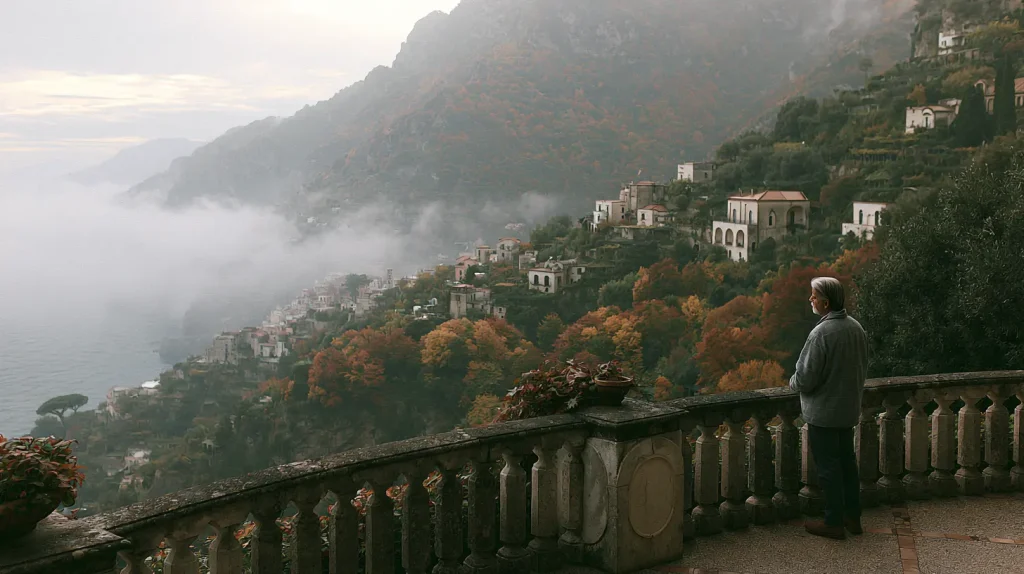
Temperatures in April average around 15-18°C, with some cooler days and occasional showers, particularly in early April. The sea is cold — typically 15-16°C — and swimming is not comfortable. But for sightseeing, hiking, and simply being on the coast without crowds, April is already good.
Crowds: noticeably lower than May or June. You can walk along the waterfront in Positano at noon in early April without shoulder-to-shoulder tourists. The coast has a slightly unfinished quality — some places are still polishing up for the season — but that is part of the appeal.
Budget: prices are lower than peak season, and accommodation is available without booking many months ahead.
May: The Best Month
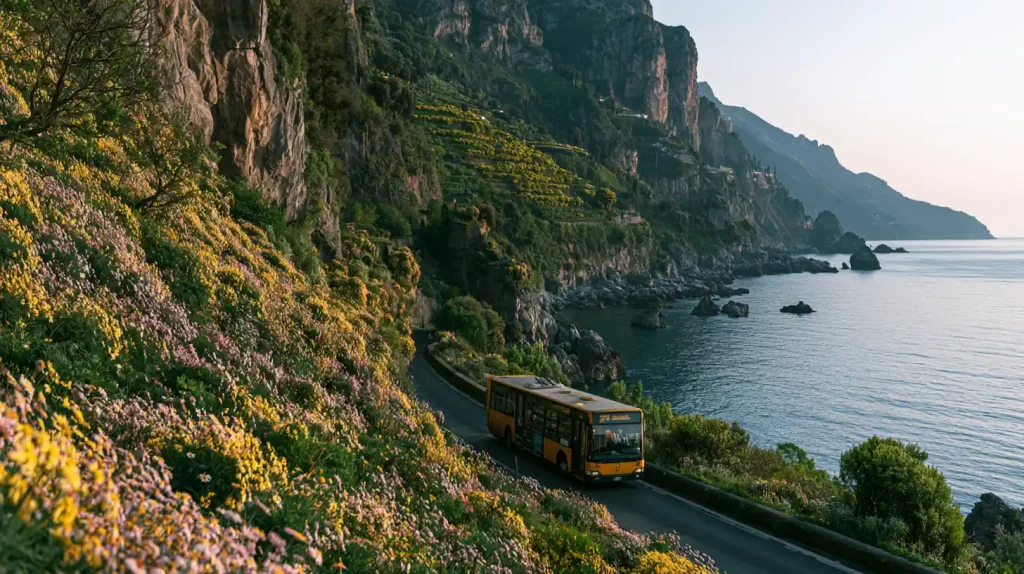
May is consistently the answer when people ask about the best time to visit. The flowers are at their peak — wild orchids, broom, rosemary, poppies on the hillsides. Temperatures are comfortable in the 18-23°C range. The sea is warming up enough for swimming by late May (17-19°C). Ferries run on full schedules. Every restaurant is open. The Path of the Gods is in ideal condition.
The crowds are meaningful but not overwhelming. Positano in May at midday is busy. Positano in May at 8am is quiet and beautiful. The key is timing within the day rather than avoiding the month.
Accommodation and restaurant bookings should be made at least a few weeks in advance for popular spots, but you are not fighting the same competition as July and August.
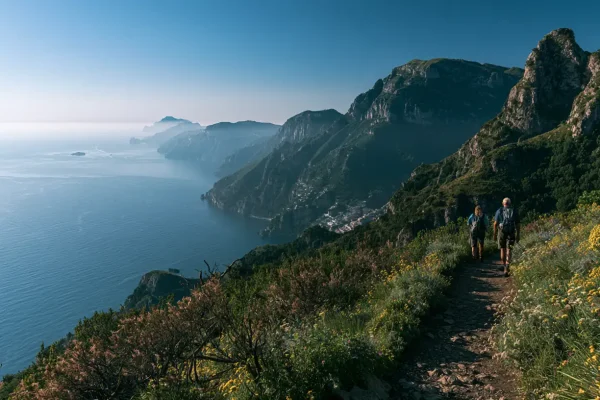
May is also the best month for hiking the Sentiero degli Dei — cool enough to walk in comfort, dry underfoot, flowers along the ridge.
June: Good, Getting Busy
June runs like extended May for the first half of the month, then shifts toward peak summer in the second. Temperatures rise toward 25-28°C. The sea reaches comfortable swimming temperatures (19-21°C) by mid-June. School holidays in most of Europe have not yet started, so the crowds are still manageable in early June.
By the last two weeks of June, the coast starts to feel like peak season. Italian school holidays begin. The Ravello Festival opens in early July and some concerts fall in late June. Restaurant terraces fill every evening. Early booking becomes more important.
For a mix of good weather and reasonable crowds, early June — the first two weeks — is a strong choice that most guides understate.
July and August: Peak Season
The Amalfi Coast in high summer is beautiful, crowded, hot, and expensive. July temperatures average 22-30°C. August hits highs of around 30°C and above, with a humid quality that makes the heat feel heavier than the number suggests.
The Ravello Festival runs 4 July through 5 September 2026, with concerts staged on the Villa Rufolo terrace. This is a genuine reason to visit in July or August if outdoor classical music under the stars above the Tyrrhenian Sea is on your list.
What you get: warm, clear weather, reliably warm sea (22-24°C), full ferry and bus schedules, every restaurant and attraction open.
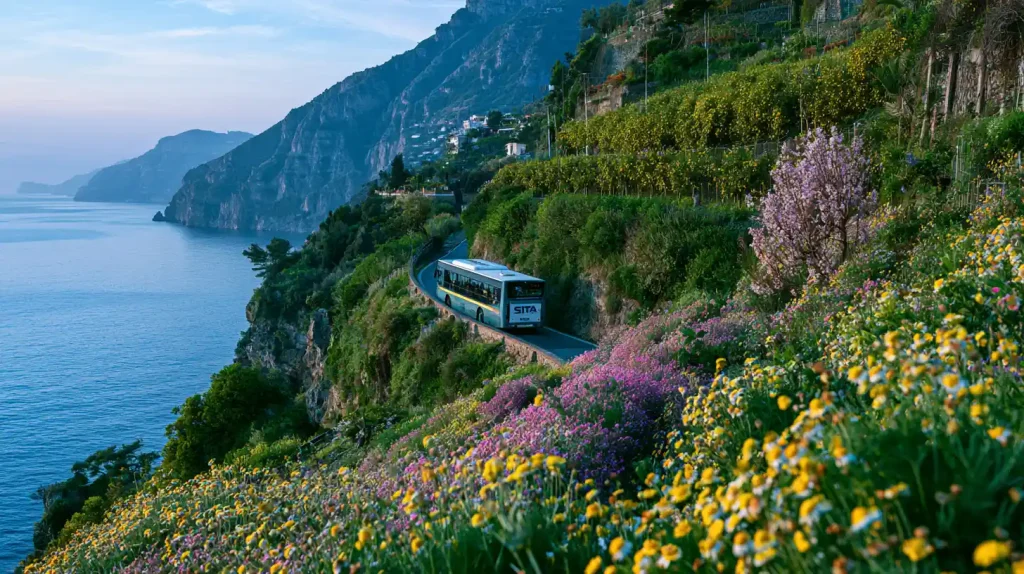
What you deal with: buses that are genuinely packed — standing room only on the SITA coastal service — ferries that book up, Positano that feels overwhelmed by noon, parking that does not exist, accommodation that costs 40-70% more than shoulder season rates.
If you must visit in August: arrive at every location before 9:30am. Leave by 1pm or stay until 5pm when the heat eases. Book everything in advance.
September: The Other Best Month
September is the month the Amalfi Coast locals quietly prefer. The summer heat eases — temperatures average 19-26°C, warm and sunny but without August’s edge. The sea is at its warmest of the year (22-23°C). The Ravello Festival ends in early September. The July-August crowds thin noticeably after the first week.
For beach swimming, September is actually the best month. The water is warmest, the days are long, and by mid-September the coast road is no longer at maximum capacity.
For hiking, September is excellent — the morning temperatures on the Sentiero degli Dei are comfortable again, and the light on the coast in autumn is particularly good.
Restaurants and ferries still run on full schedules. Most accommodation is still open. Prices start to dip slightly compared to August.
September is arguably underrated relative to May. It wins on sea temperature and loses marginally on wildflower scenery. For most visitors, it is the better month.
October: Underrated and Honest
October on the Amalfi Coast is quiet in a way that rewards visitors who do not need beach weather to enjoy the place.
Temperatures average 16-22°C. Some days are warm and sunny. Others are grey with rain — October rainfall increases noticeably compared to summer months. The sea is still swimmable in early October (around 20°C) but cools through the month.
Crowds: significantly lower than September. Positano in mid-October feels like a village again rather than a destination. The road traffic is manageable. You can walk into restaurants without bookings.
What starts closing in October: some beach clubs shut down after the first or second week. A few seasonal restaurants and hotels close by the end of the month. Ferry schedules may reduce frequency.
For sightseeing, Ravello, Amalfi town, and Positano are all fully accessible and genuinely pleasant in October. The villa gardens are changing color. The lemon groves are in late harvest.
Suggested topic — Amalfi Coast Hidden Gems
What Happens During the Ravello Festival
The Ravello Festival runs each year from early July through early September, and if you are visiting during this window it changes the cost and availability equation in Ravello specifically. The village becomes more expensive during festival months — accommodation books up further in advance, and the restaurants near Piazza Duomo operate at capacity on concert nights.
Concerts are staged outdoors on the Villa Rufolo terrace, with the Mediterranean dropping away below the stage — one of the most dramatic outdoor performance settings in Europe. Tickets range from around 30 EUR for general lawn seating to 80-120 EUR for premium positions close to the stage. Past performers have included major orchestras, chamber ensembles, and jazz acts. Check the official Ravello Festival website for the current season lineup before you book.
If music is not the reason you are going, avoid Ravello on concert evenings — the village crowds up significantly and parking, already nonexistent, becomes genuinely difficult. Go on an afternoon without a scheduled concert and you get the terraces and the gardens largely to yourself.
What the Local Crowds Look Like (Not Just the Tourist Crowds)
August is famous for being crowded, but it matters to understand whose crowd it is. The Amalfi Coast in August is not just full of foreign tourists. It is peak Italian holiday season — Ferragosto, the traditional August break, fills the coast with Italian families who rent villas, take over beach clubs, and eat at restaurants that have been booked since spring.
This matters for two reasons. First, the experience in August is more local than people expect — you are not surrounded by tour groups from a cruise ship, you are surrounded by Neapolitan and Roman families who have been coming here since childhood. Second, the good restaurants fill from both directions: tourists wanting the best tables and Italian regulars who know the chef. Book ahead or you will eat at the obvious tourist spots that no one who knows the coast would choose.
September sees the Italian families go home. The foreign tourists thin out. The coast gets quieter but not dead. By mid-September you can get a walk-in table at a decent restaurant on a weekday evening. That is the clearest signal the shoulder season has arrived.
November Through March: Off-Season Reality
This is when the Amalfi Coast returns to something closer to its actual self — a set of small towns perched on cliffs above the Mediterranean, without the tourist machinery running at full speed.
November is the wettest month, with roughly 122mm of rainfall and about 14-15 rain days. The coast can be dramatic and beautiful in November — sea mist, dramatic light, the villages without crowds. But some restaurants close for the winter, many seasonal hotels shut, and the ferry services largely stop running between towns.
December and January are cold by coastal standards — 8-13°C, with occasional frost on the higher ground above Ravello. The towns are very quiet. Amalfi itself remains open year-round with its cathedral, a handful of restaurants, and the paper shops. Some visitors come specifically to experience the off-season solemnity of the place.
If you want low prices and solitude: November and March are the entry and exit points to the quiet season, with some businesses still open and weather less extreme than December-February.
If you want the full Amalfi Coast experience: stay away from winter. Too much will be closed and the weather unpredictable.
Suggested topic — 3 Days in Amalfi Coast
Practical Differences You Will Actually Notice
A few things change by season that guides rarely mention:
Parking and road traffic: The SS163 coast road is gridlocked in July and August, particularly between Positano and Amalfi. Journey times that should take 20 minutes take 60-90 minutes in peak season. In May and September, traffic moves. In October, the road is open and you could drive the whole coast comfortably in under two hours.
Restaurant reservation lead times: In August, the good restaurants in Positano require bookings made weeks or months ahead. In May, a few days’ notice is usually enough for most places. In October, many spots accept walk-ins. If you are someone who makes spontaneous dinner decisions, this seasonal difference matters a lot.
Accommodation availability and price: July-August rates in Positano can be 50-80% higher than May-June rates for the same room. Booking windows shift accordingly — August rooms at top properties are often reserved six months out. May and September offer the same properties at significantly lower rates with more last-minute availability.
Ferry schedules and capacity: Full ferry service runs April through October. In peak summer, the popular routes (Positano-Amalfi-Capri) sell out in advance and the boats are crowded. In May and September, you can buy a same-day ticket. This sounds minor but changes the experience meaningfully — a relaxed ferry crossing is one of the best things about the coast.
Quick Reference by Reason
For the best weather and manageable crowds: May or September.
For swimming: Late June through September, with September winning on water temperature.
For hiking the Path of the Gods: April, May, or September-October. Avoid July-August heat.
For the Ravello Festival concerts: 4 July to 5 September 2026.
For the lowest prices: November through March, if you accept limited openings.
For a city-break with no beach ambitions: October or November — sightseeing weather, genuine quiet.
FAQ
When is the Amalfi Coast most crowded?
July and especially August, when Italian summer holidays coincide with peak international tourist season. Positano and Amalfi town become genuinely congested midday.
Is April too early to visit the Amalfi Coast?
Not at all for sightseeing and hiking. The sea is cold (15-16°C) so swimming is not comfortable, but the weather is pleasant, crowds are thin, and the spring scenery is excellent.
What is the sea temperature on the Amalfi Coast by month?
Cold (14-16°C) November through April, warming to 19-21°C by June, peaking at 22-24°C in August-September, then cooling from October onward.
Do restaurants and ferries close in winter?
Many seasonal restaurants close November through March. Ferry services between coast towns largely suspend in November and resume in April. Amalfi town and a few others stay open year-round with reduced options.
Is September really as good as May?
Yes, and in some ways better — warmest sea, thinner crowds than July-August, full services running, excellent light. It loses to May on wildflower scenery and early spring freshness.