The worst gelato in Florence looks like the best gelato in Florence — at first glance. It is piled high above the container in colourful swirls, displayed in the window of a shop near the Duomo with a sign that says gelato artigianale, and served with a plastic spoon into a cone that is more structural architecture than food. It can cost €5-6 for one scoop. It is made from industrial premix delivered to the shop in bags and mixed with water and vegetable fats by whoever opened that morning. It tastes of nothing in particular except sweetness and air.
There is a version of this conversation that sounds snobbish. Florence has real artisan gelato that is genuinely extraordinary and it also has a large quantity of tourist-targeted product that is extraordinary only in how confidently it presents itself as the former. The practical difference is a couple of euros and the knowledge of what to look for.
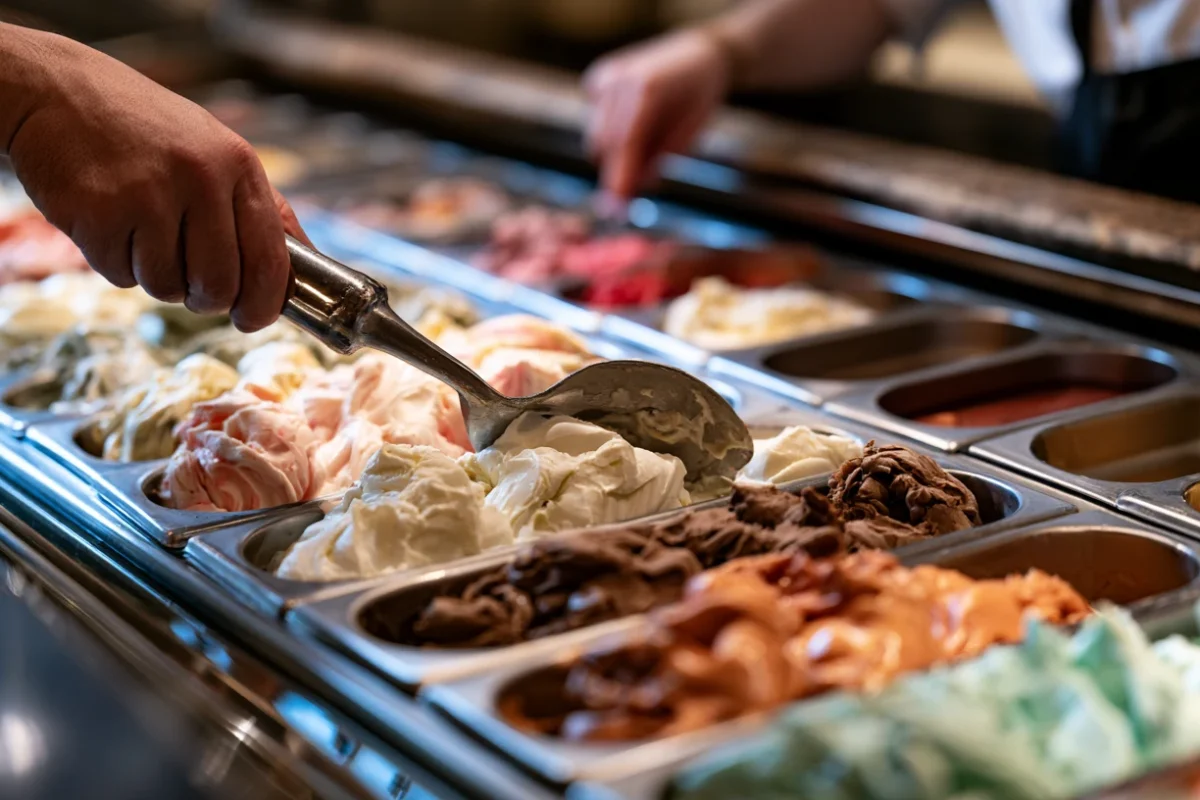
The best gelato in Florence is stored in flat metal containers with lids, served from a small list of whatever is in season that day, priced at roughly €2.50 to €3.50 for a small cone, and tastes like the specific fruit or nut or chocolate it is actually made from — recognisably, directly, without a generalised sweetness covering the flavour. These two things exist in the same city and sometimes on the same street. A gelato crawl structured around the good places and armed with the ability to read a gelateria before you order from it will save you both money and disappointment.
How to Identify Real Gelato Before You Order
The single most reliable indicator of quality gelato is the container. At an artisan gelateria, the gelato is stored in flat steel trays with lids that control the temperature and protect the product from air and light. You cannot see the gelato until the server opens the lid. At a tourist-oriented gelato shop, the gelato is displayed in open containers piled well above the rim in dramatic coloured mounds. The mounds require the gelato to be stiffened with stabilisers and artificial agents to hold their shape at room temperature. Real gelato, made with dairy and fresh ingredients and no artificial support, cannot hold a pyramid shape.
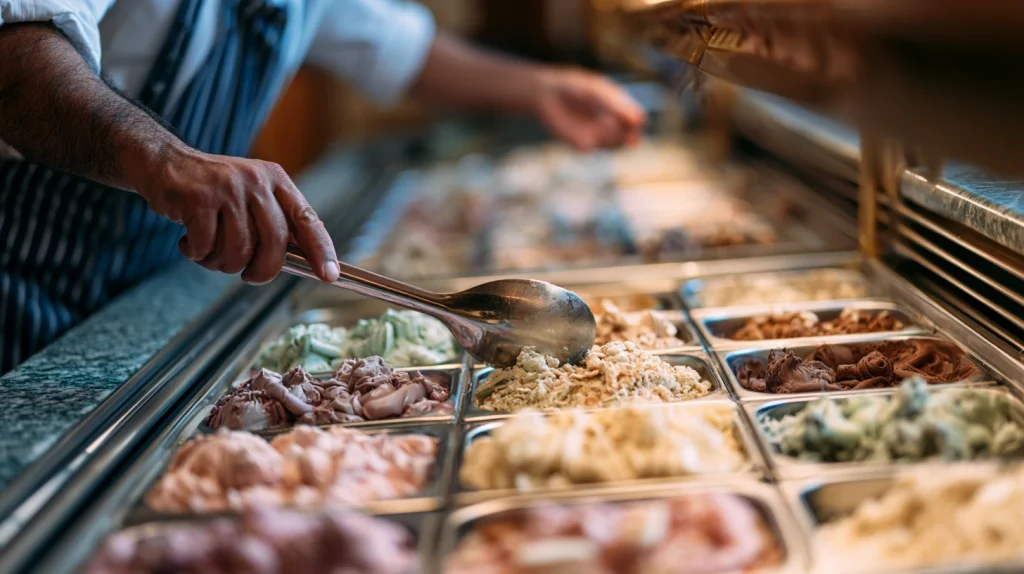
The colour test: good gelato made from natural ingredients has muted, realistic colours. Pistachio gelato at a quality gelateria is a dull greyish-green because real pistachios are a dull greyish-green. Pistachio gelato at a tourist shop is neon green. The neon is from synthetic colouring. Same logic applies to strawberry (pale pink, not hot red), lemon (pale yellow, not vivid yellow), and hazelnut (dark brown, not orange-brown).
The flavour list test: a good gelateria has a shorter list with a higher proportion of unusual, seasonal, or locally specific flavours — fig in August, chestnut in autumn, blood orange in winter. If every flavour list at every shop you pass includes the exact same eighteen items (including “cookies and cream” and “Nutella” and blue “smurf” flavour), you are looking at mass-produced gelato served from the same distributor.
The signs test: produzione propria (our own production) or gelato artigianale are good signs if the rest of the indicators align. These phrases alone mean nothing — they appear on tourist-trap shops as well. Treat them as necessary but not sufficient.
Price: a small cone (piccolo) at a genuine artisan gelateria typically costs somewhere in the €2.50-3.50 range, though this varies shop to shop and has been drifting upward with inflation — check the posted price before ordering. If a small serving is €5 or €6, the premium is not reflecting quality. It is reflecting the square footage of tourist territory the shop happens to occupy. The gelato at an expensive shop near the Duomo is almost never better than the gelato at a cheaper shop fifteen minutes away. Budget your gelato stops accordingly and walk a bit.
One more reliable indicator: the queue. A gelateria with a genuine local following will have Florentines in it at 11am on a Tuesday. If the only people in front of you are tourists carrying maps and roller bags, reconsider your choice.
The Crawl: Where to Go
A proper Florence gelato crawl can cover three to five stops across the city over two or three days. These are the ones worth planning around.
Gelateria della Passera (Via Toscanella 15r, Oltrarno) is consistently one of the highest-ranked gelaterias in Florence and in Italy — it has held Gambero Rosso’s Tre Coni (“three cones”), the guide’s top recognition, across multiple recent editions of the Gelaterie d’Italia guide, including the current one. The flavour list changes daily based on what arrived that morning and is written on a handwritten board outside. There is no permanent flavour list. If you go in February and want strawberry, there is no strawberry — and this is the sign of a serious operation. Open Tuesday-Sunday from midday, closed Mondays; hours run later into the evening on weekends.
The shop itself is tiny — a few square metres of counter space and no seating — in a quiet square in the Oltrarno that most tourists pass through only if they are actively looking for it. Combine this visit with the Santo Spirito neighbourhood (five minutes on foot) to make the trip worthwhile. Go in the early afternoon before the more unusual flavours on the day’s list run out.
Perché No (Via dei Tavolini 19r) has been open since 1939 and is one of the oldest continuously operating gelaterias in Florence, tucked between Piazza della Signoria and Piazza della Repubblica. The name means “Why Not” — an answer to the question of whether to eat gelato. The shop makes unusual flavours that are rarely found elsewhere: honey and sesame, ginger, green tea, ricotta and fig among them. This is the place to try something you will not get at any other gelateria you walk into.

Carabè (Via Ricasoli 60r, a block south of the Accademia) is run by a family with roots in Sicilian gelato-making, founded in Florence in 1980 by Antonio Lisciandro. The shop has stayed close to the Accademia since — technically tourist territory, but it has kept its focus on Sicilian techniques and Sicilian produce. The fruit sorbets here are the best single argument for the Sicilian gelato tradition in Florence — intensely flavoured, barely sweet, made from fresh fruit rather than concentrates. Strawberry in season, blood orange in winter, pistachio from Sicilian pistachios that are a different thing entirely from the mass-produced pistachio used everywhere else.
In summer, the granita is the correct thing to order — coffee granita or almond granita in the morning is one of the more practical discoveries a first-time visitor to Florence can make. And for the experience: ask for gelato or granita served in a brioche (brioche col tuppo, a soft round sweetened bun with a round topknot). Sicilians eat their granita in brioche for breakfast. In Florence, any time of day works. It sounds strange. It works very well.
Badiani (Viale dei Mille 20r) is located in the Cure neighbourhood outside the historic centre, a walk or short bus/taxi ride northeast of the Duomo. This is why most tourists never visit it — it requires deliberate effort to reach. Badiani carries Gambero Rosso’s “Due Coni” (two-cone) recognition and is the best-known place in Florence to eat the buontalenti, the old Florentine gelato flavour named after Bernardo Buontalenti, the Medici court architect and engineer credited — with some historical debate over the details — with an early version of gelato served at a Medici banquet in the 16th century. The flavour has existed in some form for centuries regardless of the exact origin story.
The buontalenti is made from egg yolks, cream, and Vin Santo, the Tuscan dessert wine. It tastes like something between crème brûlée and zabaglione — a smooth, rich cream with a subtle sweetness and a warm, slightly boozy undertone from the wine. There is no flavour quite like it elsewhere in the Italian gelato tradition. It is the most specifically Florentine thing on any gelato menu in the city and the single flavour worth going out of your way to try.
I Gelati del Bondi (Via dei Servi, near Piazza Santissima Annunziata) is another well-regarded, long-established Florentine gelateria — founded in 1982 — known for its meticulous, research-driven approach to flavours, including a historic zuccotto recipe made to Buontalenti’s original method. It has held Gambero Rosso’s Tre Coni in several recent editions of the guide, though the most recent 2027 edition of Gelaterie d’Italia (published mid-2026) dropped it from the top tier — a reminder that these rankings shift year to year and are worth a quick check before you build a special trip around a specific award. It remains a serious, well-regarded gelateria either way, and its location near Piazza Santissima Annunziata makes it more accessible from the tourist centre than della Passera.
Gelateria de’ Medici and similar shops around Via dei Servi are worth noting for unusual flavour combinations: basil with pine nut, for instance, which is exactly what it sounds like (pesto without the cheese and oil) and is better than that description suggests. If you are tired of chocolate and hazelnut, this is where to look.
What to Order on Each Stop
The crawl works best if you use each stop to try something different from the previous one. Three stops over a two-day span is a sustainable pace that does not turn Florence into a gelato tour at the expense of everything else.
Stop one (Perché No): one unusual flavour — honey and sesame, ginger, or whatever is on the day’s handwritten board that you cannot immediately name. This is the stop for discovery. Order the thing you would not order anywhere else.
Stop two (Carabè): a fruit sorbet in summer, or almond granita in any season. If the brioche option is available and you have not tried it, this is the stop to do it. The experience is more interesting than the flavour alone.
Stop three (Badiani or della Passera): buontalenti at Badiani specifically — this is not replicable elsewhere in the city at the same quality level. Or the day’s seasonal recommendation at della Passera if you are in the Oltrarno and the list is still available.
One gelato per stop is the right pace. Two flavours per cone is possible — ask for due gusti (two flavours) and the server will give you two scoops side by side. Three is too many and they will fight each other. Commit to one or two things and taste them properly.
If you are in Florence for four or five days and want to add a fourth stop, I Gelati del Bondi near Piazza Santissima Annunziata is the logical addition — accessible, consistent, and a good test of whether your palate has started to calibrate after the earlier stops.
Gelato vs. Ice Cream vs. Sorbet: What the Differences Actually Are
Gelato contains less air than ice cream — it is churned more slowly, so the overrun (the amount of air whipped in during churning) is lower, making it denser and heavier per volume. It is served at a warmer temperature than ice cream, meaning the texture when it hits your tongue is softer and more giving. The fat content is lower than most commercial ice creams, which paradoxically makes the flavour more intense because there is less fat coating the palate between tasting and swallowing.
Sorbet (sorbetto) contains no dairy. Good Italian sorbetto is made from fruit and sugar with nothing else — the quality is entirely determined by the quality of the fruit, which is why a sorbetto di limone at a serious gelateria using good lemons tastes like a distilled lemon, and one at a mediocre shop tastes like lemon-flavoured sugar water. The texture is coarser than gelato, without the creaminess.
Granita is a Sicilian product with a deliberately icy, granular texture. The base — fruit juice and sugar, or coffee and sugar, or almond milk and sugar — is frozen slowly with stirring but not broken down fully, leaving ice crystals intact. It is eaten with a spoon rather than from a cone. On a hot Florence afternoon it is cold enough to be genuinely refreshing in a way that gelato is not, because gelato is served warmer than it looks and granita is served genuinely cold.
You do not need to pick one and commit to it. A small gelato and a small granita shared between two people at Carabè is a reasonable visit. Mixing them in the same cup is also acceptable — ask the server.
Final note: eat your gelato immediately after ordering. It is served at the correct temperature and starts warming and softening quickly. Photographs first is fine but keep them brief.
Panini & Mercato Centrale Florence: Lampredotto, Nerbone, and Where to Eat
3 Days in Florence Itinerary: What to Do, See, and Eat
Addresses and Gambero Rosso Tre Coni / Due Coni recognitions verified August 2026 against current gelateria listings and Gambero Rosso’s own coverage of the 2026/2027 Gelaterie d’Italia guide. Note that guide rankings are re-evaluated annually and do shift — I Gelati del Bondi, for instance, held Tre Coni in the 2025/2026 guide but was not on the top-tier list in the 2027 edition — so treat any specific award as current at time of writing rather than permanent. Prices are typical ranges rather than fixed figures, since individual gelaterias set and adjust their own pricing.