Three days in Florence is enough — if you use them right. Enough to see the Uffizi properly, to climb Brunelleschi’s dome, to eat a real bistecca alla Fiorentina, to spend an afternoon in Oltrarno, and to watch the city from Piazzale Michelangelo at sunset. That is a solid Florence trip. What it is not enough for is six museums, two day trips, a cooking class, and every church in the historic centre.
This itinerary is built around what first-time visitors most regret missing and most often waste time on. The pacing is intentional. Art fatigue is real — the Uffizi followed immediately by the Accademia followed by a third museum in the same afternoon is a common mistake that turns a great visit into an endurance exercise, where you remember nothing specific from the last two hours because you were too tired to look properly. Spread the major experiences out. Build real city time — neighbourhood walks, market lunches, afternoon aperitivo — into each day. And accept that you will not see everything, because no one sees everything in three days, and the visitors who try come home with a blurred gallery memory and blisters.
Florence rewards slowing down more than almost any other European city. The art is denser and more significant per square kilometre than anywhere else. Three focused days will outperform five scattered ones.
Before You Arrive: Booking Logistics
The most important thing to do before reading the day-by-day plan: book the Uffizi the moment you have confirmed travel dates. The Uffizi fills weeks or months in advance during peak season (April-October) — timed slots commonly sell out 45-60 days ahead — and attempting to get a walk-up ticket involves queuing for 60-90 minutes with no guarantee of entry. Book directly at tickets.uffizi.it. Standard admission is €25 walk-up or €29 booked online (which includes the reservation fee); a new afternoon-entry discount introduced in 2026 brings the price down to €16-20 for entry from 4pm onward, which is also one of the quietest times to visit if your schedule allows it.
Book the Accademia (Galleria dell’Accademia) through the official platform at galleriaaccademiafirenze.it or via b-ticket.com. Standard admission is €16 at the door or €20 online (€16 plus a €4 booking fee); under-18s are free. As of March 2026, a combined 48-hour Accademia + Bargello ticket is also available for €26.
Advance booking is also required for the Brunelleschi dome climb, through the official Opera di Santa Maria del Fiore channel (duomo.firenze.it). The Brunelleschi Pass costs €30 and covers the dome, the bell tower, the Baptistery, the Cathedral Museum, and the Santa Reparata crypt, valid across three days — book this rather than separate tickets if you’re doing more than the dome alone. Dome slots commonly sell out two to four weeks ahead in peak season.
The Uffizi and Accademia are both closed on Mondays (along with January 1, December 25, and a couple of additional Italian holidays that vary by year — check the official sites for exact dates). If your three days include a Monday, shift accordingly — museums on Day 1 and Day 2, outdoor and neighbourhood activities on Monday. The Duomo complex, by contrast, is open daily.
Rough museum budget for two people: Uffizi (€29 x 2 online), Accademia (€20 x 2 online), and the Brunelleschi Pass (€30 x 2) comes to a little over €150 total for the core sights — before any guided tours or add-ons.
Day 1: The Uffizi, Piazza della Signoria, and Ponte Vecchio
Morning: Uffizi Gallery (3 hours minimum)
Arrive at the Uffizi at your booked time, and go early. The gallery opens at 8:15am, and the first slots of the morning have consistently the lightest crowds and the most time before the bulk of guided tour groups arrive from mid-morning onward. The Uffizi is large and contains Botticelli’s Primavera and Birth of Venus, Leonardo’s Annunciation and Adoration of the Magi, Michelangelo’s Doni Tondo, Raphael, Titian, Caravaggio, and much more. Three hours is the minimum for a serious visit; four hours if the Renaissance painting collection is the reason you came to Florence. Last entry is 5:30pm, strictly enforced, so don’t plan a late-afternoon visit around a leisurely arrival.
Do not try to see everything. The Uffizi is organised roughly chronologically, from medieval Florentine painting through the High Renaissance — pick the rooms your interest gravitates toward and give them time rather than moving fast through everything. The Botticelli rooms are the centre of gravity for most visitors (room numbering has shifted over the years with renovations, so follow the current museum map rather than a specific room number from an older guide). If you see nothing else, see the Primavera and the Birth of Venus. They are larger than you expect and more complex than the reproductions suggest.
For art history context without a guided tour: the Uffizi sells room-by-room guides at the ticket desk and offers an audio guide covering the major works. Either is useful for a solo visit.
Midday: Piazza della Signoria and lunch
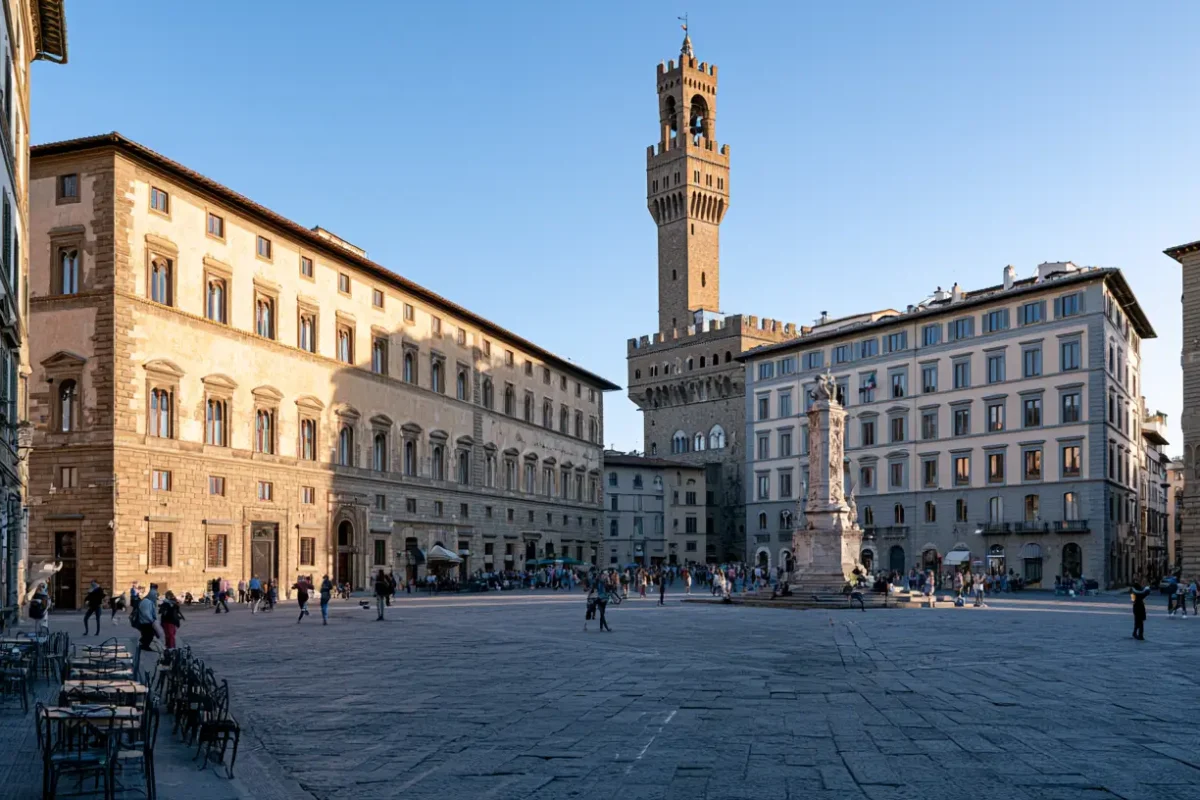
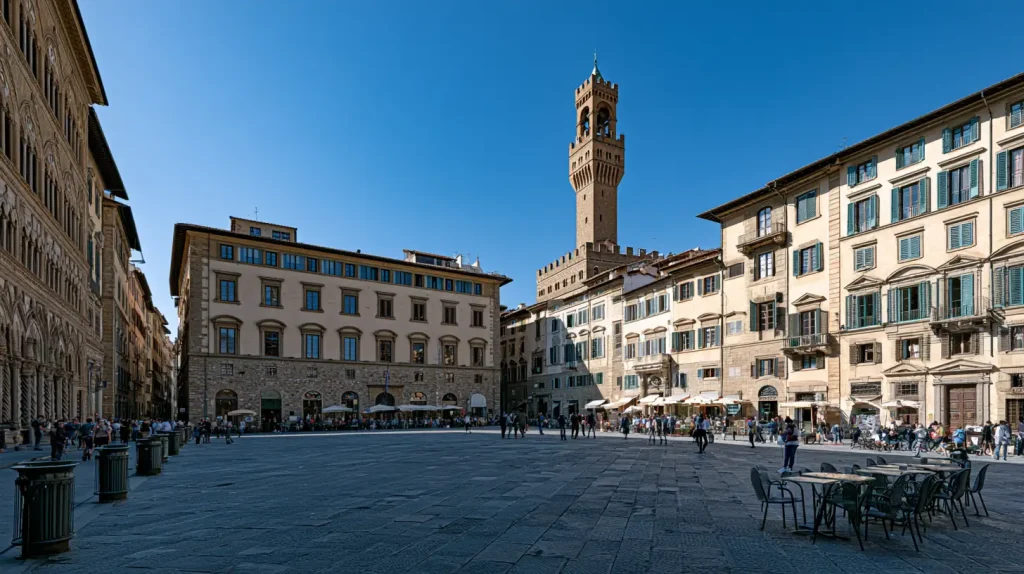
Exit the Uffizi into the Piazza della Signoria. The outdoor sculpture collection in the Loggia dei Lanzi is worth 15 minutes — Cellini’s Perseus with the head of Medusa, Giambologna’s Rape of the Sabine Women, and others, all in the open air for free. The piazza also has the original site of the David (now a replica stands here; the original is in the Accademia).
Lunch nearby without eating somewhere that has a menu board in five languages and photos of each dish. Walk one or two streets back from the main piazza and the price and quality improve immediately.
Afternoon: Ponte Vecchio and Oltrarno (3 hours)
Cross the Ponte Vecchio in the mid-afternoon and spend the rest of the day in the Oltrarno neighbourhood. Stop into Santa Felicita for Pontormo’s Deposition (ten minutes, free, extraordinary). Walk the artisan streets around Via Santo Spirito. Visit Piazza Santo Spirito. End with aperitivo at one of the bars around the square before dinner in the neighbourhood — Oltrarno has the best trattoria pricing in the city centre.
Day 2: The Duomo Complex and Mercato Centrale
Morning: Duomo complex (3-4 hours)
Book your dome climb timed entry for early morning — the first slots begin at 8:15am on weekdays. The dome climb (463 steps) takes 45-60 minutes including the interior gallery stop overlooking Vasari and Zuccari’s Last Judgment fresco, and viewing platform time at the top. Descend, then visit the Baptistery (its interior mosaics are covered by the Brunelleschi Pass) and the Opera del Duomo Museum (original Gates of Paradise panels, Donatello’s Magdalene, Michelangelo’s Pietà Bandini — 90 minutes is the right allocation).
The Brunelleschi Pass covers the dome, the bell tower (Campanile), the Baptistery, and the museum, valid across three calendar days — buy this and spread the components across Day 2 and Day 3 rather than trying to do all four in one morning. The dome and the museum are the priority; the Campanile can wait until Day 3.
Midday: Mercato Centrale (1 hour)
Walk north from the Duomo to the Mercato Centrale (10-12 minutes on foot). If you arrive before 2pm, eat on the ground floor: Nerbone’s boiled beef or lampredotto sandwich, or simply walk the market and buy cheese and bread for eating outside. If the ground floor is closed, the upstairs food hall is open until late evening.
Afternoon: Free time and neighbourhoods
This is the afternoon to get lost. The San Lorenzo neighbourhood around the market, the streets north of the Duomo toward San Marco and Piazza Santissima Annunziata, the quiet streets east of the historic centre near Sant’Ambrogio market. Florence is extraordinarily walkable and the areas between the major sights — the streets most visitors move through quickly on the way to the next attraction — are full of churches (most free to enter), small piazzas, independent bookshops, and ceramics and leather shops that are more interesting than the tourist corridor equivalents near the Duomo.
The afternoon is also the right time for gelato. Perchè No (Via dei Tavolini) and Carabè (Via Ricasoli) are both close to the Duomo area. Gelateria della Passera is a good reason to cross to Oltrarno early. Do not eat gelato within sight of the Duomo — the pricing reflects the location, not the quality.
Evening: Bistecca dinner
If you are eating bistecca alla Fiorentina, tonight is the night — you have a full day of walking tomorrow and want to be hungry now. Book a trattoria in advance — established names like Trattoria dall’Oste or Buca Lapi are popular enough that a same-day walk-in isn’t reliable, so call or book online a day or two ahead.
Day 3: Accademia, Piazzale Michelangelo, San Miniato
Morning: Accademia Gallery (1.5-2 hours)
Book the first available morning slot — the gallery opens at 8:15am, closing at 6:50pm with last entry around 6:20pm. The Accademia is smaller than the Uffizi and the visit is more focused: the Prisoners corridor (Michelangelo’s unfinished slaves), the David room (spend 20 minutes here, walk the full circumference, look at the hands), and whatever of the painting collection interests you. One and a half hours is enough for a good visit without rushing.
Midday: Piazza Santissima Annunziata and lunch
The Piazza Santissima Annunziata, five minutes north of the Accademia, is one of the calmer and more elegant piazzas in Florence — a bronze equestrian statue in the centre, colonnaded loggias on three sides, the Foundling Hospital (Ospedale degli Innocenti) with Brunelleschi’s arcade and a small museum inside worth checking current hours and admission for if you have the extra half hour. It is quiet in a way that Piazza della Repubblica and Piazza della Signoria are not. Take 20 minutes here before lunch.
The church of San Marco adjacent to the piazza houses Fra Angelico frescoes painted directly onto the walls of the monks’ cells in the 15th century. Each cell has its own small fresco painted for the monk who lived there to use as a focus for contemplation. It is a specific and moving experience — check current opening hours before you go, as the museum keeps its own schedule separate from the Accademia. If the Day 3 schedule is feeling manageable, this is the right addition.
Afternoon: Piazzale Michelangelo and San Miniato al Monte
Leave the centre by 3pm and cross to the Oltrarno side. Take bus 12 or 13 to Piazzale Michelangelo, or walk up via the hillside paths from Piazza Giuseppe Poggi (20-25 minutes uphill). At the piazzale, continue uphill another 15 minutes on foot to the Basilica of San Miniato al Monte.
If timing allows, try to catch the daily sung service at San Miniato, when the Olivetan Benedictine monks who maintain the basilica chant in Latin and Gregorian chant. The exact schedule has varied somewhat by source and season in recent years — weekday services are generally in the early evening (commonly cited as 6pm, with vespers following around 6:30pm), and Sunday’s main sung celebration is typically at 5:30pm — so check the current schedule on the monastery’s own site (sanminiatoalmonte.it) close to your visit date rather than relying on an old posted time. It is free, open to all, and one of the more memorable experiences Florence offers; arrive a few minutes early and expect to sit in near silence.
Return to the piazzale for sunset. Stay 30 minutes past the sunset itself for blue hour. Then descend to the Oltrarno for a final dinner.
What to Cut If Time Is Short
If your three days shrink to two — arrival delays, day trips that pull you away, or simply wanting to spend more time in fewer places:
Cut the Accademia. The David is extraordinary and the Prisoners corridor is genuinely important, but the Uffizi is the more significant museum by a wide margin and the Duomo complex is more specifically Florentine than any single gallery. The Accademia is best saved for a second trip or a longer stay when you have already done everything else.
Cut the Pitti Palace. It is large, requires a separate visit, and the Uffizi collection is broader and better presented. Pitti is for art-focused visitors with a fourth or fifth day.
Do not cut Piazzale Michelangelo and San Miniato al Monte. This is the part of the itinerary most often sacrificed for another museum and most consistently regretted — the view at sunset and the sung vespers at San Miniato are not replicable by any indoor experience.
Practical Notes
Walking is how you get around Florence. The historic centre is roughly 2km across and everything in this itinerary is walkable. Good shoes — not sandals, not brand-new trainers that will blister you — are the single most important logistical decision you will make for Florence. The streets are mostly cobblestone and hard on feet over a long day.
The city is busy from April through October and notably calmer November through March. In summer, start all museum visits as early as possible — the first 8am-9am slot at any major museum is the best version of the experience. By midday the streets near the Duomo and Uffizi are very crowded, and in July and August the heat is a real factor in how much you want to walk.
Florence is an easy base for day trips to Siena (roughly 1-1.5 hours each way by direct bus, or about 1.5 hours by regional train — both run frequently through the day), San Gimignano (typically around 1.5-2 hours by bus, usually with a change), and the Chianti wine region (best by car or an organised tour from Florence). With three days in Florence itself, do not attempt a day trip unless you are willing to drop one museum from this itinerary. Four days is the right number if you want both the city and the Tuscan countryside around it.
Arrival tip: if you arrive in Florence by train at Santa Maria Novella station, your hotel or rental will be within 15-20 minutes’ walk of the station if you are staying in the historic centre. There is no reason to take a taxi for this distance unless you have heavy luggage or mobility limitations. The walk from the station toward the Duomo is a good introduction to the city.
Best Time to Visit Florence: Month-by-Month Guide
Where to Stay in Florence: Best Neighbourhoods and Hotels
Museum prices, hours, and closing days verified August 2026 against the official Uffizi, Accademia, and Opera di Santa Maria del Fiore ticketing sites. San Miniato’s service schedule is confirmed as generally accurate but has been reported with small variations across sources and seasons — check sanminiatoalmonte.it directly before planning around a specific time. Bus routes, restaurant availability, and day-trip transport options should be reconfirmed close to your travel dates, as these change more often than museum admission policy.