The argument for staying in the centre of Florence is simple: everything is close. The argument against it is equally simple: everything costs more, the streets outside your window are noisier until midnight, and you are staying in the part of the city that is most densely packed with other tourists rather than with Florentines.
Florence’s historic centre is small — roughly 2km across at its widest. Walking from the Oltrarno neighbourhood south of the Arno to the Uffizi takes 10 minutes. Walking from the Santa Maria Novella station area to the Duomo takes 12 minutes. Walking from the far end of the Santa Croce neighbourhood to the Ponte Vecchio takes 15 minutes. The “walking distance to everything” advantage of a hotel directly beside the Duomo is real, but smaller than the price premium usually reflects.
The more useful question before booking is not “how close is it to the Duomo?” but rather “what kind of daily experience do I want?” A hotel room 400 metres from the Duomo and a hotel room 1.1km from the Duomo have meaningfully different environments around them, not just meaningfully different prices. Understanding what those environments are like is more useful than optimising for proximity to a specific landmark.
Here is how each neighbourhood actually compares for different kinds of visit.
Centro Storico: The Duomo Area
Staying within a five-minute walk of the Duomo puts you at the geographic and tourist centre of Florence. The main sights — Uffizi, Baptistery, Piazza della Signoria, Ponte Vecchio — are all reachable without significant planning. This is the right choice if your itinerary is dense with museum visits and you need to be at the Uffizi at 8:15am without leaving time for a walk.
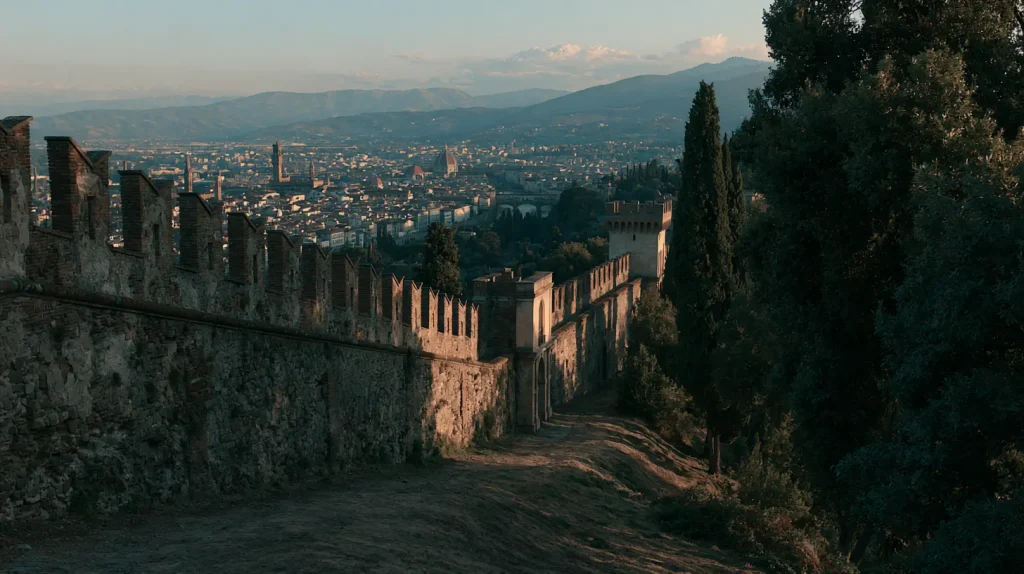
The trade-offs are significant. Room prices in this zone are the highest in Florence by a meaningful margin — expect a real premium over comparable rooms elsewhere in the city, particularly for anything within sight of the Duomo itself. The streets are noisy from early morning (delivery vehicles, groups gathering for tours) through late evening (restaurants and tourist foot traffic). Views from lower floors are often into other buildings or narrow lanes. In summer, the area around the Duomo is hot and crowded throughout the day.
For first-time visitors with a short itinerary who want maximum convenience and do not particularly mind paying for it, the centro storico delivers on its promise. You wake up, step outside, and you are in Florence in the most immediate possible sense — the Duomo is visible from the end of the street, the cafés open at 7am, and the morning before the tourist crowds build is genuinely beautiful.
For everyone else, the case for staying here is thinner than it initially appears, and the discomforts of the location — noise, crowds, cost — are not trivial over a 4-5 day stay.
Best for: first-time visitors with 2-3 days, very dense museum schedule, visitors who are not price-sensitive and for whom proximity matters more than neighbourhood character.
Santa Croce: The Livelier Option
The Santa Croce neighbourhood, east of the historic centre toward the Arno, is the neighbourhood guide recommendation that appears most consistently in independent travel writing, and the reputation is deserved. It is close enough to the major sights — roughly a 10-15 minute walk to the Uffizi — without being inside the tourist core.
The area around Piazza Santa Croce and the streets extending toward the Sant’Ambrogio market has a real local character — restaurants priced for residents, wine bars that open in the evening and fill with people who live nearby, a morning market at Sant’Ambrogio that sells produce rather than tourist goods. The neighbourhood is also where a younger, more relaxed nightlife scene exists, which is relevant to some visitors and irrelevant to others.
Accommodation in Santa Croce runs across price ranges — guesthouses, boutique hotels, and apartment rentals — at prices generally lower than the centro storico. The Basilica of Santa Croce (Michelangelo’s tomb, Galileo’s tomb, Giotto’s frescoes) is here, which would be a major attraction in any other city and is slightly undervisited in Florence because the Uffizi and Accademia get all the attention.
The basilica’s current admission is €10 full price, €6 reduced (ages 12-17, university students, groups of 15+); a €1 booking fee applies if reserved online. It’s open Monday-Saturday 9:30am-5:30pm (last entry 5pm) and Sunday/religious holidays 2pm-5:30pm. The ticket covers the basilica, both cloisters, the Pazzi Chapel, and the Museo dell’Opera.
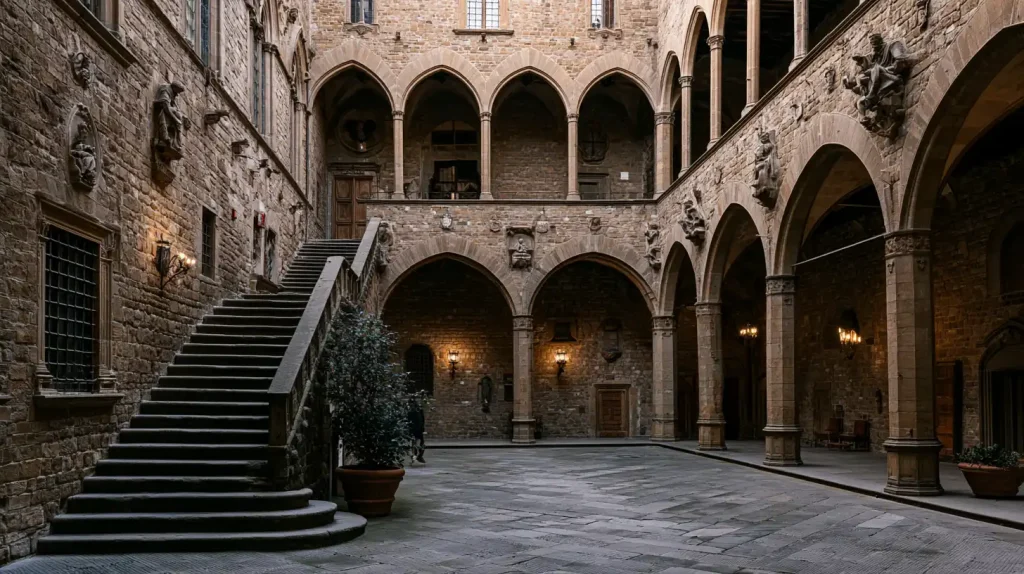
Best for: most first-time visitors, couples, anyone wanting access to the city’s best restaurant areas, visitors staying 3 or more days who want convenience without the full tourist-centre price and noise premium.
One honest note: the piazza around Santa Croce basilica itself gets crowded on summer evenings when it is used for open-air events. If you are a light sleeper, confirm that your specific room faces a courtyard rather than the piazza.
Oltrarno: The Best Neighbourhood, South of the River
The Oltrarno is south of the Arno and requires crossing a bridge to reach the major museums on the north bank. The Ponte Vecchio crossing takes four minutes on foot. This is not a meaningful inconvenience and it should not factor heavily in the decision.
Staying in the Oltrarno means staying in Florence’s most interesting neighbourhood for daily life. The artisan workshops in San Frediano. Piazza Santo Spirito with its morning market, afternoon residents, and evening bars. The streets of small restaurants where a meal costs what it costs in a city where people actually have to eat every day, rather than what it costs when the customer is in Florence for 48 hours and probably won’t come back.
Accommodation in the Oltrarno covers a wide range. At the high end, the Hotel Lungarno is owned by the Ferragamo fashion family, sits directly on the Arno riverfront with views toward the Ponte Vecchio, and is one of the best-positioned luxury hotels in the city — nightly rates vary enormously by season and room type, roughly €200-500+ for standard rooms and considerably more for suites, so check live rates for your dates rather than treating any single figure as fixed. The Palazzo Guadagni is a mid-range option in a 15th-century palazzo on Piazza Santo Spirito, with a rooftop loggia that has open views over the square and the church facade — one of the better hotel terraces in Florence. Throughout the neighbourhood, smaller guesthouses and self-catering apartments offer the widest range of budget options. Prices across the Oltrarno generally run below comparable room quality in the centro storico, though the gap narrows or widens depending on season and specific property — check current listings rather than assuming a fixed percentage.
The area is quieter at night than the tourist centre. The streets are walkable in a way that feels like a neighbourhood rather than a destination. The morning routine of coffee at a neighbourhood bar — standing at the counter, exchanging nods with people going to work — and a schiacciata from a local bakery is available to you in a way it simply is not when your hotel is 80 metres from the Duomo.
I would stay in the Oltrarno every time, personally, and have done so. The 10-minute walk to the Uffizi is not a sacrifice. It is a pleasant walk across the Ponte Vecchio or the Ponte alle Grazie with the Arno below you. Which, honestly, is a better start to a museum morning than stumbling out of a hotel onto a crowded tourist street.
Best for: repeat visitors to Florence, anyone who prioritises food and neighbourhood character, those who want the most genuinely interesting daily experience rather than the most convenient museum access.
Santa Maria Novella: Station Proximity and Value
Santa Maria Novella is the neighbourhood around the main train station (Stazione di Santa Maria Novella), on the western edge of the historic centre. It has a mixed reputation — some guides treat it as a secondary choice, others recommend it specifically for the price advantage and transport convenience.
The honest assessment: it is the least atmospheric of the recommended areas and the most practical. Hotels here typically cost noticeably less than the centro storico for comparable quality. The train station proximity is genuinely useful if you are arriving by train with luggage (which is most visitors from Rome, Venice, or other Italian cities) or if you are doing a day trip and need to catch early morning trains.
The neighbourhood is more mixed-use than the tourist zones — some less salubrious streets between the station and the historic centre, more daily-life commerce. Walking distance to the Duomo is roughly 12-15 minutes. The Basilica of Santa Maria Novella, which the neighbourhood is named for, is at the square by the station and contains significant frescoes, including Masaccio’s Trinity and Ghirlandaio’s frescoes in the Tornabuoni Chapel.
Official admission is €7.50 full price, €5 reduced (ages 11-18); residents of Florence, under-11s, and several other categories enter free. A special-events rate of €12 applies during certain evening events, which includes basilica entry for the event’s duration.
Best for: budget-conscious visitors, those arriving by train with heavy luggage who want to reach their hotel without navigating a city they have never been to, anyone who prioritises transport convenience over neighbourhood atmosphere, and visitors using Florence as a base for day trips by train to Siena, San Gimignano, Lucca, or other Tuscan destinations.
One important note on the station area specifically: the streets immediately around Santa Maria Novella station include some blocks that are less pleasant than the rest of Florence’s centre — more transient, less looked-after. The area improves quickly as you move east toward the Duomo. If you are booking here, check the specific location of your hotel on a map rather than trusting only the neighbourhood designation.
San Marco: Quiet and Budget-Friendly
The San Marco neighbourhood north of the Duomo is quiet, slightly removed from the tourist core, and has some of the most affordable central accommodation in Florence. The Galleria dell’Accademia and the church of San Marco (Fra Angelico frescoes) are both here. The neighbourhood lacks the restaurant and bar scene of Santa Croce or Oltrarno but is genuinely calm and walkable.
Best for: budget visitors, those whose itinerary centres on the Accademia and the Duomo complex (both easily walkable from San Marco), anyone who prioritises quiet over nightlife access, and older travellers who find the noise levels of Santa Croce or the tourist density of the centro storico tiring over a multi-day stay.
Practical Booking Notes
Florence accommodation books up quickly from April through October. During peak season (June-August and Easter week), desirable mid-range hotels in Oltrarno and Santa Croce can sell out several weeks in advance — six to eight weeks is a reasonable planning horizon if you have specific properties in mind. The Oltrarno has fewer total rooms than the north side — boutique hotels and small apartments rather than large hotel complexes — and the more desirable properties fill earliest.
For all Florence accommodation, read recent reviews for noise: whether your room faces the street or an internal courtyard is a significant factor in sleep quality in the centro storico, Santa Croce, and any area with active evening restaurant trade. Rooms facing internal courtyards are worth a modest premium in central areas. In summer especially, an open window for ventilation and a quiet courtyard are a meaningful quality-of-stay factor.
Parking: Florence’s historic centre is a ZTL zone (Zona a Traffico Limitato) — private vehicles without a permit cannot enter during restricted hours, enforced by camera at every entry point. The standard hours are Monday-Friday 7:30am-8pm and Saturday 7:30am-4pm, with Sundays and public holidays generally unrestricted; some sectors add extra nighttime restrictions on summer weekends. Fines for unauthorized entry run roughly €80-335 per entry, issued by mail weeks or months later — including to addresses abroad, and often with an added administrative fee if you’re driving a rental. If arriving by car, check whether your hotel can register your plate for temporary access, or use a public parking garage on the edge of the historic centre and complete the stay on foot and by public transport. Given the size of the fines and how easy the boundaries are to cross without noticing, this is worth confirming with your hotel directly rather than guessing from GPS.
Airbnb and short-term apartment rentals: Florence has a large supply of apartments, particularly in Oltrarno and Santa Croce. Italian and Florence-specific regulations on short-term rentals have tightened and continued to evolve in recent years — check the listing and the host’s registration status, since some buildings and neighbourhoods have specific restrictions and hosts are required to register and collect a tourist tax. Apartments with a small kitchen are worth the modest premium over a single hotel room for stays of four nights or more, since self-catering breakfast and one meal per day from Mercato Centrale or a neighbourhood market makes a meaningful cost difference over several days.
Florence Hidden Gems: Spots Most Visitors Miss
Attraction prices (Santa Croce and Santa Maria Novella admission) last verified August 2026 directly against the basilicas’ own official sites, santacroceopera.it and smn.it. ZTL hours and fines verified against multiple current guides; check posted signage at zone boundaries, as sector-by-sector hours can vary slightly. Hotel nightly rates are inherently variable by season and booking window — treat the ranges given here as a rough steer and check live rates for your actual travel dates.