Most Rome neighbourhood guides describe every option as excellent. They’re not lying — Rome’s central areas are all walkable and all reasonable in different ways. But the differences between staying in Trastevere and staying in Prati are real, and they’ll affect your trip differently depending on what you care about.
A note on accommodation type: Rome has hotels across every price range, but holiday apartments have become the predominant option in Testaccio and Trastevere especially. Apartments give you a kitchen (useful for breakfast and for cooling down mid-afternoon without paying café prices), more space, and often a more residential feel. Hotels are better for the Colosseum arrival and 3am check-out logistics. Both options exist in all the neighbourhoods below.
This guide covers the six neighbourhoods worth considering for most visitors: what each one actually feels like to stay in, the trade-offs, who each suits, and what the walking time is to the three major site clusters (Colosseum/Forum, Vatican, and the historic centre). Honest assessments, including the noise situation in Trastevere and the Termini advice most guides skip.
Centro Storico (Historic Centre)
The historic centre — roughly the area between the Pantheon, Piazza Navona, Campo de’ Fiori, and the Trevi Fountain — is where the maximum density of what Rome is famous for lives. The Pantheon is a five-minute walk from a hotel in this area. The Trevi Fountain is a ten-minute walk.
What it’s actually like: Tourist-heavy from 9am until midnight. The streets near the major sights are crowded at nearly all hours. Restaurants immediately adjacent to the Pantheon and Trevi are overpriced and average. Gelato near the Trevi costs twice what it costs two streets back.
The upside: You wake up in Rome in the most literal sense. The Piazza della Rotonda (the square in front of the Pantheon) at 7:30am before the tourists arrive is one of the better things about staying in this part of the city. Everything is walkable with no transport needed.
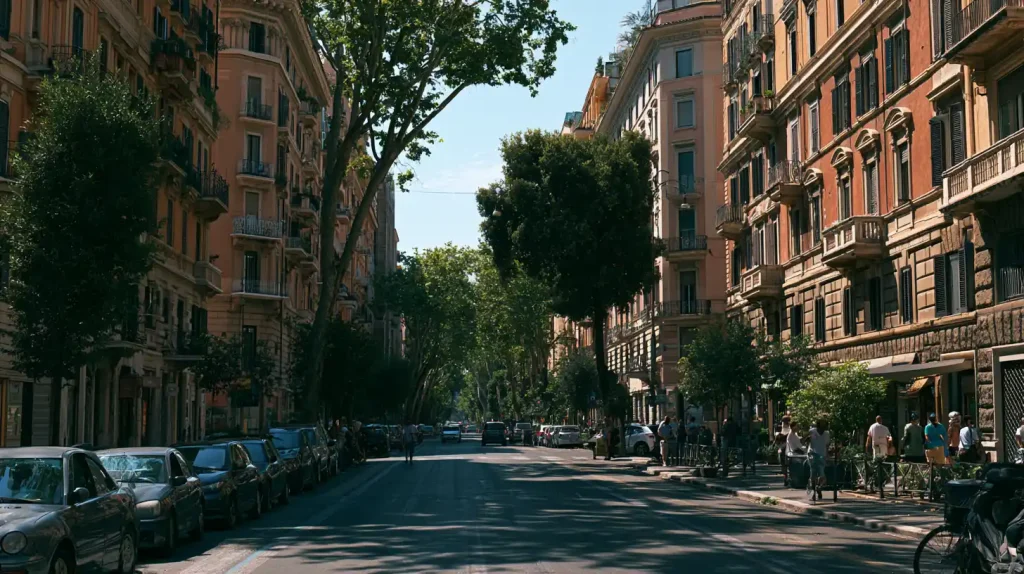
Who it suits: First-timers who want maximum convenience and don’t mind paying for it, and anyone who wants to experience the historic core at off-hours (early morning, late night) when the crowds have gone. Also good for short trips — 2 nights, a specific event — where location efficiency matters most.
Walking times: Colosseum 30-35 min on foot. Vatican 30-40 min. Borghese Gallery 30-35 min via Villa Borghese park. Trastevere 20-25 min across the river.
Noise: Moderate during the day, can be significant near bar-heavy streets (Via del Governo Vecchio, the streets north of Campo de’ Fiori) at night. Choose accommodation on a small side street rather than directly on a major piazza or a bar-lined street. The difference between a room on Via dei Coronari and a room on the Piazza Navona perimeter is significant in terms of noise after 11pm.
Price range: The most expensive area to stay in Rome, typically 20-40% more than equivalent rooms in Trastevere or Prati.
Trastevere
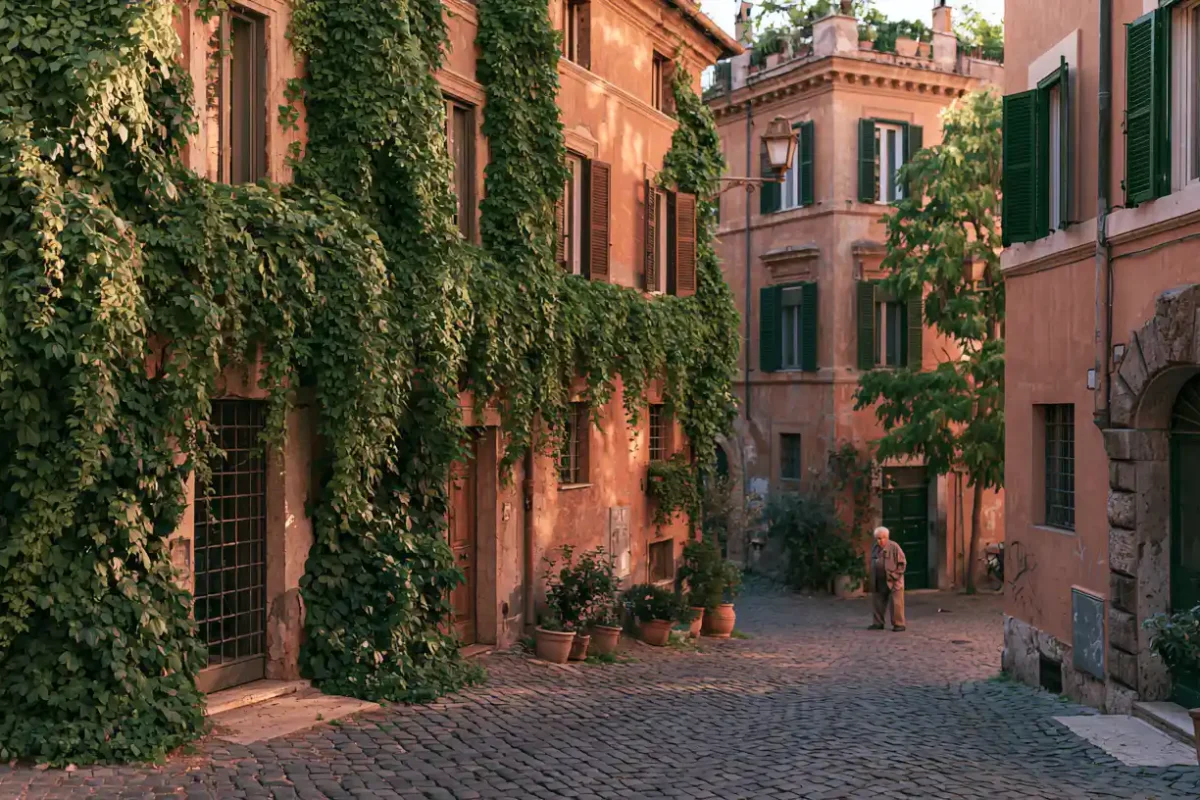
Trastevere sits across the Tiber from the historic centre. It’s a neighbourhood of medieval streets, vines on walls, and one of the best restaurant and aperitivo scenes in the city. It’s also extremely popular with both visitors and Romans from other neighbourhoods who come for dinner.
What it’s actually like: Beautiful streets with genuinely good food. Also loud at night — the main drinking streets (Via della Scala, Piazza Trilussa) stay noisy until 1am or later. If you’re a light sleeper or travelling with young children, the main Trastevere streets are a problem. Book accommodation on the quieter streets toward the Gianicolo side of the neighbourhood for lower noise levels.
The upside: The best restaurant density of any neighbourhood on this list. Dinner options from budget trattorias to excellent mid-range spots all within walking distance. The neighbourhood feels more local than the historic centre despite its tourist popularity.
Who it suits: Food-focused travellers, couples who want good evening atmosphere, anyone who sleeps well regardless of street noise.
Walking times: Colosseum 35-45 min on foot or train from Trastevere station to Termini then Metro. Vatican 25-35 min walk across the river, or short bus ride (bus 23 or 280). Historic centre 15-20 min walk across Ponte Sisto or Ponte Garibaldi.
Price range: Mid-range, generally 15-30% lower than comparable rooms in Centro Storico. Very good value given the quality of the dining and atmosphere in the neighbourhood.
Prati
Prati is the neighbourhood immediately north of the Vatican, built in the late 19th and early 20th centuries as a planned residential area. Wide streets, good shops, excellent delis and restaurants, a calm atmosphere. It’s where Romans who work near the Vatican live.
What it’s actually like: Genuinely quiet in the evenings. You can eat well here at reasonable prices — the restaurants on the side streets off Via Cola di Rienzo (the main commercial street) are mostly local and good. The neighbourhood has none of the chaos of the tourist areas and considerably lower noise levels at night.
The upside: Calm, clean, well-connected (Metro Line A at Lepanto or Ottaviano stations), and genuinely pleasant as a place to return to after a long day on your feet. Via Cola di Rienzo has supermarkets, pharmacies, and a range of restaurants operating primarily for local residents. The neighbourhood has no tourist trap restaurants to avoid — almost everything is aimed at people who live here.
Who it suits: Families travelling with children, older travellers who want calm evenings and a quiet street, anyone who wants a residential Rome experience rather than the tourist version. Also practical for anyone whose trip centres heavily on the Vatican — you can walk there in 15 minutes for an early morning slot.
Walking times: Vatican 10-15 min walk. Historic centre 30-40 min walk or short Metro/bus. Colosseum 45 min on foot or direct Metro Line A to B at Termini.
Price range: Mid-range. Generally competitive with or slightly cheaper than Trastevere.
Monti
Monti sits between the Colosseum and the historic centre — roughly the area bounded by Via Cavour to the west and the Colosseum to the east. It’s a neighbourhood of small streets, artisan shops, and wine bars that was, until the 2010s, quietly local and is now fairly well-known but still retains much of its character.
What it’s actually like: Easier to walk than Trastevere (the streets are slightly wider and less confusing), quieter at night, and with excellent food options — good wine bars, genuine trattorias, and a morning market. The proximity to the Colosseum is its main practical advantage.
The upside: Best location for Day 1 of the standard itinerary (Colosseum, Forum, Palatine Hill). Quiet enough to sleep well — the streets are not a nightlife destination in the way Trastevere is. The wine bars and small restaurants on Via del Boschetto and Via Panisperna are low-key and local. A neighbourhood that still feels like it belongs to the people who live there.
Who it suits: History-focused travellers who want the Colosseum area as their base. Anyone who appreciates a quieter neighbourhood with good food options and shorter morning walks to the ancient sites.
Walking times: Colosseum 8-15 min walk. Borghese Gallery 35 min walk or taxi. Vatican 40 min walk or Metro. Historic centre 20-25 min walk.
Price range: Mid-range. Not quite as expensive as Centro Storico.
suggested topic — Rome Hidden Gems: What Most Visitors Miss
Testaccio
Testaccio is the neighbourhood built for the slaughterhouse workers in the early 20th century, now the city’s most food-serious residential area. It’s slightly south of the main tourist cluster but still central.
What it’s actually like: Very local. Quieter than Trastevere and Monti. The market, the trattorias, the food shops — all operating for a neighbourhood clientele rather than tourists. A significant walk (or short Metro ride) to most major sites.
The upside: If eating well in a genuine local neighbourhood is a priority, nowhere else in central Rome quite matches Testaccio. Felice a Testaccio, the Mercato Testaccio, Volpetti deli — all within walking distance. The accommodation options are fewer than in Trastevere or Prati, but holiday apartments are relatively available at good prices.
Who it suits: Food-focused repeat visitors, anyone who has done the standard sightseeing circuit already and wants a different Rome experience, travellers who prioritise neighbourhood life over easy access to museums.
Walking times: Colosseum 30-40 min walk. Forum 30-40 min. Vatican 40 min plus. Historic centre 30-40 min.
Price range: Generally lower than Trastevere and the centre. Good value.
What to Avoid
One honest note on Termini (the main train station area): the streets immediately around Termini are serviceable but not pleasant. The area around Piazza Vittorio Emanuele and Piazza Indipendenza has a higher density of budget accommodation than anywhere else in the centre, and for good reason — it’s not a neighbourhood anyone is choosing for its atmosphere. There’s higher foot traffic from people who aren’t staying the night, the restaurant quality near Termini is generally poor (many exist solely for station arrivals who don’t know better), and the general street feel is transactional rather than local.
If your budget forces you toward cheaper accommodation near Termini, staying a 10-15 minute walk north (toward Monti) or west (toward the Quirinale area) materially improves the experience without dramatically increasing prices. The Esquilino market area near Termini is worth a morning visit but not a multi-night base.
How to Actually Choose
If this is your first trip to Rome and you have a standard three-day itinerary: Trastevere or Monti. Trastevere for food and evening atmosphere; Monti for quieter sleep and morning Colosseum access. Both are good.
If you’re travelling with family and need calm evenings and practical amenities: Prati. The neighbourhood works for everyone and has no meaningful downside beyond the Vatican-to-food-neighbourhood distance.
If eating well in a local context is your primary priority: Testaccio. Accept the longer walks to the northern sites.
If you want maximum proximity to the Pantheon, Piazza Navona, and the historic centre icons and you’re willing to pay for it: Centro Storico. Just choose a side street for your accommodation.
If budget is the primary constraint: Any of the above except Centro Storico. Testaccio and Prati offer the best price-to-quality neighbourhood ratio. Monti is also relatively affordable for its central location compared to the historic centre.
For couples on a honeymoon or anniversary trip wanting an atmospheric neighbourhood: Trastevere on a quiet street, or the Aventine Hill area south of Testaccio (limited accommodation but very calm and with good river views).
FAQ
Is it better to stay near the Colosseum or near the Vatican?
For a three-day itinerary, neither gives you an ideal position — the Colosseum and Vatican are at roughly opposite ends of the city. Trastevere, Prati, or Monti each put you in a central position from which both are reasonably reachable. Choose based on the neighbourhood character rather than proximity to a single site.
How important is it to be near a Metro station?
Less important than people expect. Rome’s Metro has only two main lines (A and B, intersecting at Termini) and misses most of what you want to see — the Pantheon, Piazza Navona, Trastevere, Campo de’ Fiori, and Testaccio are all not served by Metro. Walking is the primary mode of transport for anything in the historic centre.
Being near a Metro station is genuinely useful for two things: the airport transfer (Leonardo Express from Termini) and accessing the Vatican (Line A, Ottaviano or Lepanto) or Colosseum (Line B, Colosseo). For everything else in the city, you’re walking or taking a bus. Don’t weight Metro proximity highly when choosing accommodation unless you have mobility reasons to do so.
Are any of these neighbourhoods unsafe?
All six areas above are safe for tourists by any reasonable standard. Pickpocketing is the main concern in tourist-heavy areas (Trevi Fountain, Vatican, Colosseum), particularly on crowded public transport — bus 40 and bus 64 (Vatican to Termini) are notorious for this. The risk is manageable with normal precautions: money belt or inside pocket for cards and cash, bags in front of you, and awareness of anyone who creates a sudden distraction or crowd. None of the residential neighbourhoods listed above have safety issues worth factoring into accommodation decisions. The area to be more careful is the streets immediately around Termini, not the neighbourhoods recommended above.