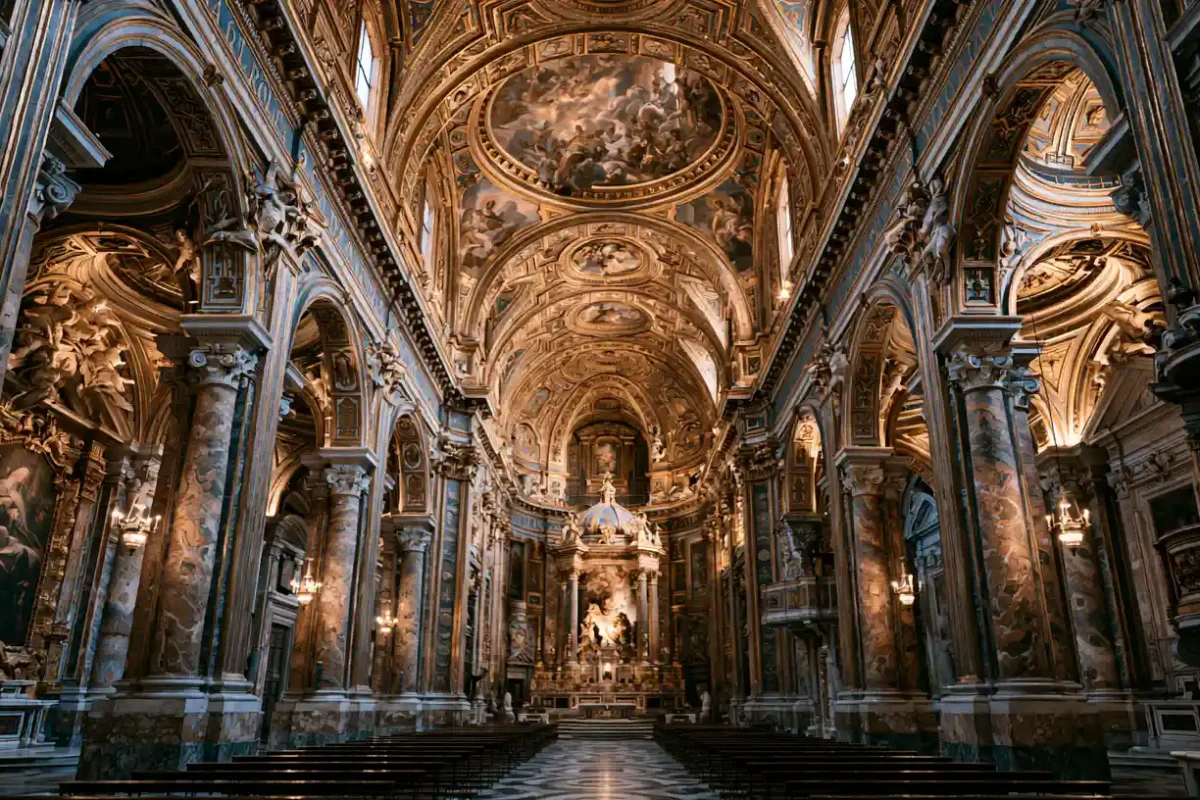
The Pantheon and the Colosseum are extraordinary. They deserve their queues. But Rome is also a city where a Bernini sculpture of comparable quality to the Borghese’s most famous pieces sits in a small church near Termini that most visitors walk past, where an entire underground palace of Nero is still being excavated, and where a doorway keyhole on the Aventine Hill frames St. Peter’s dome perfectly, and almost no one knows about it.
None of these require secret knowledge. They’re in guidebooks. They’re on maps. They just don’t make it onto most three-day itineraries because there’s already too much to fit in, and because none of them have the marketing infrastructure (official ticket websites, sponsored tour content, hotel concierge recommendations) that makes certain places easy to choose without research.
This guide covers eight of them — the ones worth building time for, even at the cost of something more famous. In most cases, replacing one overcrowded site with one of these gives you a better afternoon.
The Aventine Keyhole
The most literally described hidden gem in Rome: a keyhole in a door on the Aventine Hill, at the Priory of the Knights of Malta (Piazza dei Cavalieri di Malta 3), through which St. Peter’s dome is perfectly framed at the end of a cypress-lined garden alley.
It sounds like a tourist gimmick. It is not. The alignment is real — the garden alley, the trees trimmed to form a tunnel, and St. Peter’s dome in the far distance are designed to do exactly this — and the view is genuinely striking. The effect of an enormous dome appearing miniaturised and perfectly composed through a small brass keyhole is the kind of image that stays in memory long after the Trevi Fountain has blurred into a crowd photograph.
The approach matters. The Aventine Hill is a quiet residential area with no other tourist infrastructure. You take a taxi or bus to Piazza Albania, then walk up the hill through increasingly calm streets. The walk itself is part of the experience — leaving the noise of the city below.
There is usually a queue of 5-20 people at the keyhole. It moves quickly — each person gets ten seconds, which is enough. Walk here in the early morning (8am-10am) or late afternoon (4pm-6pm) when light falls on the dome from the side rather than from behind it. Admission is free. The neighbourhood around the Priory — the Orange Garden (Giardino degli Aranci) is a five-minute walk — has its own views over the Tiber bend and across to the Vatican.
The Ecstasy of Saint Teresa (Santa Maria della Vittoria)
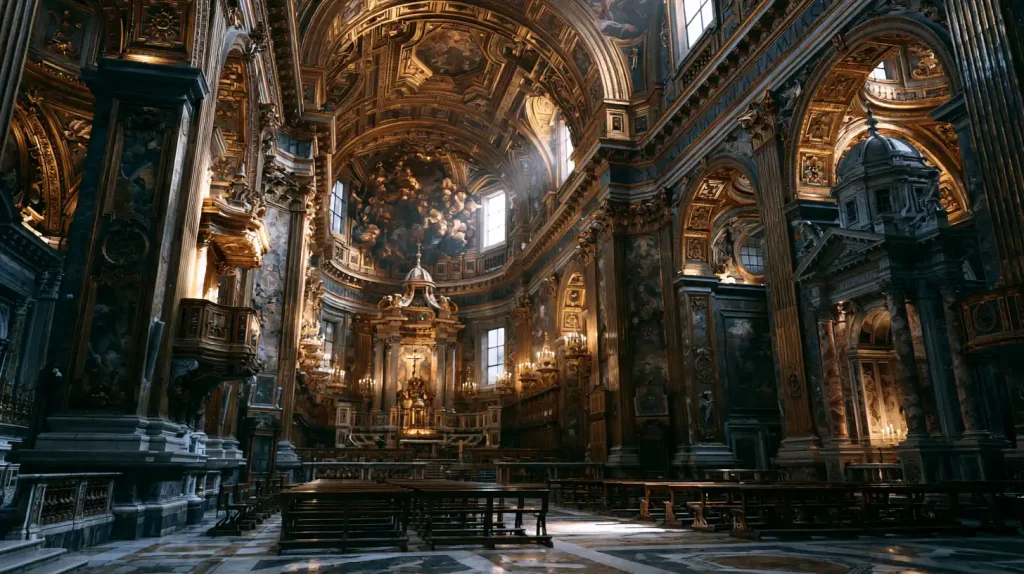
Bernini’s Ecstasy of Saint Teresa is one of the great sculptures of the Baroque period. It depicts the Spanish mystic Teresa of Ávila at the moment an angel pierced her heart with a golden arrow — a moment she described in her autobiography as simultaneously painful and divine. Bernini renders the moment in marble: the angel, Teresa’s face turned away in what reads as either agony or rapture (Bernini leaves this deliberately ambiguous), the robes arranged in deep folds that seem to move. The composition also includes the Cornaro family, who commissioned the chapel, watching from boxes on either side like theatre audience members — Bernini’s comment on the relationship between religious experience and spectacle.
The church (Via Venti Settembre 17, Santa Maria della Vittoria) is a 5-minute walk from Piazza Repubblica and a 10-minute walk from Termini. It is rarely crowded — it sits on a busy road between the station area and the historic centre, easy to walk past without noticing. Entry is free. The sculpture is in the Cornaro Chapel on the left side of the church as you enter. Allow 20-30 minutes, enough to look at the sculpture from different angles and from the narrow space of the chapel itself.
The lighting is theatrical in the correct Baroque sense: a hidden window above the composition sends natural light down onto the figures from above, creating the effect of divine illumination that Bernini specified. In the afternoon, the light is at its strongest. If you can only visit in the morning, the effect is reduced but the sculpture is still unmissable.
The Capuchin Crypt (Cimitero dei Frati Cappuccini)
Beneath the Church of the Immaculate Conception on Via Veneto (Via Veneto 27) is a series of small chapels decorated entirely with the bones of approximately 4,000 Franciscan monks. This is not as strange as it sounds in the context of medieval and Baroque Catholic devotional practice — the display was intended as a memento mori, a reminder of mortality. But it is also extremely strange.
Five rooms: the Crypt of Skulls, the Crypt of Pelvises, the Crypt of Leg Bones and Thigh Bones, the Crypt of the Three Skeletons. The bones are arranged in patterns — flowers, clocks, stars — with the more intact mummified remains of some monks still wearing their habits. A sign reads: “What you are now, we once were. What we are now, you will be.”
This is not for everyone. The experience is unsettling, deliberately so — that was the point when it was created. It is worth seeing for anyone interested in the history of death in Christian practice, Baroque devotional art, or simply unusual encounters. The attached museum gives context on Franciscan history and the history of similar bone chapels across Catholic Europe.
Standard self-guided entry to the crypt and museum costs €10 for adults, with a reduced rate of €6.50 for under-18s, students up to 25, over-65s, and religious groups; visitors with disabilities enter free. The Roma Pass does not cover this site. Open daily, 10am-7pm, last admission 6:30pm.
The church is on Via Veneto, which is otherwise a wide, expensive boulevard of mid-century luxury hotels and cafés that feels very different from any other part of Rome’s centre. The Crypt is at basement level; the entrance is through a small door to the right of the church facade — not through the main church doors.
Palazzo Doria Pamphilj
The Palazzo Doria Pamphilj (Via del Corso 305, near the Pantheon) is one of the largest privately-owned palaces in Rome and houses a collection of 650+ works including Velázquez’s portrait of Pope Innocent X — one of the finest portraits in European art — alongside Caravaggios, Titians, Raphaels, and Bruegel.
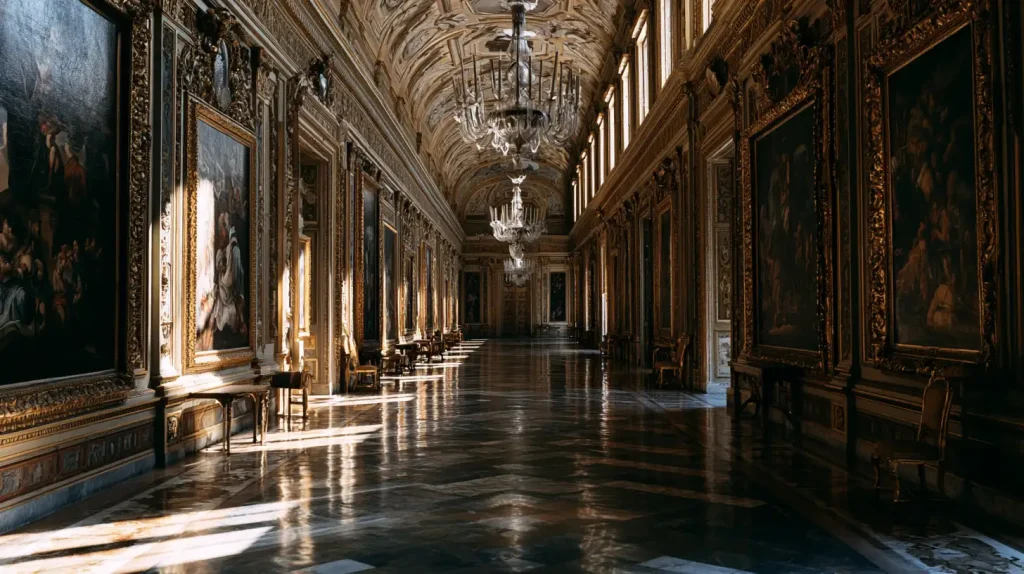
What makes it unusual is that it’s still owned and lived in by the Doria Pamphilj family. The audio guide is narrated by a current family member. The collection is hung in the old-fashioned way — salon-style, frames touching, works covering every inch of wall — rather than the modern white-wall gallery approach. The experience is closer to walking through a very large house than through a museum.
Visitors who come here specifically for the Velázquez portrait of Innocent X — a painting that Francis Bacon called the greatest portrait ever made and made the subject of a series of 45 distorted variations — often emerge having also seen things they hadn’t expected to. The Caravaggio Rest on the Flight to Egypt and the Penitent Mary Magdalene, hanging side by side in the same room, are two of the less-visited Caravaggios in Rome and two of the better ones. The Flemish and Dutch rooms have excellent Bruegel and Memling works that most visitors to Rome never see.
The palace itself is worth walking through independently of the collection — the Hall of Mirrors, the private apartments, the layout of rooms accumulated over three centuries of one family’s ownership.
The official single ticket, which includes a multilingual audio guide, is €16 at the ticket office or €17 booked online in advance. Children under 12 enter free (a small €1-2 booking fee applies online). Third-party resellers charge considerably more — up to €29-30 — for the same entry with faster booking or add-ons, so book direct through the palace’s own site if you’re comfortable planning ahead. Closed Wednesdays.
The Domus Aurea (Nero’s Golden House)
Between 64 and 68 AD, Emperor Nero built a vast pleasure palace across the slope of the Oppian Hill, spanning an estimated 80 hectares and including a 35-metre bronze statue of himself. After Nero’s death the palace was stripped, buried, and built over — the Colosseum was built on the site of its ornamental lake.
What survives underground is about 150 of the original rooms, still being excavated and studied. The ceiling paintings — discovered by Renaissance artists (including Raphael’s workshop) who lowered themselves through holes in the ceiling to see them — gave the name grottesco to an entire decorative tradition. The painted vaults, rediscovered and then reburied for centuries, are extraordinary: architectural trompe l’oeil, mythological scenes, painted plaster surviving intact from the 1st century AD.
The Domus Aurea is open for guided tours only — no independent visiting is possible — typically Friday to Sunday, with the site closed the rest of the week for ongoing excavation work. Tours are timed, archaeologist-led, and involve wearing a hard hat. This is the correct way to experience an active archaeological site.
The standard official guided tour is €18 for adults without the VR reconstruction, or €26 with it (the VR headset shows the palace as it looked in Nero’s time and is worth the upgrade). EU citizens aged 18-25 pay €2; under-18s go free. A small online reservation fee applies. Third-party operators sell more elaborate versions of the same tour — longer, private, or bundled with other sites — for considerably more, sometimes €70-100+, so check what you’re actually getting before paying a premium. The Roma Pass is not accepted here.
Worth booking well in advance for anyone interested in Roman archaeology, the origins of Renaissance decorative art, or simply Nero — one of the more complex and fascinating figures of the early imperial period, whose reputation as a monster has been partly revised by modern historians examining the source bias of his contemporaries.
Galleria Sciarra
On Via Marco Minghetti, between Via del Corso and Piazza Venezia, a glass-roofed Art Nouveau courtyard gallery built in the 1880s for the Sciarra family. The interior walls are covered in frescoes celebrating virtues of womanhood (industriousness, modesty, strength) in a style that mixes allegorical painting with period fashion illustration. The ceiling is vaulted glass.
It’s now offices. You walk in off the street during business hours, look up at the glass ceiling and frescoed walls, and walk out. Takes five minutes. Almost no tourists — the office workers are too used to it to notice. There is no sign that clearly marks it as accessible; you push open a door that looks like it leads to private offices and find yourself in a 19th-century Art Nouveau marvel.
The fresco subjects are unusual in the context of the era: women at work, women in different professional roles, women in historical and mythological contexts. The wealthy patron who commissioned it — apparently making a statement about women’s capabilities that was out of step with the 1880s — remains historically somewhat unclear. The building itself is the statement. Entry is free.
The Orange Garden Viewpoint (Giardino degli Aranci)
A small garden on the Aventine Hill (near the keyhole) with an unrestricted view over the city toward St. Peter’s dome. Locals come here to sit in the afternoon and evening. Orange trees, stone benches, the sound of the city below.
Not a secret — it appears in most Rome guides — but not crowded in the way the Janiculum Hill viewpoint often is. The garden’s combination of shade from the orange trees, stone benches, and the view over the Tiber bend toward the Vatican makes it the best free outdoor viewpoint in central Rome for a quiet thirty minutes.
Go in the late afternoon (4pm-6pm) when the sun is behind you and the light falls on the city below. Combine it with the keyhole visit — they are five minutes apart on foot. Together they make a good Aventine Hill afternoon: keyhole, Orange Garden, then walk down the hill toward Testaccio for dinner. Entry is free.
FAQ
Are these actually secret or do all Rome guides include them? The Aventine keyhole, the Ecstasy of Teresa, and the Capuchin Crypt appear in most thorough Rome guides. The Domus Aurea is less commonly recommended because it requires advance booking and is only open a few days a week. Galleria Sciarra appears in almost nothing. None of them feel crowded even when well-known because they’ve not become logistically easy — there are no pre-booked skip-the-line tours, no café attached, no souvenir shop, in most cases.
How do I sequence these with a standard Rome itinerary? The Aventine keyhole and Orange Garden pair well with a Testaccio morning — walk up the hill after the market, then descend to Testaccio for lunch. The Ecstasy of Teresa and the Capuchin Crypt are both near Termini/Piazza Repubblica and can be combined in a single afternoon (90 minutes total for both). Palazzo Doria Pamphilj is five minutes from the Pantheon and works as an addition to a historic centre afternoon — visit the palace, then the Pantheon, then Campo de’ Fiori. The Domus Aurea and Galleria Sciarra require separate trips but are both short visits that reward planning.
Do any of these cost money? The Aventine keyhole, Orange Garden, Ecstasy of Teresa, and Galleria Sciarra are free. The Capuchin Crypt is €10 for adults (€6.50 reduced). Palazzo Doria Pamphilj is €16-17 depending on booking method. The Domus Aurea guided tour is €18 without VR or €26 with VR. None of the paid sites here accept the Roma Pass.
Is the Capuchin Crypt appropriate for children? Depends on the child. Children who are curious about bones and history often find it fascinating. The site has a small museum with context that helps. Younger children who might be frightened by the display should probably skip it.
Prices last verified August 2026 directly against official ticketing sites for the Capuchin Crypt, Palazzo Doria Pamphilj, and the Domus Aurea. All three are current standard adult rates; discounted and family rates are noted where they apply. As with any Rome attraction, check the official site before your visit in case of seasonal changes.
