What Cicchetti Actually Are
Cicchetti (pronounced cheek-KET-tee) are Venice’s answer to tapas — small, inexpensive bites served at the counter of bacari (singular: bacaro), the city’s traditional neighbourhood wine bars. They are not a recent food trend or a tourist invention — cicchetti culture predates modern tourism by several centuries. The cicchetti-and-wine culture of Venice is centuries old and still part of daily life for many Venetians, particularly the mid-morning and late-afternoon ritual of stopping at a bacaro for a glass and a bite between tasks.
The standard price range is €1.50 to €3 per piece, though some items — particularly those involving seafood or more elaborate preparation — run slightly higher [VERIFY current prices at individual bars]. A full meal equivalent of four to six cicchetti plus two glasses of wine costs roughly €15-20, making it one of the most affordable and satisfying ways to eat well in Venice. This compares favourably to a sit-down restaurant where a first and second course with wine can easily cost €50 per person — more in tourist-facing establishments near San Marco.
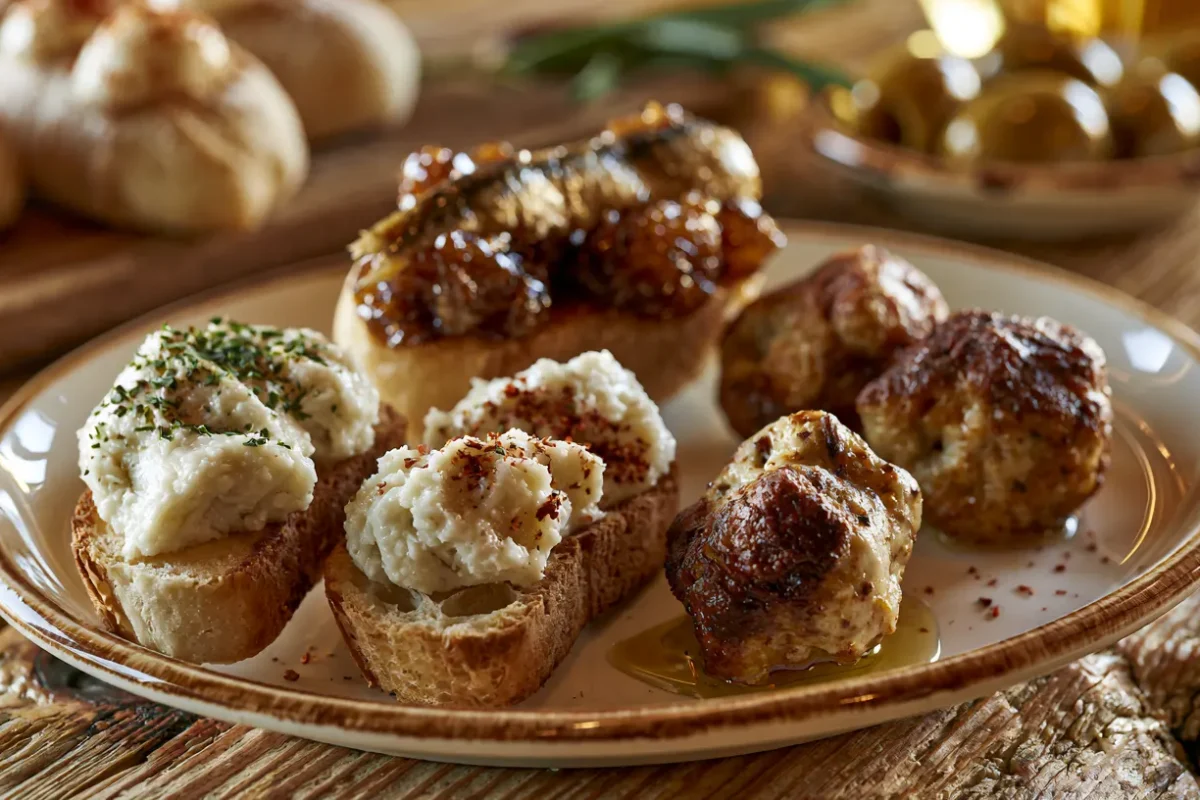
Common cicchetti include:
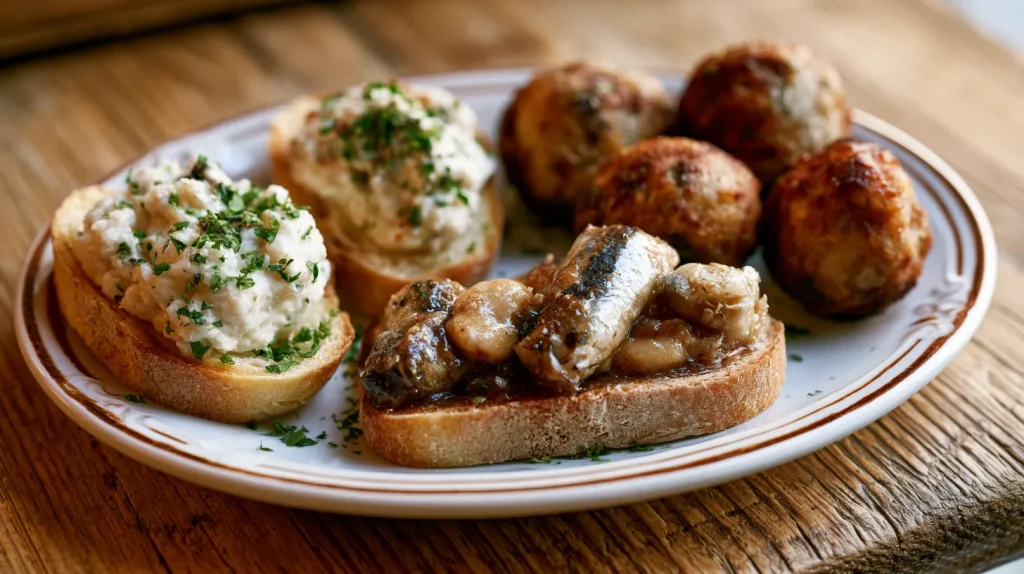
- Baccalà mantecato: Creamy whipped salt cod on grilled bread — the most iconic Venetian cicchetto. The dish involves salt cod that has been desalted and then whipped with olive oil into a smooth, pale paste. The texture is unlike anything from fresh fish and the flavour is mild, savoury, and rich without being heavy
- Sarde in saor: Vinegar-marinated sardines with onions and raisins, a sweet-sour preparation with medieval roots
- Polpette: Fried meatballs, either meat or fish (sometimes both on the same counter)
- Schie e polenta: Tiny grey lagoon shrimp atop a small square of grilled polenta
- Crostini: Grilled bread topped with various combinations — tuna, crab, artichoke, egg and anchovy
- Mozzarella in carrozza: Fried mozzarella and anchovy sandwich
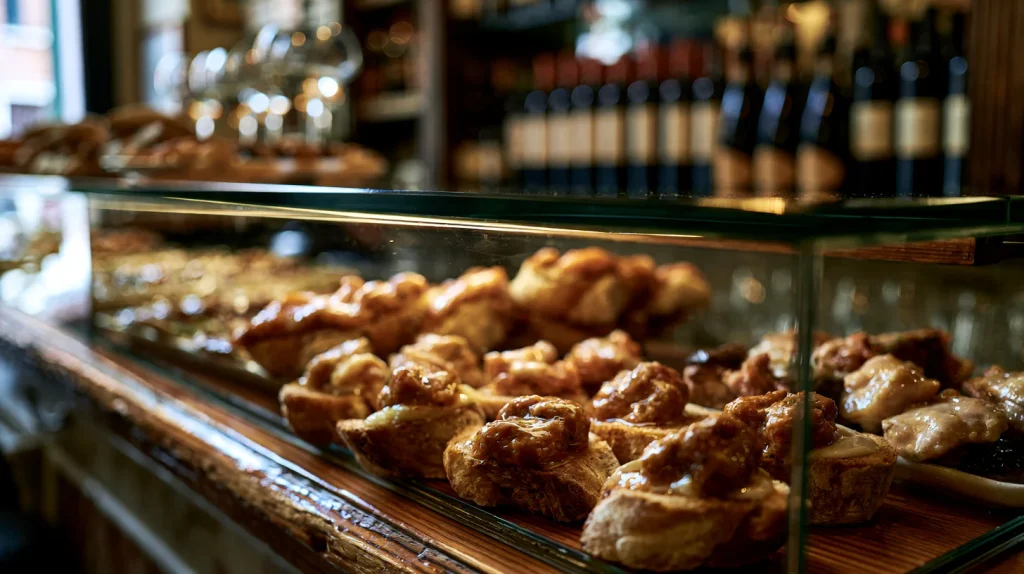
Bacari typically display their cicchetti in a glass case on the counter or on large platters. The selection changes through the day as items sell out and are replaced. Coming at 6pm means a full counter; coming at 9pm means the last of what’s left.
Venice food
How the Ritual Works
Walking into a bacaro for the first time can feel disorienting. There is usually no host, no seating allocation, no menu in any conventional sense. Here is the actual process:
Walk to the counter. The cicchetti are displayed at or behind the counter, usually on large platters or in a glass case. Look at what’s there and point at what you want — the bartender will place them on a small plate or a piece of paper. You may need to speak up in a busy bar; simply saying “questi, per favore” (these, please) while pointing works. In the most traditional bacari there is no transaction at the counter: you eat and drink and settle up at the end, operating on trust. This is less common now than it was but still exists in some neighbourhood places.
Order your drink at the same time. The classic is an ombra — a small glass (roughly 100ml) of house wine, typically red or white, for €1-3. Spritz is equally traditional: in Venice this means Select or Campari with prosecco and a splash of water, rather than the Aperol version that has become globally dominant. Both are correct. Prosecco by the glass is always available. Some bacari now carry craft beers [VERIFY at individual bars].
Eat standing up. Most bacari have limited or no seating. The counter, the windowsill, the nearest bollard on the canal — these are all acceptable eating positions. Sitting is for restaurants; standing is for bacari. This is not rudeness but the tradition. Venetians do not linger for hours; they have a few pieces, a glass or two, and move on — which is why the next suggestion matters. If you occupy a stool or a bit of counter space, eat and drink at a reasonable pace during busy hours and move on when you are done rather than camping for the evening. The bar fills up quickly in the 6-8pm window.
Do a giro d’ombre (a round of shadows). The classic approach is to visit three or four bacari in sequence, having one or two cicchetti and one drink at each, rather than eating your fill at a single bar. This is the giro d’ombre — the “round of shadows” — named either for the shadow-chasing of wine casks in St Mark’s Square in earlier centuries or simply for the small wine glasses. Moving between bars and neighbourhoods gives you a spread of styles and specialities rather than one bar’s entire menu. Three to four stops over two to three hours — with a 20-minute walk between each — is a comfortable evening without becoming either full or drunk. The walking between bars is part of the experience: Venice’s nighttime calli, lit by scattered lamps and largely empty of the daytime tourist crowds, are some of the most atmospheric streets in Europe.
The History Behind the Food
Cicchetti are not a simplified version of Venetian cuisine — they are in many cases the original form. Sarde in saor (sweet-sour sardines) was documented in Venetian cookbooks in the 14th century and was standard provisions on Venetian Republic galleys because the vinegar-and-onion preparation preserved the fish for long voyages. Baccalà (salt cod) reached Venice through the Republic’s Nordic trade networks and became so embedded in Venetian cooking that it appears in countless variations. Polenta arrived from the New World in the 16th century and was absorbed into Venetian food within a generation.
Eating cicchetti in Venice is eating the distillation of what the city traded, preserved, and adapted over a thousand years as a maritime commercial empire. The bar snack and the trade history are the same thing.
The Rialto Area: Where to Start
The neighbourhood around the Rialto market — specifically the calli (alleyways) between the market and Campo San Polo in the San Polo sestiere — is the historical centre of bacaro life in Venice. The market has operated here since the 11th century, and the surrounding bars evolved to serve the market workers, merchants, and traders who kept the commercial heart of the Republic running.
Cantina Do Mori (Calle Do Mori, San Polo) claims to be Venice’s oldest bacaro, established in 1462. It is dark and narrow, with copper pots hanging from the ceiling and strictly standing room only. Order the “francobolli” — tiny stamp-sized sandwiches with various fillings. The atmosphere alone is worth the visit, though it is popular enough that it can feel crowded by 6:30pm.
Al Mercà (Campo Bella Vienna/Erbaria, San Polo) is a tiny counter bar just off the Rialto market with some of the lowest cicchetti prices in Venice. Primarily used by locals and market workers; the outdoor standing area along the canal is pleasant.
Cantina Do Spade (Calle Do Spade, San Polo) specialises in fried items — polpette in several varieties, fried seafood — and is slightly larger than Do Mori with a bit more room to move.
Osteria Bancogiro (Campo San Giacometo) sits along the Grand Canal with outdoor seating and a full crostini and wine selection. One of the more tourist-accessible bacari in the area, with canal views and slightly higher prices to match. It works well as the second stop on a Rialto-area crawl when you want to sit for a moment between standing-room-only bars.
Dorsoduro: The Local Alternative
The Dorsoduro neighbourhood, particularly along the Fondamenta delle Zattere and around Campo Santa Margherita, has a strong bacaro culture that feels less tourist-oriented than the Rialto area.
Cantine del Vino già Schiavi (Fondamenta Nani, Dorsoduro) is set along a quiet canal and has an authentically local feel. The counter offers a rotating selection of cicchetti; their baccalà-stuffed courgette flowers (when in season), tuna polpette, and crab claw preparations are frequently cited as the best in the city. Wine selection is serious.
Osteria Al Squero (Fondamenta Nani, Dorsoduro) is directly opposite a working gondola boatyard (squero) and often catches overflow from Schiavi next door. Worth a stop for the view of the boatyard across the canal — seeing the gondola construction process behind the gates gives a different angle on the city — as much as for the food and wine selection.
Cannaregio: The Neighbourhood Bacaro
Alla Vedova (Calle del Pistor, Cannaregio) is a proper trattoria that also functions as a bacaro at its front counter. Their polpette fritte (fried meatballs) are consistently mentioned as among the best in Venice — small, crisp outside, soft and savoury inside, made fresh rather than sitting under a heat lamp. The bar fills up early in the evening; arrive by 6pm for the best selection. If you want to eat a sit-down meal rather than just standing at the counter, reservations are recommended.
Vino Vero (Fondamenta della Misericordia, Cannaregio) is a natural wine bar with a serious selection of small-producer wines by the glass and excellent crostini. More wine-focused than the traditional bacaro style, and slightly more expensive, but the wine quality is noticeably higher. The Fondamenta della Misericordia canal-side is worth the walk from the tourist center — a long stretch of canal with several bars and restaurants that fills up with Venetians on summer evenings and has a distinctly local atmosphere that the Rialto area, for all its historic credentials, sometimes lacks.
Practical Notes
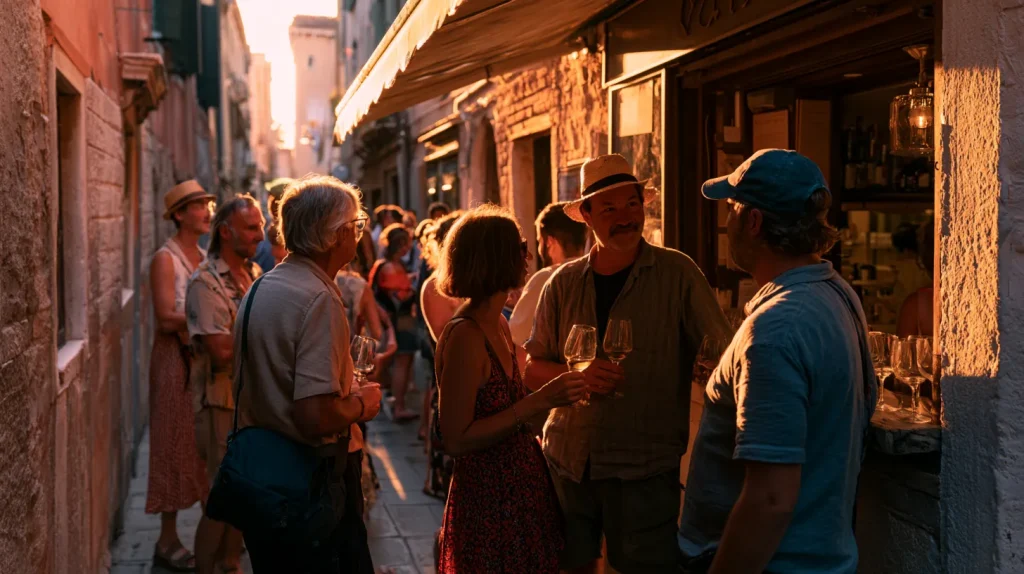
Timing: Bacari are busiest at lunch (12-2pm) and aperitivo hour (6-8pm). Outside these windows, many are either closed or have limited cicchetti selections. Plan your giro d’ombre to start around 11:30am if doing lunch, or 5:30-6pm if doing the evening version. Starting slightly before the peak means you arrive at each bar just as the cicchetti are freshest and the crowds are building rather than already at maximum. By 7:30pm on a summer evening, the most popular bacari near the Rialto can feel uncomfortably crowded.
Cash: Many traditional bacari still operate on cash only [VERIFY current payment options at individual bars]. Bring small bills — €5 and €10 notes are ideal. The €50 note you get from an ATM will often be refused at a small bar where cicchetti cost €2 each and the cash float is limited. Breaking a large note at a supermarket or post office before your evening makes the whole process smoother.
Spritz variations: Venice’s signature spritz uses Select (a local bitter liqueur) rather than Aperol, giving it a more pronounced bitterness and a distinctly different character from the sweeter Aperol version that has spread globally. Both are available at most bacari. Trying the Select version in Venice specifically is worth doing once — it is the local version and pairs better with the salty-savoury cicchetti than the sweeter Aperol.
Finding bacari: The best bacari are rarely on main tourist streets. Look in the narrow calli running between campos, and follow Venetians who are clearly heading somewhere specific — they tend to move with purpose toward good food. If a bar has a handwritten chalkboard outside and wine bottles stacked to the ceiling inside, you are in the right place. If it has a laminated menu with photographs and English descriptions at eye level, it is catering primarily to tourists and the prices and quality will reflect this.
What to avoid: Tourist-facing “cicchetti bars” near St Mark’s Square and the main tourist streets near the Rialto Bridge (as opposed to behind the market) often charge two to three times the going rate for the same items. The price difference between a tourist-facing bar and a neighbourhood bacaro two streets back can be significant — sometimes €4-5 for a piece that should cost €1.50.
Language: Ordering cicchetti requires almost no Italian. Pointing works. If you want to try, “uno di quello, per favore” (one of that, please) and “un ombra rosso/bianco” (a small red/white wine) will get you everything you need. Venetians are generally patient with visitors at the counter and appreciate any attempt at politeness.
Vegetarians: Traditional cicchetti are meat and seafood-heavy. Most bacari have some cheese and vegetable-based options — artichoke crostini, egg and vegetable combinations — but the selection is narrower than for meat-eaters. Vino Vero in Cannaregio tends to have more vegetarian-friendly options than the older-style bacari.
suggested topic — Venetian Seafood & Spritz: What It Is and Where to Try It
suggested topic — 3 Days in Venice: First-Timer Itinerary & Top Highlights