Before You Arrive: What to Book in Advance
The single biggest mistake first-time Venice visitors make is arriving without pre-booked tickets for the major sites. This is not optional in peak season (April through October). Queue times of 1-2 hours are standard for St. Mark’s Basilica and the Doge’s Palace; some time slots genuinely sell out weeks in advance.
The booking system requires planning in a specific order. Start with accommodation — good hotels in Cannaregio, Dorsoduro, and San Polo sell out months ahead in summer. Once you have your dates fixed, book the Basilica and Doge’s Palace immediately. The Accademia can usually be booked 1-2 weeks out. Restaurant reservations for the better places (Antiche Carampane, for example) should be made at least two to three weeks ahead in peak season.
Travellers who arrive without any of this sorted typically spend their first morning standing in queues, lose half a day, and feel pressured to rush everything that follows. The itinerary below only works if the time slots are in place before departure.
Book these before leaving home:
- St. Mark’s Basilica: Mandatory online reservation since 2025. Morning time slot as early as possible on Day 1.
- Doge’s Palace: Pre-booking saves up to 2 hours in queue. Book for Day 1 afternoon.
- Gallerie dell’Accademia: Book online for Day 2 morning [VERIFY at gallerieaccademia.it].
- Islands day trip (Day 3): No booking needed — just your vaporetto pass.
Book your hotel as early as possible, particularly if visiting in June through September when Venice accommodation fills months in advance. The neighbourhoods of Cannaregio, Dorsoduro, and San Polo give better access to local life and quieter streets than staying right on San Marco.
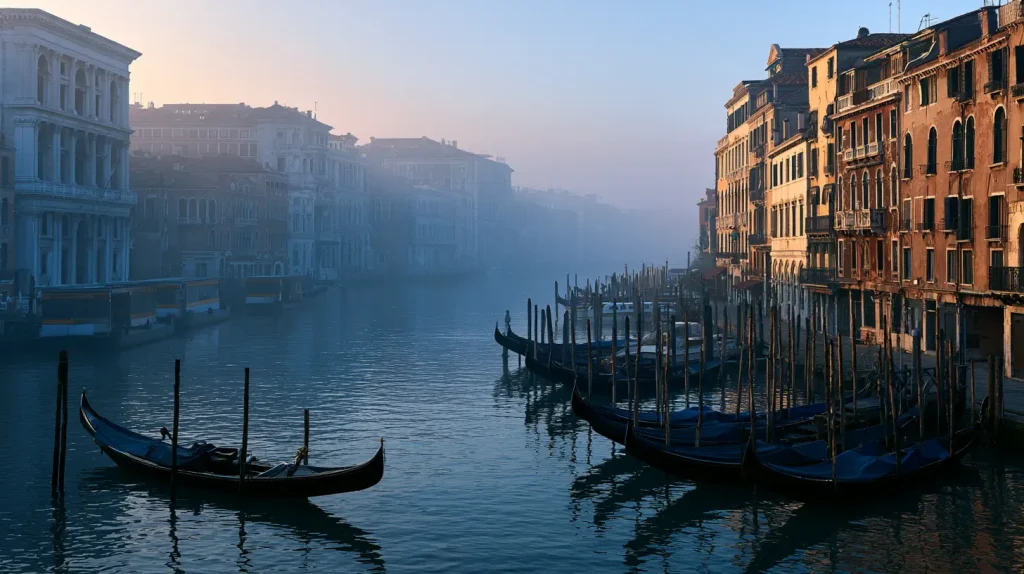
Get a 72-hour vaporetto pass when you arrive [VERIFY current price at actv.avmspa.it] — you will use it for the islands day and various Grand Canal crossings throughout the trip.
Day 1: San Marco, Rialto, and the Heart of Venice
7:00am — Piazza San Marco at dawn: Set your alarm. The piazza at 7am — when the light falls obliquely across the basilica facade and the square is nearly empty — is one of the most genuinely remarkable sights in Europe. This window closes fast: by 9am the tour groups begin arriving and by 10am the piazza is a solid mass of people. Spend 30-45 minutes on the piazza, walk around the exterior of the basilica, study the horses above the central portal (the originals are inside), and photograph the colonnades without crowds obstructing the view. Pick up a coffee and cornetto at a bar on the piazza — standing at the bar costs roughly one-third of seated table service.
9:00am — St. Mark’s Basilica: Use your pre-booked morning time slot. Allow 60-90 minutes inside, moving slowly enough to actually read the mosaics. Pay the small extra fee for the Pala d’Oro altarpiece — it is worth it. Do not rush.
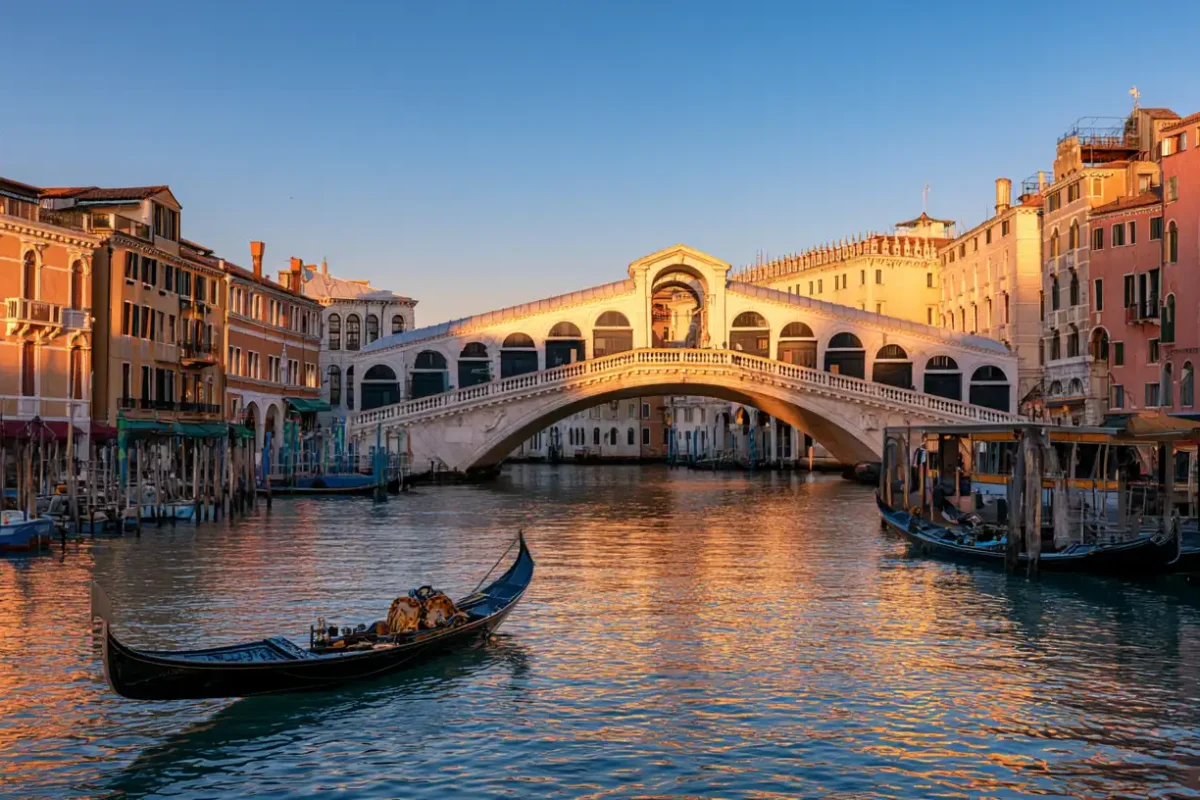
11:00am — Rialto Bridge and market: Walk from San Marco to the Rialto — about 20 minutes through the sestiere San Marco, well-signed via yellow arrows on walls. The Rialto Bridge itself is always crowded, but crossing it is worthwhile for the view of the Grand Canal in both directions. The Rialto fish market (Pescheria) operates Tuesday to Saturday until roughly noon; the vegetable market alongside it runs the same days. Even if you are not buying anything, walking through the market gives a clear picture of what actually goes into Venetian cooking — lagoon fish, seasonal vegetables, wild herbs. Grab lunch at a cicchetti bar in the narrow streets behind the market — the area around Cantina Do Mori and Campo Bella Vienna offers a cluster of traditional bacari serving wine by the glass and plates of bar snacks.
1:30pm — Doge’s Palace: Use your pre-booked afternoon slot. Allow 90-120 minutes. Focus on the Great Council Hall (Tintoretto’s Paradise on the end wall), the Armoury, and the Bridge of Sighs crossing. Consider the Secret Itinerary if you booked it.
5:00pm — Free exploration, San Polo and Santa Croce: After the Doge’s Palace, resist the urge to add more sights. The instinct to maximise every hour produces exhaustion rather than good memories. Walk west through the sestieri of San Polo and Santa Croce — away from the tourist corridors and into quieter residential calli lined with laundry, neighbourhood shops, and small churches. Find a bacaro that looks right and have an aperitivo spritz while standing at the counter. This is how Venetians end the working day.
7:30pm — Dinner: Book a restaurant in the Dorsoduro or San Polo area in advance for your first night. The areas around Campo Santa Margherita and Campo San Polo have a range of good options at different price points, and the walk from the Doge’s Palace along the Zattere waterfront to Dorsoduro (about 20 minutes) is one of the most pleasant evening walks in the city.
Day 2: Dorsoduro, Art, and the Grand Canal
9:00am — Gallerie dell’Accademia: One of the great art museums in Italy, housing Venetian painting from the 14th to 18th centuries — Bellini, Giorgione, Titian, Tintoretto, Veronese. Most visitors spend 90 minutes to 2 hours [VERIFY current opening hours at gallerieaccademia.it]. If you only have time for one room, the large hall containing Veronese’s Feast in the House of Levi (originally painted as a Last Supper until the Inquisition objected to its secular details) is the one to prioritise.
11:30am — Peggy Guggenheim Museum: Immediately adjacent to the Accademia along the Dorsoduro waterfront, the Guggenheim holds one of the best collections of 20th-century art in Europe — Picasso, Dalí, Mondrian, Pollock, Ernst — in a palazzo on the Grand Canal. Peggy Guggenheim herself is buried in the garden alongside her beloved dogs. Allow 60-90 minutes [VERIFY current ticket prices at guggenheim-venice.it].
1:00pm — Lunch in Dorsoduro: Cantine del Vino già Schiavi (cicchetti at the canal-side counter) or a full sit-down lunch in one of the restaurants around Campo San Barnaba.
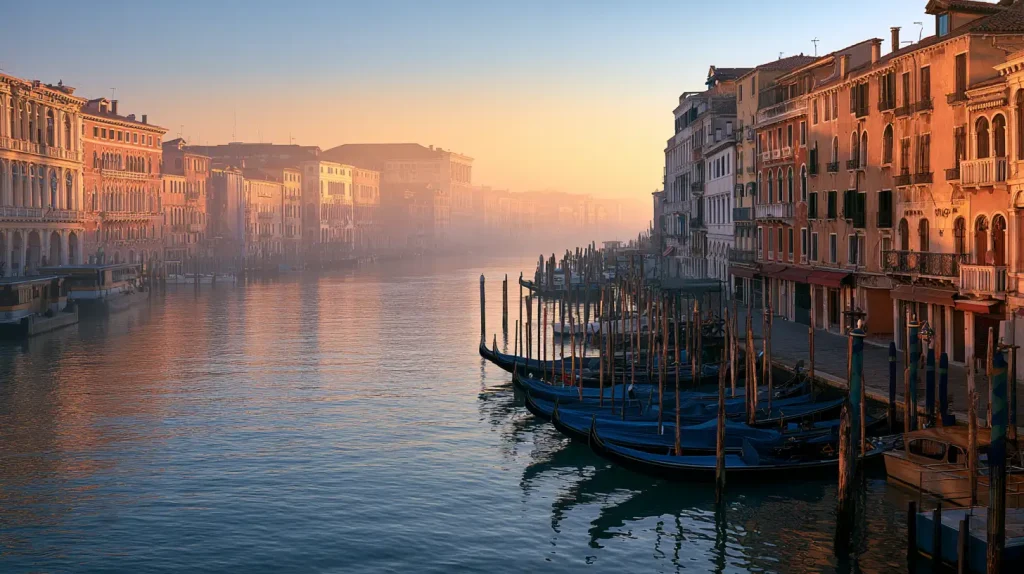
2:30pm — Grand Canal by Vaporetto (Line 1): Board Line 1 heading toward San Marco or Piazzale Roma and ride the full length of the Grand Canal. This is the architectural overview of Venice from the water — 50 palazzi, the Rialto Bridge, the Accademia Bridge, the final sweep into the San Marco basin. Sit at the open-air front or back for the unobstructed view. The journey takes 40-50 minutes end to end.
4:00pm — Cannaregio: Take the vaporetto north and spend the rest of the afternoon in Cannaregio — Venice’s northern residential sestiere, quieter than the tourist centers and home to the Jewish Ghetto (the oldest in Europe, established 1516). The Ghetto Nuovo square is surrounded by tall buildings — the houses were built upward when the Jewish community was confined to this small island, resulting in some of the tallest residential buildings in old Venice. Walk the long fondamente along the Cannaregio canal and the Misericordia canal, stop in at a neighbourhood bakery, and settle into your giro d’ombre (cicchetti and wine crawl) in the early evening. Alla Vedova on the Calle del Pistor and Vino Vero on the Fondamenta della Misericordia are both reliable — go to wherever looks busy with people you take to be locals rather than tourists.
8:00pm — Dinner: Book ahead for a Cannaregio restaurant — the neighbourhood has some of the best value-for-quality restaurants in Venice. Options range from traditional osterie serving classic Venetian cooking to newer restaurants doing more contemporary Venetian food.
Day 3: The Island Day Trip
8:30am — Depart Fondamente Nove: Head to the Fondamente Nove vaporetto stop on the northern edge of Venice and take Line 12 or 4.2 toward Murano. Departing by 8:30-9am gets you to Murano before the day-tripper crowds.
9:00-10:30am — Murano: Most glassblowing demonstrations at Murano factories are free and run continuously throughout the morning — the factory stores attached to them are the monetisation, so there’s no pressure to buy. The demonstrations are genuinely impressive; a master glassblower shaping a horse or a vase from a blob of molten glass in under two minutes is worth seeing regardless of whether you purchase anything. Visit the Museo del Vetro (Glass Museum) if you have time and genuine interest in the history of glassmaking from Roman times through the Venetian trade dominance of the Renaissance. The church of Santi Maria e Donato has a 12th-century mosaic floor that rivals anything in the Basilica of San Marco for technical quality, and it receives only a fraction of the visitors. Then take Line 12 from Murano Faro to Torcello.
11:00am-12:30pm — Torcello: Torcello was once a city of 20,000 people — the dominant settlement in the Venetian lagoon before the islands of Venice itself rose to prominence. Now only a handful of families live there permanently. The Cathedral of Santa Maria Assunta contains a 12th-century mosaic Last Judgment covering the entire west wall — one of the finest Byzantine mosaics outside of Constantinople — and a golden Madonna in the apse that dates from the same period. The island’s silence is its most striking quality. After the cathedral, climb the nearby bell tower for views across the flat lagoon. Take the Line 9 boat to Burano — the crossing takes about 5 minutes.
12:30-3:00pm — Burano: Lunch at a canalside restaurant (the risotto di gò, if available, or fresh seafood pasta), photograph the coloured houses, and walk across to Mazzorbo for a quieter contrast. Take Line 12 back to Fondamente Nove.
3:30pm onwards — Final hours in Venice: Spend your last afternoon on anything you didn’t get to — a church you walked past, the Campo Santa Maria Formosa in Castello, or simply sitting by a canal. Buy any remaining gifts at a shop that is not immediately adjacent to a major tourist site.
What to Skip
Gondola ride in peak season daytime: Not skip entirely, but if budget is limited and you are visiting in July or August, the gondola experience in the congested main canals is not the best use of €90. An evening gondola ride through the quieter Cannaregio or Dorsoduro canals is a different proposition.
Aquarium: Venice has one, near San Marco. The time is better spent on any of the above.
Museum Correr: The museum of Venetian civic history on the piazza is interesting but comes third in priority behind the Basilica and the Doge’s Palace. Skip if pressed for time.
Day trips to mainland: The Prosecco hills, the Palladian villas, and Padua are all genuinely worth visiting, but not while you have three days in Venice itself. A day trip to the mainland eats up the better part of two days once you account for transport and logistics. If you have additional time, add days in Venice; if you want the mainland, build a separate trip around it.
Gondola serenades: The gondoliers who offer singing performances on the canals (a gondolier or a separate musician accompanying the ride) charge a significant premium. The experience varies widely depending on the gondolier. The baseline gondola ride without musical accompaniment already costs €90 per boat for 30 minutes, and the addition adds €120 or more. Worth knowing before agreeing.
Practical Notes
Three days is enough to see the major sights and get a real sense of the city without feeling rushed. Less than two days produces a highlight reel; more than four starts to reveal Venice’s limitations as a place for daily life rather than observation.
Comfortable, flat shoes are the single most important packing item. Venice’s cobblestoned streets and bridges cover 12-15 kilometres of walking per day easily. Blisters from bad footwear will affect the quality of the trip more than any booking or itinerary decision.
Wake up early every morning. Venice before 8am is a different city — quieter, cooler, and genuinely beautiful in a way that the daytime crowds obscure.
Acqua alta (high water flooding) affects Venice from October through March. If visiting in autumn or winter, check the forecasts at the Centro Previsioni e Segnalazioni Maree. It rarely makes the city impassable — rubber boots or waterproof shoes, elevated walkways, and a willingness to paddle through an inch or two of water resolve most situations — but it is worth knowing about before arrival.
Drinking water from Venice’s public fountains is clean and free — refill a bottle rather than buying plastic throughout the day. Water fountains (fontanelle) are marked on most detailed city maps.
suggested topic — Where to Stay in Venice: Best Areas for First-Time Visitors
suggested topic — How to Get Around Venice: Easy Transport Guide for First-Timers