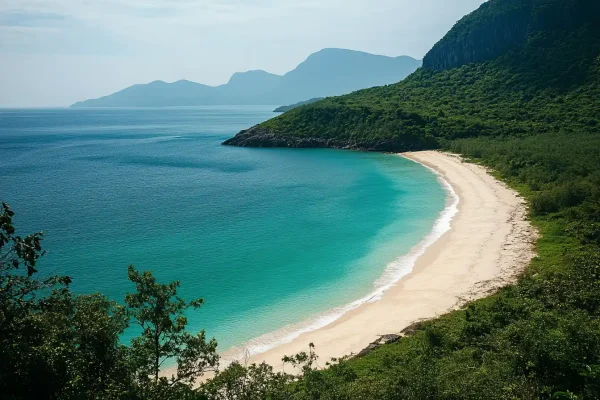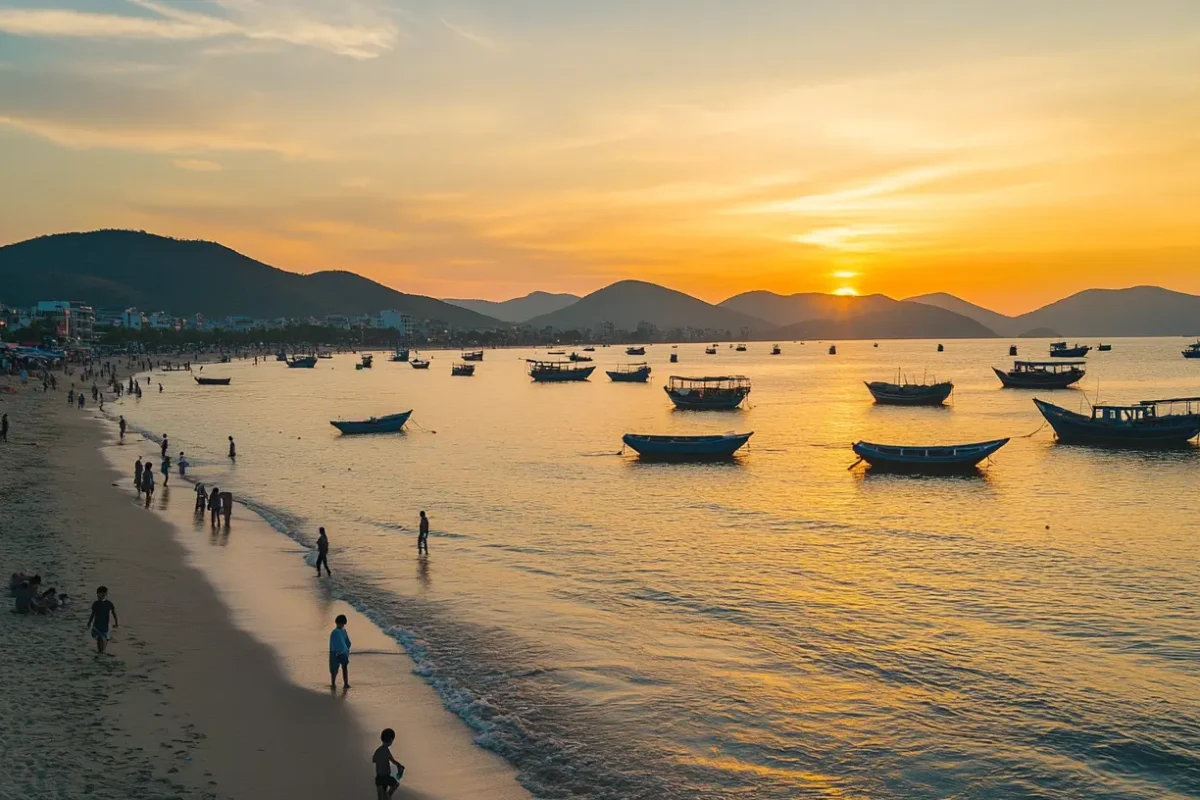
Quy Nhon sits on Vietnam’s central coast between Da Nang and Nha Trang, 450km from Ho Chi Minh City, and the first thing most backpackers say when you mention it is “where?” It has an airport (Phu Cat, UIH), a direct train from the Reunification Express, a city of 300,000 people, beaches that are cleaner and emptier than anything in Da Nang or Nha Trang, 12th-century Cham towers that are as architecturally significant as anything in Hoi An, a signature dish (bún cá — fishcake noodle soup) so regional it barely exists outside the province, and almost no foreign tourists. The locals have noticed you. They are delighted you’re there. You are probably the only foreigner on the street.
| Best time to visit | February–August (dry, hot); September–December is rainy season |
|---|---|
| Getting there | Fly from Hanoi or Ho Chi Minh City to Phu Cat Airport (UIH), 1 hr; or train to Dieu Tri station |
| Budget per day | $25–55 USD — one of Vietnam’s best-value coastal destinations |
| Visa for Americans | Vietnam e-visa required; $25, 90 days at evisa.xuatnhapcanh.gov.vn |
| Language | Vietnamese; very limited English outside guesthouse sector |
| Currency | Vietnamese Dong (VND); ~25,000 to $1 USD; cash dominant |
Why Is Quy Nhon Still Under the Radar?
Transport friction, mainly. Quy Nhon doesn’t have an international airport, and Phu Cat Airport gets domestic flights from Hanoi and Ho Chi Minh City but not the direct international charter connections that fill Danang. The train drops you at Dieu Tri station, 10km from town. The city doesn’t have a tourist quarter in the way Hoi An or Da Nang does — it’s a real Vietnamese city that happens to have extraordinary beaches nearby, and navigating it requires a scooter or motorbike rather than a walk from your hostel door. For travelers willing to manage that, the reward is significant.
Ky Co Beach
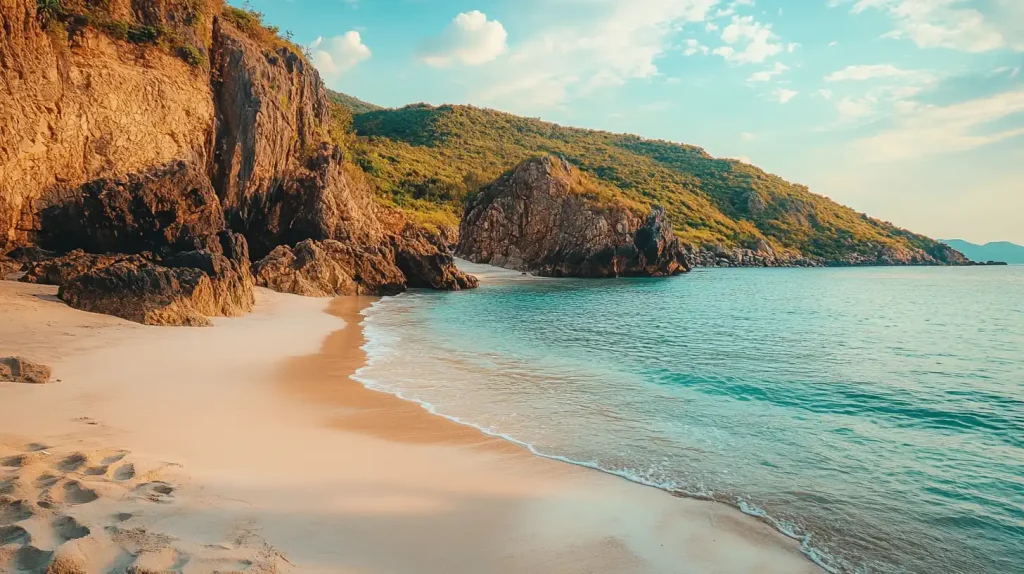
Ky Co is the beach that’s putting Quy Nhon on maps — a sheltered cove about 20km south of the city with turquoise water, white sand, and limestone headlands that together produce an image people reasonably compare to the Maldives or Palawan. Getting there from Quy Nhon involves either a boat from the Quy Nhon pier (30 minutes, about 80,000–100,000 VND per person round trip) or an off-road vehicle rental through increasingly passable dirt tracks across the peninsula. The boat is the better option in any weather. Arrive before 9am for empty beach and the best light. By 11am the Vietnamese day-trippers arrive.
The beach itself charges a small entry fee (around 20,000 VND). There are a few snack stalls and a basic restaurant. No overwater bungalows, no DJ, no resort infrastructure — just the bay. Swimming is good in the calm interior cove; the open-water side has stronger currents and is better for watching than swimming.
Eo Gio Cliffs
Eo Gio (“Windy Strait”) is a dramatic indentation in the coast about 15km north of Quy Nhon city — high cliffs forming a narrow channel where the sea forces through in a churn of white water, with a rope bridge across the strait and walking paths along the cliff edge. The views are extraordinary. The wind lives up to the name. This is the best late-afternoon location near Quy Nhon: the light hits the cliffs from the west and the sea below catches the colors. Scooter from town takes about 25 minutes. Entry 30,000 VND. Allow 90 minutes to walk the circuit.
Cham Towers and History
The Binh Dinh province around Quy Nhon was the heartland of the Cham Kingdom — an Indianized maritime civilization that dominated the central Vietnamese coast from the 2nd century CE until it was conquered by the Vietnamese expanding southward in the 15th century. The Cham built in fired brick, and dozens of towers survive across the province. Thap Doi (Twin Towers), 3km north of Quy Nhon city center, are the most accessible — two towers from the 12th century that are reasonably intact and surrounded by nothing but sky. Scooter there in 10 minutes. Entry free. The Binh Dinh Museum in the city has a remarkable collection of Cham artifacts including armor pieces collected by a local warlord — genuinely unusual collection that puts the towers in context.
Eating in Quy Nhon
Bún cá is the local obsession — fishcake noodle soup with a broth made from dried fish, served with fresh herbs and lime. It’s eaten for breakfast, widely, at plastic-stool canteens throughout the city for 25,000–35,000 VND ($1–1.40). Find it anywhere near the central market. The other local specialty is bánh xèo tôm nhảy — a crispy rice flour pancake stuffed with “jumping shrimp” (live shrimp that jump when dropped into the hot pan), eaten by wrapping pieces in lettuce leaves. The seafood market near the harbor sells fresh catch at prices that feel practically free by Western standards — a full crab or 500g of prawns for $3–5 cooked at a market stall.

Getting to Quy Nhon from the US
Fly to Ho Chi Minh City (SGN) or Hanoi (HAN) from US hubs — typically $800–1,100 round trip. Domestic flight from SGN or HAN to Phu Cat Airport (UIH) on VietJet, Bamboo, or Vietnam Airlines: about 1 hour, $20–50 one way. Alternatively, the Reunification Express train stops at Dieu Tri station (10km from Quy Nhon center), reachable from Hanoi in about 18 hours or Da Nang in 4 hours — one of Vietnam’s more scenic rail stretches. Transfer from Dieu Tri to Quy Nhon by taxi (~$5) or shared bus.
Where to Stay
Budget ($12–25/night): Life’s a Beach hostel on the peninsula south of the city — run by a local family, excellent vibe, organizes boat trips to Ky Co. Mira Bai Xep guesthouse in the fishing village of Bai Xep (15km south of the city) is quieter and more remote.
Mid-range ($45–80/night): L’Amor Boutique Hotel in the city center — locally owned, centrally located, great reviews. Anantara Quy Nhon Villas at the luxury end of mid-range for private villas with ocean views.
Splurge ($150+/night): Anantara Quy Nhon Villas — the finest property in the area, private pool villas on a cliff above the sea, genuinely excellent.
Practical Tips
Rent a scooter on the first morning — it’s the only practical way to reach Ky Co, Eo Gio, and Thap Doi Cham towers independently. Rentals cost 100,000–150,000 VND ($4–6) per day. No ATM at the beaches — bring enough cash from the city.
The rooftop bar at Fleur De Lys Hotel in the city center gives the best panoramic view over the bay and coastline — no need to be a hotel guest, just buy a drink (~60,000 VND).
Frequently Asked Questions
How do I get from Da Nang to Quy Nhon?
Train from Da Nang to Dieu Tri station (about 4 hours on the Reunification Express, ~$7–12 USD), then taxi or bus 10km to Quy Nhon center. Alternatively, Vietnam Airlines and VietJet fly Da Nang to Phu Cat Airport in 45 minutes. Open Bus overnight sleeper buses also run Da Nang to Quy Nhon in 6 hours for $8–12.
What is Quy Nhon famous for?
Ky Co Beach (turquoise cove with limestone headlands), Eo Gio cliffs (dramatic coastal scenery), Thap Doi Cham towers (12th-century Cham Kingdom ruins), the local dish bún cá (fishcake noodle soup), and being one of the last genuine undiscovered coastal destinations on Vietnam’s heavily touristed central coast.
Is Quy Nhon good for budget travelers?
Excellent. It’s one of Vietnam’s best-value coastal destinations — guesthouses from $12/night, meals at local canteens $1–3, scooter rental $4–6/day. The absence of the tourist infrastructure that inflates prices in Hoi An, Da Nang, and Nha Trang means everything runs at local Vietnamese prices.
How do I get to Ky Co Beach from Quy Nhon?
Boat from Quy Nhon pier — about 30 minutes, 80,000–100,000 VND per person round trip (boats depart when full, roughly every 30–60 minutes in peak season). The off-road driving route requires a motorbike with good ground clearance and takes about 45 minutes over rough tracks. The boat is safer, faster, and more enjoyable.
When is the best time to visit Quy Nhon?
February through August. The rainy season (October–December) brings significant precipitation and rough seas that make beach visits unpleasant and Ky Co boat trips dangerous. March–May is the sweet spot: warm, dry, and the sea is at its calmest and clearest. July and August are hot (35°C+) but good for beach days with an early start.