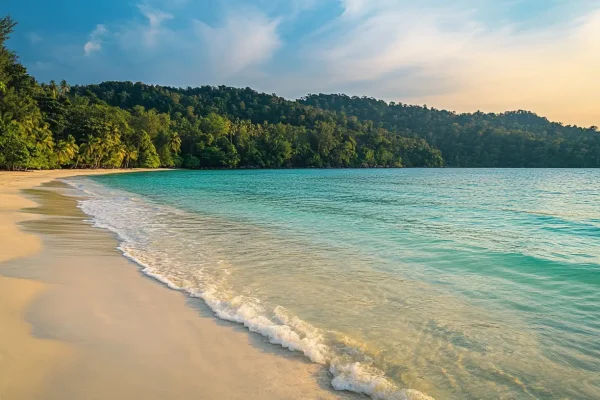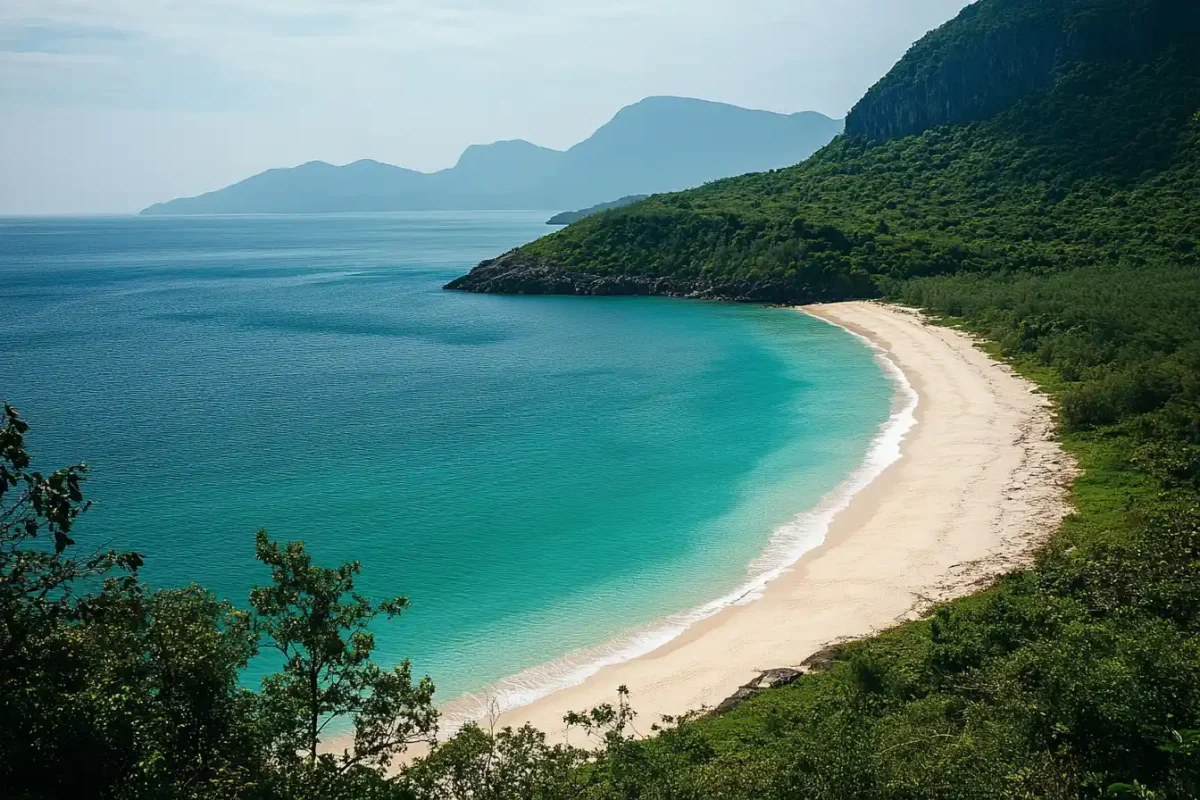
Con Dao is an archipelago of 16 islands 230km off the southern Vietnamese coast, and it holds two completely different realities in one small place. The first is a former prison colony where French and then American-backed South Vietnamese governments incarcerated, tortured, and killed thousands of political prisoners over a century — the tiger cages, exposed in Life magazine in 1970, became a symbol of the war’s atrocity. The second is some of the clearest water and emptiest beaches in Vietnam, sea turtles nesting from June to September, dugong (sea cows) in the national park waters, and a small town with very good food and an atmosphere unlike anywhere else in the country. Both things are real. Neither cancels the other out. You go for the beaches and stay for the history, or the other way around, and leave with something more layered than either.
| Best time to visit | November–April (dry, calmer seas); March–May ideal; June–September turtle nesting |
|---|---|
| Getting there | Fly Ho Chi Minh City (SGN) to Con Dao (VCS), 50 min; or fast ferry from Vung Tau (2.5 hrs) |
| Budget per day | $60–120 USD; budget possible but mid-range is better here |
| Visa for Americans | Vietnam e-visa required; apply at evisa.xuatnhapcanh.gov.vn ($25, 90 days) |
| Language | Vietnamese; limited English outside resort hotels |
| Currency | Vietnamese Dong (VND); ~25,000 VND to $1 USD; cash for most things |
Is Con Dao Worth the Effort to Reach?
Yes — it’s a 50-minute flight from Ho Chi Minh City with daily service, which makes the “effort” essentially nothing. The real question is cost: Con Dao doesn’t have Phu Quoc’s backpacker economy. The accommodation spectrum jumps from simple guesthouses ($15–30/night) directly to mid-range boutiques ($80–150/night) and luxury resorts (Six Senses charges $400–900/night). The middle is thin. If you’re traveling on a tight budget, it works but requires more planning. For mid-range travelers, it’s significantly less expensive than Southeast Asian island resorts in Thailand or the Philippines at comparable quality.
The Prison History
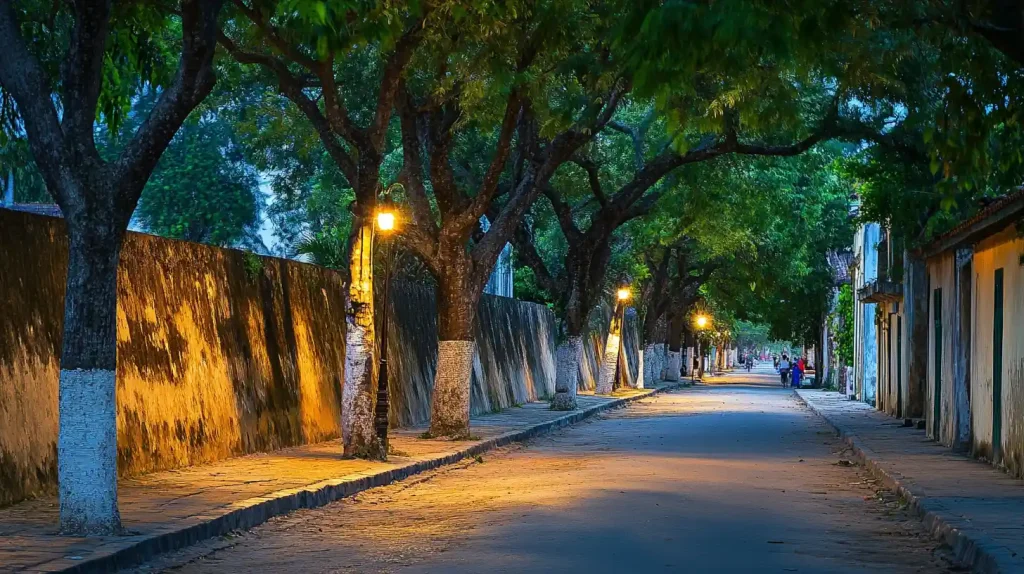
This is not optional context. About 200,000 prisoners passed through the Con Dao prison system between French colonization in 1862 and the fall of Saigon in 1975. The French built the original cells in 1862; the Americans and South Vietnamese expanded them through the 1960s. The “tiger cages” — 5-foot by 9-foot concrete cells where prisoners were chained by the ankles and had lime poured on them — were discovered by two US congressmen and a reporter in 1970. The photographs published in Life magazine contributed to the change in American public opinion about the war.
The Con Dao Museum in the main town (Con Son) covers the full history clearly and is free. The Phu Hai Prison — the largest of the complex — is the site visitors typically tour: the long cell blocks, the solitary confinement units, the outdoor courtyards where prisoners were held in the open. Entry NIS 15,000 VND ($0.60 USD). The cemetery (Nghia Trang Hang Duong) contains the graves of thousands of prisoners and is also the tomb of Vo Thi Sau, a female Viet Minh fighter executed by the French at age 19 and now venerated as a national martyr. Incense burns constantly at her tomb. This is not a tourist performance; it is an active Vietnamese place of pilgrimage that happens to be open to visitors.
Beaches
Dat Doc Beach, on the south of Con Son island, is a long curve of clean sand adjacent to the Six Senses resort — you can use the beach regardless of where you’re staying. The walk from town by motorbike takes about 15 minutes on a coastal road with excellent views.
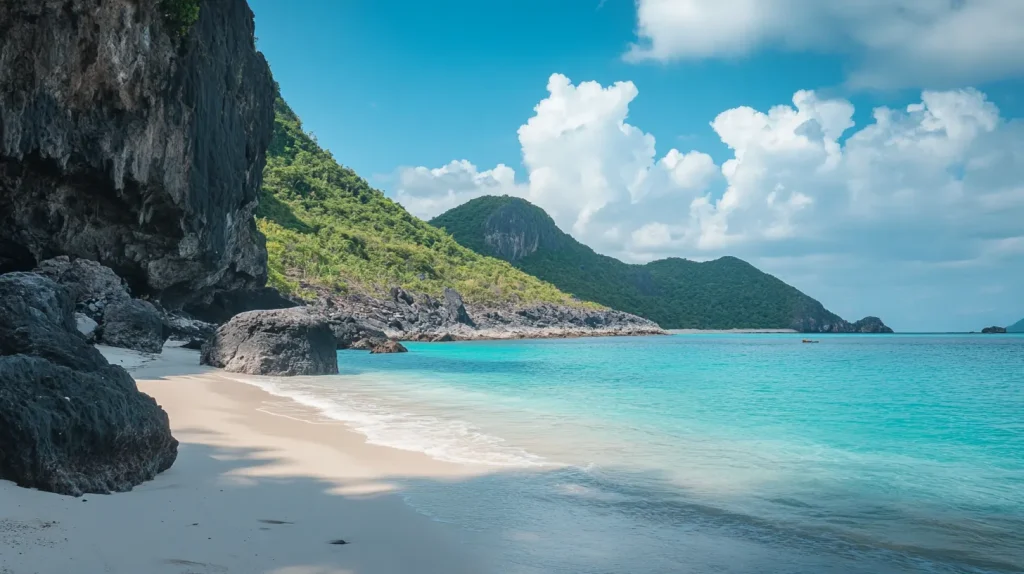
Dam Trau Beach, near the Con Dao airport in the northeast, is the classic postcard image — white sand, crystal-clear shallow turquoise water, total emptiness on weekdays. Entry fee of 15,000 VND ($0.60) per person. Take a motorbike from town, about 20 minutes.
Bai Nhat Beach, just south of town, is the most accessible for swimming from the main settlement. Calmer, more sheltered, less dramatic than Dam Trau but five minutes from the Con Dao Museum by foot.
The best beaches on the outer islands (particularly Bay Canh Island) require boat trips organized through the national park office — day trips run about $20–35 per person including the boat. Bay Canh’s coral reef and turtle nesting beaches are genuinely excellent for snorkeling.
Sea Turtles
Con Dao National Park contains the most important sea turtle nesting site in Vietnam — primarily green turtles, nesting from June to September. The Con Dao Conservation Department offers guided night walks to watch turtle nesting on Bay Canh Island ($15–20 per person) during nesting season. These are not performances — the turtles are wild, the nesting is unpredictable, and the guides are conservation staff doing actual monitoring work. You may or may not see a turtle laying eggs, but the walk is worthwhile regardless. Outside nesting season, turtles are commonly visible while snorkeling around the outer islands.
Food in Con Son Town
The town has a genuine local restaurant scene that reflects Con Dao’s unusual status as both a domestic pilgrimage destination and a luxury resort island. Street-side bánh mì from a cart near the central market: 20,000–25,000 VND ($0.80–$1). Clay pot rice (cơm niêu) restaurants on Tô Hiệu Street serve excellent Vietnamese family cooking — clay pot caramelized fish, pumpkin blossom stir-fry, southern sour soup — for 60,000–100,000 VND ($2.40–$4) per dish. Beach House restaurant in the alley behind the main street is more curated, with good cocktails and a menu that takes local seafood seriously at mid-range prices.
Getting to Con Dao from the US
Fly to Ho Chi Minh City (SGN) — typically $800–1,100 round trip from US hubs via Tokyo, Seoul, Taipei, or Hong Kong. From Ho Chi Minh City’s Tan Son Nhat airport, Bamboo Airways and Vietnam Airlines run daily flights to Con Dao (VCS), about 50 minutes, $35–80 USD one way depending on lead time. Book ahead — the island has a small airport and flights fill quickly in peak season. Alternatively, take a bus from HCMC to Vung Tau (~2 hours, $3) and the fast ferry from Vung Tau to Con Son (~2.5 hours, $20–25 USD).
Where to Stay
Budget ($15–35/night): Lighthouse Boutique Hotel (guesthouse despite the name) and several small local guesthouses near the Con Dao Museum. No pool, basic amenities, but clean and central. Cash payment expected.
Mid-range ($80–150/night): The Mystery Con Dao — a boutique hotel with pool, good location, genuine quality without resort pricing. Poulo Condor Boutique Resort on Vong Beach is the slightly pricier but more atmospheric option at $120–180/night.
Splurge ($400+/night): Six Senses Con Dao — 50 pool villas on a private bay, one of the finest resort properties in Southeast Asia, legitimately extraordinary if cost isn’t the primary constraint.
Practical Tips
Rent a motorbike (150,000–200,000 VND/$6–8 per day) on the first morning. The island is small — about 15km in length — and the coastal road between beaches and viewpoints is perfectly suited to slow motorbike exploration. No cars for hire; taxis exist but are more expensive.
Cash only at most local restaurants and guesthouses. The ATM in Con Son town works intermittently — bring enough cash from Ho Chi Minh City for your entire stay plus buffer. Most mid-range and luxury hotels accept cards.
What most visitors miss: the Nghia Trang Hang Duong cemetery, particularly at dawn when Vietnamese pilgrims arrive. The contrast between the quiet graves, the incense smoke, and the ocean surrounding the island — visible from higher up in the cemetery — is one of the more affecting things on the island.
Frequently Asked Questions
How do I get to Con Dao from Ho Chi Minh City?
Fly from Tan Son Nhat Airport (SGN) on Bamboo Airways or Vietnam Airlines — about 50 minutes, $35–80 one way depending on booking lead time. Daily flights. Alternatively, bus to Vung Tau (~2 hours) then fast ferry to Con Son (~2.5 hours, $20–25 USD).
When is the best time to visit Con Dao?
November through April for the calmest seas and best weather — dry season, good visibility for diving and snorkeling. March–May is peak season but least crowded from an international visitor perspective. June–September is the sea turtle nesting season on Bay Canh Island, with guided night walks available; weather is rainier but the sea is calm and this is when Vietnamese domestic tourists are fewer.
What are the tiger cages at Con Dao?
The tiger cages were a set of 5-foot by 9-foot concrete cells at the Con Son Prison (Phu Hai), where political prisoners were chained by their ankles and subjected to physical abuse. They became internationally known when two US congressmen, a reporter, and a photographer from Life magazine documented them in 1970. The photographs helped turn American public opinion against the Vietnam War. The prison site is now a museum and open to visitors.
Is Con Dao good for diving and snorkeling?
Yes — Con Dao has some of the best diving in Vietnam, with 219 coral species and over 1,300 species of marine life in the national park waters. Visibility is generally excellent from November through May. The best dive sites are around the outer islands — Rainbow Reef and the reefs around Bay Canh Island are the most popular. Dive operators in Con Son town run half-day trips for $50–70 per person including equipment.
What is the Con Dao prison history?
The Con Dao prison system operated from 1862 (French colonial period) through 1975, housing an estimated 200,000 political prisoners over its history. The French, then the American-backed South Vietnamese government used the island to imprison independence fighters, Viet Minh cadre, and political opponents. The “tiger cages” were exposed internationally in 1970. After 1975, the island was administered by unified Vietnam, the prisons were closed, and the site was eventually designated a historical monument. The museum and prison complex in Con Son town document the full history.