Tana Toraja sits in the highlands of South Sulawesi, about an 8-hour bus ride north of Makassar, and it is the only place in the world where the most important ceremony in a person’s life is their funeral. Not their wedding. Their funeral. This is not metaphor. A family will keep a recently deceased relative at home — preserved with formalin, dressed, brought meals — for months or sometimes years while saving money for a ceremony worthy of their soul’s journey. When the funeral finally happens, it can last a week. Hundreds of water buffalo and pigs are sacrificed. Entire villages attend. And visitors are welcome.
| Best time to visit | July–September (dry season, peak funeral season) |
|---|---|
| Getting there | Fly to Makassar (UPG), then 8–9 hr bus to Rantepao |
| Budget per day | $25–50 USD (budget comfortable) |
| Visa for Americans | Visa on arrival available; $35 USD, 30 days |
| Language | Bahasa Indonesia; Torajan locally. Basic English at guesthouses |
| Currency | Indonesian Rupiah (IDR); cash only in Toraja. ATMs in Rantepao |
Is Tana Toraja Worth the Journey?
Yes, if you genuinely want to encounter a living culture that has maintained a relationship with death and ancestry that the modern world has almost entirely forgotten. No, if you want comfort or a polished tourist experience. Rantepao — the main town and base — has decent guesthouses but basic restaurants. Roads in the surrounding villages are rough. Everything takes longer than expected. The payoff is proportional to your patience.
The honest complication: if you visit without attending a funeral ceremony, you’ve missed the core of what makes Toraja extraordinary. The cliff tombs, the tongkonan houses, the tau-tau effigies are all remarkable in context — but without seeing the living culture that produced them, they’re just unusual ruins. Your best move is to arrive in July or August and ask your guesthouse owner about any funerals happening nearby. You will be told. You will probably be invited. Go.
Attending a Torajan Funeral
This is not dark tourism. You are not gawking at grief — or at least, you shouldn’t be. Torajan funerals are communal celebrations attended by entire communities, neighboring villages, and yes, curious foreigners. The family expects visitors. You’ll be offered food, coffee, and betel nut. You’ll sit with strangers from the village and watch processions, hear traditional music, and observe the buffalo sacrifices if you choose to stay for that portion.
The buffalo sacrifice is confronting. It happens quickly, with a single machete stroke. It is not a spectacle staged for tourists — it is the ritual transfer of wealth and status that guides the deceased to Puya, the spiritual afterlife. Each buffalo sacrificed represents both the family’s love and its social standing. A chief’s funeral might involve dozens. The animals are then distributed to all attendees to eat. Nothing is wasted.
How to find a funeral: Tell the staff at Pia’s Poppies hostel in Rantepao or any local guesthouse that you’d like to attend. They will know. Bring gifts — cigarettes, coffee, or sugar — not money. Dress modestly. Don’t photograph without asking. Stay as long as you feel comfortable.
The Burial Cliffs and Tau-Tau
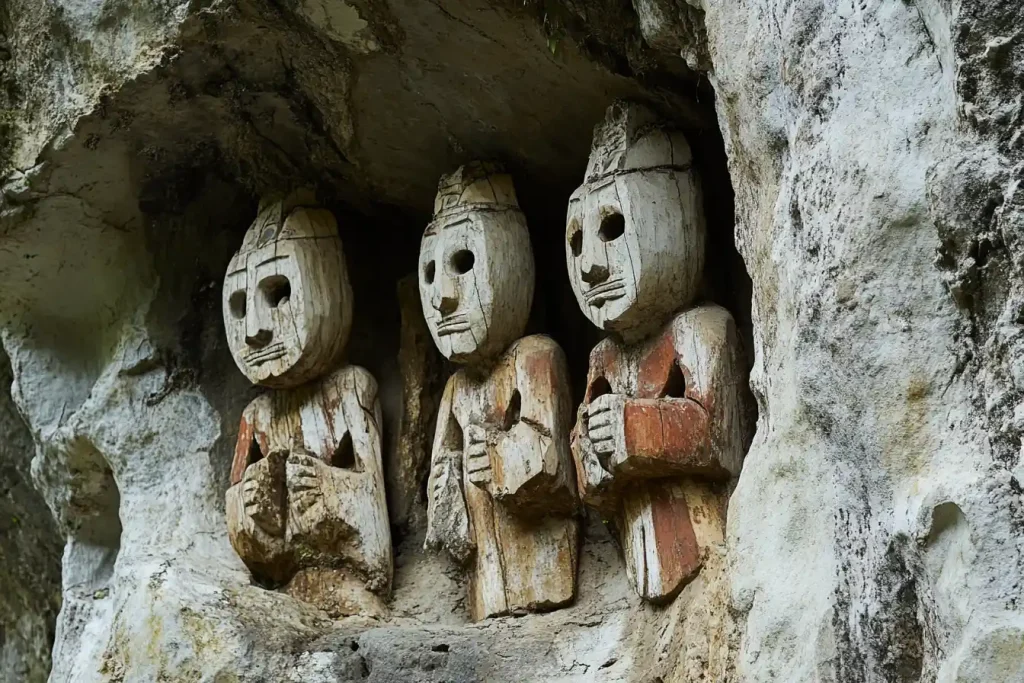
The most photographed sight in Toraja is the burial cliff at Lemo — a vertical limestone face with galleries of graves carved directly into the rock at various heights. Standing in front of each grave niche is a tau-tau: a wooden effigy of the deceased, hand-carved to resemble them, dressed in their clothes. At Lemo, the tau-tau stand in rows looking out over the rice fields, sometimes dozens at different heights. They watch you as you approach. It’s one of the more quietly powerful things I’ve seen anywhere.
Entry to Lemo costs about IDR 25,000 ($1.50 USD). Go early morning — afternoon light is flat and tour groups arrive after 10am. Londa is another major burial cliff, also impressive, with cave burial chambers you can walk through by candlelight. The guide at the entrance will take you in for a small tip (IDR 30,000–50,000 is appropriate).
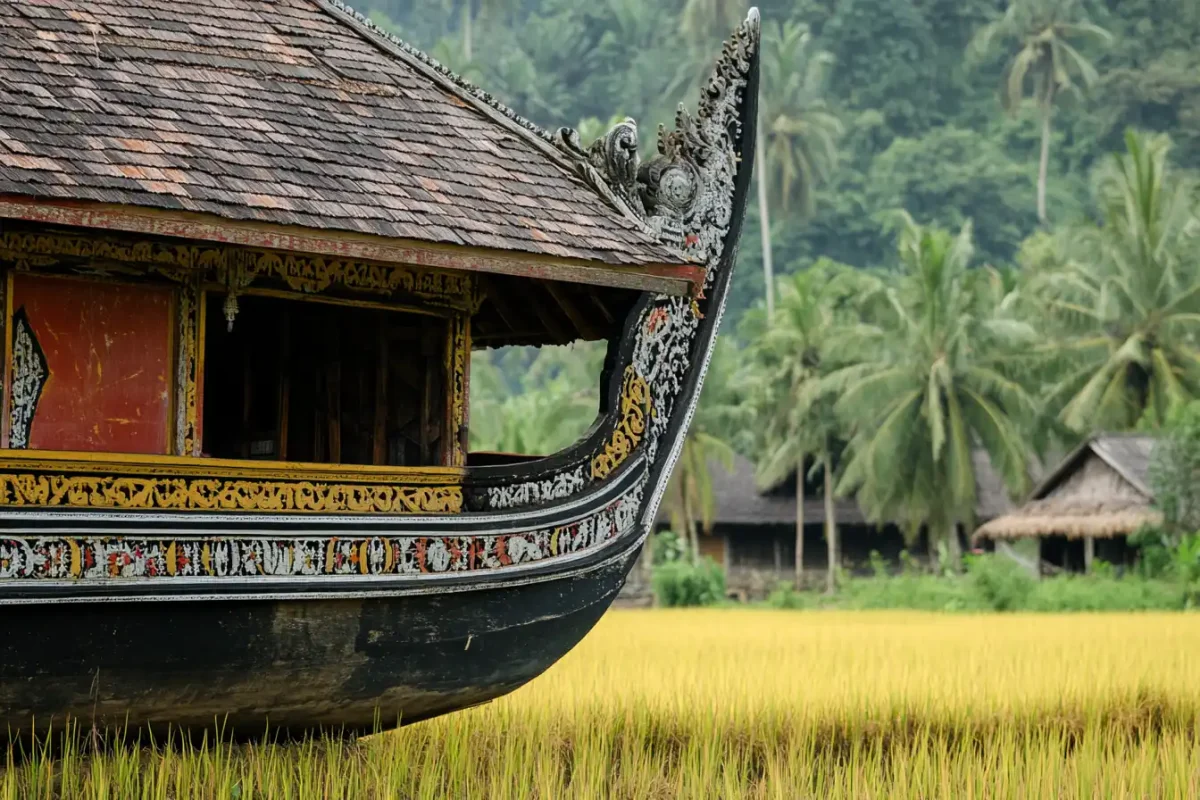
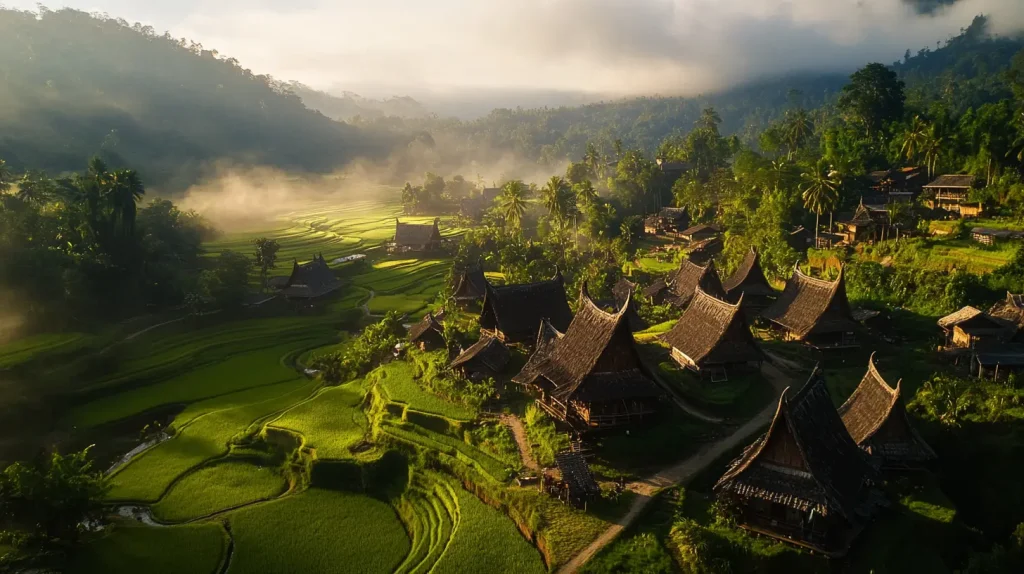
Kete Kesu is the most photogenic traditional village near Rantepao — a row of tongkonan houses with carved facades and rice barns, plus a burial rock just behind. The tongkonan rooflines curve up at the ends like buffalo horns or boat hulls, referencing a Torajan myth about their maritime origins. Every surface is carved and painted in geometric patterns in black, red, and yellow.
Getting to Tana Toraja from the US
Fly to Makassar (UPG) via Singapore (Singapore Airlines or Scoot) or Jakarta. Typical US-to-Singapore flights run $800–1,100 round trip; add $80–150 for the Makassar connection. From Makassar’s Hasanuddin Airport, take a shared minivan (called a “travel”) from the bus agents near the airport directly to Rantepao — about 8–9 hours, IDR 150,000–180,000 ($9–11 USD). Night buses also run from the main bus terminal. Alternatively, fly the short hop from Makassar to the Toraja Airport (TRT) if you book well ahead — domestic fares run $30–60 USD one way and save half a day.
Where to Stay in Rantepao
Budget ($10–20/night): Pia’s Poppies Hostel — the original backpacker hub in Rantepao, locally run by the Pia family for decades, excellent source of local information about ceremonies and village events, good food including the famous pa’piong (meat slow-cooked in bamboo). Manubackpacker Zero Star Toraja is similarly priced and well-reviewed.
Mid-range ($30–60/night): Singki Home Family — quiet, comfortable, family-run, mountain views. A solid step up from the hostel scene without being a resort.
Splurge ($80+/night): Toraja Heritage Hotel — the nicest property in the area, with tongkonan-inspired architecture and a pool.
Best Time to Visit
July through September is both the dry season and the peak funeral season. Torajan funerals are held in the dry months when communities can gather and when the deceased’s body has typically been preserved long enough to complete the preparations. August is the most active month. October through June is quieter and wetter — you can still visit and see the burial sites, but you are less likely to encounter a ceremony.
Practical Tips
Cash only. Everywhere. ATMs in Rantepao dispense rupiah and accept foreign cards. Withdraw enough for your stay in the villages — there are no ATMs outside Rantepao. Budget about $15–25 USD per day for a simple but comfortable trip including guesthouse, meals, and site entry fees.
Hire a local guide for your first day in the villages — IDR 200,000–300,000 ($12–18 USD) for a full day, and it’s worth it. They know which families are hosting ceremonies, can translate, and help you navigate village protocols around what’s appropriate to photograph and when.
What most tourists miss: the mountain village of Batutumonga, about 45 minutes from Rantepao by motorbike. The views of the valley from here at sunrise are extraordinary — rice terraces, tongkonan rooflines, mist in the valleys. Mentirotiku Guesthouse there serves coffee on a terrace with one of the best views in Sulawesi.
Frequently Asked Questions
Is it okay to attend a Torajan funeral as a tourist?
Yes, provided you go respectfully. Torajan funerals are communal events that welcome visitors. Dress modestly, bring small gifts (cigarettes, coffee, sugar), ask before photographing, and follow the lead of your local guide on protocol. The family expects guests and the ceremony is not diminished by outsiders attending — it’s how Torajan culture has always worked, with entire communities participating.
How do I get from Makassar to Tana Toraja?
Shared minivan “travel” services run from near Makassar’s airport directly to Rantepao — about 8–9 hours, roughly $10 USD. Book at the travel agents near the airport arrivals hall. Alternatively, fly the short domestic route from Makassar to Toraja Airport (TRT) if available, saving several hours.
When is the best time to see Torajan funeral ceremonies?
July through September, particularly August. Funerals are held in the dry season when communities can gather. Ask your guesthouse on arrival — they will know which villages are hosting ceremonies during your stay.
What is a tau-tau in Toraja culture?
A tau-tau is a carved wooden effigy of a deceased person, dressed in their clothing and placed at their burial site — typically a niche carved into a limestone cliff face. It serves as a vessel for the spirit and a visible representation of the deceased within the community. Tau-tau effigies at Lemo and Londa are among the most striking cultural sights in Indonesia.
How many days do I need in Tana Toraja?
Minimum three days to see the burial sites, traditional villages, and have a reasonable chance of encountering a ceremony. Four to five days is better — it gives you time to venture to Batutumonga, do a village-to-village hike, and not feel rushed. The journey from Makassar alone takes most of a day each way.
travel photography, panoramic view from Batutumonga village Tana Toraja Indonesia, traditional tongkonan houses below, terraced rice fields, mountain mist, blue hour evening, wide angle, no text, no watermark –ar 16:9 –style raw –v 6.1