Angkor Wat is the largest religious monument ever built and one of the most visited archaeological sites in the world. The ticket system has been overhauled, the prices haven’t changed since 2019 (genuinely remarkable for a site this popular), and the main thing that catches visitors off guard is not the cost but the logistics of how crowded the sunrise is, which temples to prioritize if you have limited time, and the fact that the park covers more than 400 square kilometers with over 90 temples — most of which you’ll never see on a standard one-day visit.
| 1-Day Pass | $37 USD |
|---|---|
| 3-Day Pass | $62 USD (use any 3 days within 10 days) |
| 7-Day Pass | $72 USD (any 7 days within 1 month) |
| Children under 12 | Free (passport required as proof) |
| Ticket office hours | 5:00am–5:30pm daily |
| Online purchase | Available at angkorenterprise.gov.kh |
How to Buy Angkor Tickets in 2026
Three options. All sell the same official Angkor Pass.
Option 1 — Ticket Office on Road 60: The main office is about 4km from central Siem Reap, open 5am–5:30pm. You can drive or tuk-tuk there, get your photo taken, and receive your pass in about 10 minutes during off-peak hours. In July–August or around sunrise time (5–6am), lines can be 20–30 minutes. The ticket office accepts USD cash, Cambodian Riel, Thai Baht, Euro, and all major credit cards including Visa, Mastercard, and Apple Pay.
Option 2 — Self-Service Kiosks: As of 2025, there are kiosks at Heritage Walk Mall in Siem Reap and at the Western Entrance to Angkor Wat itself. These accept credit cards, dispense tickets in under two minutes, and have multilingual interfaces including English. The Heritage Walk Mall kiosk is the most convenient if you’re buying the night before for an early start.
Option 3 — Online Purchase: Buy at angkorenterprise.gov.kh. You’ll create an account, upload a photo, and receive a QR code. The advantage is skipping any physical queue entirely. Works smoothly. The gotcha is that the official website has been clunky — allow extra time for your first online purchase.
The smart move: buy your ticket the evening before, after 4:45pm. This gives you entry that evening (for sunset at Phnom Bakheng if you want it) plus valid access for the full next day starting at sunrise. Effectively doubles your use of a one-day pass at no extra cost.
What the Angkor Pass Covers
One pass covers all temples in the Angkor Archaeological Park including Angkor Wat, Angkor Thom (Bayon, Baphuon, Terrace of Elephants), Ta Prohm, Preah Khan, Banteay Srei, Beng Mealea, the Roluos Group, and about 85 other sites. It does not cover Phnom Kulen National Park (separate $20 ticket) or Koh Ker (separate $10 ticket). Those are outlying sites worth a dedicated day if you have a multi-day pass.
How Much Time Do You Actually Need?
One day: possible but rushed. You can see Angkor Wat properly, the Bayon, Ta Prohm, and one or two smaller sites. You will not see Banteay Srei, Preah Khan in depth, or any outlying temples. You will spend 4–6 hours in heat and crowds.
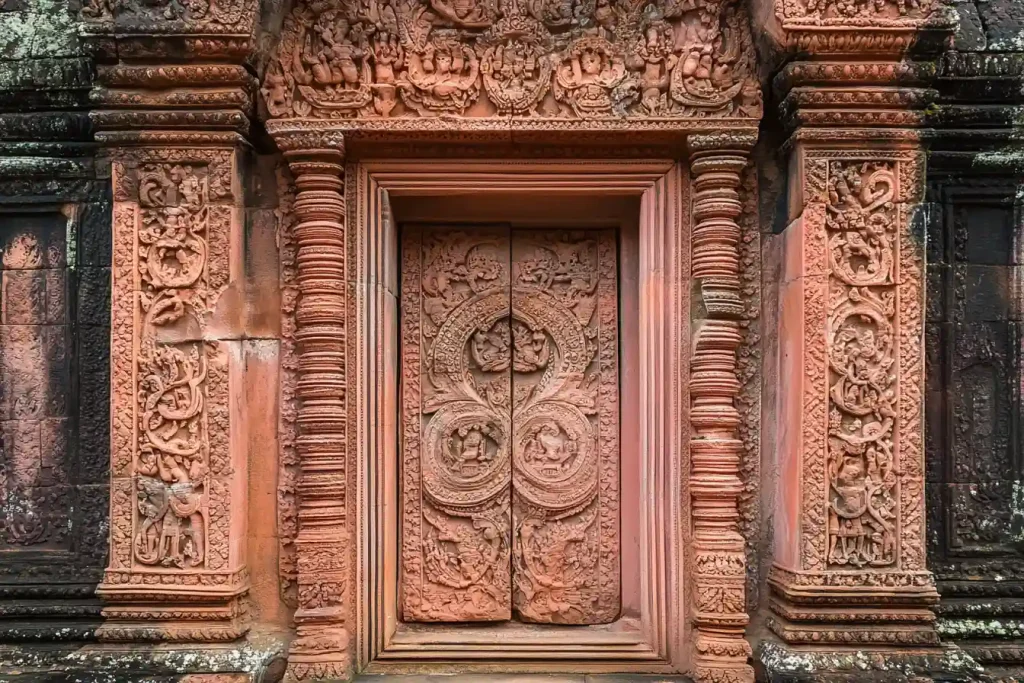
Three days: the right amount for most visitors. Day 1 — Angkor Wat at sunrise, Angkor Thom (Bayon, South Gate, Terrace of Elephants), Ta Prohm. Day 2 — Preah Khan, Banteay Srei (35km from Angkor Wat — requires separate transport, but it’s the most intricate carvings in the park), Banteay Kdei, Sras Srang reservoir at sunset. Day 3 — smaller temples on the Grand Circuit, Phnom Bakheng sunset, or a day trip to Beng Mealea or Koh Ker. Three days lets you start early, take midday breaks (necessary in the heat), and actually absorb what you’re seeing rather than racing through.
The 3-day pass at $62 is a far better value than two 1-day passes at $74 combined. If there’s any chance you’ll want three days, buy the 3-day pass upfront.
The Sunrise Situation: Honest Assessment
The famous Angkor Wat sunrise reflection — towers reflected in the lotus pond in orange dawn light — is real and genuinely spectacular. It is also one of the most crowded tourist moments in Southeast Asia. On a typical morning from November through March, 1,500–2,000 people are standing at the reflection pools by 5:30am. The best spots are taken by 5am. The “empty, misty, serene” image you’ve seen took either a very specific low-season morning, a very expensive private tour at 4am, or careful cropping.
If sunrise matters to you, go Monday–Wednesday in September or October when visitor numbers drop significantly. Arrive at the Western Gate at 4:30am (earlier requires a permit — the temple has access rules). Find the secondary reflection pond to the north of the main one — it’s longer and less crowded because it requires walking further along the causeway.
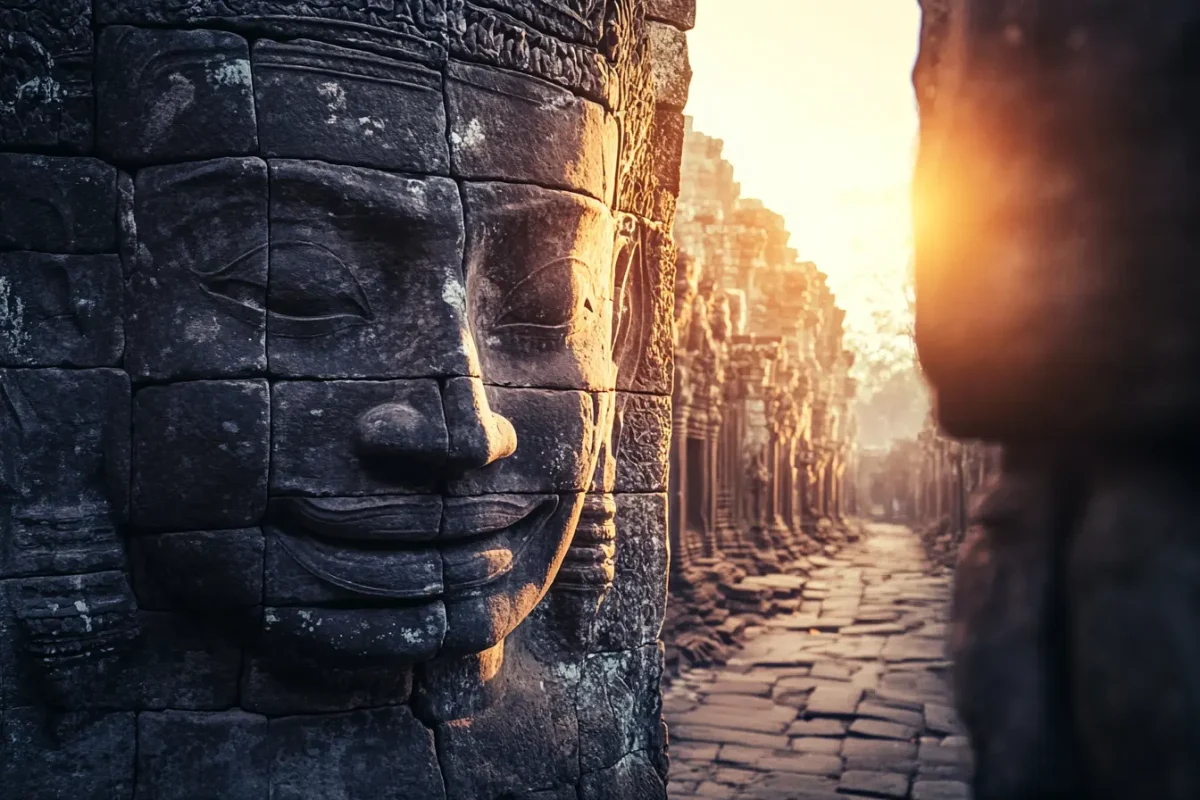
The Bayon at sunrise is often better than Angkor Wat at sunrise — fewer people, more dramatic in low light because of the massive stone faces, and the small courtyards feel less overwhelmed by crowd noise.

Ta Prohm: What It’s Like vs What You Expect
Ta Prohm is the Tomb Raider temple — the one where strangler fig trees have grown over and through the stone walls, roots wrapping around gallery roofs, trunks splitting walls. The reality is genuinely impressive. The tourist management is less so: wooden boardwalks direct traffic in a one-way flow, and peak hours (9–11am) are nearly shoulder-to-shoulder. The famous “tree growing through the wall” photograph spots have permanent crowds waiting for their turn.
Go to Ta Prohm before 8am or after 3pm. The heat is still oppressive but the crowd drops to manageable. The less-photographed back sections of the temple have equally dramatic tree-root architecture with far fewer people. Spend 90 minutes rather than 45 minutes and you’ll discover sections most visitors walk past entirely.
Practical Tips: Getting Around the Park
Tuk-tuk: the standard option. A full-day tuk-tuk with driver costs $15–25 USD and covers the Small Circuit (main sites) comfortably. Negotiate the night before at your guesthouse; your hotel can connect you with trustworthy drivers. A good driver waits at each temple, knows the best angles for photos, and can suggest which sites to extend time at.
Bicycle: genuinely excellent for the temples close to Siem Reap (Angkor Wat, Bayon, Ta Prohm). Rent from any guesthouse for $3–5 USD/day. Banteay Srei and Beng Mealea are too far for a comfortable bike ride.
Electric bicycle: increasingly popular. Covers more distance than a pedal bike without the sweat. $8–12 USD/day.
Elephant rides to the temples: no. Not in 2026. The elephants at Angkor were retired from temple transport after years of conservation pressure. Don’t book any service offering this.
Getting to Siem Reap from the US
Fly via Bangkok (BKK/DMK), Singapore (SIN), or Kuala Lumpur (KUL) to Siem Reap (REP). Total journey from East Coast US: typically 20–26 hours. Expect to pay $700–1,100 round trip from major US hubs. Bangkok is the most frequent connection hub. From Bangkok to Siem Reap, the flight is 50 minutes ($40–100 USD one way depending on airline and booking lead time).
The Cambodia eVisa is $36 USD and processed online at evisa.gov.kh before travel — much better than the visa-on-arrival queue. Get it before you leave.
Where to Stay in Siem Reap
Budget ($10–25/night): Mad Monkey Hostel or The Siem Reap Hostel — the established budget choices with social atmospheres and tuk-tuk connections.
Mid-range ($40–80/night): Pavillon d’Orient Hotel — colonial-style, pool, central, excellent reviews. Le Jardin D’Asie is similarly priced and quiet.
Splurge ($150+/night): Park Hyatt Siem Reap or Shinta Mani Wild — the Shinta Mani is outside the main Siem Reap area, connected to a wildlife conservation project, and one of the more unusual luxury hotels in Southeast Asia.
Frequently Asked Questions
How much does Angkor Wat cost to visit in 2026?
$37 USD for a 1-day pass, $62 for a 3-day pass (valid any 3 days within 10 days), $72 for a 7-day pass (valid any 7 days within 1 month). Children under 12 enter free with passport as proof of age. These prices have not changed since 2019.
Where can I buy Angkor Wat tickets?
At the official Angkor Enterprise ticket office on Road 60 (open 5am–5:30pm), at self-service kiosks at Heritage Walk Mall or the Western Entrance, or online in advance at angkorenterprise.gov.kh. Buy the evening before (after 4:45pm) for free sunset access plus full next-day validity.
Is 1 day enough for Angkor Wat?
Barely — you can see Angkor Wat, Bayon, and Ta Prohm in one day, but it’s rushed and you’ll see the park’s main sites rather than experiencing it. Three days is the right amount for most visitors. The 3-day pass is $62 vs two 1-day passes at $74 — it’s also better value.
How do I avoid crowds at Angkor Wat?
Visit in September–October (lowest crowds), go to Angkor Wat itself by 4:30–5am for sunrise (or skip the main sunrise entirely), visit Ta Prohm before 8am or after 3pm, and prioritize lesser-known temples like Preah Khan, Banteay Kdei, and Neak Pean which receive far fewer visitors than the circuit highlights.
What is not covered by the Angkor Pass?
Phnom Kulen National Park ($20 separate ticket) and Koh Ker archaeological site ($10 separate ticket) require their own admission. These outlying sites are worth visiting on a multi-day trip but require a half or full day trip from Siem Reap.