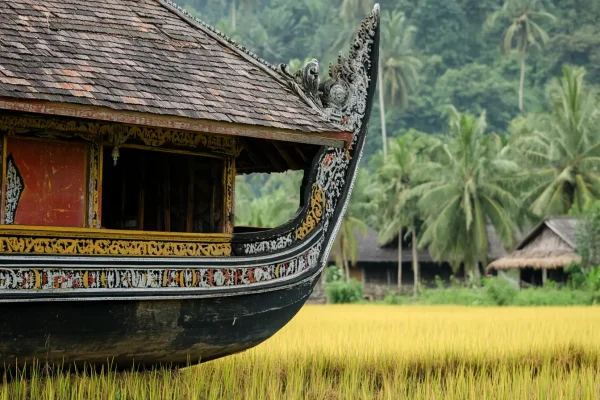
Battambang is Cambodia’s second city and its most overlooked. Most travelers breeze through on the bus between Siem Reap and the Thai border at Poipet, treating it as a rest stop rather than a destination. That’s a mistake. Battambang has the best-preserved French colonial architecture in Cambodia outside Phnom Penh, a bamboo train that is simultaneously absurd and genuinely fun, the most active arts scene in the country, a hillside temple complex with bat caves that produce one of the stranger wildlife spectacles in Southeast Asia, and an entire industry built around Battambang oranges that the rest of the country agrees are the finest in Cambodia. It runs slower than Phnom Penh and less touristically than Siem Reap. That combination is rare and worth seeking out.
| Best time to visit | November–April (dry season); cooler November–January |
|---|---|
| Getting there | Bus from Siem Reap (3 hrs, $5–8); bus from Phnom Penh (5–6 hrs, $8–12) |
| Budget per day | $25–50 USD — one of Cambodia’s best-value cities |
| Visa for Americans | e-Visa required; $30 USD at evisa.gov.kh, 30 days |
| Language | Khmer; English functional at guesthouses and most restaurants |
| Currency | US Dollars and Cambodian Riel; USD dominant in Battambang |
Is Battambang Worth Stopping?
Yes — and for longer than one night. The standard traveler move is to take the slow boat from Siem Reap to Battambang (6–8 hours through the Tonle Sap floodplain, genuinely beautiful), spend one night, and catch the morning bus onward. That’s enough for the bamboo train and a walk through the colonial streets. But two nights adds Phnom Sampeau and the bat caves, a countryside cycling day, and the time to eat properly — Battambang’s market food and its handful of genuine restaurants are better than what you’ll find in Siem Reap’s tourist strip. The honest downside: the airport is under renovation as of 2024 and not accepting flights. Arrival by road is the only current option, which adds time.
The Bamboo Train (Norry)
This is the thing everyone knows about Battambang and it genuinely delivers. The norry is a bamboo platform about 2 meters square, laid across two sets of axles on a rural railway track, powered by a small engine, and driven by a local man at speeds that feel considerably faster than they should. The track is the original French colonial railway — single, maintained irregularly, shared by the occasional real train. When two norries meet head-on on a track with no passing places, one disassembles (takes about 90 seconds) and waits while the other passes. This is both the solution and the entertainment.
The ride covers about 7km of Cambodian countryside — rice paddies, villages, bamboo groves — and returns. Cost is around $5–8 per person for a 20-minute ride plus the waiting time. Find the norry station at Wat O Dambong, about 5km south of town. Tuk-tuk from center costs $2–3. The norry experience is not a profound transportation innovation. It is deeply enjoyable regardless.
Phnom Sampeau and the Bat Caves
About 12km southwest of Battambang, Phnom Sampeau is a limestone hill with a hilltop temple complex, panoramic rice paddy views, and a cave system that served as a Khmer Rouge killing site in the 1970s — a sobering counterweight to the bamboo train tourism. The Killing Caves contain a memorial of bones and skulls that requires respectful, quiet attention. Spend time here before doing anything else on the hill.
The main reason most travelers make the journey is the bat exodus: every evening at dusk (around 5:30–6pm), somewhere between two and three million wrinkle-lipped bats pour out of the cave mouth in a continuous column that lasts 20–30 minutes. The column spirals up into the sky in a stream that looks like animated smoke. Hawks circle and dive. The sound builds from a soft rustle to something audible 200 meters away. This is one of the more remarkable wildlife spectacles in Southeast Asia and costs nothing beyond the tuk-tuk fare to get there ($6–8 round trip). Get there 30 minutes before sunset for a viewpoint position.
The Colonial Streets and Arts Scene
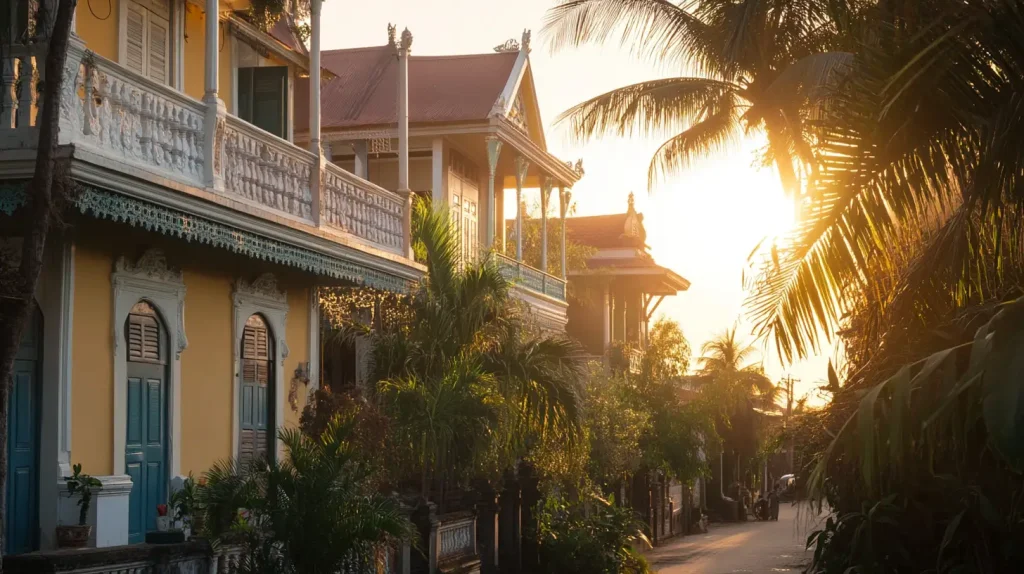
The riverfront and surrounding streets hold the best collection of French colonial buildings in northwest Cambodia — some well-maintained, some in photogenic decay, all more accessible and less touristic than Phnom Penh’s equivalents. Walk the riverfront south from the central market, then up through the streets behind. The former governor’s residence and the train station (closed but photogenic) anchor the architectural tour. Allow 90 minutes on foot.
Battambang has a disproportionately active arts scene for its size — a legacy of the Phare Ponleu Selpak arts school, which trained Cambodian artists through the trauma of the post-Khmer Rouge reconstruction period and now runs circus performances open to visitors. The Phare circus shows run several nights per week, cost around $18 USD, and are the most polished cultural performance in the city. Reserve ahead.
Getting to Battambang from the US
Fly to Phnom Penh (PNH) via Bangkok, Singapore, or Kuala Lumpur — typically $800–1,100 round trip from US East Coast. From Phnom Penh, bus to Battambang takes 5–6 hours on Giant Ibis or Mekong Express ($8–12). Alternatively, fly to Siem Reap (REP) and take the 3-hour bus to Battambang ($5–8). The slow boat from Siem Reap to Battambang (available November–May, about $15 for a full day on the water) is the most scenic option and a legitimate experience in itself.
Where to Stay
Budget ($8–18/night): Bambu Hotel has been the backpacker reference point for years — rooftop, good social scene, helpful staff with bike rentals and countryside tour organization. Classy Hotel is slightly quieter at similar prices.
Mid-range ($25–55/night): La Villa Hotel in a restored French colonial house on the riverfront — genuinely atmospheric, swimming pool, the best breakfast in town.
Splurge ($80+/night): Battambang Resort on the river, traditional Khmer-influenced design, pool, good restaurant.

Practical Tips
Rent a bicycle or tuk-tuk for the day to reach Phnom Sampeau, the bamboo train, and the surrounding countryside temples (Banan Temple, 30 minutes south, is an Angkor-era hilltop site with better views and far fewer visitors than Angkor). A full-day tuk-tuk with driver costs $15–25 USD and covers all these sites comfortably.
Battambang’s morning market (Psar Nath) has some of the best cheap Cambodian food: nom banh chok (rice noodles with fish curry sauce, $0.50–1), grilled meats and satay sticks, and fresh fruit stalls selling the famous local oranges. Eat breakfast there before anything else.
Frequently Asked Questions
How do I get from Siem Reap to Battambang?
Bus takes about 3 hours on Giant Ibis, Mekong Express, or Capitol Tours — around $5–8 USD. The slow boat (available November–May) travels through the Tonle Sap floodplain in 6–8 hours for about $15 USD — slow but one of the more scenic river journeys in Southeast Asia. Battambang’s airport is currently under renovation (2024 onwards) and not operating flights.
What is the Battambang bamboo train?
The norry is a bamboo platform mounted on railway axles and powered by a small motor, running on the original French colonial-era railway tracks through the Cambodian countryside southwest of Battambang. The ride covers about 7km in each direction. When two norries meet on the single track, one disassembles for the other to pass. Cost: $5–8 per person. Find it at the station near Wat O Dambong, about 5km from town.
Is Battambang safe for tourists?
Yes — Battambang has a very low crime rate by Southeast Asian standards. It’s a functioning Cambodian city rather than a tourist zone, which means petty theft is less common than in high-tourist areas. Normal precautions apply: don’t leave belongings unattended, don’t flash expensive items. The Phnom Sampeau Killing Caves are a somber historical site that requires respectful behavior rather than safety precaution.
How many days should I spend in Battambang?
Two nights (two full days) is the sweet spot: Day 1 covers the bamboo train, colonial streets, and the afternoon-into-evening bat exodus at Phnom Sampeau. Day 2 covers a countryside cycling or tuk-tuk day including Banan Temple and the village circuit. One night is too brief; three nights is comfortable if you also catch the Phare circus.
What is Battambang famous for?
The bamboo train (norry), the bat cave exodus at Phnom Sampeau, the best French colonial architecture in northwest Cambodia, the Phare Ponleu Selpak circus arts school and performances, the Battambang orange (considered Cambodia’s finest), and being the country’s second city with a genuine arts scene that Siem Reap lacks.