There is a version of eating on the Amalfi Coast that costs 80 EUR per person and involves white tablecloths and a waiter who explains the origin of every ingredient. There is another version that costs 12 EUR and involves a paper cone of fried seafood eaten standing up at a harbor railing with the sea two meters below you. Both are legitimate Amalfi Coast experiences. The paper cone version will probably make you happier.
Eating fish on this coast is easy. The Tyrrhenian Sea is right there. Most restaurants get their catch the same morning, and even the mediocre places serve reasonably fresh seafood because the supply chain is short. What separates the good restaurants from the excellent ones is the pasta and the sauces — the local dishes that a tourist-trap kitchen will approximate badly, and a serious kitchen will get exactly right.
The Dishes Worth Ordering
Scialatielli ai frutti di mare
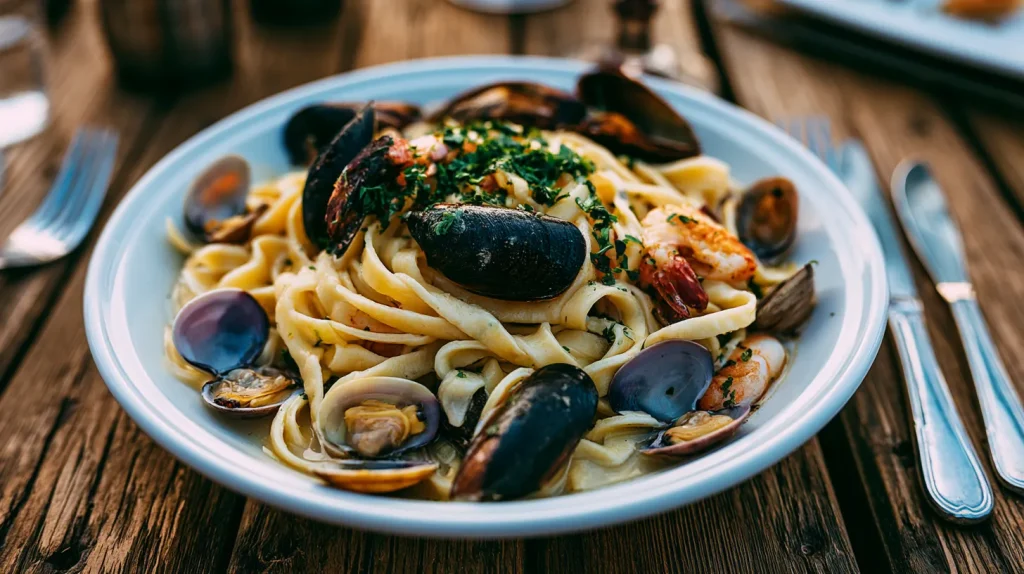
This is the single most important dish on the Amalfi Coast and the one most visitors miss because they reach for spaghetti. Scialatielli is a thick, short, hand-cut pasta made fresh with flour, milk, eggs, and sometimes lemon zest — it originated in Amalfi and is found properly only in this coastal area. The texture is chewier and more substantial than spaghetti or linguine, and it holds a seafood sauce in a completely different way.
Order it with frutti di mare (mixed seafood — clams, mussels, prawns, sometimes calamari) and you get one of the best pasta dishes in southern Italy. This is not hyperbole. When the pasta is made fresh that morning and the seafood came in that morning, it is a genuinely exceptional plate of food.
Cuoppo di mare
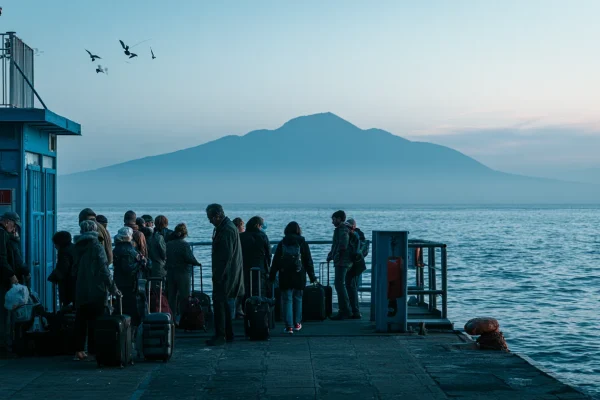
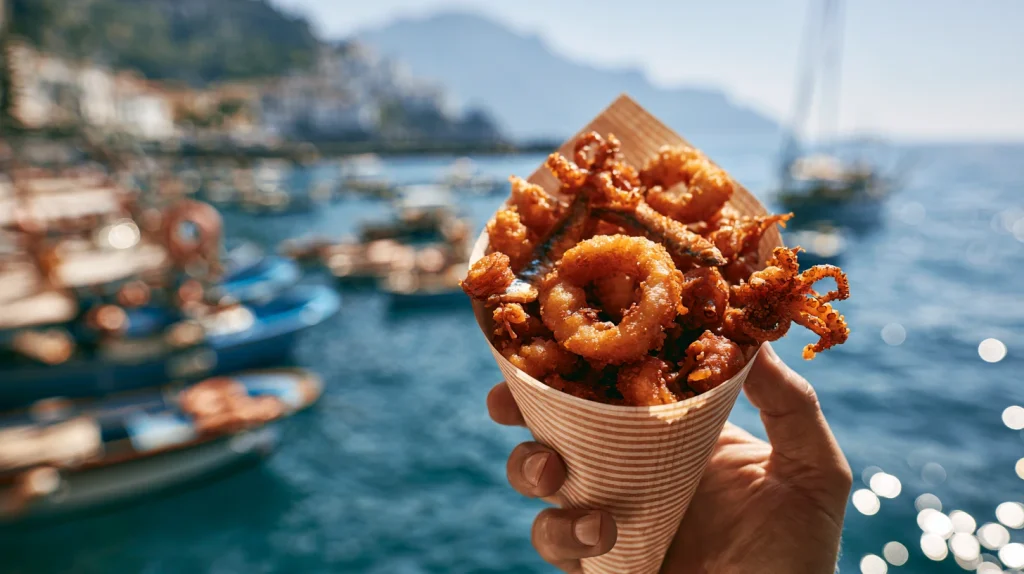
A paper cone of mixed fried seafood — squid rings, anchovies, baby octopus, fish balls, and white fish — lightly battered and fried until just crispy. Sold at harbor-front kiosks and small shops in Amalfi town and along the coast. Costs around 5-8 EUR. Eat it immediately, standing up, while the batter is still crisp. Do not take it back to a table and let it steam in the paper.
Spaghetti alle vongole
Clams, white wine, garlic, parsley, olive oil. One of Italy’s most copied pasta dishes and, on the Amalfi Coast, one of the most reliably excellent versions of it. The clams here are small, sweet, and fresh. The difference between a good vongole and a mediocre one is whether the pasta was cooked in the clam broth (good) or just tossed with clam liquid at the end (not as good). You cannot tell from the menu. You can tell from the taste.
Fritto misto di pesce
A mixed plate of lightly battered and fried seafood — usually calamari, shrimp, anchovies, and whatever else is going that day. The best versions are delicate rather than heavy-battered. Ordered with a wedge of sfusato lemon (always present on the coast) it is one of the more satisfying things you will eat for 14-18 EUR.
Colatura di alici on pasta
Colatura di alici is anchovy sauce from Cetara, the small fishing village east of Amalfi that has made this product for centuries. The sauce is intensely savory and deeply umami — a few drops turn a simple pasta into something complex. Restaurants serving it typically dress linguine or spaghetti with olive oil, garlic, parsley, and colatura. No cheese. The anchovies replace the salt entirely. One of those dishes that sounds odd and tastes extraordinary.
Totani e patate
Flying squid and potatoes — a traditional Praiano dish that shows up on menus across the coast. The squid is braised with potato, tomato, and herbs until the whole thing becomes soft and deeply flavored. Not glamorous. Very good.
Where to Eat: By Town
In Positano
Lo Guarracino is the consistently recommended spot for the view-plus-quality combination. It sits on a terrace above Fornillo Beach with the sea below and serves traditional seafood cooking — the zucchini flowers stuffed with ricotta are famous, the pasta is made in-house. Prices are mid-range for Positano, which means still expensive by most standards, but justified by the quality. Book ahead in peak season.
Da Vincenzo on Via Pasitea has been run by the same family since 1958. The menu changes daily based on the catch. Order the spaghetti alle vongole or whatever pasta they are making that morning. The terrace is shaded and the atmosphere is genuinely local in a way that fewer Positano restaurants manage.
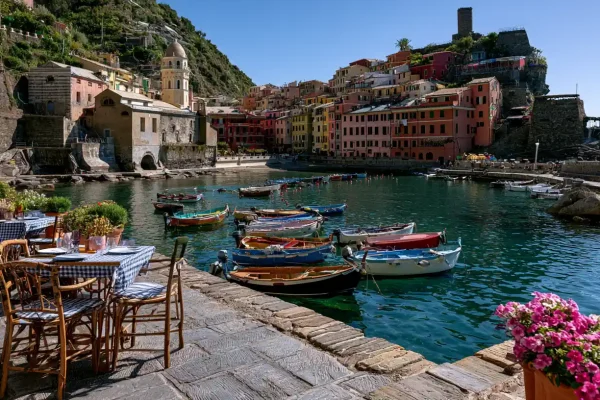
Chez Black on Spiaggia Grande has tables on the beach with fishing boats beside you. It has been here since 1949. The seafood is good without being exceptional, but the location is unbeatable and prices are more honest than most of Positano’s terrace restaurants.
In Amalfi
Marina Grande sits in the old fishermen’s quarter on the waterfront west of the main piazza — not to be confused with the beach. This is the most-recommended affordable seafood restaurant in Amalfi for good reason. The fritto misto is excellent, the portions are generous, and mains run 16-28 EUR. It fills fast; arrive early or book.
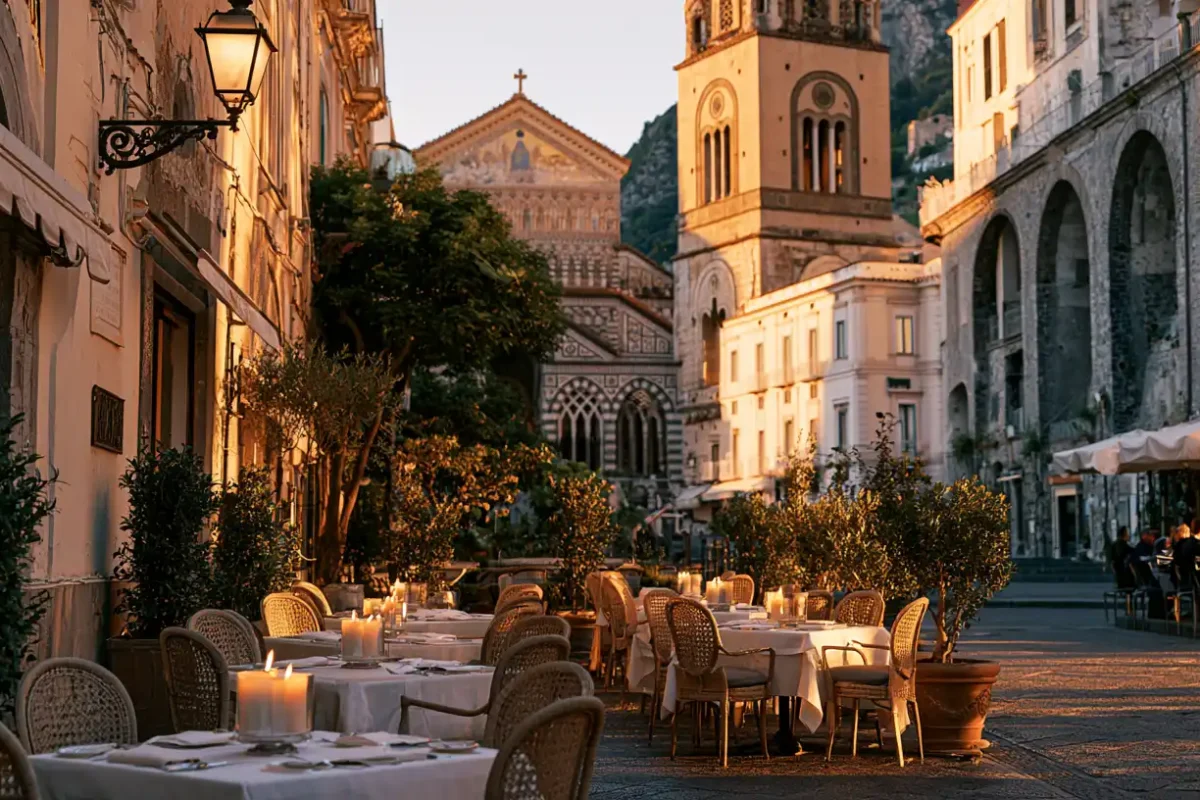
La Caravella holds a Michelin star and operates from a vaulted dining room a few steps from the cathedral. The best cooking on the coast, arguably. The price matches. For a special occasion meal, it is the benchmark.
In Atrani and Cetara
Atrani is Amalfi’s overlooked neighbor — a small fishing village five minutes east by road or ten minutes on foot via the cliff path. Fewer tourists, lower prices, same fish. Several small restaurants along the waterfront serve very fresh seafood without the Amalfi markup.
Cetara is the anchovy village, and the colatura di alici found here is the original. Any restaurant in town will have it on the menu. Acqua Pazza in Cetara is the most recognized restaurant and serves excellent pasta with colatura. Getting to Cetara requires a bus or a car — it is east of Amalfi and less visited, which is part of the appeal.
Suggested topic — Amalfi Coast Hidden Gems
In Ravello
Ravello sits 350 meters above the sea, so the fish travels further. The restaurants here serve excellent food, but the seafood is slightly less immediately fresh than in the fishing villages below. The trade is the view, which is unmatched.
Rossellinis at Palazzo Avino is Ravello’s Michelin-starred restaurant and worth the splurge if you want the full clifftop dining experience — the linguine with sea urchin is the dish to order. The hotel terrace below, the Belvedere, serves more casual food at somewhat lower prices with the same view.
For something more affordable with sea views, the restaurants along Via della Repubblica in the village offer good food at reasonable prices.
Eating Seafood on a Tighter Budget
The Amalfi Coast has a reputation for being expensive, and it is not wrong. But the gap between eating well and eating badly here is often just a matter of where you sit, not what you order.
The same fritto misto that costs 22 EUR at a terrace restaurant in Positano costs 14 EUR at a no-view trattoria two streets back. The fish is equally fresh. The cook may be better. What you are paying for on the terrace is the unobstructed view of the sea, and that is a real thing worth deciding on consciously rather than accidentally.
Strategies that actually work:
Eat lunch, not dinner. Many restaurants offer a cheaper midday menu — a primo (first course), secondo (second course), and sometimes a glass of wine for 15-20 EUR. The same table at dinner runs 35-50 EUR per person. The view is the same.
Eat in the less-visited villages. Atrani, Minori, Maiori, Cetara, and Vietri sul Mare are all east of Amalfi and significantly cheaper than Positano or Ravello. The fish is if anything fresher in the fishing villages. Cetara is the anchovy capital. Minori has Sal De Riso’s pastry shop. Maiori has a long beach and real local restaurants serving full meals for 20 EUR per person. None of them have the celebrity status of Positano, which is precisely the point.
Order the cuoppo. Five to eight euros for a paper cone of mixed fried seafood from a harbor kiosk is one of the best-value eating experiences in southern Italy. Do it at least once. Eat it at the harbor railing rather than taking it to a cafe table.
Stand at the bar. Coffee, pastry, even a quick seafood panino — everything costs significantly less if you eat standing at the counter rather than at a table. The surcharge for table service is real and can be 50-100% of the food price in tourist-heavy spots.
The Timing Question
Restaurants on the Amalfi Coast tend to run on Italian time — lunch runs from 12:30 to about 3pm, dinner from 7:30pm. Some kitchens take a proper break in the afternoon and reopen for dinner only. Do not arrive at 6pm expecting dinner. You will find closed doors and a confused-looking waiter.
The exception is bars and pasticcerie, which stay open through the afternoon and will feed you a coffee, pastry, and something small if you arrive outside main meal hours.
In high summer (July-August), restaurants in Positano in particular fill very fast at dinner. Walk-in at 7:45pm for a table at Lo Guarracino in August and you will be disappointed. Reserve a day ahead at minimum.
The best meal timing for a budget-conscious visitor: lunch at noon when the tourist rush has not yet peaked, at a restaurant slightly away from the main waterfront. You get a better table, more attentive service, and 20-30% lower prices than the same restaurant at 1:30pm peak.
What to Avoid
The tourist restaurants on Amalfi’s Piazza Duomo are an obvious trap — they charge 5 EUR for a Coke and the food is indifferent. The same applies to any restaurant that approaches you aggressively outside and waves a menu with photos. A good restaurant does not need to recruit.
Seafood risotto is often where kitchens cut corners. It requires attention and timing that high-volume restaurants simply cannot give it when they are turning tables fast. Unless a restaurant specializes in it or the waiter recommends it specifically, pasta is the safer order. The scialatielli has never let anyone down on this coast.
Suggested topic — 3 Days in Amalfi Coast
What to Drink With Seafood
The local answer is a cold glass of Falanghina or Greco di Tufo — white wines from Campania that are dry, mineral, and designed to sit next to seafood. Most coast restaurants stock them at honest prices.
Prosecco is everywhere but not the most interesting choice. A house white from a Campanian producer will cost 15-25 EUR for a half-litre carafe and be more interesting than most.
After the meal: limoncello. Always. A cold shot poured from a frozen bottle, arriving unannounced and free at the end of dinner, is one of the small pleasures this coast delivers reliably. The quality varies by restaurant but the gesture is universal.
FAQ
What is scialatielli?
A thick, short, hand-cut pasta made fresh from flour, milk, and eggs. It originated in Amalfi and is the signature pasta of this coast. Best ordered with mixed seafood (frutti di mare) in a white wine sauce. Not found in this form in most other parts of Italy.
What is cuoppo di mare?
A paper cone of assorted fried seafood sold at harbor kiosks and small shops. Costs around 5-8 EUR. Eat it immediately while still hot and crispy. One of the best-value eating experiences on the coast.
What is colatura di alici?
Anchovy sauce from Cetara, made by fermenting anchovies and drawing off the liquid over time. Used to dress pasta instead of salt — intensely savory, not actually fishy in the way you might expect. Try it on linguine at any Cetara restaurant.
How expensive is eating seafood on the Amalfi Coast?
It varies significantly by location. In Positano or Ravello, a seafood pasta costs 18-28 EUR. In Atrani or Cetara, the same dish can be 12-16 EUR. Choosing to eat in less touristy villages saves real money without sacrificing quality.
Should I book restaurants in advance?
In July and August, yes — especially for dinner at well-known spots like Lo Guarracino in Positano or Marina Grande in Amalfi. In shoulder season, you can usually walk in for lunch. Dinner tables fill earlier than you expect on this coast.