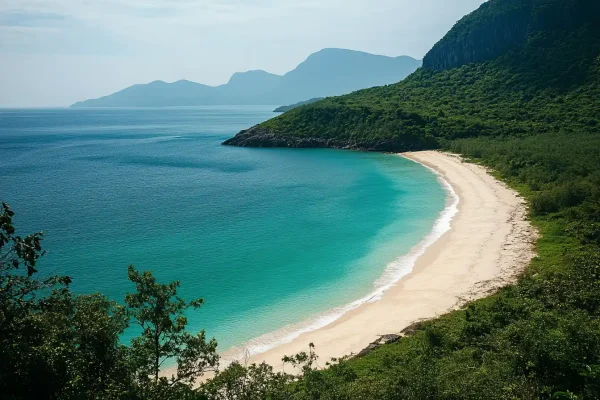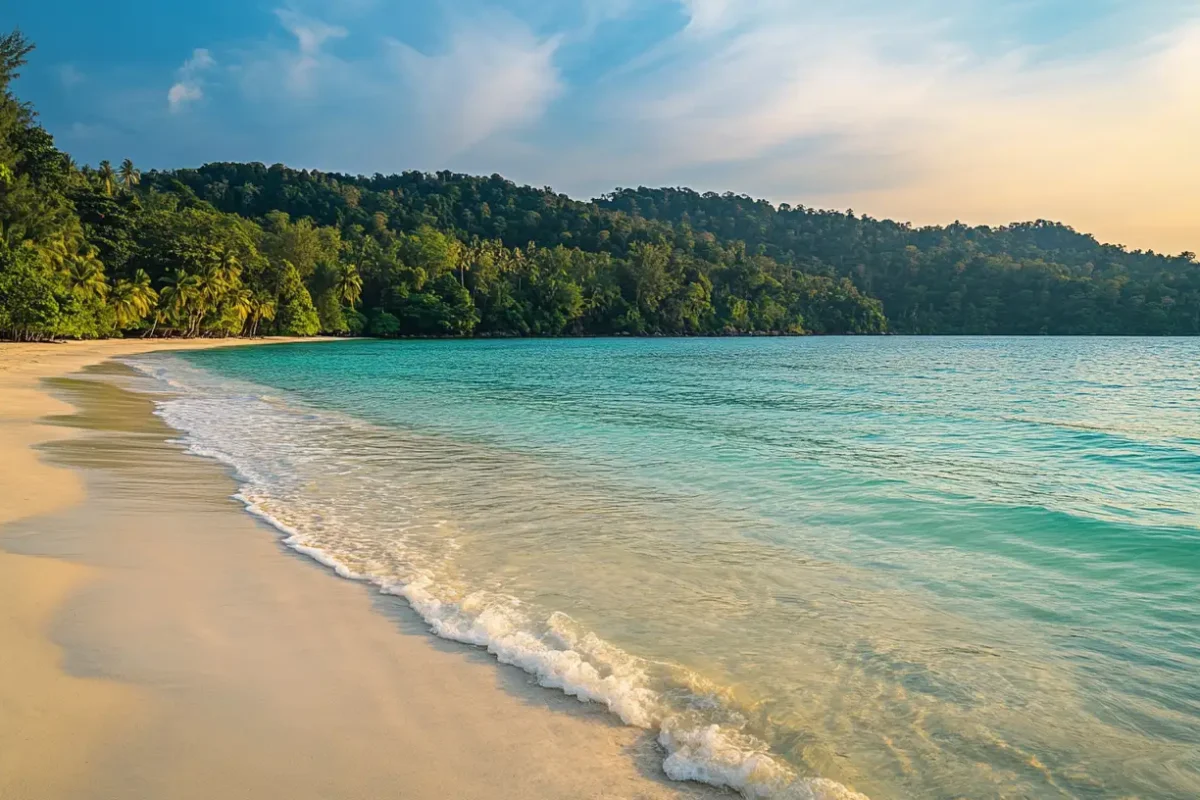
Koh Kood (also spelled Ko Kut) is Thailand’s fourth-largest island and still its least developed. In the Gulf of Thailand near the Cambodian border, it has no 7-Eleven, no major vehicle ferry, no beach clubs, no full-moon parties — the deliberate absence of these things is what makes it worth the 6-hour journey from Bangkok. Half the island is a Thai army base, which has permanently blocked resort development there. What remains is 25km of jungle-covered hills, white sand beaches on the west coast, a swimmable waterfall (Khlong Chao), a sea gypsy village on stilts, and water so clear you can see fish from the deck of the ferry before you arrive.
| Best time to visit | November–April (dry season); May–October is rainy — avoid |
|---|---|
| Getting there | Bus or minivan Bangkok to Laem Sok Pier, then 1–2 hr ferry to Koh Kood |
| Budget per day | $50–120 USD; budget options limited but exist |
| Visa for Americans | No visa required; 30 days on arrival, or 60-day tourist visa in advance |
| Language | Thai; limited English outside resorts — more than Koh Chang, less than Koh Samui |
| Currency | Thai Baht (THB); ~35 THB to $1 USD; some cash-only businesses |
Is Koh Kood Worth the Long Journey?
Yes — but only if you want what Koh Kood actually offers: genuinely undeveloped beach atmosphere, minimal infrastructure, and an island that still functions on its own rhythm rather than a tourism rhythm. The Guardian called it “Thailand’s last unspoilt island” in 2014, and despite increased development since, the description holds more than on any other major Thai island. The journey takes 6–8 hours from Bangkok total. Arrive on a slow ferry mid-afternoon on a Tuesday and walk to a beach that has four people on it. That’s the offer.
If you want reliable restaurants and convenience stores, Koh Chang (next island north) is much better connected. Koh Kood is not trying to be that.

The Best Beaches
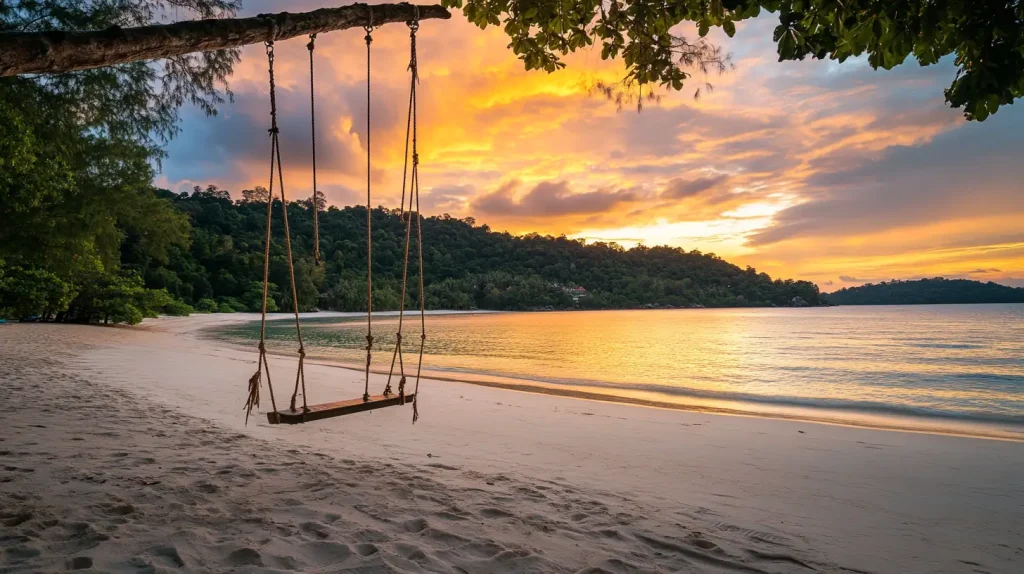
Ao Tapao (Tapao Beach) on the southwest coast is the island’s finest beach — a long curve of powdery white sand facing directly west for sunset, with large rocks at the southern end for snorkeling and a handful of laid-back bungalow resorts. The water here is shallow and warm. Rope swings hang from trees at the resort end. The sunset is unobstructed. This is the beach that makes people extend their stays.
Klong Chao Beach, on the west coast toward the north, is the most developed beach on Koh Kood — which means it has a small collection of cafés, a massage place, and a couple of restaurants. Still genuinely quiet by any standard. The Klong Chao waterfall is a short walk inland from this beach: a 10-meter cascade into a large pool that’s warm and swimmable, surrounded by jungle. Visit early morning before tour boats arrive from Koh Chang.
Klong Hin Beach, between Tapao and Klong Chao, is more secluded and harder to find — a small bay with very limited accommodation. At low tide the water recedes significantly; time your swimming visit for high tide.
Ao Salat Sea Gypsy Village
On the east coast of Koh Kood, the village of Ao Salat is built on stilts over the water — elevated boardwalks connecting stilt houses, fishing nets strung between buildings, a community of Thai and Cambodian residents who’ve lived here for generations. It’s not a tourist attraction (there’s nowhere to stay and nothing to buy), but a 20-minute scooter ride across the island from the main beaches makes it a worthwhile cultural stop. Walk the boardwalk, watch the fishermen tend their gear, don’t take photographs of residents without asking. The contrast with the west-coast resort beaches is striking.
Getting to Koh Kood from Bangkok
The most convenient option: book a combined van and ferry package from Bangkok’s Ekkamai Bus Terminal (or your hotel in Bangkok) to Laem Sok Pier in Trat Province, then ferry to Koh Kood. Several operators run this service daily in high season for about THB 600–900 ($17–26 USD) total one way, door to resort on the island. Total journey: 5–7 hours depending on Bangkok traffic and ferry schedule. Boonsiri Ferry is the major operator; Princess Ferry also reliable. Book online in advance for high season (December–February) or Thai holidays.
Alternatively: fly Bangkok to Trat Airport (TDX) on Bangkok Airways — about 50 minutes, $50–80 one way — then taxi to Laem Sok Pier and ferry. Saves 3–4 hours of bus travel but costs significantly more.
Where to Stay
Budget ($20–50/night): Simple fan bungalows around Klong Chao Beach and a few inland from Ao Tapao. PD Guesthouse is the cheapest reliable option near Klong Chao — basic rooms, good breakfast, helpful staff who organize island tours.
Mid-range ($80–150/night): To The Sea Resort near Klong Chao — bungalows with sea views, pool, good restaurant. Siam Beach Resort at Ao Tapao — the best mid-range positioning on the finest beach.
Splurge ($200+/night): High Season Pool Villa and Spa on Klong Chao Beach — widely considered the best resort on the island, private pools, excellent food, the full treatment.
Best Time to Visit
November–April only. Koh Kood sits in a zone that receives heavy monsoon from May through October — the seas are rough, ferries sometimes cancel, and the island genuinely shuts down. Some resorts close entirely. Don’t book for May–October unless you specifically want the off-season empty experience (some do) and understand the weather risk. December–February is peak season with the best weather; January is the driest month. March–April is warm (35°C+) but still reliably dry and the water is at its clearest.
Practical Tips
Rent a scooter the morning you arrive. The island has no proper public transport and the distances between beaches are too far to walk comfortably. Scooters cost THB 200–300 ($6–9) per day. The main road is paved; side roads to some beaches are rough.
No 7-Eleven. The closest thing is a small convenience store near Klong Chao. Stock up on snacks, sunscreen, and anything specific you need before you leave Trat or the mainland.
The Black Bananas restaurant near Klong Chao, run by a local family, serves the best Thai food on the island and is genuinely excellent — pad kra pao, massaman curry, fresh seafood at honest prices. Cash only, opens from noon.
Frequently Asked Questions
How do I get from Bangkok to Koh Kood?
Bus or minivan from Bangkok (Ekkamai terminal or hotel pickup) to Laem Sok Pier in Trat Province (~5 hours), then ferry to Koh Kood (~1.5–2 hours). Several operators sell combined packages for $17–26 USD one way. Alternatively, fly Bangkok to Trat Airport (~50 minutes, $50–80) then short taxi and ferry. Book Boonsiri or Princess Ferry in advance for December–February peak season.
What makes Koh Kood different from Koh Chang?
Koh Kood is significantly less developed. No 7-Eleven, no vehicle ferry (meaning no large-scale tourist buses arriving), no beach clubs, and half the island permanently off-limits as an army base. The trade-off is less infrastructure and choice. Koh Chang has more restaurants, better transport connections, more things to do. Koh Kood has better beaches and more actual quiet. Choose based on what you’re after.
Is Koh Kood good for snorkeling?
Yes — the water clarity is excellent and the coral reefs around the island’s headlands are healthy. Best snorkeling: around the rocks at Ao Tapao’s southern end, and at the offshore reef near Koh Maak (day trip possible). Diving is also available from a small operator near Klong Chao Beach. The marine environment is genuinely better than Koh Samui or Koh Phangan at this point.
Can I visit Koh Kood in May or June?
Technically yes, but it’s not recommended. The Gulf of Thailand rainy season (May–October) brings regular heavy storms, rough seas that can cancel ferries for days, and a significantly reduced island experience. Most resorts either close or operate at minimal capacity. Some travelers specifically go in October for the empty-island experience — ferries still run in shoulder wet season — but this is for experienced travelers comfortable with weather uncertainty.
How many days should I spend on Koh Kood?
Minimum 3 nights given the travel time from Bangkok. 5–7 nights if you want to properly decompress, explore all the beaches, visit the waterfall and the sea gypsy village, and take a boat trip to the offshore islands. The journey time makes a 2-night stay feel rushed and inefficient.