The hotel you book in Venice is the single decision that shapes everything else about the trip. Not because the distance between neighbourhoods is vast — it isn’t, Venice is a small island and most points are within 30 minutes’ walk of each other — but because where you sleep determines what you see at 7am before the crowds arrive, what kind of restaurant you walk past on the way home, and whether you feel like you are staying inside a living city or a themed tourist zone.
There are six historic sestieri (districts) in Venice proper, plus the islands of Giudecca and Lido. Each has a distinct character built over centuries of specific use — merchant district, shipyard district, university quarter, civic centre. Most have genuine reasons to stay in them depending on what you are looking for. The right choice depends on what you actually want from the trip, not on which area sounds most appealing in a travel guide.
San Marco: The Most Central, The Most Expensive
San Marco is where the Basilica, the Doge’s Palace, and the Piazza sit. Staying here puts you within five to ten minutes of the major sights, which is a genuine practical advantage — particularly for early morning arrivals at the Basilica before the crowds, or for late evening walks when the piazza is at its calmest.
What you pay for this proximity: hotel prices in San Marco are the highest in Venice, often significantly so. The restaurants in the immediate San Marco area are also priced for people who are unlikely to return, and the food quality at many of them does not match the prices. The streets around the Piazza in the evening are very quiet — the tour groups leave and the residential population here is thin — which some people find atmospheric and others find slightly hollow.
Stay in San Marco if: you are visiting Venice for a short time (one to two nights) and access to the major sights matters more than neighbourhood atmosphere. Or if you have the budget and specifically want a Grand Canal hotel — the views from Canal-facing rooms in San Marco are genuinely extraordinary and the experience of being on the water in the right building justifies the premium for some people. The area is also notably quiet late at night once the day visitors leave, which some people find appealing.
Skip San Marco if: you are on a mid-range or tight budget, if you are staying three nights or more and want local texture in your daily life, or if you find heavily touristy environments draining after the first day. The neighbourhood is beautiful but thin — there are relatively few genuine residents here compared to its size.
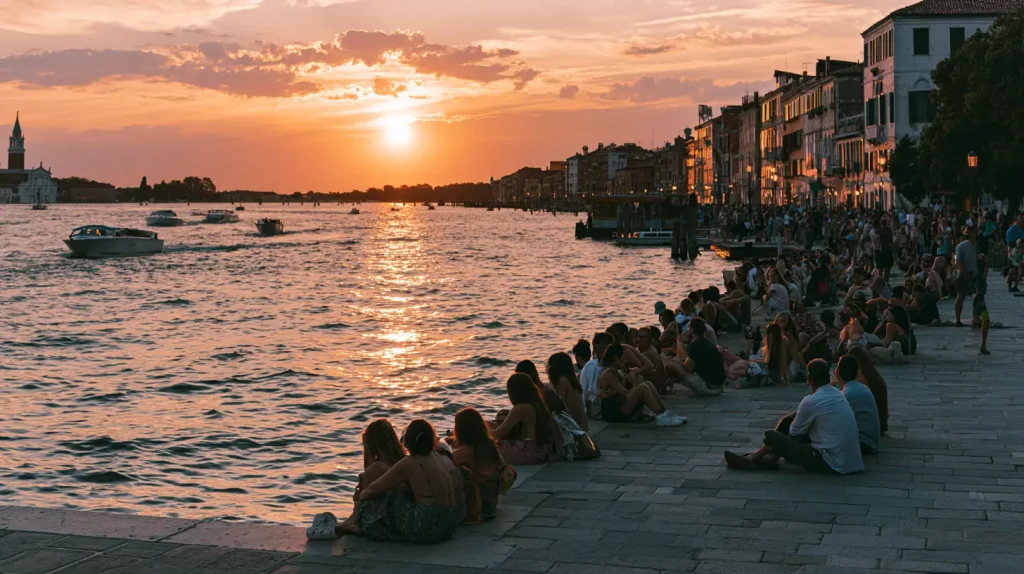
Cannaregio: The Local Alternative
Cannaregio is the northernmost sestiere, running from the train station east toward the Rialto. It is the neighbourhood most often recommended by people who have visited Venice multiple times and now avoid the San Marco area.
The reasons: Cannaregio has a working residential population. It has a proper morning market. Its bacari (wine bars) serve Venetians, not primarily tourists. The long fondamente running alongside its main canals — the Rio di Cannaregio and the Fondamenta della Misericordia — are some of the most pleasant walking streets in Venice. The Jewish Ghetto, the oldest in Europe (established 1516), is here and worth exploring seriously rather than just photographing the square.
Hotel prices in Cannaregio are lower than San Marco — sometimes significantly so. The restaurant-to-price-quality ratio is the best of any central neighbourhood. The walk from the eastern edge of Cannaregio to the Rialto takes about fifteen minutes.
The Fondamente Nove vaporetto stop, on the northern edge of Cannaregio, is the departure point for the island day trips to Murano, Burano, and Torcello — a practical advantage if islands are in your plan.
Stay in Cannaregio if: you value local atmosphere over proximity to the big sights, you want better value on food and accommodation, or you are doing island day trips. It is the neighbourhood that most rewards people on a second or third Venice visit who have already done the highlights and want something different.
The one genuine downside: the area immediately around the train station (Scalzi) is the least attractive part of Cannaregio — functional, transient, with tourist-trap restaurants near the station that could be anywhere in Italy. Stay east of the station, closer to the Misericordia or Fondamente Nove end, for the neighbourhood’s genuine character.
Dorsoduro: Galleries, Students, and Grand Canal Frontage
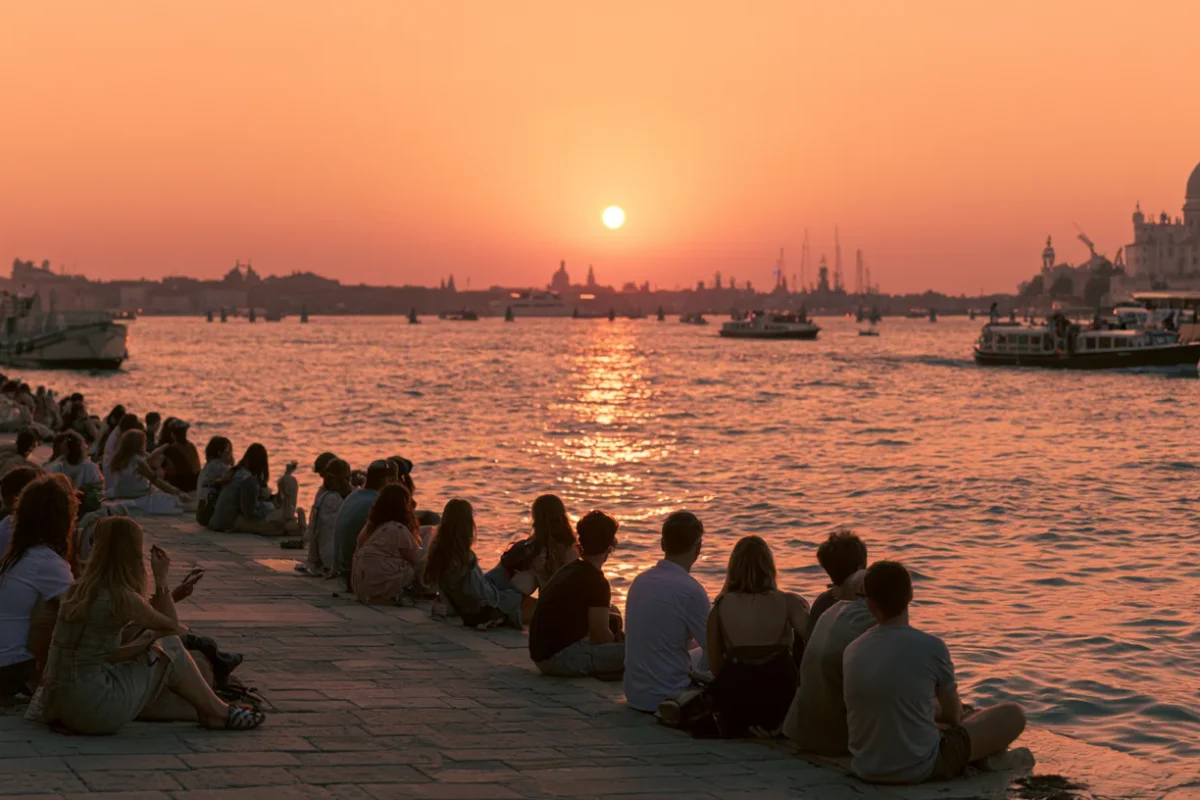
Dorsoduro sits south of the Grand Canal, across from San Marco. It contains the Gallerie dell’Accademia, the Peggy Guggenheim Museum, and the Zattere waterfront — a long promenade facing the Giudecca canal where you can walk, sit, and eat facing the water. It is also the university district, which gives it a younger, more lively evening atmosphere than the other sestieri.
The neighbourhood has genuine quality in its restaurant and bar scene, concentrated around Campo Santa Margherita — a wide open campo that functions as a real neighbourhood square with bars and small shops around it rather than a tourist magnet. In the evenings Campo Santa Margherita fills with students, young locals, and travellers who found their way here. It is one of the best places in Venice to have an inexpensive drink at a table in the open air.
Accommodation in Dorsoduro ranges from boutique hotels facing the Grand Canal (expensive, with exceptional views) to small guesthouses and B&Bs in the interior streets (mid-range, good value). Getting to San Marco from Dorsoduro takes about twenty minutes on foot or five minutes by vaporetto.
Stay in Dorsoduro if: art, evening atmosphere, and quality of neighbourhood life are priorities. It is also the best choice if the Accademia and Guggenheim are high on your list and you want to be five minutes from both. Campo Santa Margherita in the evening, with an Aperol spritz on a table outside and the neighbourhood going on around you, is one of the most pleasant urban experiences Venice offers.
One honest caveat: Dorsoduro’s university character means evening noise in certain streets. If you need a quiet hotel room by 10pm, verify the specific location before booking.
San Polo: Smallest and Most Central
San Polo is the smallest sestiere in Venice, sitting on the inside of the Grand Canal’s main curve between the Rialto and the Santa Croce boundary. It is closely associated with the Rialto market — the fish and vegetable markets that define what Venetian cooking actually uses — and has historically been the neighbourhood with the most authentic restaurant culture.
The walk from the centre of San Polo to San Marco takes about ten to fifteen minutes through well-signed calli. The Rialto Bridge is immediately adjacent. Frari church (the church of Santa Maria Gloriosa dei Frari, home to Titian’s Assumption) is here.
Hotels in San Polo are mid-range in price — not as expensive as San Marco, not as cheap as Cannaregio. There are fewer hotels overall in San Polo, so options book up earlier in peak season.
Stay in San Polo if: you want to be close to everything without paying San Marco prices, and you want the Rialto market and bacaro culture right on your doorstep. It is particularly good for food-focused travellers — the streets between the market and the Frari church have some of the best cicchetti bars and neighbourhood trattorias in Venice. Ca’ Macana (one of Venice’s best mask shops, with a proper artisan workshop) is also in San Polo, for what it’s worth.
Castello: The Most Authentic
Castello is the largest sestiere, stretching from the San Marco waterfront east to the shipyard district (the Arsenale) and the public gardens (Giardini). The western half of Castello — the area around Campo Santi Giovanni e Paolo and Campo Santa Maria Formosa — is a genuinely beautiful residential neighbourhood with some of the best mid-range hotels in Venice and a daily life that goes on largely unrelated to tourism.
The eastern half of Castello, beyond the Arsenale, is the quietest part of Venice’s main islands — fewer tourists get this far, and the neighbourhood has the most intact residential character of any area. The Biennale gardens are here, which means every two years the area comes to life with the international art crowd, but in non-Biennale years it is particularly calm.
The Hotel Danieli, Venice’s most famous luxury hotel, is in Castello on the San Marco waterfront — if you are booking at that level, the Danieli’s position is unmatched.
Stay in Castello if: you want authenticity, lower prices, and do not mind a slightly longer walk to San Marco. Western Castello — the area around the great Gothic church of Santi Giovanni e Paolo and the nearby Campo Santa Maria Formosa — is the sweet spot. It is close enough to be genuinely convenient, with San Marco a 15-20 minute walk, but far enough from the main tourist corridor to feel like a different city. The neighbourhood has good mid-range hotels, real bakeries, and locals who go about their day without tourist infrastructure defining every block.
Santa Croce: Convenient, Not Atmospheric
Santa Croce borders Cannaregio and San Polo and contains the Piazzale Roma — the main terminus for buses and taxis arriving from the mainland, and the nearest point to the off-island car parks. Hotels here are often used by people arriving late or leaving early who want a simple, fast connection point.
The area has noticeably less character than any other sestiere — it is functional rather than atmospheric, a transit hub that happens to have hotels. Accommodation prices are competitive. If your primary concern is transport convenience (bus from airport, early morning departure) Santa Croce solves that problem efficiently.
Giudecca and Lido: For a Different Experience
Giudecca is the long island directly south of Dorsoduro, separated by the Giudecca canal. It is entirely residential with almost no tourist infrastructure — no major sights, few restaurants aimed at visitors, quiet streets with locals going about their day. The vaporetto crosses the Giudecca canal in five minutes from the Zattere stop, giving fast access to Dorsoduro and the rest of Venice. A small number of high-end hotels are here, including the Belmond Cipriani, one of the most legendary hotels in Venice. Staying on Giudecca appeals to people who want complete separation from the tourist mass while still having quick water access to the main islands.
Lido is the barrier island at the mouth of the lagoon — a proper beach resort town with streets, cars, bicycles, and a genuine summer season. It connects to Venice by vaporetto in about 25 minutes. It is worth visiting for a half-day if you want to see the belle époque beach architecture and the long Adriatic beach. As a base for the main Venice sights, the commute is workable but adds up over three days. It makes most sense for families who want beach access alongside Venice.
Booking Practicalities
Book accommodation in Venice as early as possible for any travel between April and October — particularly if visiting in June through August or during Carnival. Hotels in the preferred neighbourhoods (Dorsoduro, Cannaregio, San Polo) sell out months ahead of peak dates. Venice has no shortage of accommodation options, but the good-value ones at the right location go first.
Check air conditioning when booking for summer travel. Many older Venetian buildings have narrow windows and thick walls that retain heat — a room without AC in July or August is a significant problem that will affect sleep and recovery between long walking days.
Also check the exact address against a Venice map before booking. Hotel addresses using calle names can look similar to each other, and a hotel described as being ‘near the Rialto’ might be a 20-minute walk from the bridge depending on how ‘near’ is being defined. Look for the vaporetto stop nearest to the hotel and how many minutes on foot from that stop.
Registered overnight guests are exempt from Venice’s day visitor access fee [VERIFY current rules at veneziaunica.it]. Your accommodation provides a QR code confirming your overnight status. This is not a major logistical hurdle but is worth understanding before arrival, particularly if you plan to arrive on a charged day.
suggested topic — Best Time to Visit Venice: An Honest Month-by-Month Guide
suggested topic — 3 Days in Venice: First-Timer Itinerary & Top Highlights