There is no objectively best time to visit Venice. There is only the time that matches what you want from the trip — and an honest accounting of what each season costs you in weather, crowds, price, and experience. That accounting changes depending on your priorities, your budget, your tolerance for cold and grey skies, and whether acqua alta is something you find romantic or simply inconvenient.
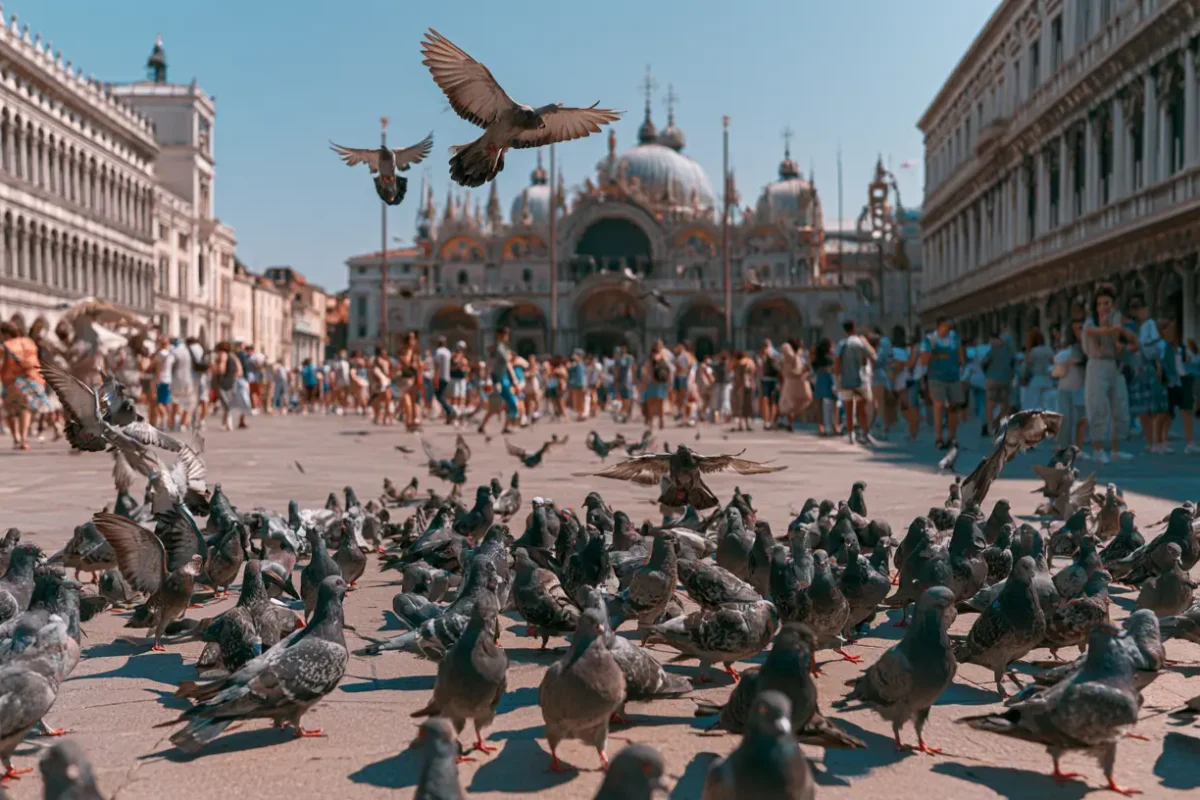
What is true across all seasons: Venice in the first hour after dawn is calmer than most cities ever are. The canal sounds carry differently. The alleys are yours. And Venice at 2pm in August, when cruise ship passengers and coach tours converge on Piazza San Marco and the temperature sits at 32°C, is worse than almost any city ever gets. Same city, different reality.
January and February (Off-Season, then Carnival)
January is the quietest month in Venice. Hotel prices drop to their annual low — sometimes 40-50% below summer rates The city is cold (4-8°C / 39-46°F), occasionally grey, and free of the masses. The restaurants and bacari serve Venetians rather than tourists. Museum queues are short or nonexistent. The Gallerie dell’Accademia, which in summer might require a 45-minute wait, you can walk straight into. The afternoon light on the Grand Canal in January, low and golden, is unlike anything summer produces.
If you dress appropriately and do not require sunshine as a baseline condition for travel, January is genuinely one of the best months to be in Venice. The city functions differently without the tourist weight on it. You can hear it.
Then comes February, which splits into two distinct experiences depending on your exact dates.
Carnival (Carnevale di Venezia): In 2026, Carnival runs February 7-17. Roughly 3 million visitors attend the annual celebrations. Weekends during Carnival are genuinely overwhelming — Piazza San Marco becomes nearly impassable, hotel prices spike back toward summer levels, and accommodation books out months in advance. Weekday mornings are dramatically quieter than the weekends, which gives a more workable experience of the event.
If you want to attend Carnival without the worst of the crowds, book accommodation in Cannaregio, Castello, or Santa Croce rather than the San Marco area, and plan your San Marco visits for early mornings on weekdays rather than the main event weekends. The costumes and masks you see on weekday mornings are often more elaborate than on the crowded weekends — serious costume participants favour the quieter hours for their own reasons. You do not need to wear a costume to participate, though a mask bought at one of the traditional mask artisan shops (rather than mass-produced souvenir stalls) is a reasonable addition. The difference in quality between a papier-mâché mask from a real maskmaker and a plastic one from a tourist shop is considerable and the price difference is not as large as you might expect.
If you have no interest in Carnival and are visiting Venice for its architecture, food, and islands, avoid the two Carnival weekends entirely. Target the first two weeks of January for maximum quiet and minimum cost, or the final week of February after the event winds down.
March and April (Spring Arrival)
March is still quiet and occasionally cold, with acqua alta possible until the month ends. By late March the city begins to warm and the tourist volumes start building. This is a transitional month — better than peak summer, less atmospheric than January.
April is where Venice’s spring season properly begins. Temperatures reach 12-18°C (53-64°F), most days are dry, and the city is operating its full summer schedule of extended hours and open attractions. Hotel rates rise but remain below the June-August peak. Easter brings a significant spike in visitors for roughly a week — in 2026, Easter falls on April 5 [VERIFY exact 2026 date]. Accommodation around Easter books up quickly and prices spike for the holiday weekend and the days immediately surrounding it. The weeks either side of Easter are preferable to the holiday period itself if your dates are flexible.
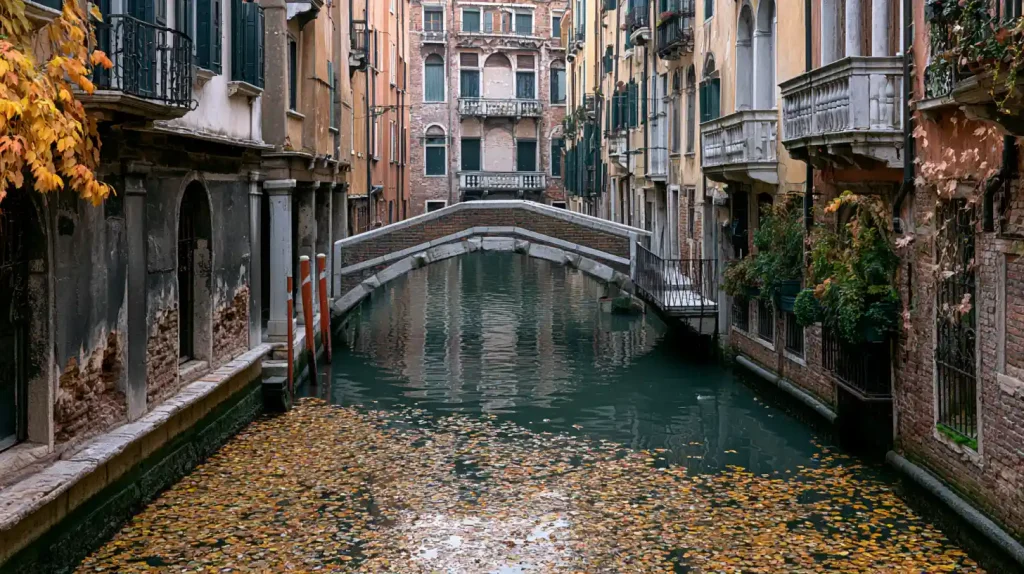
Late April into early May is frequently cited as the single best period by experienced Venice visitors. The crowds are manageable by Venice standards. The weather is reliable — warm enough for comfortable walking, not so hot that the afternoon becomes oppressive. The roses are flowering on balconies along the smaller canals. The light is good throughout the day and particularly beautiful in the early morning and late afternoon. It is also the one period when Venice genuinely looks like the photographs — clear light, relatively empty calli, the water a deep green rather than summer murk.
May and June
May is one of the most consistent months for Venice. Temperatures are comfortable (18-24°C / 64-75°F), rainfall is moderate, and tourist volumes have not yet hit the summer peak. If you can only visit in summer months, May is the clear choice over July or August.
June marks the transition into peak season. Early June is still relatively manageable. By mid-June the daytrip crowds from cruise ships and coach tours become the dominant feature of the San Marco area. The difference between a Tuesday in late May and a Saturday in late June in terms of crowd density is not incremental — it is dramatic.
July and August (Peak Season)
You should know what you are getting into.
Daily visitor counts in Venice during July and August reach 80,000-100,000 people [VERIFY against official Venice tourism data]. Cruise ships contribute a significant portion of these numbers — vessels docking in the port can disembark thousands of day visitors at a time who then concentrate in the San Marco area for five to six hours before returning to their ship. St. Mark’s Square becomes densely crowded by mid-morning and remains so until late afternoon. Queue times for the Basilica and Doge’s Palace run 90-120 minutes without pre-booked tickets, even with pre-booking the timed entry system still means waiting around the specified time slot in a crowded area.
Temperatures range from 28-33°C (82-91°F) with high humidity. The narrow calli trap heat. The vaporetti are overcrowded. Hotel rates hit their annual peak. The restaurants in the San Marco area know they will not see the same customers again, and the food and pricing reflect that in ways that are difficult to miss once you compare a meal there to a meal in Cannaregio at the same price point.
None of this makes July and August impossible. If your school holiday schedule or work schedule means it’s July or you don’t go at all, then go in July. Pre-book everything, arrive before 7am each morning, retreat to your hotel or a Cannaregio bacaro during the hottest midday hours, and return to the major sites in the late afternoon when the daytrip crowds begin leaving on their coaches and ships.
The honest opinion: summer Venice rewards people who plan around the conditions rather than against them.
September and October (Best Overall)
September is consistently recommended by experienced Venice visitors as the best single month to visit. Temperatures remain warm (22-28°C / 72-82°F), rainfall is low, and crowds drop noticeably after the European summer holidays end around the third week of August. The Venice Film Festival runs in late August into early September — worth knowing about as it attracts visitors to the Lido, though it has limited impact on the main islands.
October offers similar advantages to September with slightly cooler temperatures (15-20°C / 59-68°F) and lower hotel prices as the month progresses. By late October, acqua alta begins to be a realistic possibility and the city takes on its autumn character — quieter, more local, genuinely different from the summer version.
The specific case for September over October: the weather is still summer quality — warm enough for sitting outside in the evenings — but the crowds are shoulder season. This combination is rare for any major European city. September also brings better light for photography than summer’s harsh noon sun.
The restaurant situation in September eases compared to August. Reservation lead times shorten. The better bacari are easier to get into. Walking through Cannaregio at 8am in September, with the morning light on the canal and local residents heading to the market, is close to what people imagine Venice is like before they arrive. Which, honestly, is kind of the point.
November to Mid-December
November is Venice’s most atmospheric month, and it is underrated as a time to visit.
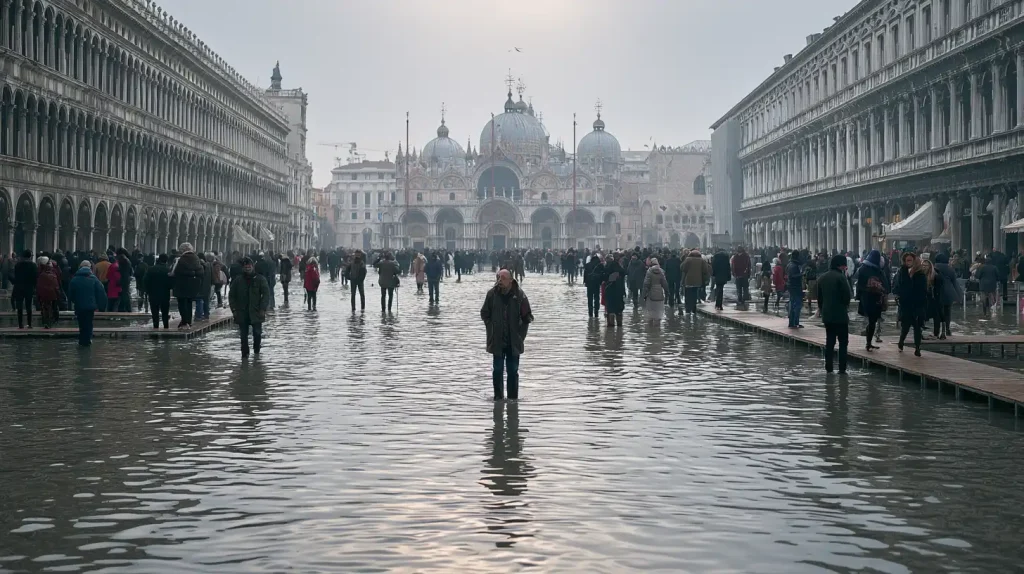
Crowds are minimal outside of Carnival. Hotel rates return to their winter lows [VERIFY current rates]. The city is cool and occasionally misty. Acqua alta — the high water flooding caused by tidal surges pushing Adriatic water into the lagoon — peaks in November and December. It is one of the defining features of Venetian life and has been occurring for centuries. Since the MOSE flood barrier became operational in 2020, high-water events of the most damaging kind are increasingly manageable [VERIFY current MOSE operational frequency and effectiveness]. The barrier is raised when serious flooding is forecast, blocking the tidal surge before it reaches the city. Even when acqua alta does occur, it typically affects the lowest-lying areas — the Piazza San Marco sits at one of the lowest elevations in the city and floods first — and events last only a few hours before the tide recedes. Rubber boots or waterproof shoes, elevated wooden walkways (passerelle) erected by the city in the most affected areas, and a dry day bag resolve most situations. The BBC-style images of completely submerged Venice represent the most extreme events rather than a typical November morning.
The cultural argument for November is strong. Venice stripped of its summer tourism shell reveals a working city with a functioning residential life — something that is genuinely hard to see during July or August when the density of visitors per square metre of island reaches levels that obscure it entirely. The bacari fill with Venetians in the evenings. The fish market at the Rialto is bought by local restaurants cooking local food rather than tourist traps serving generic pasta. The churches are empty enough that you can actually stand in front of Bellini’s altarpieces without someone in the frame taking a selfie. If this is the Venice you came for, November is the month to be here.
If acqua alta concerns you significantly, check the MOSE activation forecasts before travel [at comune.venezia.it/mareografico]. The barrier has substantially reduced the frequency of damaging high water since its full activation.
Day Visitor Surcharge
Venice introduced a day visitor access fee system in 2024 for certain peak season days — predominantly busy weekend days and public holidays between April and mid-July. Day visitors (those not staying overnight in registered accommodation) pay a small entry fee [VERIFY current amount and operational dates at veneziaunica.it]. Overnight guests staying in officially registered hotels, B&Bs, and apartments are exempt and receive a QR code from their accommodation confirming their status. The fee is low enough that it is unlikely to deter visitors who have already travelled to Venice; the primary effect is administrative. It is worth checking the official city calendar before arrival to know if your arrival day falls within the charged dates.
A Simple Framework
For weather and crowds combined: September first, late April to May second, October third.
For budget: January (avoiding Carnival), November, February outside Carnival.
For atmosphere: November and January — if the grey and cold do not bother you.
For avoiding acqua alta entirely: May, June, July, August.
For Carnival specifically: weekday mornings in the second week of February — not the opening or closing weekends.
The one month with the fewest straightforward reasons to visit is mid-August. Not because Venice is not worth seeing in August — it is, and millions of people see it and enjoy it — but because the ratio of stress to reward is lowest then compared to any alternative timing. There is no version of August in Venice that costs less effort than the same trip taken in September, October, May, or November. You accept more heat, more crowds, higher prices, and longer queues, and receive approximately the same Venice in return. That is not a recommendation to avoid it if August is what you have. It is a recommendation to choose differently if you can.
suggested topic — 3 Days in Venice: First-Timer Itinerary & Top Highlights
suggested topic — Where to Stay in Venice: Best Neighbourhoods Explained