Three Islands, Three Completely Different Experiences
Murano, Burano, and Torcello are in the same lagoon and reachable on the same vaporetto line, but they are not interchangeable. Murano is a working town of around 5,000 people, dominated by its glass industry and with a fabric closer to a small Venetian neighbourhood than a tourist attraction. Burano is a fishing community whose brightly painted houses have made it one of the most photographed islands in Italy. Torcello is almost entirely empty — fewer than 30 permanent residents, a single main path, and one of the oldest and most extraordinary Byzantine churches in the Western world.
Understanding what each island actually is helps you calibrate how much time to spend and what to prioritize, rather than rushing between three disappointments.
The three islands are all reachable in a single day, and the standard approach is to do all three together. But if your schedule only allows one island, Torcello is the most under-visited and genuinely remarkable for what it contains; Burano is the most immediately striking visually and the most photographed; Murano is the most practical for shopping and learning about a specific craft tradition. Each rewards a different kind of visitor.
Getting There: Vaporetto Logistics
All three islands are reached from Fondamente Nove — the vaporetto stop on the northern edge of Venice, walkable from the Cannaregio sestiere or reachable by vaporetto from other parts of the city.
- Murano: Lines 4.1, 4.2, 12, or 13 from Fondamente Nove. Journey time: 10-15 minutes [VERIFY current routes at actv.avmspa.it]
- Murano to Burano: Line 12. Journey time: 30-40 minutes
- Burano to Torcello: Line 9. Journey time: approximately 5 minutes
- Return to Venice from Torcello/Burano: Line 12 back to Fondamente Nove
Tickets: A single 75-minute ACTV ticket costs approximately €9.50 [VERIFY current price at actv.avmspa.it]. For a full day visiting all three islands with multiple hops, the 24-hour pass (approximately €25) is far better value [VERIFY current price]. Buy the 24-hour pass at Fondamente Nove before your first departure.
Timing: Depart Venice by 9am. Allow 5-7 hours in total. An 8am start gives you a comfortable buffer, particularly in summer when the boats to Burano get crowded by mid-morning.
The Recommended Sequence
The standard tourist sequence is Murano → Burano → Torcello. A better sequence is Murano → Torcello → Burano.
The reason: Torcello is tiny and its cathedral closes in the early afternoon [VERIFY current hours at museiciviciveneziani.it]. The cathedral’s Byzantine mosaics catch excellent light in the mid-morning to midday. Ending on Burano — the most visually dramatic island — works well because its colourful facades photograph best in afternoon light, and there are good lunch options there before the return boat.
This sequence — Murano first because it is closest and the glass demonstrations run all morning, Torcello in the middle of the day when the cathedral light is at its best, Burano last for afternoon colour and lunch — makes the day feel progressive rather than backtracking. The alternative (default tourist sequence) of Murano → Burano → Torcello requires retracing the same vaporetto route and puts you on the emptiest and most atmospheric island at the end of the day when the cathedral may be closing.
Murano: The Glass Island
Murano has been Venice’s glass-making centre since 1291, when the Venetian Republic relocated all glassblowers to the island to reduce fire risk in the city. The island has its own canal system, bridges, and permanent community — it is not a theme park but an inhabited place that happens to be famous for one industry.
Glass demonstrations: Most Murano glass factories offer free demonstrations of glassblowing. A master glassblower shapes molten glass in a few minutes — it is genuinely impressive to watch. However, the free demonstration model operates on the expectation that visitors will then tour the showroom and buy. The pressure is generally soft but present. You are under no obligation to purchase, and the demonstration itself is worthwhile regardless.
Watch out for boats that offer “free trips to Murano” from the main tourist docks in Venice — these are privately operated services run by specific factories, designed to bring captive customers to their showrooms. The free vaporetto using your own ticket is the independent option.
What else to see on Murano: The Museo del Vetro (Glass Museum) [VERIFY current ticket price at museovetro.visitmuve.it] gives the history of Venetian glassmaking from Roman times to today and is worth 45-60 minutes. The church of Santi Maria e Donato has a remarkable 12th-century mosaic floor in the nave — geometric and figural patterns in coloured stone — that is often entirely overlooked by visitors focused on the glass showrooms. Entry is free and worth a 10-minute stop.
Allow 1.5-2 hours on Murano, more if you visit the Glass Museum.
One thing to be aware of: Murano is a real town with residents, not a preserved historic attraction. Parts of it are scruffy and workaday. Do not expect the romantic canal atmosphere of central Venice — the island has industrial glass furnaces, delivery boats, and regular Venetian urban textures alongside its more photogenic canal frontage. This is not a drawback; it means the island feels like a functioning place rather than a performance.
Torcello: The Quiet Cathedral Island
Torcello was the first major settlement in the Venetian lagoon — established in the 5th century, it was once home to tens of thousands of people. Repeated malarial epidemics gradually depopulated it, and today fewer than 30 people live on the island permanently. What remains is an extraordinary sense of historical weight in a near-empty landscape.
The Cathedral of Santa Maria Assunta (founded 639 AD, current form 11th-century) contains two of the finest Byzantine mosaic cycles in Italy: the Teotoco (Madonna and Child) in the apse, and the vast Last Judgment mosaic covering the entire western wall. The Last Judgment mosaic — Christ at the top, descending levels of saved and damned souls below — is detailed, powerful, and far less visited than comparable work in Ravenna or Istanbul. The cathedral’s simplicity and age make the mosaics land differently than they do in tourist-saturated settings.
Entry to the cathedral costs approximately €5 [VERIFY current price at cattedrale.torcello.it]. Allow 30-45 minutes inside. There is a small museum in the adjacent Museo Provinciale di Torcello [VERIFY current hours and ticket price] with artifacts from the island’s medieval settlement — worth 15-20 minutes if you are interested in the archaeological history of the lagoon.
There is also Attila’s Throne — a simple stone seat outside the cathedral with no historical provenance actually linking it to Attila but a long tradition of the association. The island’s silence and visible antiquity give it a quality that is difficult to name: a place that once housed a city and now holds only ghosts of it. Even visitors who are not particularly interested in Byzantine art find Torcello memorable for this atmosphere.
The island has a single restaurant, the Locanda Cipriani, which is a famous and expensive establishment associated with Hemingway [VERIFY current prices]. Eating there is not necessary for the island experience; bring snacks and water if you want to sit quietly outside the cathedral.
Burano: The Colourful Fishing Village
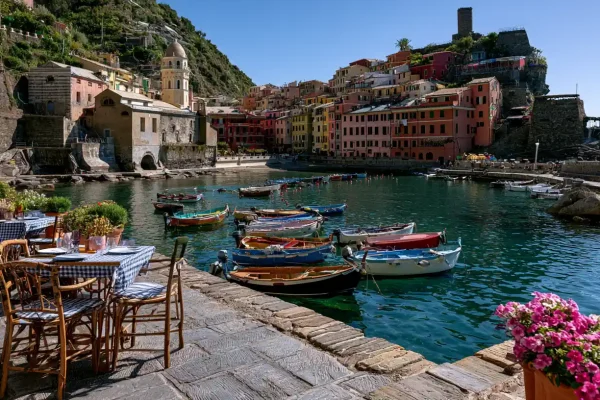
Burano is the most immediately striking of the three islands. The tradition of painting houses in contrasting, saturated colours — red, yellow, blue, green, pink — is centuries old, originally serving as a way for fishermen to identify their homes from the water in fog. The result is one of the most visually distinctive streetscapes in Europe.
Beyond the colours, Burano is known for its lace-making tradition. The Museo del Merletto (Lace Museum) [VERIFY current ticket price at museomerletto.visitmuve.it] documents the history of Burano lace, which was once the finest in Europe and produced for royalty. The museum sometimes has elderly lacemakers demonstrating the technique — an increasingly rare craft skill, given that few younger Buranesi are learning it. The Burano lace tradition reached its peak in the 16th and 17th centuries when Venetian lace was the most expensive textile in Europe, worn by royalty and aristocracy from Spain to Russia. The industry declined with industrial production and mass trade, and the craft today is carried by a small number of older women who learned it from their mothers. Whether the tradition will survive another generation is genuinely uncertain.
Burano is also the best place to eat on the islands. Restaurants along the main canal serve fresh seafood pasta and risotto at reasonable prices compared to central Venice. The afternoon arrival (if following the recommended sequence) puts you here for a late lunch before the return vaporetto.
Photography: The main photo positions are along the canal with the coloured houses reflected in the water. Early morning gives the clearest reflections with the fewest people in frame. Afternoon light hits the facades at a warm angle. Overcast days produce flat colours; sun is noticeably better here than on most Venice subjects.
Allow 1.5-2 hours on Burano.
Burano also has its own small satellite island, Mazzorbo, connected by a wooden footbridge. Mazzorbo is nearly empty, has a working vineyard (Venissa), and is worth the 10-minute walk from Burano if you want a few minutes of genuine calm away from the crowds. The contrast between the two — colourful and busy Burano, silent and green Mazzorbo — is striking and the walk takes no real time away from your main visit.
Practical Notes
Crowds: Burano is extremely popular with day-trippers and can feel overrun by late morning in peak season (June-September). Arriving by 9:30am gives you the best version of the island. If you visit all three and end on Burano following the recommended sequence, you will arrive in early to mid-afternoon — past the morning peak but still comfortable for a weekday visit. Weekends bring significantly higher boat frequency and more visitors on both Murano and Burano. If possible, do this trip on a Tuesday, Wednesday, or Thursday — the island experience on a summer Saturday is genuinely different from a weekday in terms of crowd density.
Murano itself is less overwhelmed than Burano at most times, partly because it is large enough to absorb visitors across more than one main canal, and partly because it functions as a residential area rather than purely as a tourist destination.
Toilets: Limited on all three islands. Public facilities on Torcello reportedly close in the early afternoon [VERIFY current hours]. Use the facilities at Fondamente Nove before departing, again at the main landing on Murano (near the vaporetto stop), and on Burano before your return journey. Do not count on finding facilities on Torcello if you arrive late in the day.
Shopping on Murano: Authentic Murano glass carries a certificate of origin and the Vetro Artistico® Murano trademark [VERIFY current certification marks]. Glass sold in Venice souvenir shops as “Murano glass” is almost never actually made on Murano — most is mass-produced in China or Eastern Europe and sold under the brand name. If you want to buy genuine Murano glasswork, buy it on the island itself, from a producer with a working furnace on the premises. Prices range from small decorative pieces for €15-30 to large sculptural works in the thousands. The factories running public demonstrations tend to have larger showrooms and wider price ranges.
Lunch logistics: The recommended approach is a light snack on Murano or Torcello and a proper lunch on Burano. Alternatively, pack your own food for Torcello and use the time there for a proper picnic by the canal — the island is quiet enough that this is entirely pleasant.
What to wear: All three islands involve walking on uneven stone and wooden boarding surfaces. Comfortable, flat shoes are strongly recommended. In summer, sun exposure on the vaporetto and on open island paths is significant — hat and sunscreen are practical rather than optional.
Prices on the islands: Murano and Burano have noticeable tourist pricing in their waterfront restaurants. Walking one street back from the main canal on either island reduces prices considerably. Torcello has effectively one restaurant and limited alternatives — the Locanda Cipriani is the famous choice, but bringing your own supplies is entirely acceptable.
suggested topic — 3 Days in Venice: First-Timer Itinerary & Top Highlights
suggested topic — How to Get Around Venice: Easy Transport Guide for First-Timers