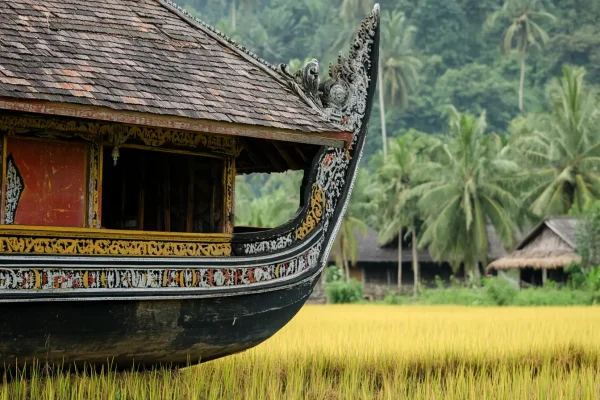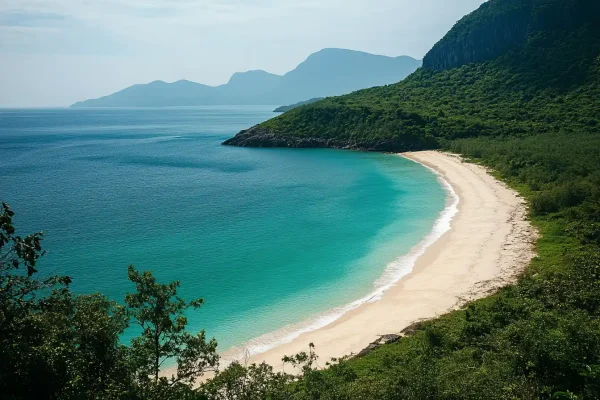
Kep is the kind of place that makes you feel like you found something. It’s a former French colonial beach resort 25km from the provincial town of Kampot on Cambodia’s Gulf of Thailand coast, and most of the grand villas have been rotting since the Khmer Rouge swept through in 1975. The town is slowly rebuilding itself, but unhurriedly. The seafood is extraordinary — blue swimmer crab caught that morning from the bay, cooked with fresh Kampot pepper from the farms just inland, for $8–12 USD at a waterfront restaurant. You pick a specific crab from a cage in front of you. By the time you’ve ordered a beer it arrives on your table.
| Best time to visit | November–April (dry season) |
|---|---|
| Getting there | Fly to Phnom Penh (PNH), bus or minivan to Kep (3–4 hrs, ~$10 USD) |
| Budget per day | $30–60 USD (very comfortable) |
| Visa for Americans | eVisa required ($36 USD) at evisa.gov.kh; or eVisa on arrival |
| Language | Khmer; basic English at guesthouses and restaurants |
| Currency | USD and Cambodian Riel (KHR); US dollars work everywhere in Kep |
Is Kep Worth an Overnight Stay or Just a Day Trip?
Overnight. Easily. The standard travel circuit does Kampot for 2–3 days and Kep as a day trip from there. That’s fine, but it misses the point of Kep. The town’s mood changes after the day-trippers leave around 4pm — the crab market stalls light up, the waterfront restaurants fill with expats and the occasional backpacker who actually stayed, and the pace drops to something genuinely relaxed. Two nights in Kep is the right call. The beach at sunset, dinner at the crab market, a morning on Rabbit Island — you need the time.
The Kep Crab Market
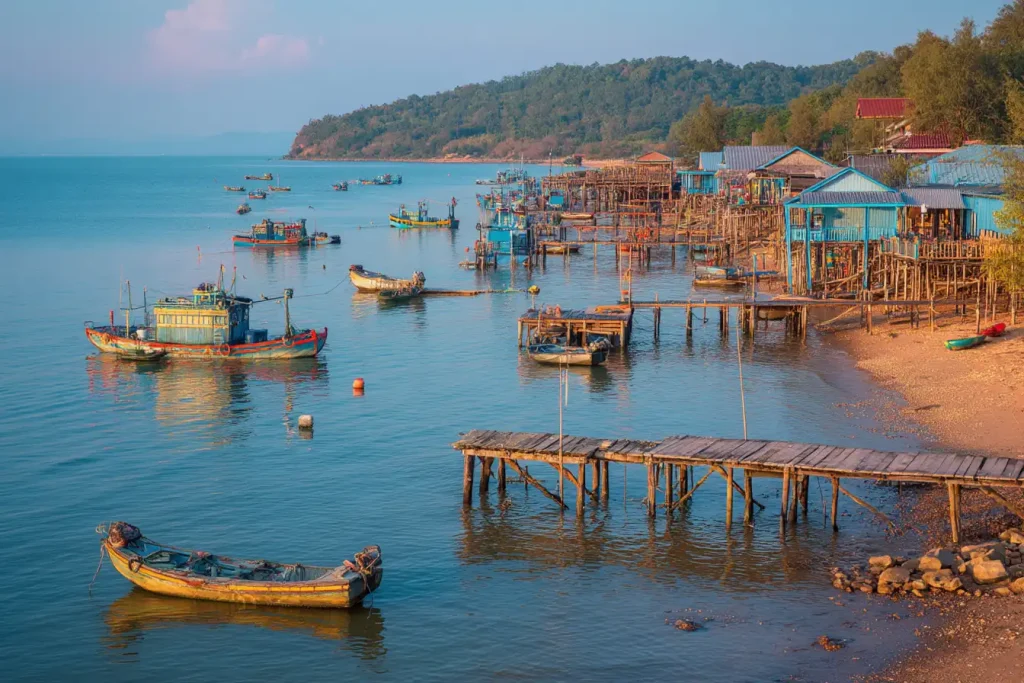
The Crab Market is a 300m wooden pier that curves along the shoreline at the western end of town, with stalls selling freshly caught seafood at the front and restaurants extending behind them. The scale surprises first-time visitors — it’s louder and more active than a quiet beach town has any right to be. Local fishermen bring their hauls in by small boat each morning, and the crabs arrive alive in cages stacked along the stalls. You choose your crab. The vendor notes the weight. The cook does the rest.
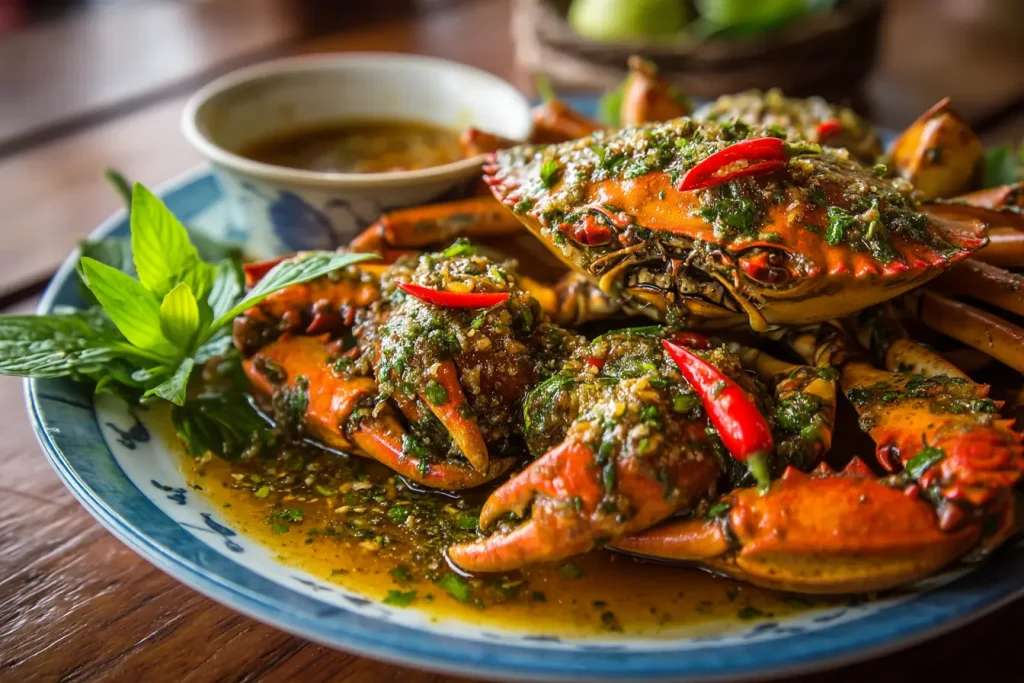
The signature dish is whole blue swimmer crab with Kampot pepper — green peppercorns still on the vine, added to a stir-fry with butter and garlic. The pepper is fresh and floral, with heat that builds slowly. A whole crab (usually 400–600g) runs about $6–10 USD. Order two per person. Order rice. Order the squid as well.
Kimly Restaurant and Holy Crab are the two most-recommended spots at the market. I ate at Kimly twice and the crab was consistently the best version of this dish I’ve had anywhere. The terrace looks out toward Phu Quoc Island (visible on clear days) and Vietnam’s distant coast. The sun sets in that direction. Book a table for sunset dinner at least 30 minutes ahead during dry season weekends.
One genuine complaint: vendors near the market entrance can be aggressive about pulling you toward their stalls, especially if you stop to look at the crab cages. Keep walking and choose your restaurant before engaging with the stall-keepers. The food is uniformly excellent once you’re seated.
Rabbit Island (Koh Tonsay)
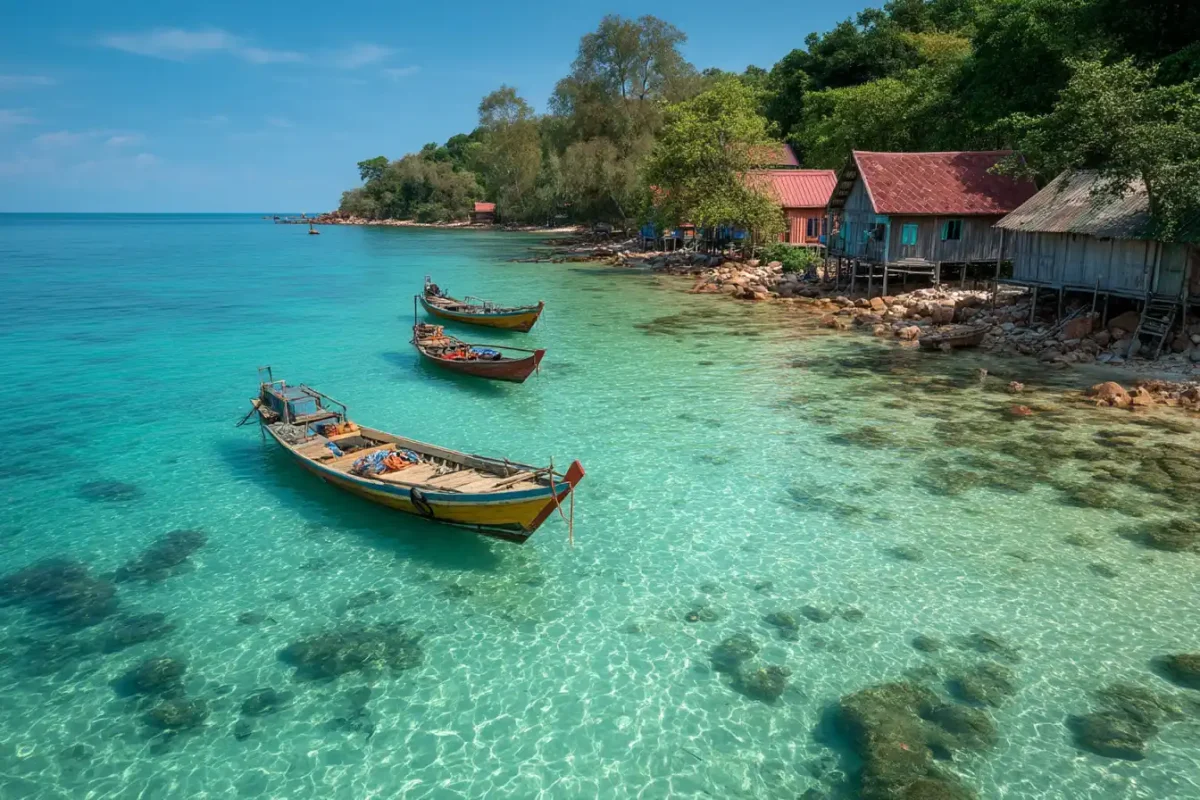
Twenty-five minutes by longtail boat from the Kep pier (about $12 USD return), Koh Tonsay is a tiny island with four beaches, no cars, a cluster of very basic bungalows and hammock restaurants, and very little else. You can swim on the north beach, walk a rough trail around the island (about 1.5 hours), and eat grilled fish with rice for $4 USD while watching the fishermen work.
Day trips are fine but staying overnight changes the experience completely — after the last day-trip boat leaves around 4pm, the island becomes genuinely quiet. The bungalows are extremely basic (wooden structures with fans, no air conditioning, shared bathrooms), running $10–20 USD per night. Bring cash — no card machines on the island. Bring more water than you think you need.
The last longtail back to Kep typically leaves Rabbit Island around 5pm. Miss it and you’re staying overnight whether you planned to or not — and frankly, that’s not the worst outcome.
Kep National Park
The forested hill above Kep town is a small national park with a 23km loop trail and several shorter options. The main trail takes 2–3 hours and passes through dense jungle with good birdwatching, viewpoints over the bay, and several small Buddhist shrines built into the hillside rocks. Entry is free, but the trailhead sign can be hard to find — it’s at the top of the road that winds behind the giant crab statue. Start before 8am in dry season to beat the heat.
The park is directly behind the town and doesn’t require transport — just good shoes and sun protection. The jungle is genuine: proper canopy, dense undergrowth, and the occasional monkey overhead.
The Abandoned Villas
The Khmer Rouge evacuated and destroyed most of Kep’s French-era villas in 1975. Fifty years later, some of them still stand in various states of photogenic collapse — roofless stone walls with trees growing through them, ornate window frames without glass, staircases leading nowhere. Walking the roads above the waterfront takes you past several of the more dramatic ones. Technically they’re on private land but the access is casual; locals aren’t particularly bothered by curious walkers.
This is the layer of Kep that separates it from every other Cambodian beach destination — the coexistence of fresh seafood and genuine economic regeneration with the visible ghost of a violently interrupted past. It’s not dark tourism; it’s just a town that got destroyed and is slowly, quietly rebuilding itself.
Getting to Kep from the US
Fly to Phnom Penh (PNH) — typically routing through Bangkok, Kuala Lumpur, or Hong Kong from US cities. Round-trip fares from LAX or SFO run $700–1,000. From Phnom Penh, take a shared minivan to Kep directly ($10–12 USD, 3–4 hours) or stop in Kampot first ($7–8 USD, 2.5–3 hours from Phnom Penh) and continue to Kep by tuk-tuk or taxi ($8–10 USD). The “Crab Shuttle” boat also runs from Kampot to Kep during dry season for about $10 USD — a more scenic option.
Where to Stay
Budget ($10–25/night): Captain Chim’s Guesthouse near the pier — simple rooms, private bathrooms, close to the crab market. Clean and functional. Raingsey Bungalows has good budget bungalows with sea views.
Mid-range ($40–80/night): Kep Bungalows — well-located near both beach and crab market, pool, consistently good reviews. Q Bungalows for a quieter option with pool.
Splurge ($100–180/night): Veranda Natural Resort — hillside resort above the bay with excellent views, two pools, free breakfast, and a significantly more polished experience than the rest of Kep’s accommodation. Worth it for a special occasion.
Best Time to Visit
November through April is dry season and the clear best time. The beach is swimmable, the roads are dust rather than mud, and the Crab Market is at full operation. January and February are peak months — temperatures around 26–30°C, low humidity, clear skies. Rabbit Island is at its best in February and March.
May–October is wet season — heavy afternoon rain, rough seas making Rabbit Island trips uncertain, the national park trails muddy. The crab market runs year-round but it’s a different experience in constant humidity and rain. Not recommended for a first visit.
Practical Tips
Cash is king in Kep. The crab market, most guesthouses, Rabbit Island, and the national park all run on cash. Bring USD from Phnom Penh. There’s an ATM in town near the market but it runs out on busy weekends.
Rent a bicycle ($2–4 USD/day) or motorbike ($7–10 USD/day) to explore the coastline independently. The road between Kep and Kampot is paved and flat. The road to the crab market passes the famous blue crab statue — the best landmark to navigate by.
Kep is small. You can walk from your guesthouse to the crab market, beach, and crab statue in 20–30 minutes. A tuk-tuk to the national park trailhead costs about $2–3 USD.
The one thing most tourists get wrong: staying only one night and treating Kep as a lunch stop. The crab market at 7pm, with boats coming in and restaurant lights reflecting off the water, is the version of Kep you actually want to experience.
Frequently Asked Questions
How much does the Kep Crab Market cost?
A whole Kampot pepper crab (400–600g) costs about $6–10 USD. A meal for two people — two crabs, rice, squid or prawns, and drinks — typically runs $20–30 USD total. It’s excellent value for the freshness and quality. The most-recommended restaurants at the market are Kimly and Holy Crab.
How do I get to Kep from Phnom Penh?
Shared minivans from Phnom Penh to Kep run $10–12 USD per person and take 3–4 hours. Alternatively, take a bus to Kampot ($7–8 USD, 2.5–3 hours) and continue to Kep by taxi ($8–10 USD, 30 minutes). Book minivan tickets through guesthouses or apps like 12go.asia.
Is Rabbit Island worth visiting from Kep?
Yes, particularly for overnight stays. The 25-minute longtail from the Kep pier costs about $12 USD return. Day trips work but miss the evening calm. Basic bungalows on the island run $10–20 USD per night. Bring cash — no card terminals on the island.
What is Kampot pepper and why is it famous?
Kampot pepper is a geographically designated product from the Kampot province adjacent to Kep. Grown on volcanic soil near the coast, it’s considered among the finest pepper in the world — complex, floral, with different flavors at different ripening stages (green, red, black, white). Used fresh on the crab, it’s fundamentally different from dried supermarket pepper.
When is the best time to visit Kep Cambodia?
November through April, with January–March being the peak. The beach is swimmable, Rabbit Island trips are reliable, and the crab market is at full capacity. Avoid May–October (wet season) for a first visit — heavy rain and rough seas limit beach and island activities significantly.