León sits at roughly the same latitude as Miami, is reachable by direct flight to Managua for around $300–400 round trip from Houston or Miami, and has almost zero American tourists on its streets. The reason why is mostly reputation — Nicaragua went through a violent political crisis in 2018, and the State Department advisories never quite fully reset to normal. The reality on the ground in León in 2026 is a functional, interesting, genuinely inexpensive university city where you can slide down an active volcano in the morning and eat the best vigorón of your life at a market stall for under $3 in the afternoon.
| Best time to visit | November–April (dry season, cooler) |
|---|---|
| Getting there | Fly to Managua (MGA), then 1.5–2 hr bus to León |
| Budget per day | $30–50 USD budget, $60–90 mid-range |
| Visa for Americans | $10–$15 tourist card on arrival, 30–90 days |
| Language | Spanish; limited English outside hostels |
| Currency | Córdobas (NIO); USD widely accepted. Cards work in some spots, carry cash |
Is León Safe for Americans in 2026?
This deserves a direct answer, not hedging. The Ortega government is authoritarian and the political environment is not free, but day-to-day street safety for foreign tourists in León is not what the State Department Level 3 advisory might make you picture. León is a university town with an active expat and backpacker presence. Petty crime (phone grabs, bag snatching) happens, as it does in any Central American city. Violent crime targeting tourists is rare. The 2018 protests and crackdown were concentrated in Managua, Masaya, and Matagalpa — León was affected but has returned to normal functioning.
What you should actually know: don’t photograph police or military, avoid political demonstrations entirely, and don’t engage in political conversation with strangers. Your US passport is fine — Americans are not targeted or treated differently from other foreign visitors. The Sandinista flags everywhere are political décor at this point, not a threat.
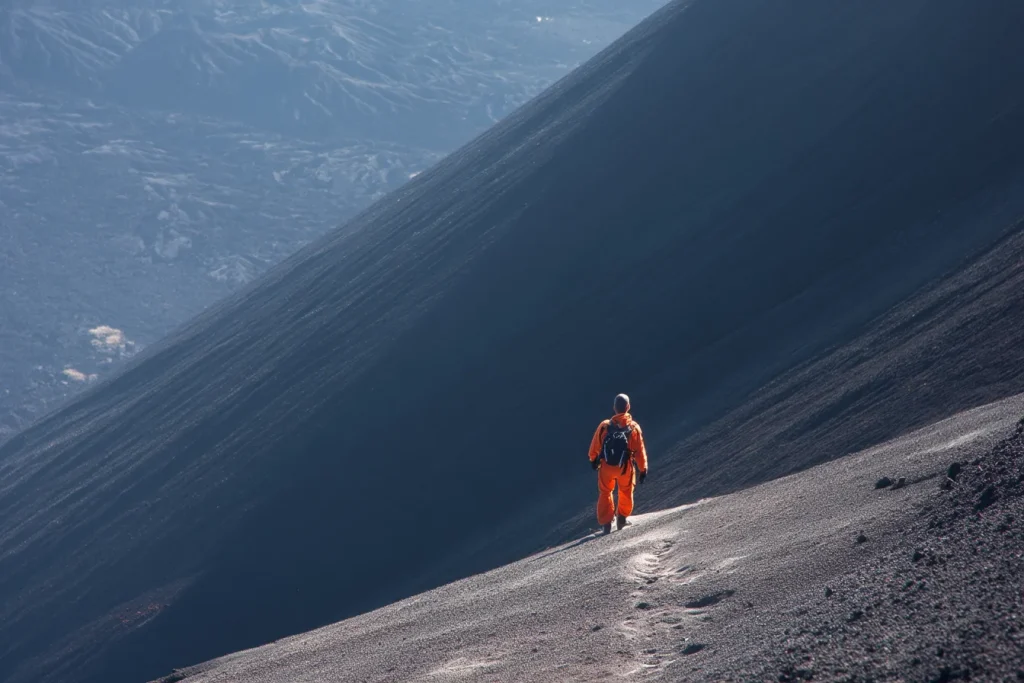
Volcano Boarding at Cerro Negro
This is why most backpackers come, and it lives up to the hype — mostly. Cerro Negro is an active cinder cone about 25km from León. Tours depart daily from hostels and tour offices on or near the central park; half-day tours cost $25–35 USD including transport, gear, and guide. The hike up takes 45–60 minutes on loose volcanic gravel that crunches underfoot and gets inside everything. The summit smells faintly of sulfur. You can see three other volcanoes from the top.
The boarder on the descent is essentially a wooden sled you sit on or lie on and push yourself down the steep ashy face. The slope is real — you can hit 50–60km/h if you don’t brake. The orange jumpsuit they give you is not stylish but it’s functional: the black volcanic sand will embed itself into any fabric not covered. Bring a bandana or buff for your face.
One honest note: the lava viewing part of the tour, which some operators advertise, has been disappointing for years. The active lava is now 300+ meters below the surface. You’re not going to see flowing lava. You’ll see a distant dark crater. Adjust expectations accordingly — the descent is the experience, not the geology.
Bigfoot Hostel and ViaVia are the two operators most backpackers use. Both run solid tours. Book the morning departure if you care about photos — afternoon trips get hazy light.
[IMAGE: hiker with orange jumpsuit at base of Cerro Negro volcano Nicaragua, black volcanic ash slope above, bright midday sun, eye-level documentary style, no text]
The Cathedral and the City’s Revolutionary History
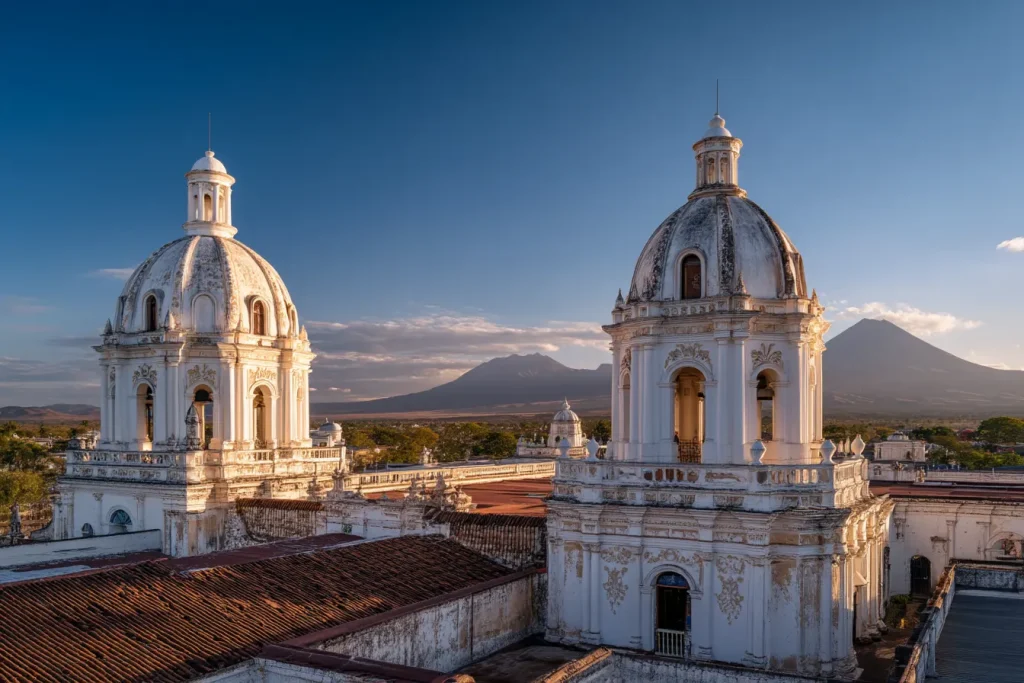
León Cathedral is the largest in Central America and a UNESCO World Heritage Site. The rooftop costs about $3 USD to access — worth every cent for the views over the city to the volcano chain. Go early morning or just before closing (open 8am–noon and 2:30–5pm) to avoid the heat.
The Museo de la Revolución is one block from the cathedral. Entry is about $3 USD and includes a guide — critically, some of the guides are former Sandinista fighters who were teenagers during the revolution. Ask your guide if they were involved. The stories are real and unsettling. One of the guides on my visit pulled up his shirt to show a shrapnel wound millimetres from his spine. He pointed to a photo on the wall of himself at 14, rifle in hand, surrounded by friends. He went through the row: “dead, dead, dead, dead.” Nobody performs that kind of history.
The Ortiz-Gurdian Foundation art museum is free to enter and genuinely good — one of the best contemporary art collections in Central America, housed across two colonial mansions connected by a garden. Most visitors skip it. Don’t.
Getting to León from the US
Houston (IAH) and Miami (MIA) both offer connecting flights to Managua, typically via San Salvador or Mexico City. Expect to pay $300–500 round trip, sometimes less on Spirit or Copa. From Managua’s airport (MGA), take a taxi to the UCA bus terminal (~$15–20 USD) and board an express bus to León ($2–3 USD, about 1.5–2 hours). The express buses leave when full — you rarely wait more than 20 minutes. Direct shuttle services from the airport to León also exist for $15–25 USD if you’d rather skip the bus experience.
Where to Stay
Budget ($10–20/night): Bigfoot Hostel or ViaVia — both run on the party-hostel model, organized around the volcano tour, great for meeting people. Bigfoot has the better pool. Dorms from $8–10 USD.
Mid-range ($30–60/night): Madroño Hostel — opened 2024, locally run, colonial house, AC rooms, proper breakfasts, quieter vibe. Good pick if you want comfort without resort pricing.
Splurge ($70+/night): Hotel Real de León — colonial rooftop terrace, swimming pool, good location. Still not expensive by US hotel standards.
Best Time to Visit
November through April is dry season and significantly more comfortable. León sits in Nicaragua’s coastal lowlands and gets genuinely hot and humid — daytime highs can hit 38°C (100°F) in the dry season, and the wet season (May–October) adds rain on top of that. The best months are November through January, when temperatures drop slightly and skies stay clear. If you’re visiting over US Christmas or New Year’s, expect the city to be lively with Nicaraguan holiday activity — fireworks, processions, street food — which is actually worth planning around, not avoiding.
Practical Tips
Money: ATMs in León dispense córdobas and accept US cards. Dollar bills are also accepted widely at a standard rate. Cards work at larger hotels but many restaurants and markets are cash only. Budget: a very comfortable day in León — hostel, three meals, a tour — runs about $40–50 USD.
Getting around locally: León is walkable for the central area. For the crab market and beach at Las Peñitas (30 min away), arrange a taxi or chicken bus from the central market for about $1.50–2 USD one way.
The thing most tourists get wrong: treating León as a two-day stop solely for volcano boarding. The city rewards an extra day — the evening market near the central park, the side streets with their revolutionary murals, the art museum, the smaller churches on the quieter plazas. León has its own intellectual identity that has nothing to do with the volcano.
Frequently Asked Questions
Is León Nicaragua safe for tourists in 2026?
Safer than the State Department Level 3 advisory might suggest for day-to-day street life. Petty theft exists. Political tensions are real but don’t translate to danger for tourists going about normal tourist activities. Avoid protests, don’t photograph military, and you’ll likely have an incident-free visit.
How do I get from Managua to León?
Take a taxi from Managua airport to the UCA bus terminal ($15–20 USD), then board an express bus to León ($2–3 USD, about 1.5–2 hours). Express buses leave when full — usually no more than a 20-minute wait. Shuttle vans directly from the airport cost $15–25 USD and are convenient but unnecessary.
How much does volcano boarding at Cerro Negro cost?
Tours run $25–35 USD per person, including transport, gear (orange jumpsuit, gloves, goggles, board), and a guide. Book through your hostel or directly with Bigfoot or ViaVia on the central park. Half-day trips, leaving around 8–9am or 1pm.
Is León or Granada better for tourists?
Different enough that the comparison matters. Granada is more polished, more architecturally impressive, and more touristy — easier if you want a smooth, low-effort trip. León is rougher around the edges, hotter, and more politically charged in a way that’s actually interesting. Most people who’ve done both say León is more memorable. If you have time for only one, your answer depends on whether you want comfortable or real.
What’s the best food in León Nicaragua?
Vigorón — steamed yuca with chicharrón and cabbage slaw — from any market stall for about $2 USD. Nacatamal (a large corn-dough tamale steamed in banana leaf) on Sunday mornings. Batidos Pitaya on the central plaza for fresh fruit drinks. For a sit-down meal, Casa Coco Calala near the cathedral does good Nicaraguan plates in a garden setting for $6–10 USD.