Chan Chan is the largest adobe city ever built and one of the least-visited major UNESCO sites in South America. It sits five kilometers west of Trujillo on Peru’s northern coast, and unlike Machu Picchu — which you book months out, wake at 4am for, and share with 5,000 people — you can take a $0.50 combi from the city center, buy a $3 ticket at the gate, and spend two hours walking through the mud-brick ruins of a city that once housed 60,000 people with often no one else in sight.
| Best time to visit | May–December (minimal coastal fog, drier) |
|---|---|
| Getting there | Fly Lima (LIM) to Trujillo (TRU), 45 min; or 8–9 hr bus from Lima |
| Budget per day | $35–60 USD (very comfortable mid-range) |
| Visa for Americans | No visa required, up to 90 days |
| Language | Spanish; basic English at larger hotels |
| Currency | Peruvian Sol (PEN); cards at hotels, cash for markets and transport |
Is Trujillo Worth the Trip from Lima?
Absolutely, and most travelers skip it entirely. The northern coast of Peru is the least visited part of the country despite having the highest concentration of pre-Incan archaeological sites in South America. Chan Chan, the Huacas del Moche (the Moche temples), El Brujo (where the Lady of Cao mummy was found), Huanchaco’s reed-boat surf beach — Trujillo is the base for all of it, and it’s a 45-minute flight from Lima that most itineraries leave out because they’re busy choosing between Cusco and the Amazon.
One honest note: the Chan Chan site is vulnerable. Adobe melts. El Niño years with heavy rain do real damage. Restoration is ongoing and parts of the site are covered with protective roofs that look industrial and break the atmosphere a bit. Visit now rather than waiting.
Chan Chan: The Nik An Palace
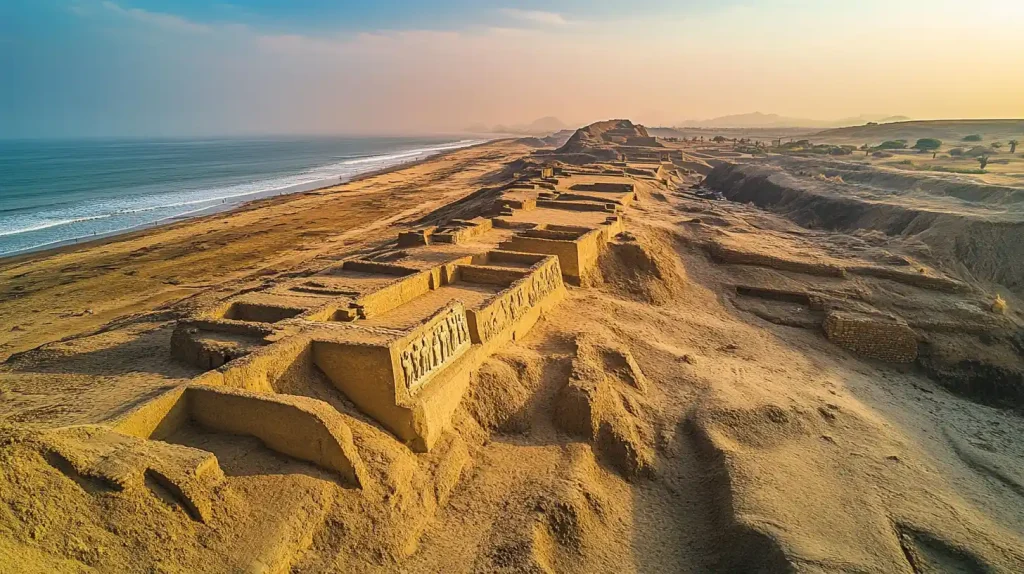
Chan Chan covers 20 square kilometers of desert, but visitors access it through the Nik An Palace (formerly called the Tschudi Palace) — the best-restored of the nine royal citadels that made up the Chimú Empire’s capital from roughly 900 to 1470 AD. The ticket costs S/10 ($2.65 USD) and includes the Nik An Palace plus two smaller outlying sites. Opening hours are 9am–4pm daily (museum closed Mondays).
Walk the perimeter of the main ceremonial courtyard first, running your hand along the walls. The adobe friezes show repeating marine motifs — pelicans, fish, waves, nets — carved in bas-relief across surfaces that were once painted red and white. The carvings are what makes Chan Chan different from every other pre-Columbian ruin you’ve likely visited. They’re decorative, intricate, and strangely delicate given that the city’s walls once stood 12 meters high. The restored sections are accurate reproductions; the original carved surfaces are protected nearby and visible on close inspection.
An English-speaking guide at the entrance gate costs about S/60–80 ($16–21 USD) for a 90-minute circuit. Worth it. Without context, the enormous empty courtyards are harder to read than the Inca or Moche sites. With a guide, the Chimú’s sophisticated water management, social hierarchy, and the story of how the Incas actually defeated Chan Chan by cutting off its irrigation rather than fighting it militarily — all of it makes the site come alive.
The Huacas del Moche: Better Frescoes
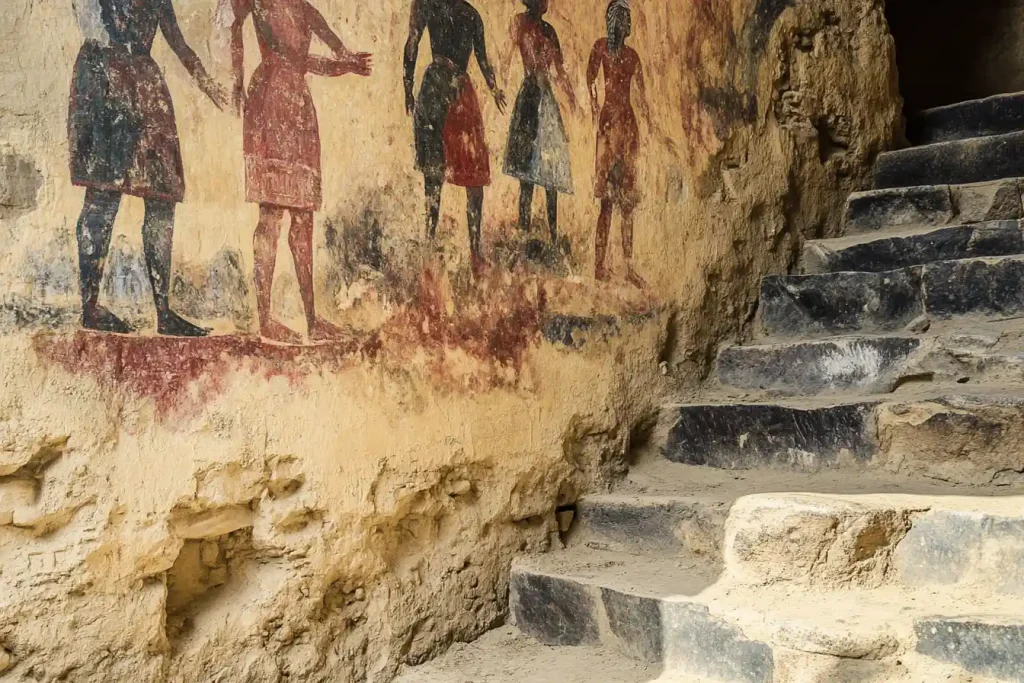
Four kilometers south of Trujillo’s city center are the Huacas del Moche — two massive adobe pyramids built by the Moche civilization between 100–700 AD, predating the Chimú by several centuries. Huaca de la Luna (Moon Pyramid) is the one you visit. It was built in five layers over 600 years, each new pyramid encasing the previous one. Archaeologists have peeled back sections to reveal the original polychrome murals inside — vivid reds, yellows, and blacks depicting the fanged god Ai Apaec surrounded by decapitated prisoners.
These murals are the finest ancient painted surfaces in South America. Tours depart every 30–45 minutes, cost about S/25 ($6.50 USD) for adults, and last about an hour. The on-site museum has additional finds. Don’t skip the museum — the mummies and ceramics give context that makes the pyramid more comprehensible.
The nearby Huaca del Sol (Sun Pyramid) is not currently open to the public interior-wise, but you can see its exterior — it’s the largest adobe structure ever built, roughly the volume of the Pyramid of Giza.
Huanchaco: Where You Should Actually Stay
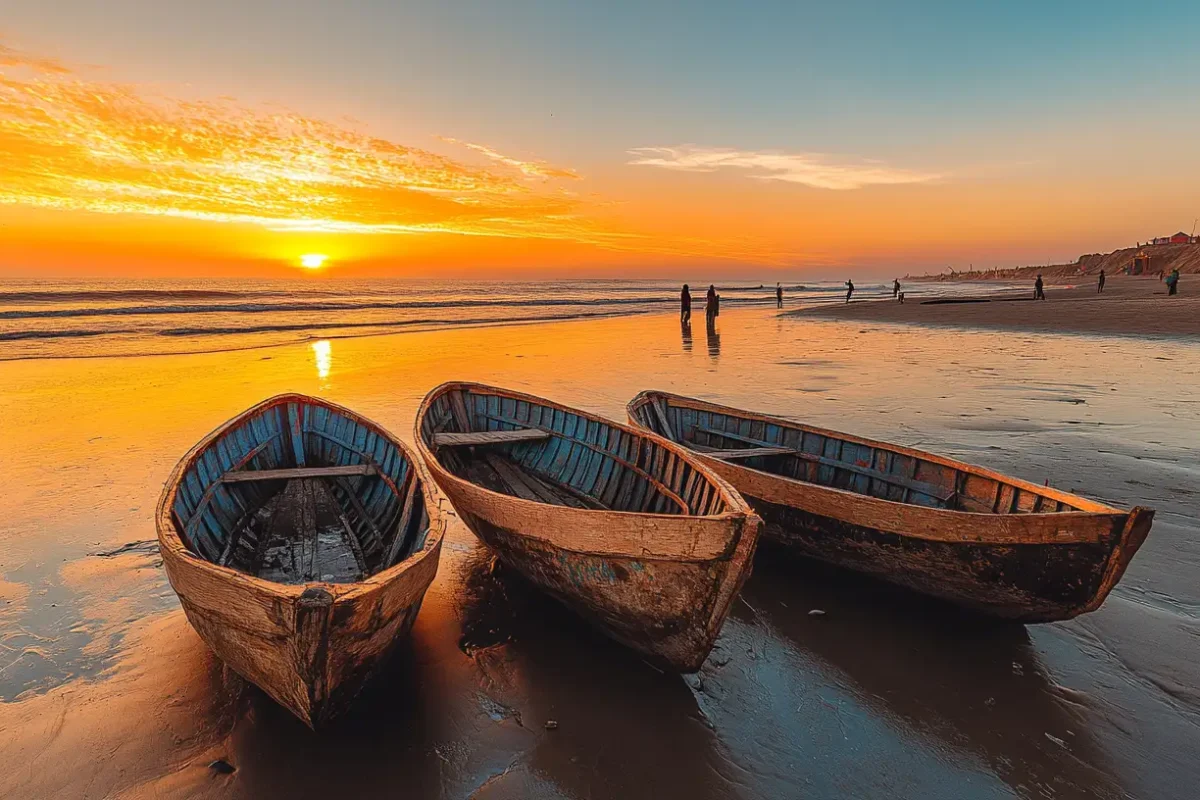
Skip staying in Trujillo city center and base yourself in Huanchaco instead — a beach village 20 minutes from the center by shared combi ($0.50 USD). Huanchaco is famous for caballitos de totora: reed boats used by local fishermen for over 3,000 years, still used today. Every morning, fishermen paddle out through the surf on these cigar-shaped reed vessels, check their nets and crab traps, then surf back to shore standing on the stern. You can pay about S/10–15 ($2.50–4 USD) to ride behind a fisherman through the surf. It’s brief and genuinely excellent.
The beach itself is brown sand and cold Pacific water, not particularly beautiful for swimming but excellent for surfing — consistent waves year-round. The best ceviche I had in Peru was at Warique El Buzo in Huanchaco ($6–10 USD for a full portion), a tiny restaurant that buys fish from the caballito fishermen each morning.
Getting to Trujillo from the US
Fly Lima (LIM) from Miami, New York, or Houston — typically $500–800 round trip on direct flights with LATAM or American. From Lima, fly to Trujillo on LATAM, Sky Peru, or Avianca — about 45 minutes, $30–80 USD one way depending on timing. The Trujillo airport (TRU) is a 10-minute taxi ride from Huanchaco (S/15/$4 USD) and 20 minutes from the city center. Alternatively, bus companies like Oltursa and Cruz del Sur run overnight services from Lima to Trujillo in 8–9 hours for S/60–100 ($16–27 USD), comfortable enough with reclining seats.
Where to Stay
Budget ($15–30/night): Yaqta Hostel in Trujillo — rooftop terrace, social atmosphere, good location for city exploration. Huanchaco has cheaper guesthouses if you prefer the beach base.
Mid-range ($40–80/night): Hotel Bracamonte in Huanchaco — the best mid-range option in the area, consistently praised, walking distance from the beach and caballito fishermen. Includes breakfast.
Splurge ($100+/night): Costa del Sol Wyndham Trujillo — colonial mansion on the Plaza de Armas, pool, spa, the nicest property in the city center.
Best Time to Visit
The northern coast of Peru is desert — it almost never rains. The main variable is garúa, a coastal fog that rolls in from June to November and can make mornings grey even when the rest of Peru is sunny. This doesn’t usually affect site visits (visibility at Chan Chan is fine in fog). December to May has clearer skies and warmer temperatures. The surfing in Huanchaco is consistent year-round. El Niño years (unpredictable; happens every few years) bring heavy rain that can affect the adobe sites — worth checking if you’re visiting after an El Niño event.
Practical Tips
Transport: From Huanchaco, red combis marked “Trujillo” run constantly and stop at Chan Chan on the way for S/1.50 ($0.40 USD). The same combi takes you into Trujillo center. It’s the cheapest and most local way to navigate the area. Taxis are faster but drivers near the sites overcharge significantly — negotiate or use a meter.
The Chimú combo ticket (S/10) for Chan Chan covers two additional sites. It does not cover the Huacas del Moche or El Brujo — those have separate admission. Budget about S/60–80 total for a full archaeological day across multiple sites including guides.
The thing most tourists miss: the Lady of Cao at El Brujo archaeological complex, about 60km north of Trujillo. The mummy of a female Moche ruler discovered in 2006, still visible in her original tomb, with tattoos of spiders and snakes on her arms visible after 1,700 years. Her existence changed the academic understanding of Moche society. The drive there is through sugar cane fields. Allow a full day with private taxi ($30–40 USD for the round trip from Huanchaco).
Frequently Asked Questions
How much does Chan Chan cost to enter in 2026?
S/10 Peruvian Sol (about $2.65 USD) for the combined ticket covering the Nik An Palace, Huaca Esmeralda, and Huaca Arco Iris. Buy at the ticket booth near the entrance or at the on-site museum. Children under 8 often free. Open 9am–4pm, last entry 4pm.
How do I get from Trujillo city to Chan Chan?
Take any red combi bus from Trujillo center marked “Huanchaco” — they pass Chan Chan en route. Cost: S/1.50 ($0.40 USD). The combi drops you on the main road; the site entrance is a 5-minute walk. A taxi from Trujillo center costs about S/10 ($2.65 USD).
Should I stay in Trujillo or Huanchaco?
Huanchaco. It’s a much more pleasant base — beach atmosphere, better mid-range hotel options, the caballito fishermen in the morning, good seafood restaurants. Trujillo city is a 20-minute combi ride away. There’s no reason to stay in the city unless you need specific urban amenities.
How many days do I need in Trujillo?
Two full days covers Chan Chan, the Huacas del Moche, and Huanchaco. Three days lets you add El Brujo (Lady of Cao) without feeling rushed. It’s a worthwhile side trip from Lima or a stop on a Lima-to-Cusco overland route via northern Peru.
What is Chan Chan and why is it significant?
Chan Chan was the capital of the Chimú Empire from approximately 900–1470 AD and is the largest pre-Columbian city in South America, covering 20 square kilometers. It’s the largest adobe (mud-brick) construction in the Americas and a UNESCO World Heritage Site since 1986. The Chimú were conquered by the Inca not through military force but by having their water supply cut off — one of the more ingenious military strategies in pre-Columbian history.