Three days in Provence is enough time to fall in love with the region, but only if you resist the urge to chase every hilltop village on the map. Provence rewards a slower pace than most first-time visitors expect: long lunches, a market morning that isn’t rushed, one or two proper stops per day instead of five rushed ones. Try to do it all in 72 hours and you’ll spend most of your trip in the car, glancing at lavender fields through a windshield instead of standing in them.
This itinerary covers three genuinely different sides of the region — the papal grandeur of Avignon, the honey-colored villages of the Luberon, and the boulevard life of Aix-en-Provence — with enough breathing room to actually enjoy each one. A car is essential for this route; Provence’s best corners simply aren’t connected by useful public transport.
Before You Go — A Few Things Worth Knowing
Provence is not one town you park in and day-trip from. It’s a scattered region, and this itinerary assumes you’re either renting a car for the full three days or picking one up on Day 1. TGV trains connect Paris to Avignon in under three hours, and Avignon makes a sensible starting point with a car rental counter right at the TGV station.
If lavender is the whole reason you’re coming, know the calendar before you book: the Luberon’s lavender blooms roughly from mid-June to mid-July, with the fields around Sénanque Abbey typically harvested by the end of July. Outside that narrow window, the fields are green stubble, not purple. The Valensole plateau further east blooms slightly later, into late July, if your dates don’t line up with the Luberon.
Distances are short but the roads are winding. Budget more driving time than Google Maps suggests, especially around midday in July and August when every road through a hilltop village slows to a crawl.
Day 1 — Avignon and the Pont du Gard
Morning: Palais des Papes and the Old Town
Start at the Palais des Papes, the vast Gothic fortress-palace built for the popes who relocated here in the 14th century. It’s one of the largest Gothic palaces in the world and one of the most-visited monuments in France, and it earns that reputation — 25 rooms open to the public, including the pope’s private apartments with frescoes by Matteo Giovannetti. As of August 2026, admission runs €16 for adults, €13 reduced, €10 for children, with a combined ticket covering the Pont Saint-Bénézet (the famous half-bridge from the “Sur le Pont d’Avignon” song) for €17. Booking a timed slot online is worth doing in summer, since the palace can fill up by mid-morning. Note that the palace is mid-renovation through 2026 and 2027, with new rooms and exhibits opening in phases — expect a slightly different layout than older guidebooks describe.
Afterward, wander the streets around Place de l’Horloge and down toward Les Halles market, Avignon’s covered food market, for coffee and a pastry before you get back in the car. The old town is compact enough to cover on foot in an hour or two without a fixed route.
Afternoon: Pont du Gard
From Avignon, it’s about a 30-minute drive to the Pont du Gard, the extraordinary three-tiered Roman aqueduct bridge that once carried water nearly 50 kilometers to Nîmes. Walking across the bridge itself is free — the fee you’ll actually pay is for parking, a flat €9 per vehicle regardless of how long you stay, which also gets you access to the site’s outdoor areas. The museum and discovery exhibits on-site charge a separate, modest entry fee if you want the deeper historical context; otherwise, the bridge and the river beneath it are the real draw.
If you’re visiting in summer, plan around the light: from mid-May through late September the monument is illuminated after dark, and on selected nights in July and August there’s a short sound-and-light show around 10:30pm. Swimming in the river below the bridge is a genuine local pastime on a hot afternoon, and a surprising number of visitors come with a picnic and simply spend two or three unhurried hours here rather than treating it as a quick photo stop.
Head back to Avignon, or push on toward the Luberon if you’re staying closer to Gordes or Isle-sur-la-Sorgue for Day 2 — either works, and shaves time off tomorrow’s drive.
Day 2 — The Luberon: Gordes, Sénanque, and Roussillon
This is the day most people picture when they imagine Provence, and it’s worth building slowly rather than rushing between villages.
Morning: Gordes and Sénanque Abbey
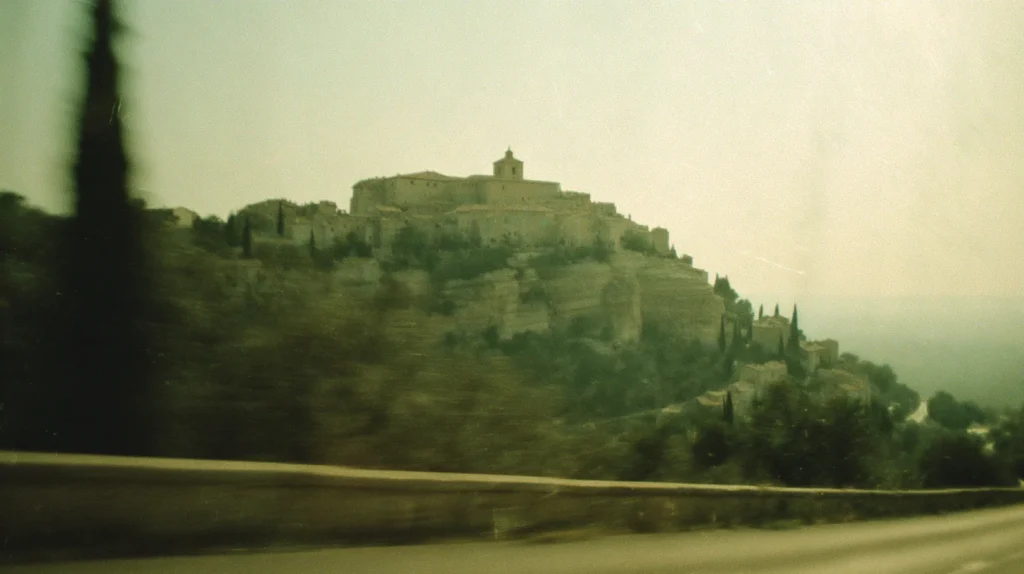
Gordes is the Luberon’s most photographed hilltop village — stone houses stacked up a cliff face, visible from the valley road long before you arrive. It’s worth a walk through the upper streets and a stop at one of the viewpoint pullouts on the approach road for the classic wide shot, but don’t linger too long; the real destination this morning is a few kilometers further on.
From Gordes, it’s about an 8-minute drive down into the valley to the Abbaye Notre-Dame de Sénanque, a working Cistercian monastery founded in 1148. This is not a staged attraction — monks still live and work here, and the site asks for genuine quiet and respect, particularly around religious services. The lavender fields in front of the abbey, if you’re visiting in season, are strictly off-limits to walk through; the harvest belongs to the monks, and access is restricted to preserve it. Photography for personal use is fine, but tripods and professional setups aren’t permitted. Arrive before 9am if you want a shot without dozens of other visitors in it — even the commercial photos that make this place famous were taken in a rare empty moment, not a typical one. Guided tours of the cloister and church cost around €8 and are worth booking ahead in peak season.
Midday: Roussillon and the Ochre Trail
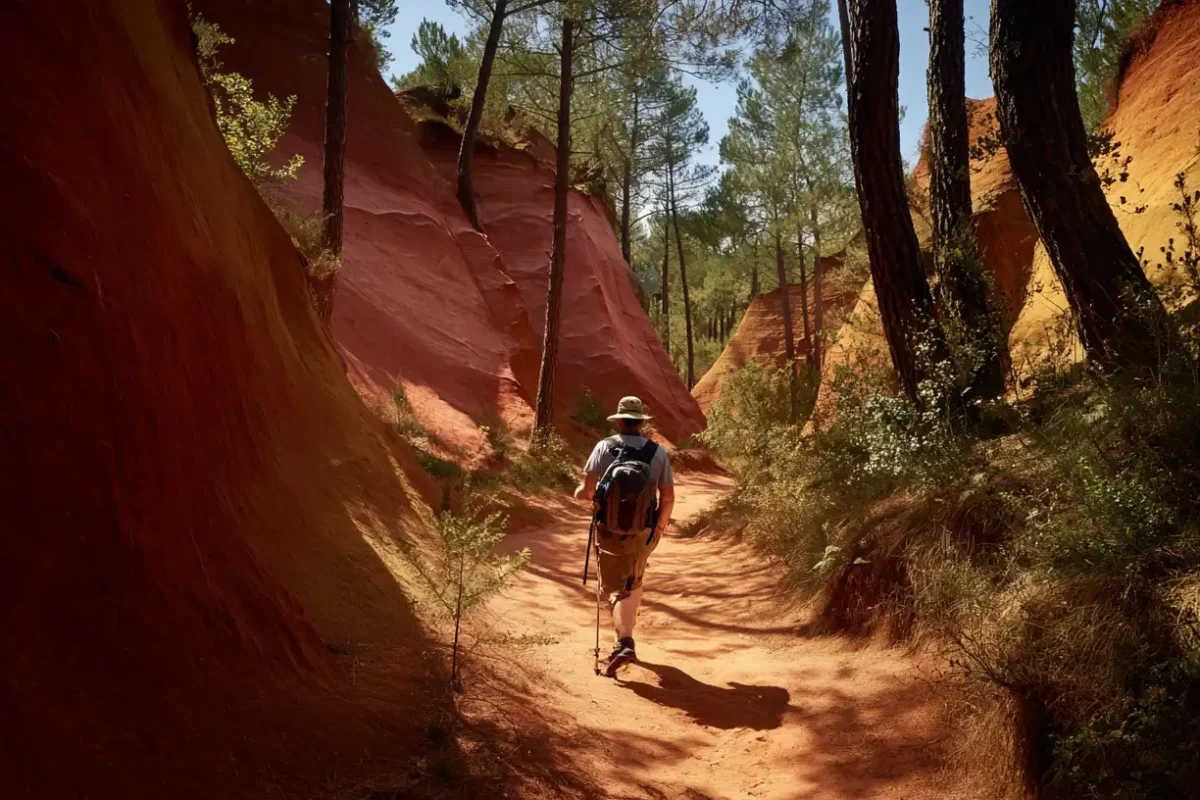
From Sénanque, drive on to Roussillon, a village built directly into a cliff of red and orange ochre deposits, with building facades that pick up the same fiery palette. Below the village, the Sentier des Ocres winds through former ochre quarries — two loop options, a short one around 30 minutes and a longer one closer to 50, both involving several hundred steps and sandy, uneven paths. Wear closed shoes and dark clothing; the ochre dust genuinely stains. Admission runs a modest €3.50 for adults, free for children under 10, with parking nearby at €4 a day (free in the off-season). No advance booking is needed — tickets are sold at the entrance.
Have lunch in Roussillon or push on to Apt, the larger market town nearby, for a wider choice of restaurants.
Afternoon: Isle-sur-la-Sorgue (Thursday or Sunday only)
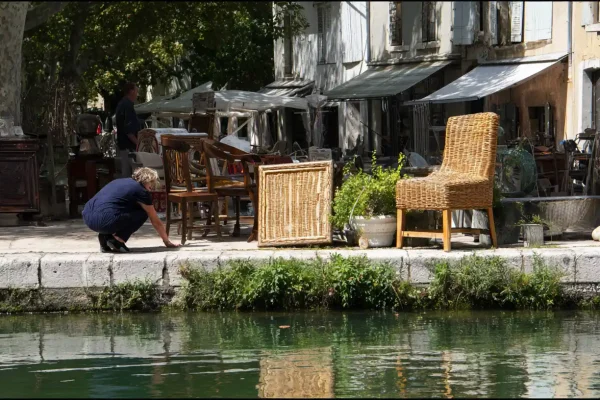
If your Day 2 lands on a Thursday or Sunday, it’s worth routing through Isle-sur-la-Sorgue, a canal-laced town nicknamed the antiques capital of Provence outside Paris. The Sunday market is the bigger event — produce, flowers, and food stalls in the morning, with antique dealers running well into the afternoon — while Thursday’s market is smaller but noticeably calmer. On any other day of the week, the antique shops along the canals still operate, just without the market atmosphere, so it’s a reasonable stop regardless, just a quieter one.
Spend the evening in whichever Luberon town you’ve chosen as a base — Gordes, Roussillon, and Isle-sur-la-Sorgue all have small hotels and B&Bs, though they book up fast in summer.
Day 3 — Aix-en-Provence and Les Baux-de-Provence
Morning: Aix-en-Provence
Aix is where Provence turns urban without losing its charm. Start on Cours Mirabeau, the wide, plane-tree-lined boulevard that splits the old town, and walk the length of it before cutting into the surrounding streets. The Saturday market around Place Richelme and Place des Prêcheurs is the best version of Aix’s market culture — produce, flowers, and Provençal goods in a genuinely local setting rather than a tourist-facing one — but a smaller daily market runs most other mornings too.
Aix is also Cézanne’s city, and if you want to trace that connection, the Musée Granet holds the largest collection of his paintings you’ll find here, alongside works by Rembrandt, Rubens, and Ingres. The Atelier des Lauves, Cézanne’s actual studio on a hill above the old town, reopened in summer 2026 after a lengthy restoration; it only operates seasonally, roughly July through October, and requires an advance reservation for a guided tour, so it’s worth checking current dates before building your morning around it rather than assuming it’s open.
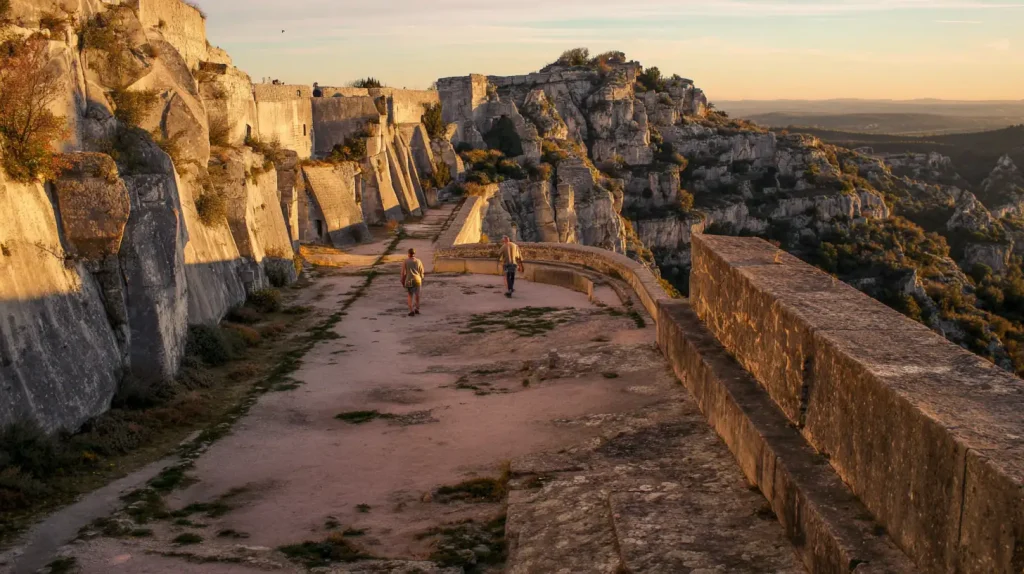
Afternoon: Les Baux-de-Provence and the Carrières de Lumières
From Aix, it’s roughly 45 minutes to Les Baux-de-Provence, a dramatic clifftop village built around the ruins of a medieval castle in the Alpilles hills. The village itself is compact and can get crowded at midday in summer, but the real draw for most visitors is just below it: the Carrières de Lumières, a former limestone quarry turned immersive digital art space, where huge floor-to-ceiling projections of famous artworks wash across the stone walls and columns to music. The current program alternates between a Picasso-focused exhibition and one dedicated to Frida Kahlo, alongside a newer underwater-themed show that launched in the summer of 2026. Adult admission runs around €16.50, with a combined pass covering both the Carrières and the Château des Baux ruins for about €21 if you want to see both sites.
This makes a strong, slightly theatrical way to close out three days in Provence — a genuinely different kind of experience from the villages and markets that filled the two days before it.
What to Skip on a 3-Day Trip
Marseille and the Calanques deserve a trip of their own; squeezing them into a Provence itinerary built around Avignon and the Luberon adds serious driving time for a rushed half-day. Save it for a longer visit or a separate trip based in the city itself.
Valensole’s lavender fields are spectacular, but they sit well east of the Luberon loop this itinerary follows, and detouring there adds hours you don’t have on a tight schedule. If lavender is your priority above everything else, consider restructuring the whole trip around Valensole instead.
The Verdon Gorge is a full day trip on its own, not something to bolt onto an already-packed Provence itinerary. It deserves — and requires — dedicated time.
Frequently Asked Questions
Is three days enough to see Provence? It’s enough to see a genuine, well-chosen slice of it — Avignon, a few Luberon villages, and Aix-en-Provence — rather than the whole region. Provence is large and its best towns aren’t clustered together, so three days means picking one route and committing to it rather than trying to cover everything.
Do I need a car for this itinerary? Yes, without much of an alternative. Trains connect the larger towns like Avignon and Aix, but the Luberon villages, Sénanque Abbey, the Pont du Gard, and Les Baux are only practically reachable by car. Rent one in Avignon on arrival if you’re coming by train.
When is the best time to see lavender in Provence? Roughly mid-June through mid-July in the Luberon, with the fields around Sénanque Abbey usually harvested by late July. The Valensole plateau blooms slightly later. Outside that window, expect green fields rather than purple ones.
Can I visit Sénanque Abbey’s lavender fields up close? No — the fields belong to the working monastery and are off-limits to walk through, to protect the monks’ harvest. You can view and photograph them from the designated viewpoints and the approach road, just not from inside the rows.
What’s the best base for this itinerary — Avignon or a Luberon village? Avignon works well for Day 1 and offers the most hotel options and easiest train access. For Day 2, staying overnight in the Luberon itself, in Gordes, Roussillon, or Isle-sur-la-Sorgue, saves a meaningful amount of driving time and lets you start Day 2’s villages before the tour buses arrive.