The question of how to get around Provence has a simple answer and a complicated one.
Simple: rent a car.
Complicated: everything else.
The region covers an enormous area. The most famous Luberon villages — Gordes, Roussillon, Bonnieux, Sénanque, Lourmarin — sit on hilltops connected by narrow country roads that no bus network was designed to serve efficiently. The TER trains are good for moving between the major cities. The Vaucluse bus lines exist, but run on schedules built for students going to school and workers commuting to town, not for a tourist trying to reach a hilltop village at 9am and be in a different one by noon.
Here’s each option with no filter.
Getting to Provence First: The TGV
Before worrying about local transport, you need to get there. The TGV, France’s high-speed train, makes Avignon an easy destination from Paris — the fastest direct services cover Paris Gare de Lyon to Avignon TGV in around 2 hours 37 minutes, though most scheduled trains run closer to 2h45 to 3 hours depending on the time of day. Marseille takes a bit longer, with the fastest trains around 3 hours and typical journeys running closer to 3h20 to 3h40.
The TGV station at Avignon is actually outside the city (Avignon TGV), separate from the older Avignon Centre station in the city itself. From the TGV station you need a shuttle bus, a short connecting TER train (about 4 minutes to Avignon Centre), or a taxi into the city — a quick trip, but one that catches first-time visitors off guard when they assume the train drops them downtown.
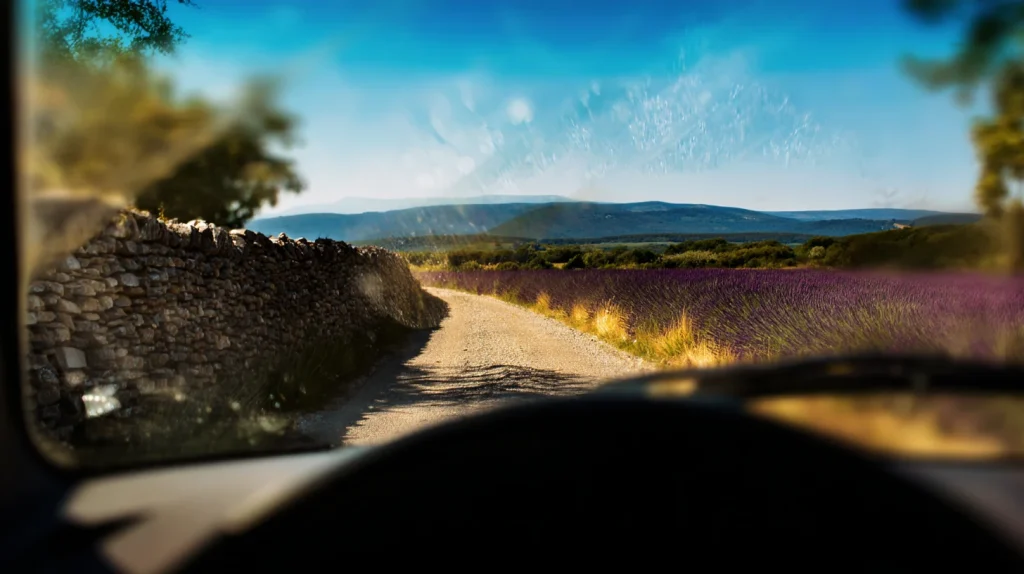
From Paris, book TGV tickets a few weeks ahead for the best prices. Advance fares can run as low as €20 to €35 for the cheapest seats, though standard fares typically land somewhere in the €35 to €60 range, and last-minute or peak-period tickets can climb well past €100. Booking through the SNCF Connect website or app gives you access to discounted Prem’s fares that often cut the price substantially, but they sell out fast.
Flying into Marseille-Provence Airport is the other main option. From there, Avignon is about an hour by car or shuttle. Aix-en-Provence is 25 to 30 minutes.
Renting a Car: The Right Answer for the Luberon
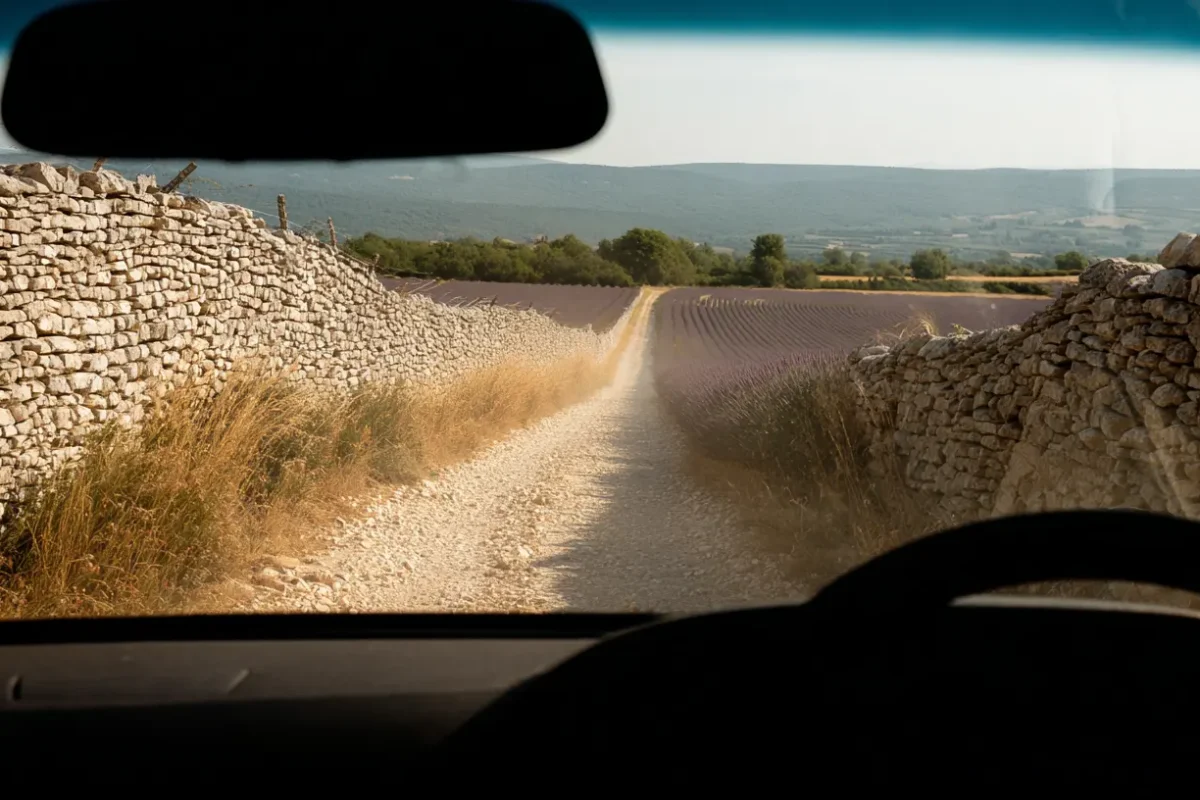
For the classic Provence trip — Luberon villages, lavender country, wine estates, Gorges du Verdon — a rental car is not optional in any practical sense. The region is designed for it. The drives between villages are part of the experience.
A compact car generally runs somewhere between €30 and €70 per day, with prices climbing noticeably in July and August compared to the shoulder seasons. A week’s rental from a major company (Hertz, Avis, Europcar, Sixt) booked several weeks ahead can come in well under €300 for a basic car outside peak season. Full coverage insurance is worth adding given the narrowness of some Luberon lanes — not because you’ll crash, but because the stone walls can be unexpectedly close.
Book at Avignon TGV station or Marseille Airport. Both have well-staffed rental desks and reasonable pricing. Avignon Centre station also has options but with a smaller fleet. Aix-en-Provence and Nîmes airports are alternatives.
France drives on the right, same as most of continental Europe. Roundabouts (ronds-points) are everywhere. The priority-to-the-right rule means traffic coming from the right technically takes precedence unless signs indicate otherwise — this trips people up in villages and on older roads that haven’t been modernized.
Luberon roads: The D-roads (departmental roads) through the Luberon are generally well-maintained but often single-lane-width in practice. In July and August, you’ll encounter tour coaches on some roads between Gordes and Sénanque — patience is required. Parking in Gordes on a summer weekend is genuinely difficult; arrive before 9am or after 5pm.
Fuel: Petrol stations in the Luberon are not on every corner. Fill up in Apt, Cavaillon, or L’Isle-sur-la-Sorgue before heading into the hills. Don’t assume there’s a station in the village you’re heading to; often there isn’t.
Trains Within Provence: The TER Network
The TER (Transport Express Régional) serves Provence-Alpes-Côte d’Azur with 16 lines and 145 stations, running around 800 trains a day, mostly concentrated around Avignon, Marseille, Toulon, and Nice. The network is strong along the coast — between Marseille, Toulon, and Nice, trains run frequently and are the easy, fast option.
Inland, the coverage thins. Useful TER connections for Provence visitors:
Avignon ↔ Marseille: Regular service, roughly 1 hour. Good for combining the two cities.
Avignon ↔ Arles: About 20 minutes. Easy day trip by train without needing a car.
Avignon ↔ Nîmes: About 30 minutes. Useful for the Pont du Gard area, though you still need a bus or taxi to reach the site itself.
Marseille ↔ Aix-en-Provence: About 35 minutes. The TGV station at Aix-en-Provence also connects directly to Paris.
What the trains don’t serve: the Luberon villages (Gordes, Bonnieux, Roussillon, Ménerbes), the Sénanque Abbey area, Lourmarin, Goult, or any of the hilltop village circuit that most people visit Provence for. The nearest train stations to the heart of the Luberon are Cavaillon or Pertuis, both at least 30 to 45 minutes from the main villages by road.
TER tickets are cheap and can be booked on the SNCF Connect website or at station machines. Regional tickets typically run somewhere in the €5 to €20 range depending on the route.
Buses: The Honest Assessment
The Vaucluse department operates bus lines under the Zou! regional network, supplementing the older Transvaucluse services, covering the main towns of the interior.
Lines that are genuinely useful:
Line 5: Avignon to Carpentras. Runs multiple times daily. Useful.
Line 6: Avignon to L’Isle-sur-la-Sorgue. Runs several times daily.
Line 15: Avignon to Apt. Passes through Cavaillon and serves the main Luberon towns.
Line 17: Apt to Gordes to Cavaillon. This is the one that gives you hope. It does pass through Gordes. The realistic caveat: check the actual timetable before planning around it — services are infrequent, often just a few per day on weekdays and fewer on weekends and school holidays. A bus that runs twice a day in each direction works for a commuter. It does not work for a tourist trying to move between two villages in the afternoon.
The honest summary: Provence’s bus network is adequate for moving between major towns (Avignon, Carpentras, L’Isle-sur-la-Sorgue, Aix, Apt) and genuinely difficult for the hilltop village circuit. Services are designed around school schedules and local commuting patterns. Timetables can change by season. If you’re planning to use buses, download the timetable before leaving and plan each day around the actual departure times rather than assuming frequency.
The other issue is connections. Getting from L’Isle-sur-la-Sorgue to Gordes by bus often requires a change at Coustellet that may or may not line up conveniently. Journey times that take 20 minutes by car can take 90 minutes or more by transit. This isn’t a complaint about the buses — they do what they’re designed to do. It’s just not designed for how tourists travel.
Taxis and Private Transfers
Taxis exist in Avignon, Aix-en-Provence, and Marseille in quantity. In the Luberon villages, there are local taxi services, but you’ll need to book ahead rather than expect to hail one off the street.
A taxi from Avignon to Gordes generally runs somewhere in the range of €60 to €90 one way, depending on the operator and time of day. For a group of three or four, this can sometimes work out cheaper per person than renting a car for the day once you factor in fuel and parking. For a solo traveler, it adds up fast.
Private transfers from Marseille airport to Avignon or the Luberon area are widely available and typically cost somewhere between €80 and €140 for a standard car. Services like Welcome Pickups let you pre-book English-speaking drivers, which is genuinely useful on arrival day when you’re tired and don’t want to navigate public transport with luggage.
Some tour operators run day trips from Avignon into the Luberon by minibus. These are worth considering if you don’t want to drive and want a guided circuit of the main villages. They’re not cheap, generally landing somewhere in the €50 to €100 per person range, but they solve the transport problem while giving you a local guide.
Cycling: For Those Who Want to Earn the View
The Luberon is famously popular with road cyclists. The cols through the Luberon range draw riders from across Europe. From a touring perspective, cycling is a real option, but not a casual one.
The Luberon climbs are genuine. The road from Cavaillon up to Bonnieux or from Apt up to the plateau above Roussillon involves several hundred meters of climbing on roads without shade in summer. Attempting this at midday in July would be uncomfortable for most people.
E-bikes change the calculation significantly. Several rental operations in Apt, Cavaillon, and L’Isle-sur-la-Sorgue offer e-bike rentals by the day. With electric assist, the climbs become manageable, and the experience of moving through the Luberon countryside at 15 to 20 km/h instead of 80 km/h is genuinely different, and better, in a lot of ways. You smell the lavender. You stop when you want.
A warning: the narrow D-roads in the Luberon carry vehicle traffic, including tourist coaches in peak season. Some sections don’t have cycling lanes. The roads are rideable but not separated from traffic.
Can You Do Provence Without a Car?
Yes, with significant limitations and realistic expectations.
What’s reachable without a car:
- Avignon itself (everything inside the walls is walkable)
- Arles by train from Avignon (about 20 minutes)
- Aix-en-Provence by train from Marseille or Avignon
- L’Isle-sur-la-Sorgue by bus from Avignon
- Carpentras by bus from Avignon
- Nîmes, with a taxi onward for the Pont du Gard
What’s genuinely difficult without a car:
- The Luberon hilltop village circuit
- Sénanque Abbey and its lavender field
- Gordes (reachable by bus but infrequently)
- Roussillon (no practical public transit option for tourists)
- The Valensole lavender plateau
- The Gorges du Verdon
If your Provence trip is built around the iconic imagery — lavender fields, hilltop villages, the Luberon landscape — you need a car. If you’re content to base yourself in Avignon or Aix and do day trips to accessible towns, a car-free trip is genuinely feasible.
Practical Driving Tips
Speed cameras: France uses fixed and average-speed cameras extensively. The legal limit on most D-roads in Provence is 80 km/h. On autoroutes it’s 130 km/h, reduced to 110 km/h in wet conditions. Violations generate automatic fines sent to the rental company, who will charge your card.
Péage (tolls): The A7 (Rhône corridor), A8 (toward Nice), and A51 (toward Gap) all have tolls. Have cash or a credit card ready. Rental cars don’t automatically come with toll transponders — ask at pickup if you want one.
Parking in Avignon: The old city has paid parking zones. The most practical option is one of the parking areas just outside the ramparts, with a walk or shuttle into the center.
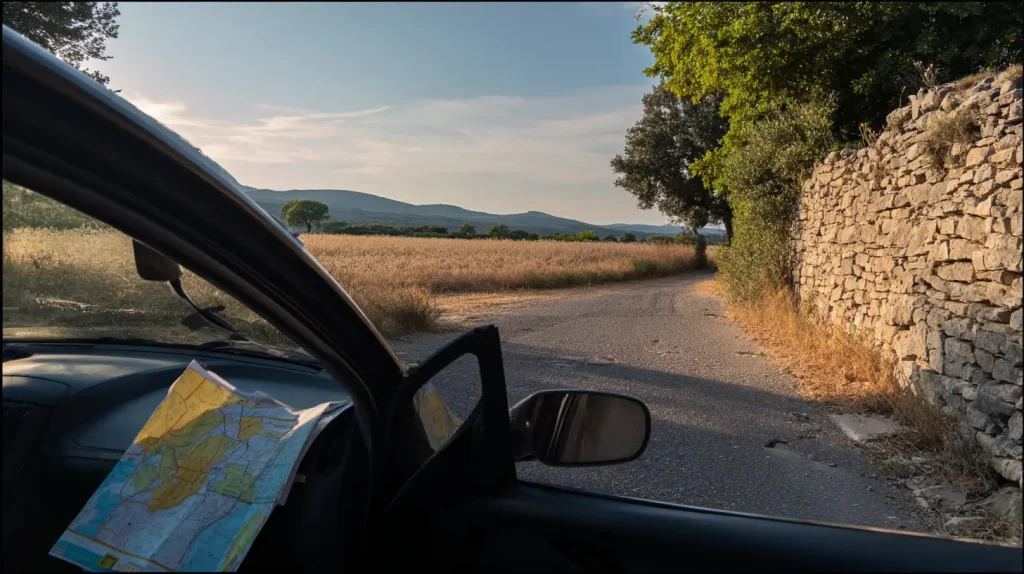
GPS: Download an offline map before entering the Luberon. Mobile signal in the hills between villages drops in and out. Having navigation that works offline prevents the specific experience of being in a village with no idea how to find the next one.
Frequently Asked Questions
Do you need a car to visit Provence? For the main attractions — Luberon villages, lavender fields, hilltop circuits — yes. Trains serve the major cities (Avignon, Marseille, Aix, Arles) well. But the hilltop village experience that most people come to Provence for requires a car or expensive taxi alternatives.
How do I get from Paris to Provence? The fastest TGV from Paris Gare de Lyon to Avignon TGV takes around 2h37, though most scheduled trains run a bit longer. Marseille takes roughly 3 to 3.5 hours. Book ahead for the best fares — Prem’s tickets can be very cheap but sell out quickly. Avignon TGV station is outside the city; take the shuttle bus, a short connecting train, or a taxi into the center.
Are there buses to Gordes and the Luberon villages? Yes, but infrequently. Line 17 connects Apt to Gordes to Cavaillon with a few services per day. Timetables are designed for local commuters, not tourists, and change seasonally. Check the current timetable on the official regional transport site before planning around bus connections.
Is it easy to drive in Provence? Generally yes. The D-roads are well-maintained and traffic is light except in July and August. The main challenges are narrow lanes in the hilltop villages, limited parking at popular spots like Gordes on summer weekends, and remembering to fill up in larger towns rather than counting on village petrol stations.
How long does it take to drive between Luberon villages? The villages are close in distance but slow in driving time because of winding mountain roads. Gordes to Roussillon is about 15 minutes. Roussillon to Apt is about 20 minutes. Gordes to Avignon is about 50 minutes. Lourmarin to Aix-en-Provence is about 45 minutes. Budget extra time in peak season for parking and slow village traffic.