Provence food runs on a short list of ingredients handled with real conviction: olive oil, garlic, anchovies, tomatoes, herbs, and whatever the Mediterranean brought in that morning. It’s a cuisine built on climate as much as tradition — three thousand hours of sunshine a year, poor rocky soil that olive trees and grapevines actually prefer, and a coastline that’s fed the region since the Greeks founded Marseille twenty-six centuries ago. None of it is complicated cooking. Most of it is simple food made from ingredients good enough that complexity would only get in the way.
The tricky part for visitors isn’t finding food labeled “Provençal” — it’s everywhere, on every menu, in every gift shop selling herb blends. The tricky part is telling the real thing from the version built for a tourist who won’t be back to complain. This guide walks through what to actually order across the region, where the honest versions come from, and what’s worth skipping entirely.
Bouillabaisse — The Dish With Rules
Bouillabaisse is Marseille’s signature dish, and it’s also the one most frequently faked. Originally a fisherman’s stew made from whatever unsellable rockfish were left over at the end of the day, it’s since become one of the more expensive things you can order in Provence — and for legitimate reasons.
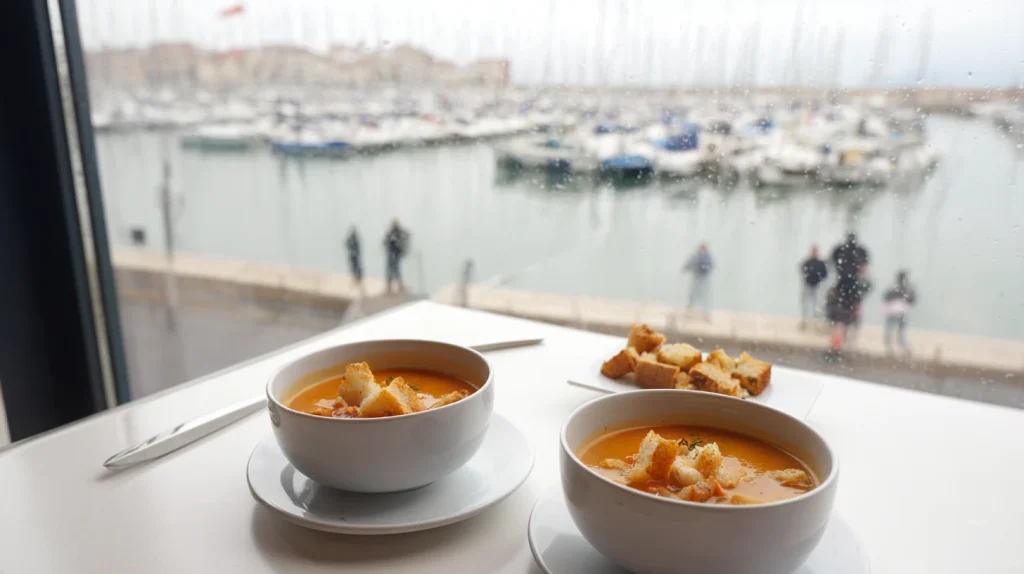
In 1980, a group of Marseille restaurateurs signed the “Charte de la Bouillabaisse,” a charter meant to protect the dish from restaurants slapping the name on any fish soup. A genuine bouillabaisse under the charter requires at least four species of Mediterranean rockfish — typically drawn from a list that includes scorpionfish, red gurnard (galinette), conger eel, John Dory, and monkfish — cooked in a saffron-and-fennel broth, and served in two stages: the broth first, as a soup with rouille and croutons, then the fish itself, often filleted tableside as a second course.
That process, and the cost of the fish involved, is why an honest bouillabaisse runs expensive — generally somewhere between €50 and €100+ per person at a reputable Old Port restaurant, and most places require a minimum of two diners to order it at all, given the quantity and variety of fish involved. Anything advertised well under that, especially alongside a laminated photo menu in six languages, is a strong signal you’re not getting the charter version. A thin, watery broth that tastes mostly of stock cube is the other giveaway — the real thing should taste distinctly of the fish and saffron, not salt.
Restaurants associated with the original charter and generally well regarded for it include Le Miramar and Chez Madie les Galinettes, both on the Quai du Port, and Chez Fonfon in the picturesque Vallon des Auffes inlet a little further along the coast. Reservations are strongly recommended, and some places ask for 24 hours’ notice given how much prep goes into the dish.
Aioli — Not Just a Sauce
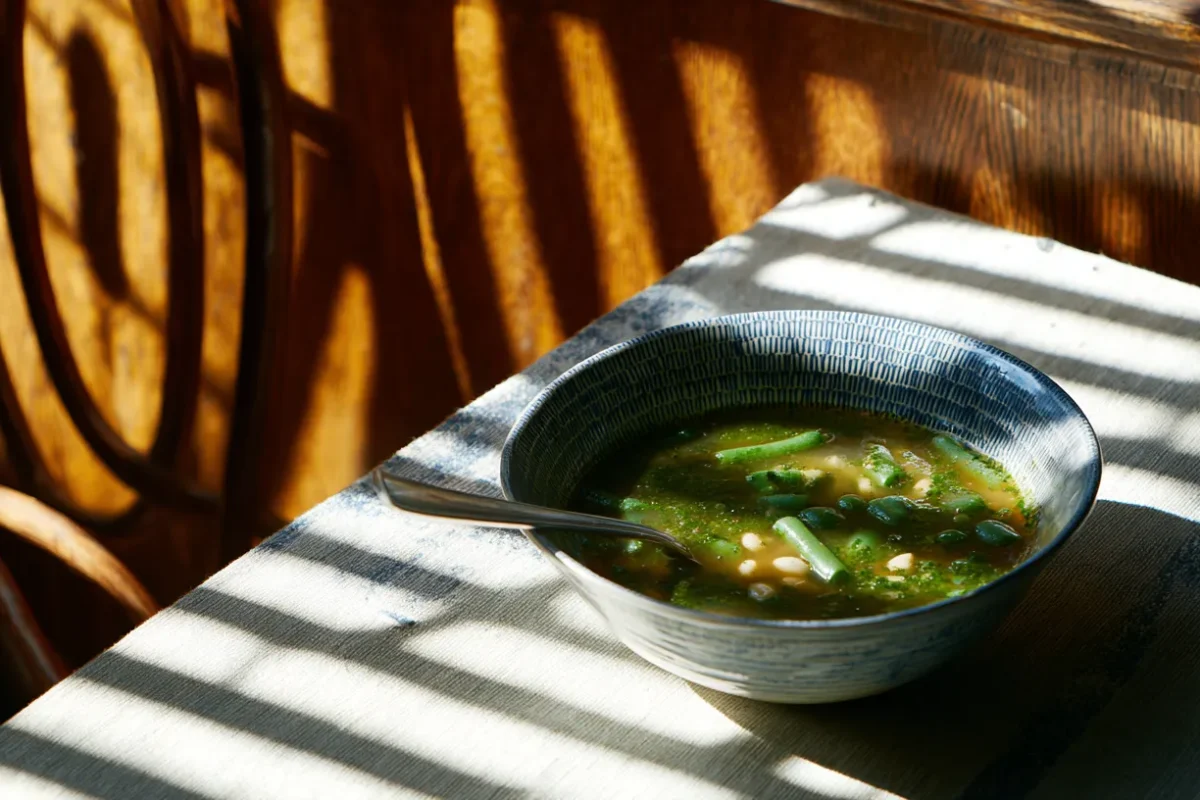
In most of the English-speaking world, “aioli” means a garlicky mayonnaise you dip fries in. In Provence, “le grand aïoli” is a full meal: a thick, emulsified garlic-and-olive-oil sauce served alongside poached salt cod, boiled vegetables (carrots, potatoes, green beans), hard-boiled eggs, and sometimes snails, all meant to be eaten together, dipped and dressed in the sauce at the table. It’s a traditional Friday and festival dish, historically tied to Lenten fasting when meat was off the table.
If you see “grand aïoli” on a menu, especially at a Provençal restaurant on a Friday, it’s worth ordering — it’s a genuinely communal, slow meal rather than a quick lunch, and a good version balances the raw punch of the garlic against the richness of the oil rather than letting either dominate.
Tapenade — Younger Than It Looks
Tapenade feels ancient, but the specific dish most people know is younger than you’d guess. Olive-and-caper pastes go back to Roman-era Provence in some form, but the modern tapenade — black olives, capers, anchovies, garlic, and olive oil blended into a spreadable paste — is generally credited to a chef named Meynier at a Marseille restaurant called La Maison Dorée in 1880. The name comes from “tapenas,” the Provençal word for capers, which are the ingredient that gives the spread its distinctive tang.
You’ll find it everywhere in Provence — at markets, on bread baskets before a meal starts, sold in small jars at every épicerie. It’s worth trying a few versions side by side if you get the chance, since the balance shifts noticeably from maker to maker: some lean heavily on anchovy, others barely use it and let the olives carry the flavor. A good tapenade should taste distinctly of olives first, with the capers and anchovy providing depth rather than dominating.
Ratatouille — Simpler Than the Movie Suggests
Ratatouille has a reputation problem, mostly thanks to the animated film’s beautifully arranged version, which isn’t really how it’s traditionally made. The actual dish is a stewed vegetable medley — eggplant, zucchini, bell peppers, tomatoes, onion, garlic — cooked slowly, usually with each vegetable sautéed separately before being combined, so the textures hold rather than collapsing into a single mush. Herbes de Provence and olive oil do the rest of the work.
It’s a summer dish, built around vegetables at their peak, and it shows up as a side or a light main course across the region. A well-made ratatouille has some real texture to it — you should be able to tell the eggplant from the zucchini — rather than the smooth, homogenized version that comes out of a can.
Petits Farcis and Socca — The Overlap With Nice
Two dishes worth knowing about show up across Provence but are more specifically associated with Nice and its Niçoise cuisine, which developed under different historical influences (Nice was part of the Kingdom of Sardinia until 1860, giving it a more Italian-inflected food culture than the rest of Provence). Petits farcis — stuffed vegetables filled with seasoned meat, rice, and herbs — and socca, the wood-fired chickpea pancake sold in paper cones across Nice’s old town, are both technically part of the broader Provençal food landscape but deserve their own deep dive given how specific the Niçoise tradition is. If Nice is on your itinerary, it’s worth treating that leg of the trip as its own culinary chapter rather than folding it entirely into general Provence food.
Herbes de Provence — More Marketing Than Recipe
The dried herb blend sold in little terracotta jars across every market and gift shop in the region — usually some combination of thyme, rosemary, oregano, savory, and marjoram, sometimes with lavender flowers mixed in — is a genuinely useful pantry staple, but it’s worth knowing it’s largely a 20th-century commercial invention rather than an old family recipe passed down through generations. That doesn’t make it fake exactly; the herbs themselves grow wild across the region’s hillsides (garrigue) and have flavored Provençal cooking for centuries. It just means the specific pre-mixed blend in the jar is more of a convenient modern packaging than an ancient culinary tradition, and the lavender-heavy versions aimed squarely at tourists are generally not what a Provençal home cook would actually reach for — lavender’s a perfume and decoration crop first, a cooking ingredient a distant second.
Olive Oil — Worth Tasting Before You Buy
Provence produces some genuinely excellent olive oil, with several protected AOC zones across the region — the Vallée des Baux-de-Provence and the area around Nyons (technically just over the border in the Drôme but firmly part of the same olive-growing tradition) are the two most recognized names. Mills across the region offer tastings, and it’s worth doing one before buying, since Provençal oils vary a lot in style — some are green, peppery, and assertive; others are milder and more buttery. What tastes good on bread at a tasting doesn’t always translate to what you’ll actually use at home, so tasting first beats buying on reputation alone.
Rosé — The Region’s Other Signature Export
Provence isn’t just where a lot of rosé happens to be made — it’s the epicenter of it. The region produces roughly 90% pink wine by volume across its nine AOC appellations, and accounts for somewhere around a third to 40% of all French AOC rosé production, with a meaningful slice of total global rosé output as well. Côtes de Provence, the largest and best-known appellation, alone accounts for something like three-quarters of the region’s total wine production, and about 80% of that is rosé.
The style is fairly consistent across the region: pale, dry, closer to salmon or pale pink than the deeper “blush” rosés found elsewhere, made mostly from Grenache, Cinsault, Syrah, Mourvèdre, and the locally distinctive Tibouren grape. It’s worth visiting a domaine directly if you have the time — many offer tastings, and the price difference between a bottle bought at the source and the same label back home is often significant.
Calisson d’Aix — The Sweet Worth Seeking Out
Calisson d’Aix is Aix-en-Provence’s signature confection: a small, diamond-shaped candy made from ground almonds and candied melon, topped with a thin layer of royal icing. Legend traces it to the 15th century, supposedly created for the wedding of King René of Anjou to make his famously unsmiling bride finally smile. Whatever the truth of that story, the modern version has held a protected geographical indication (IGP) since 2002, meaning it can only be made in Aix-en-Provence and six surrounding communes, with minimum percentages of almonds and candied fruit specified in the rules.
Each of the dozen or so calissonniers still working in Aix has their own slight variation — a bit more orange zest here, a hint of vanilla or bitter almond there — but the base is always the same: roughly a third almonds, a third candied fruit (mostly candied melon), and a third sugar and skilled hands. It’s rich and sweet in small doses, traditionally part of the thirteen desserts served at a Provençal Christmas but genuinely good year-round with an afternoon coffee.
Markets — Where the Real Version Lives
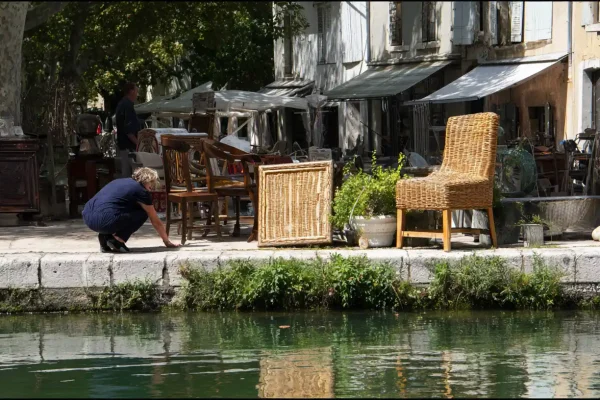
More than any single dish, the honest version of Provence food lives in its markets. Aix-en-Provence, Avignon, Uzès, and dozens of smaller towns run genuine daily or twice-weekly markets that serve local households, not just visitors — the difference shows in the produce quality, the prices, and the fact that half the stalls sell things a restaurant kitchen would actually buy rather than souvenirs. A market lunch assembled from a good cheese stall, a charcuterie counter, fresh bread, and whatever fruit is in season is often a better meal than anything you’d get sitting down, and it costs a fraction of the price.
What to Skip
Restaurants that put “Provençal” in the name and serve an identical menu to the place next door are worth being wary of — genuine regional cooking varies from town to town and season to season, and a menu that never changes is usually built around what’s easy to prep in bulk rather than what’s good that week.
Bouillabaisse priced well under €50 in a heavily touristed area is close to a guarantee you’re getting a diluted, fish-stock-cube version rather than anything close to the charter recipe. Herbes de Provence blends sold in decorative jars at inflated prices in gift shops are fine as souvenirs but aren’t meaningfully different from what you’d find at a regular market stall for a fraction of the cost. And rosé sold specifically as “the famous pink wine of Provence” at inflated prices near major tourist sites is rarely the best value — the same appellation, or better, is usually available at the source for considerably less.
FAQ
What is the most famous food in Provence? Bouillabaisse, the Marseille fish stew, is the dish most associated with the region internationally, though it’s genuinely a Marseille specialty rather than something eaten daily across all of Provence. Ratatouille, tapenade, and herbes de Provence are more broadly representative of everyday Provençal cooking.
Is bouillabaisse worth the price? At a restaurant that follows the 1980 charter — using genuine rockfish, serving it in two courses, and pricing it in the €50-plus range — yes, it’s a genuinely different experience from a regular fish soup. Cheaper versions under that price point are almost never the real thing and aren’t worth ordering on the strength of the name alone.
What should I buy to bring home from Provence? Good olive oil (tasted before buying, since styles vary a lot), a jar of tapenade or two, and calissons d’Aix if you’re passing through Aix specifically, since the IGP protection means you genuinely can’t get the authentic version elsewhere. A bottle or two of Côtes de Provence rosé, if you can carry it, is usually better value at the source than back home.
Is Niçoise food the same as Provençal food? Related but distinct. Nice belonged to the Kingdom of Sardinia until 1860, and its cuisine developed with much stronger Italian and Ligurian influence than the rest of Provence — dishes like socca and pissaladière reflect that history directly. It’s worth thinking of Niçoise cuisine as a close cousin of broader Provençal food rather than simply a regional variant of the same thing.
What’s the best way to experience Provence food on a trip? Lean on the markets, not just the restaurants. A morning spent buying cheese, bread, olives, and fruit directly from producers gives a more honest sense of what people in the region actually eat than a tourist-facing restaurant menu, and it’s considerably cheaper besides.