Cannes has a reputation that precedes itself by about forty years: red carpets, yachts, film stars, and the kind of aspirational sheen that travel magazines love. The reality is both more and less than that. Yes, La Croisette is genuinely glamorous. Yes, the yachts in the Old Port are real and enormous. And yes, the private beach clubs charge prices that require a moment of internal calculation before you sit down.
But Cannes also has something the rest of the French Riviera mostly doesn’t: sandy beaches. The pebble beaches of Nice and Monaco are fine, but Cannes offers actual sand along parts of its coast — which matters enormously if you’re traveling with children or simply prefer not to negotiate smooth stones every time you want to reach the water.
Antibes, about ten minutes east of Cannes by train, is the quieter and more grounded counterpart. Fewer tourists, a functioning old town that hasn’t been entirely given over to tourism, and one of the more underrated, least-crowded museums on the Riviera, sitting inside a medieval castle right on the sea.
Cannes: What’s Worth Your Time
La Croisette is the 2.8-kilometer seafront promenade that defines Cannes. Walk it in the morning before the heat builds and before the tour groups arrive, and it’s genuinely lovely — the curve of the bay, the palm trees, the grand hotel facades. The Palais des Festivals at the western end is where the Film Festival happens; the famous red-carpeted steps outside are accessible to the public year-round and worth a photo even without an actual premiere in progress.
The private beach clubs along La Croisette charge somewhere in the range of €50 to €100 for a sunbed and umbrella, and that doesn’t include food or drinks. On a scorching August afternoon with nothing else planned, maybe. As a standard beach day, it’s poor value. Instead, head to the free public beaches: Plage du Midi west of the Old Port, and Plage de la Bocca further west still. Both are sandy, free, and significantly less polished — which is to say, more comfortable.
Here’s something worth knowing about Cannes that most first-time visitors don’t fully grasp: the sandy beach is genuinely unusual for this stretch of coast. Nice has pebbles. Menton has pebbles. Monaco has pebbles. Cannes has sand. If you’re traveling along the Riviera and want a proper beach experience without paying for a private club, Plage du Midi is one of the better free options on the entire coast. It’s wide, reasonably clean, and far enough from the Croisette hotel strip that it feels like an actual local beach rather than a set piece.
The best time to use the public beach is before 10am or after 4pm in summer. From late morning to mid-afternoon it can get very crowded, and the heat at midday is serious in July and August. A beach umbrella of your own, bought cheap from a pharmacy or sports shop, makes the midday hours far more manageable if you plan to stay.
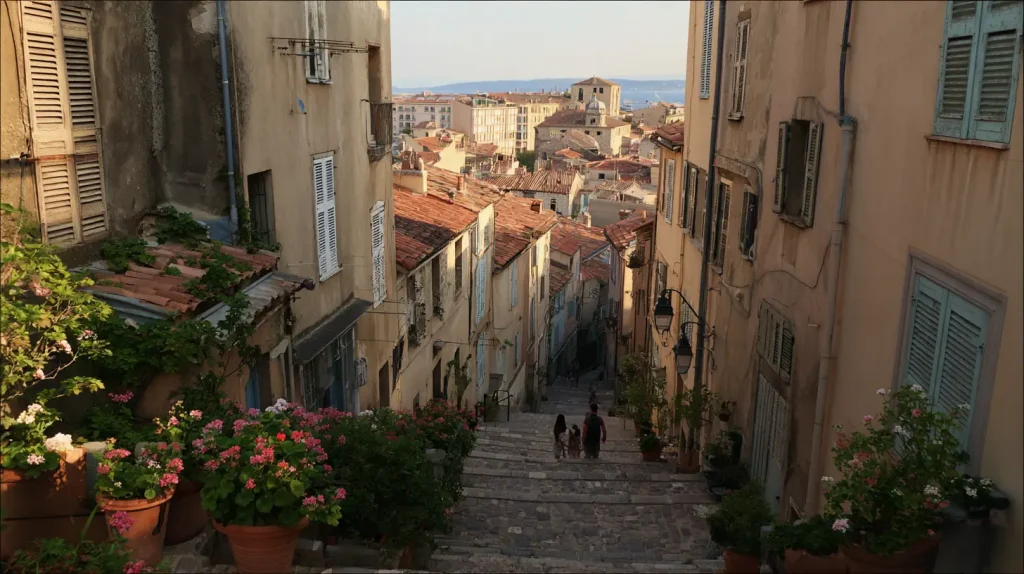
Le Suquet is the old quarter of Cannes, rising on a hill behind the Old Port. Most visitors walk along the Croisette and miss it entirely. The narrow streets climb steeply to a medieval castle and a church with panoramic views across the bay. In the evening, when the light turns amber across the water, the view from the top of Le Suquet is arguably better than anything you get at sea level. The climb takes about fifteen minutes from the port.
Inside the castle at the top of Le Suquet is what used to be known as the Musée de la Castre and has since been renamed the Musée des Explorations du Monde. It holds a compact collection of antiquities, primitive art, and Mediterranean artifacts, and the tower offers a genuine 360-degree panorama over Cannes and the coastline. Full admission runs around €6.50, with a reduced rate of about €3.50 for students, young adults, and a few other categories. Dinner restaurants line the lower streets of Le Suquet and are generally more affordable than the establishments along the Croisette — this is where to eat if you want a proper meal without a hotel-lobby price tag.
The Old Port (Vieux-Port) is free to walk around and worth an hour for the yacht-watching alone. The vessels moored here during summer range from respectable motor cruisers to superyachts so large they trail their own tenders behind them. Nobody stops you from walking along the quay and staring.
The Lérins Islands: The Half-Day Most People Miss
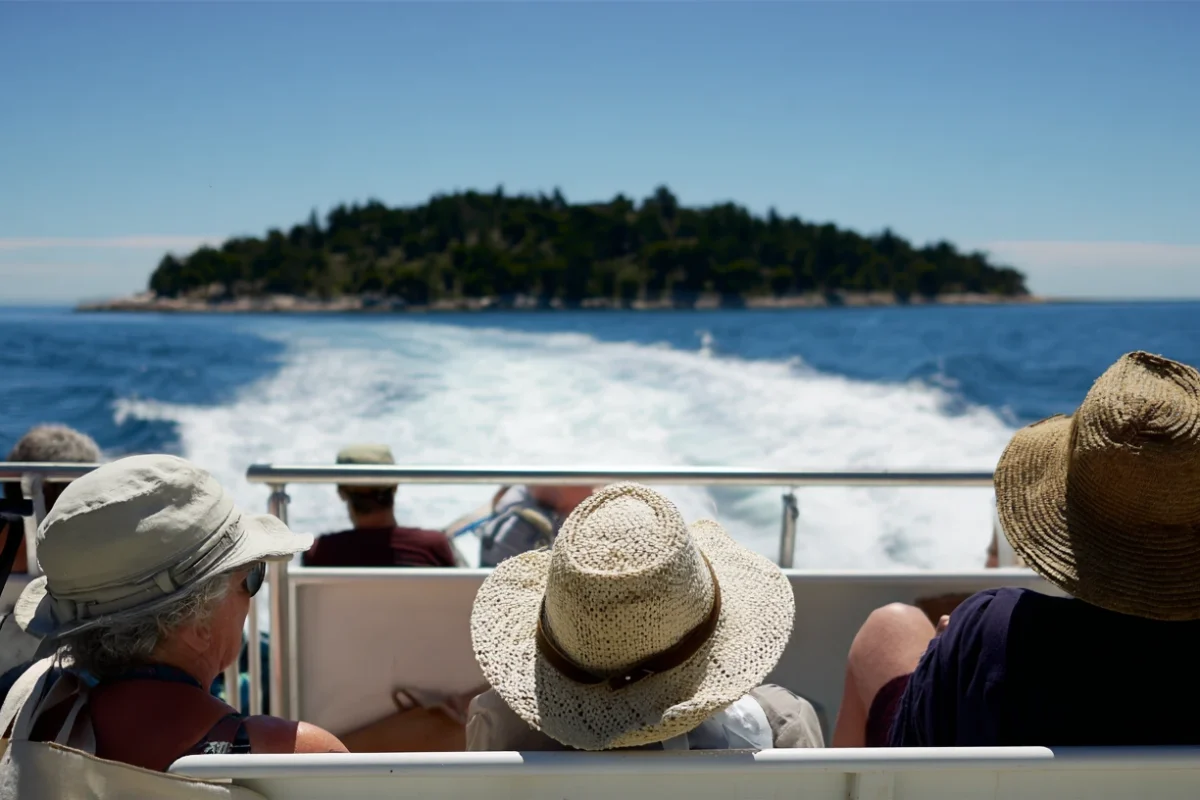
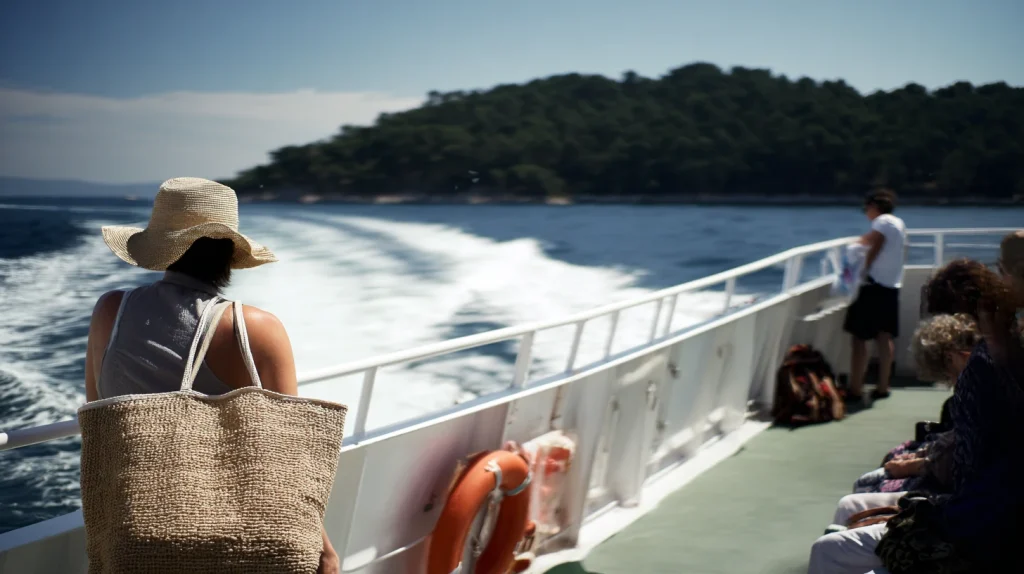
A roughly fifteen-minute ferry from Cannes takes you to the Lérins Islands — a small archipelago that feels completely removed from the Riviera’s usual energy.
Île Sainte-Marguerite is the larger and more visited of the two. Round-trip ferry fares generally run somewhere between €16 and €19 for an adult, depending on the operator, with reduced rates for children and young people. The island has the Fort Royal, a fortress associated with the legend of the Man in the Iron Mask — the mysterious prisoner whose true identity was never publicly confirmed. The fort’s museum covers the island’s history and its most famous involuntary resident. Beyond the fort, the island has walking trails through pine and eucalyptus forest, small beaches accessible only on foot, and almost no commercial development.
Île Saint-Honorat is smaller and home to a working Cistercian monastery with roots going back to the 5th century. The monks produce wine and liqueur, both sold at the monastery shop. The island’s southern coast has rocky coves for swimming.
One practical detail worth knowing before you book: different ferry operators tend to serve different islands. Some companies run only to Sainte-Marguerite, while others are the main operator serving Saint-Honorat, so a single round-trip ticket doesn’t automatically cover both islands. If you want to see both in one day, check which operator goes where before you buy, and budget for two separate tickets if needed. All ferries depart from the same general area, Quai Laubeuf in the Old Port.
Allow a half-day for the islands. It’s a genuine change of pace from the Croisette, and one of the better-value experiences on the French Riviera — a short ferry ride that drops you somewhere that feels entirely removed from the resort belt.
A few practical notes: bring food and water. The islands have limited food options — a small restaurant on Sainte-Marguerite operates seasonally, roughly April through October — and prices there run at resort levels. A packed lunch from a Cannes boulangerie, eaten at a pine-shaded picnic table overlooking the sea, isn’t a compromise. It’s arguably the ideal version of the experience.
Ferries run throughout the day, with departures roughly every 30 to 60 minutes depending on the season, tightening up considerably in winter. Check the current schedule before you go, and don’t miss the last boat back — there’s no accommodation on Sainte-Marguerite outside the fort itself.
Cannes Film Festival: When to Visit and When to Avoid
The 79th Cannes Film Festival ran from May 12 to 23, 2026. The 80th edition, marking the festival’s anniversary year, is already scheduled for May 11 to 22, 2027.
During festival week, expect the following:
- Hotels in Cannes charge significantly higher rates
- The Palais des Festivals area is cordoned off or restricted during screenings and events
- La Croisette becomes heavily crowded, particularly in the evenings
- Restaurant prices in the city center spike noticeably
Unless you’re specifically attending as an industry professional or a film enthusiast who has booked well in advance, festival week is a poor time to visit Cannes as a regular tourist. The week immediately before and the weeks after offer essentially the same weather and experience without the disruption or the price premium.
This is the specific timing consideration most Cannes travel guides don’t adequately flag or explain, and it’s worth building any Riviera trip planning around if your dates have any flexibility at all.
Antibes: Why It’s Worth the Extra Twenty Minutes
About ten minutes by train east of Cannes, or twenty to twenty-five minutes from Nice, is Antibes — and it rewards visitors who make the effort.
Vieil Antibes, the old town, is enclosed within 16th-century ramparts. The streets inside are narrow and genuinely Provençal: morning markets, small boulangeries, a working fishing port around the corner from tourist-facing restaurants. The market at Cours Masséna runs Tuesday through Sunday mornings and sells the standard Riviera mix of flowers, vegetables, cheese, and local honey.
Antibes has a noticeably different energy from Cannes. It’s a real town — people live and work here, buy their groceries here, send their children to school here. Tourism is present, but it hasn’t displaced everything else. You can walk into a café and find locals having their morning coffee alongside visitors, which feels increasingly rare on the Riviera during high season.
It’s easy to assume Antibes will feel like a junior version of Cannes. It doesn’t. It has its own distinct identity — older, less performatively glamorous, more interested in its own daily rhythms than in impressing anyone passing through. That’s a large part of what makes the train ride worth it.
The port at Antibes, Port Vauban, is one of the largest yacht harbors in Europe and has its own version of Cannes-style wealth on display. The superyachts moored here are just as impressive as anything in Monaco or Cannes, and the waterfront walk around the port is free.
The Musée Picasso is housed inside the Château Grimaldi, a medieval castle right on the sea wall. In 1946, Pablo Picasso used the castle as his studio for several months and donated a substantial body of work — paintings, drawings, ceramics, and tapestries from that period — to the town upon his departure. The terrace offers sea views that match anything else on the Riviera. Admission runs somewhere in the €8 to €10 range for adults, though it’s worth double-checking the current price on the museum’s own site before you go, since rates and free-entry days do shift.
Cap d’Antibes is the cape extending south of Antibes town — rocky coastline, pine forest, some of the most expensive real estate on the Riviera, and a free coastal path, the Sentier du Littoral, that winds along the water. The path offers access to secluded rocky coves and views dramatically different from the Croisette’s resort-facing promenade. Allow two to three hours for the full loop.
Juan-les-Pins, immediately west of Antibes, is a beach resort town known for its jazz festival in July and a more laid-back beach club scene compared to Cannes. Sandy beaches, pine trees, a slightly retro feel — it’s the more affordable Riviera beach day if you’re already staying in the area.
Getting There
From Nice: the train to Cannes takes around 35 to 40 minutes and runs frequently throughout the day. The train to Antibes takes around 20 to 25 minutes. Trains depart from Gare Nice-Ville.
Between Cannes and Antibes, the train takes around 10 minutes and costs a few euros. Both stations are centrally located and within easy walking distance of the main sights, which makes the two towns a natural pair for a single day trip from Nice.
A logical sequence for a combined day: arrive in Cannes in the morning, spend two to three hours walking La Croisette, visiting Le Suquet, and having lunch, then take the train to Antibes in the early afternoon for the Musée Picasso and a walk through the old town. Return to Nice directly from Antibes station by early evening. Total public transport time between Nice and Antibes runs under thirty minutes each way, which leaves most of the day free for actually being in either town rather than getting to it.
Frequently Asked Questions
Is Cannes worth visiting without the Film Festival? Absolutely. Outside of festival week, Cannes is significantly more pleasant — the beach is accessible, La Croisette is walkable, and Le Suquet and the Lérins Islands are genuinely worth the time. The festival atmosphere is overrated for regular visitors and comes with a real price and crowd premium.
Are there free beaches in Cannes? Yes. Plage du Midi and Plage de la Bocca are free public beaches with actual sand. They’re less glamorous than the private beach clubs on La Croisette but cost nothing and are a short walk or bus ride from the center.
How do I get to the Lérins Islands from Cannes? Ferries depart from Quai Laubeuf in the Old Port of Cannes. Round-trip tickets generally run €16 to €19 per adult, depending on the operator. The crossing to Île Sainte-Marguerite takes about 15 minutes. Boats run throughout the day year-round, with reduced frequency in winter.
Is Antibes worth visiting separately from Cannes? Yes. Antibes has a different character — a working old town, the Musée Picasso in an extraordinary location, and the Cap d’Antibes coastal path. Combined with Cannes, the two make a full and varied day trip from Nice.
When is the best time to visit Cannes and Antibes? May outside festival week, early June, and September tend to offer the best balance: warm weather, accessible beaches, and manageable crowds. July and August are very busy and expensive throughout the Riviera. Cannes Film Festival week — the 80th edition runs May 11 to 22, 2027 — is the single worst stretch for a regular visitor to be in Cannes itself.