Most people come to Paris with the same list. Eiffel Tower. Louvre. Notre-Dame. Maybe Versailles. They follow the crowd, tick the boxes, and leave with thousands of photos that look exactly like everyone else’s. Which is fine — those places are famous for a reason.
But Paris saves its best surprises for people who wander off the main drag. A nearly 5km elevated park above the rooftops. A Roman amphitheater that gets almost no foot traffic, ten minutes from the Latin Quarter. A museum that just reopened after renovation, with a courtyard café so tucked away it feels like a secret. None of these are technically unknown — they’re on maps, they’re real — but they’re invisible to most visitors because they require five minutes of research and a Métro journey that isn’t on a highlights reel.
Here are the Paris hidden gems worth finding on your next trip.
The Promenade Plantée: Paris’s Original High Line
New York has the High Line. But Paris did it first.
The Promenade Plantée — officially the Coulée Verte René-Dumont — was inaugurated in 1993, built on a former railway viaduct that cuts through the 12th arrondissement. It runs for just under 5km, starting near the Opéra Bastille and winding east toward the Bois de Vincennes.
Walk it from west to east and you pass through rose gardens, bamboo groves, stretches of wisteria, and views across Haussmann rooftops that most tourists never see. The elevated position gives you sight lines into apartment balconies and over courtyards that the streets simply don’t offer. Spring is the best season — the roses and wisteria bloom together in April and May, and the light in late afternoon turns the whole corridor gold.
Below the raised section, the brick arches of the original viaduct have been converted into the Viaduc des Arts — a row of high-end artisan workshops and galleries. Glassblowers, violin makers, furniture restorers. You can dip in and out as you walk, though the ground-level workshops keep regular business hours rather than staying open all day.
Admission is free. Summer hours run approximately 7am to 9:30pm; winter hours are closer to 8am to 5:45pm. The western entrance starts on Avenue Daumesnil, near Bastille. Take Métro Line 1 or Line 8 to Bastille and walk south.
It’s easy to underestimate this one — “elevated park” can sound more like a novelty than an actual destination. In practice, it’s one of the more genuinely peaceful stretches of time you can spend in the city, and it rewards an unhurried pace more than almost anywhere else on this list.
Arènes de Lutèce: A Roman Amphitheater Nobody Queues For
Buried in the Latin Quarter is a Roman amphitheater dating back to the 1st or 2nd century AD, drawing a fraction of the foot traffic of the Colosseum in Rome despite being nearly as old and sitting right in central Paris.
The Arènes de Lutèce was rediscovered in 1869 during construction work connected to Haussmann’s renovation of the city. Estimates of its original capacity vary, with historians putting the number of spectators anywhere from around 10,000 up to as many as 15,000 or more, and it was used for both gladiatorial combat and theatrical performances. Today, local men play pétanque on the arena floor — the metal balls clicking against ancient stone while tourists walk right past the entrance without realizing what’s inside.
Entry is free. Summer hours run 9am to 9:30pm; winter hours are closer to 8am to 5:30pm. The main entrance is at 47 rue Monge, or through rue des Arènes. It’s a ten-minute walk from Place Maubert or Saint-Michel.
The amphitheater is one of the oldest standing structures in Paris, predating Notre-Dame by close to a thousand years. That fact doesn’t quite land until you’re actually sitting in the tiers, watching someone line up a near-perfect shot at pétanque. It’s a living, used space rather than a roped-off monument.
Bring a book. This is one of the few places in central Paris where you can sit quietly for an hour without anyone trying to sell you something or angling for your photo spot. The small park attached to the site, Square Capitan, makes a good picnic stop if you’ve picked up supplies from the Rue Mouffetard market, a five-minute walk away.
Canal Saint-Martin: The Locals’ Waterfront
The Seine gets all the fame. But locals go to Canal Saint-Martin.
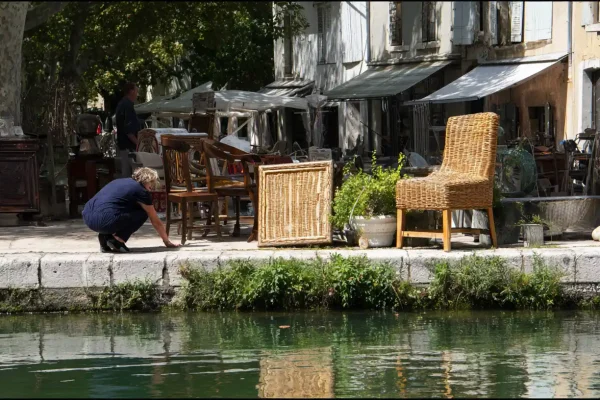
This roughly 4.6km waterway runs through the 10th arrondissement, connecting the Bassin de la Villette to the Seine. It’s lined with iron footbridges, weeping trees, and stone ledges where Parisians settle in for apéro — that pre-dinner drink that stretches on until 9pm or later in summer. On warm evenings, the canal banks fill with people who’ve brought wine, cheese, and a portable speaker.
There’s no admission, no real crowds, no queue. The area has good coffee shops, the covered Marché Saint-Martin, which has operated since the 1850s, and the Point Éphémère cultural space on the quay, hosting concerts and exhibitions inside a former industrial building.
Take Métro Line 5 to Jacques Bonsergent, walk along the quays, and let the afternoon drift. The section between Rue du Faubourg-du-Temple and Rue de la Grange-aux-Belles is the most photogenic — the iron footbridges here date from the 19th century, and the water is often still enough to reflect them cleanly.
The one caveat: avoid very late weekend nights. It gets loud. Weekday evenings in spring or early summer are close to perfect.
Musée de la Vie Romantique: The Rose Garden Museum
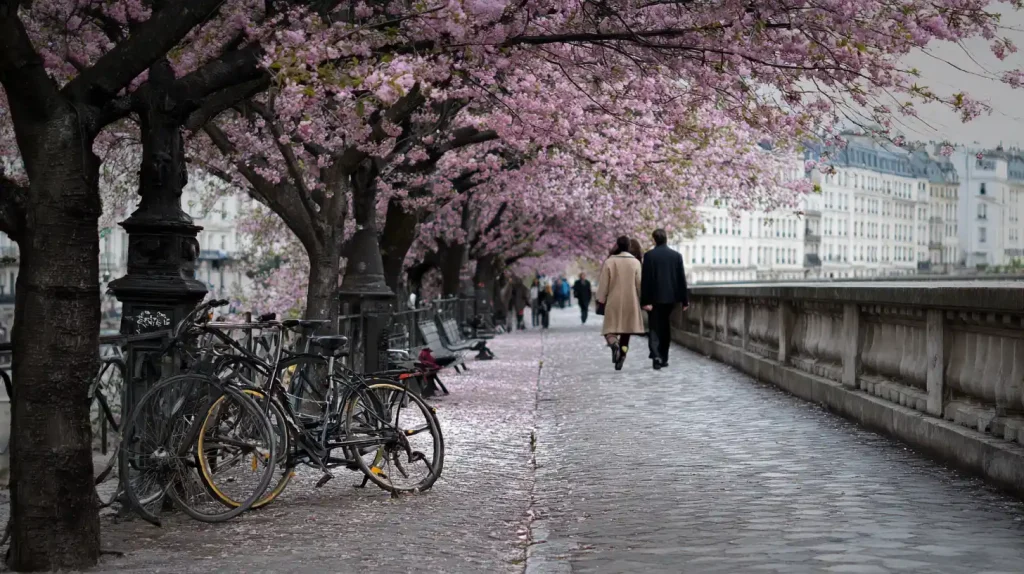
This one comes with a specific piece of context: the Musée de la Vie Romantique reopened on February 14, 2026, after roughly 17 months of renovation. The timing was intentional — it’s the Museum of Romantic Life, and choosing to reopen on Valentine’s Day was either clever or maximally on-brand, depending on your tolerance for that sort of thing.
The museum sits at 16 rue Chaptal in the 9th arrondissement, down a cobbled lane that feels removed from the city entirely. The house belonged to the Dutch painter Ary Scheffer in the 19th century, and the permanent collection includes objects and memorabilia connected to the writer George Sand and the composer Frédéric Chopin, both of whom moved in Scheffer’s circle.
The collection is genuinely interesting, but the setting is arguably the real draw. The garden and its Rose Bakery café serve tea and cakes on a terrace and in a glass greenhouse fringed with roses. In spring and summer especially, it’s one of the more pleasant places to sit down in the city.
The permanent collection is free; temporary exhibitions require a paid ticket. The museum is open Tuesday to Sunday, 10am to 6pm (closed Mondays, plus January 1, May 1, and December 25), and the Rose Bakery tea room keeps slightly shorter hours within that window, roughly 10am to 5:30pm. Take Métro Line 12 to Saint-Georges or Pigalle.
Butte-aux-Cailles: The Neighborhood That Feels Like a Village
Most visitors to the 13th arrondissement head straight for the large Chinatown around Avenue de Choisy. Fair enough. But a ten-minute walk north brings you to Butte-aux-Cailles, a hillside neighborhood that operates at a completely different speed.
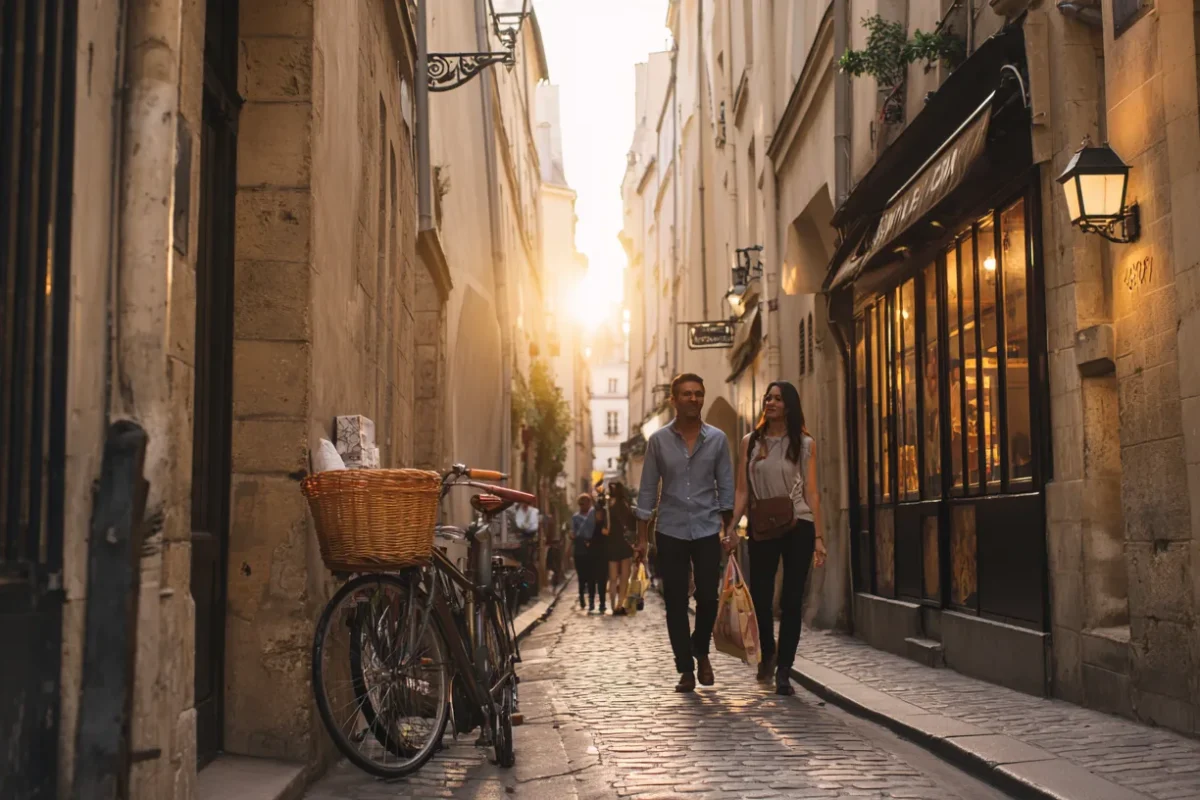
The streets here are narrow and cobbled. Ivy climbs the facades. Street art covers the walls — not the tagged, aggressive kind, but illustrated murals that change with the seasons. There’s a handful of natural wine bars and low-key restaurants that cater almost entirely to local regulars rather than passing tourists.
This is closer to the Paris of decades past, before large parts of the city became a museum of itself.
One thing that catches people off guard: the swimming pool. Piscine de la Butte-aux-Cailles, at the top of the hill, is a listed historic pool built in the early 1920s, with an ornate red-brick facade and flowing, curved lines that have made it one of the more architecturally distinctive public buildings in Paris. It’s still an active municipal swimming facility today, complete with a heated outdoor pool that stays open year-round. Not a hidden gem exactly — plenty of locals swim there every week — but the kind of specific, lived-in detail that makes a neighborhood feel real rather than curated for visitors.
The neighborhood doesn’t have a single flagship attraction, and that’s rather the point. You walk it, find a bar by instinct, and eat dinner before 8pm because the good restaurants fill up fast. Take Métro Line 7 to Place d’Italie or Corvisart.
Rue des Martyrs: A Food Street That Hasn’t Been Discovered Yet
Technically Rue des Martyrs is in the 9th arrondissement, and it’s not completely unknown — it shows up on enough food blogs that calling it truly secret would be an overstatement. But it hasn’t tipped over into the kind of place defined by chains and inflated tourist pricing.
The street runs about 400 meters from Notre-Dame-de-Lorette at the bottom up toward the edge of Montmartre. Every ten meters or so there’s something worth stopping for: a fromagerie piled high with wheels of aged Comté, a fishmonger with the day’s catch laid out on crushed ice, a chocolatier, a Lebanese grocery, a natural wine shop with cases stacked to the ceiling.
This is everyday Parisian food culture. No souvenir shops. No menus translated into English with photos attached. Nobody trying to grab your attention. You just walk, buy what looks good, and put together lunch from whatever you’ve collected along the way.
Go on a Saturday morning, and try to get there before 11am. After that it gets noticeably busier, though never unpleasant.
The best approach is to treat it like a slow shop rather than a scheduled activity. Pick up a chunk of cheese from one of the fromageries, a bottle from the wine shop, and bread from whichever boulangerie has the shortest line. Find a bench in the small park at the top of the street and eat there. That’s the whole plan, and it tends to beat anything more structured.
The street has shifted slightly in recent years — a handful of wine bars have become fashionable enough to draw in non-locals — but it still hasn’t fully tipped into tourist territory. Most people shopping here are doing their regular weekly grocery run, and that dynamic keeps both the prices and the atmosphere honest.
Parc des Buttes-Chaumont: The Park Worth the Métro Ride
Tuileries and Luxembourg get all the attention. But the best park in Paris for actually spending time in, rather than just walking through, is Parc des Buttes-Chaumont in the 19th arrondissement.
The park was built in the 1860s on the site of a former quarry and garbage dump. The terrain was deliberately sculpted into something dramatic: a central lake, a steep island with a temple on top, cliffs, grottoes, and a suspension bridge. It doesn’t feel like the formal gardens that define central Paris — it feels more like somewhere you’d go hiking.
On Sundays, families spread out with full picnics. Dogs chase ducks along the lake edge. People climb up to the Temple de la Sibylle at the top of the island for a view across the city that most guidebooks barely mention.
Take Métro Line 7bis to Buttes-Chaumont. The park is free and open every day. It sits roughly 30 minutes from central Paris, which is exactly why most tourists skip it — and exactly why it’s worth the trip.
One practical note: the path up to the island temple involves a real climb. It’s not strenuous, but wear shoes you can actually walk in. Bring water in summer, too — the park doesn’t have many food vendors, and it gets warm in full sun. The shaded path along the lake is the better option on hot afternoons.
Pair Buttes-Chaumont with a morning at Canal Saint-Martin, and you can spend a full day across the 10th and 19th arrondissements without once crossing paths with a tour group.
Frequently Asked Questions
What’s the most underrated neighborhood in Paris? Butte-aux-Cailles in the 13th arrondissement. It’s a short Métro ride from the center and feels almost nothing like tourist Paris — cobbled streets, street art, and wine bars without inflated pricing.
Is the Promenade Plantée worth visiting? Yes, especially if you want something genuinely different from the usual Paris itinerary. The elevated walk through the 12th arrondissement is free, peaceful, and offers rooftop-level views of the city you can’t get anywhere else. Allow at least two hours.
Is Canal Saint-Martin a good place for an evening? In spring and summer, absolutely. Locals gather along the canal edges in the evenings for drinks, and there are good cafés and bars lining the banks. Avoid very late weekend nights if noise bothers you.
When did the Musée de la Vie Romantique reopen? It reopened on February 14, 2026, after roughly a year and a half of renovation. The permanent collection is free. The Rose Bakery garden café is open during museum hours and worth visiting even for a short stop.
Are any of these spots actually free? Yes — most of them. The Promenade Plantée, Arènes de Lutèce, Canal Saint-Martin, Parc des Buttes-Chaumont, and the Musée de la Vie Romantique’s permanent collection are all free to visit. Paris tends to reward people who wander without a rigid plan.