The internet agrees that May and September are the best months to visit Paris, and the internet isn’t wrong. What it usually skips is what the other ten months are actually like — and why January can be a better trip than October for some travelers, or why August somehow manages to be both the busiest tourist month and one of the easiest months to get a table at a good neighborhood restaurant.
Paris doesn’t really have a bad time to visit. It has tradeoffs. Which tradeoff matters to you depends on what you’re optimizing for — weather, crowds, hotel prices, cultural events, or some mix of all four. Here’s the honest version of each season, so you can pick based on what actually matters to your trip rather than defaulting to May because a blog told you to.
Quick Answer: Best Months by Priority
- For weather and value combined: May, early June, September
- For the lowest crowds: January, February, November
- For cultural events: June (Fête de la Musique on June 21), December (Christmas illuminations)
- For photography: October–November (low golden light, moody skies), June (longest days)
- For budget: January–February, most of November
- For families with school-age kids: Late June or early September, when school-holiday crowds are more manageable
Spring (March–May)
Spring is the season most people already assume is best, and mostly, they’re right.
March starts cool, with average highs around 12°C, and the first couple of weeks can still feel like winter, with frequent rain. By the end of the month, the horse chestnut trees are budding and café terraces start reappearing on the sidewalks.
April warms up to average highs of 14–16°C and is arguably the most photographed month in the city — cherry blossoms near the Seine, the first roses opening in the Jardin du Luxembourg, long blue afternoons. Easter falls early in 2026, on April 5, which puts it right at the start of the month rather than the end. It still brings a wave of holiday travelers from the UK and northern Europe around that weekend, so expect somewhat longer queues at major sights and a small bump in accommodation prices in the days surrounding it.
May is the month most visitors should genuinely consider. Midday temperatures reach 18–20°C, the city’s gardens are at their peak — the Luxembourg roses, the Tuileries, the Bagatelle rose garden in the Bois de Boulogne — and daylight stretches to around 9pm. Hotel prices typically run 20–25% below their July peak. French school holidays around Ascension and Pentecôte bring some domestic travelers, but nowhere near the volume of summer.
The honest caveat: April and May can be rainy. Paris gets light showers fairly evenly throughout the year, and spring doesn’t get a pass. Pack a light waterproof — a rain jacket with a hood does the job better than an umbrella in a city with this much wind funneling down the boulevards.
Summer (June–August)
June is arguably the single best individual month to visit. Temperatures are warm without tipping into uncomfortable (averaging 22–25°C), daylight runs past 10pm, and on June 21 — the summer solstice — the Fête de la Musique takes over every street, square, and park in the city with free live music running from morning into the night. It’s genuinely one of the best free events in any major city, open to everyone and requiring no ticket or reservation.
July is where things get more complicated. Average highs of 25–28°C are pleasant enough, but this is when tourist density at major sights hits its annual peak — the Louvre, the Eiffel Tower, and Versailles are all running near capacity on weekdays, and hotel prices are at their highest point of the year. The city is crowded in a way that can genuinely take the edge off certain experiences.
August is the famous paradox. Les grandes vacances — France’s long-standing national summer holiday tradition — sends a large share of Parisians out of the city for the month. Local restaurants and shops close for two or three weeks at a time, often with a handwritten “Fermé pour congés” sign in the window. The city ends up simultaneously packed with visitors and emptied of locals.
Average August temperatures run around 25°C but can spike toward 35°C or higher during heatwaves, which have become more frequent in recent years. Much of Paris’s older housing stock lacks air conditioning, so it’s worth checking that detail carefully if you’re booking accommodation for August. Museum interiors, on the other hand, stay comfortably cool regardless of what’s happening outside — which makes an indoor-leaning itinerary a reasonable August strategy.
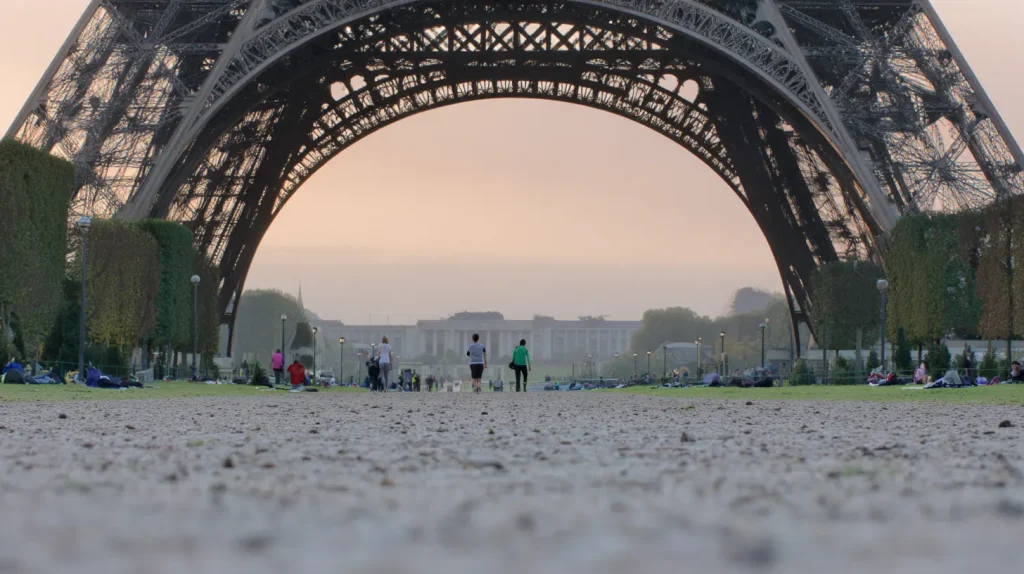
For visitors, the practical upshot is this: major attractions stay very crowded (tourists fill the space the departing locals leave), but the restaurants that do stay open often have shorter waits than usual, and there’s a genuine calm to the side streets that some travelers prefer to the intensity of July. The tradeoff is that some specific local spots you’ve read about elsewhere may simply be shut. Check ahead before building a day around any one restaurant.
Autumn (September–November)
September is the other month that consistently gets called “the best,” and it earns the reputation. Parisians return from vacation, schools reopen, and the city reassembles itself after the summer lull. Average temperatures run 22–23°C in the first half of the month, cooling to around 17°C by the end. The light through September and October takes on a specific golden quality — lower in the sky than summer, raking across building facades in a way photographers plan entire trips around.
Crowds at major attractions ease off their August peak, though September is popular enough with people who already know it’s a good month that it isn’t exactly quiet. The real sweet spot tends to be the second and third week of October: mild weather (average highs 15–17°C), the plane trees along the Seine turning amber, and noticeably lighter tourist density than September.
One thing worth flagging for late-September and early-October travelers: Paris Fashion Week’s women’s ready-to-wear season runs from September 28 to October 6, 2026. It doesn’t close anything to the public, but it does fill hotels near the main show venues and can push accommodation prices up noticeably that week, so it’s worth checking your travel dates against it before booking.
November runs cold (8–12°C highs), grey, and frequently wet. It’s also one of the best months for a museum-focused trip. The Louvre on a weekday morning in November may be about as calm as the Louvre ever gets — manageable queues, room to actually stand in front of a painting without someone stepping into your view. If your Paris trip leans more toward museums and long lunches than outdoor sightseeing, November is genuinely underrated.
The city also starts easing into its Christmas mood by mid-November, when the Champs-Élysées illuminations and department store window displays typically go up, ahead of the Christmas markets that follow in December. Walking Paris in late November, with the lights just switching on and a few amber leaves still clinging to the trees, is one of the less-photographed versions of the city — which is part of the appeal.
Winter (December–February)
December splits into two distinct halves. The first three weeks are genuinely lovely: the Christmas illuminations are up along the Champs-Élysées and around the major department stores, and Christmas markets appear at spots like the Champs-Élysées and Trocadéro — touristy, but worth a walk-through for the mulled wine. Crowds during this stretch are moderate rather than heavy.
The week between Christmas and New Year is its own category entirely — among the highest accommodation prices of the year, the city full of people with New Year’s Eve plans, and major attractions running close to July-level crowds. If you’re visiting that specific week, book everything well ahead and go in with realistic expectations.
January and February are the quietest months in Paris by most measures. Average highs sit around 6–8°C, days are grey more often than not, and light frost isn’t unusual. This is also when museum queues are at their shortest and accommodation prices are at their lowest for the whole year. The Louvre in January feels like a genuinely different building than the Louvre in August.
Two windows are worth knowing about if you’re planning a January or February trip specifically for the quiet and the savings: Paris Haute Couture Week runs January 26–29, 2026, and Wine Paris & Vinexpo, one of the world’s largest wine and spirits trade fairs, runs February 9–11, 2026, at the Porte de Versailles convention center. Neither closes anything to regular visitors, but both can tighten up hotel availability and nudge prices upward in the neighborhoods closest to their venues during those specific windows — worth a quick check if your dates happen to overlap.
Beyond those windows, though, this is Paris at its most unhurried. The city’s cafés and bistros lean into winter well — warm, softly lit, the kind of place that makes you want to stay an extra hour, which suits Parisian bistro culture perfectly. A January weekend built around three or four good bistro meals, a couple of museum visits, and an evening at a wine bar is a genuinely excellent trip, cold weather and all.
Paris Weather at a Glance
Average daily highs by month run roughly: January 7°C, February 8°C, March 12°C, April 15°C, May 19°C, June 22°C, July 25°C, August 25°C, September 21°C, October 16°C, November 10°C, December 7°C. These are long-term averages, so any given year can run warmer or cooler — heatwaves in July and August, in particular, have been pushing well above these averages in recent years.
Rainfall is fairly evenly spread across the year rather than concentrated in one wet season — Paris is neither a notably dry city nor an especially wet one. Most rain arrives as light, passing showers rather than sustained downpours, which is why a light waterproof jacket tends to be more useful than a heavy rain coat or a large umbrella for most of the year.
What Drives Accommodation Prices
Understanding the price calendar makes planning easier:
- Most expensive: July, August, the week between Christmas and New Year, and specific trade-fair or fashion-week windows — Paris Haute Couture Week in late January, Wine Paris & Vinexpo in early February, and Paris Fashion Week’s women’s ready-to-wear season in late September/early October
- Most affordable: January, February (outside the fair windows above), and most of November
- Best value: May (good weather, prices still below summer peak) and October (post-summer pricing, still pleasant weather)
If you’re booking for late September or early October, it’s worth double-checking whether your dates overlap with Paris Fashion Week, since hotel prices in central arrondissements can rise noticeably that week even though the shows themselves are invitation-only and largely invisible to visitors outside the fashion industry.
The Honest Recommendation
If you can travel in May or early September and have some flexibility, that’s the safest bet — reliably good weather, reasonable prices, and a city operating at its normal rhythm.
If low crowds and low prices matter more to you than warm weather, go in January or February and dress for the cold.
If you’re tied to a summer booking window, June is the stronger choice over July or August — the Fête de la Musique alone is worth building a trip around.
If August is your only option, go anyway. It’s not a bad time to visit Paris — it’s a crowded time to visit the handful of major attractions, and some neighborhood spots will be closed. Book Eiffel Tower tickets and any major reservations well ahead, check specific restaurants before you commit to them, and take advantage of the fact that the city’s side streets are quieter this month than almost any other.
There’s no wrong answer here, just tradeoffs. And one thing worth saying plainly: Paris is Paris no matter the month. The food is just as good in February as it is in May. A rainy afternoon doesn’t make the Musée d’Orsay less worth seeing. The best bistro meal of your trip probably won’t happen because you picked the “right” month — it’ll happen because you were hungry and found the right door at the right moment, which can happen in any season.
FAQ
What is the best month to visit Paris? May and September are the most consistently strong choices — good weather, manageable crowds, and prices below the summer peak. June is excellent if you want long daylight hours and fewer crowds than July. January is the best choice if low prices and low crowds matter more to you than warm weather.
Is August a good time to visit Paris? It depends on what you’re looking for. Major attractions are very crowded, and many local restaurants and shops close for the summer holidays. But the city’s quieter side streets, sometimes shorter waits at the restaurants that stay open, and generally warm weather make it a reasonable trip if it’s your only option — just check specific places are open before you plan around them.
How cold does it get in Paris in winter? Average highs in January and February sit around 6–8°C, occasionally dropping to 2–3°C overnight. Snow is uncommon and rarely lasts long when it does fall. A warm coat, a few layers, and waterproof shoes are generally enough — the cold in Paris tends to be damp rather than severe.
What should I pack for Paris in spring? Layers, plus a light waterproof jacket. Spring temperatures swing a fair amount within a single day — a May morning might start around 10°C and climb to 20°C by afternoon. A rain jacket with a hood doubles as a wind layer on cooler days, and comfortable walking shoes matter in any season, since Paris is very much a city you explore on foot.
When is Paris least crowded? January and February have the lowest tourist volume of the year, followed by November and early December. The weeks right after New Year and the middle of October, once the September rush has thinned out, are also noticeably calmer than the surrounding months.