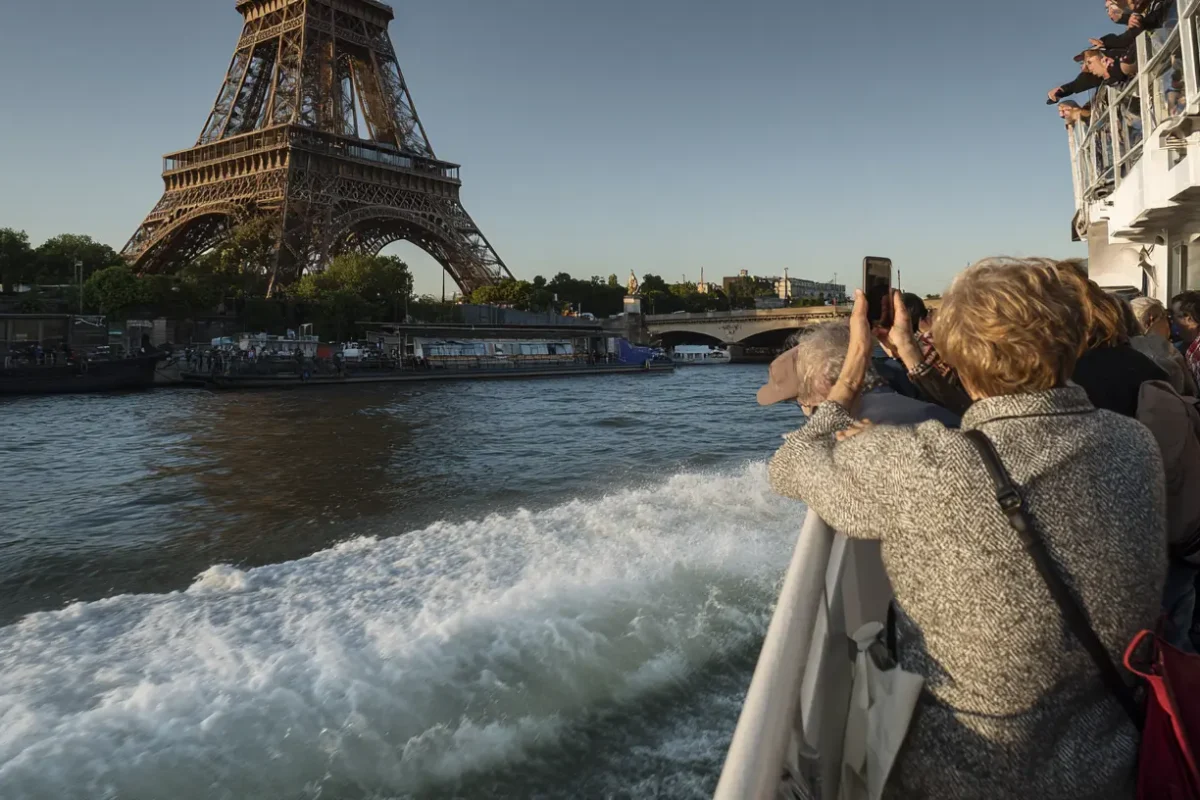
At dusk on a summer evening, the Seine River cruise is one of those Paris experiences that earns its reputation without trying. The Eiffel Tower catches the last of the light. Notre-Dame comes into view from a angle you can’t get from any bridge or street. The city looks calm from the water in a way it never quite does from inside it.
I’ll be honest: I avoided Seine cruises for years because they felt like tourist obligation. The big white boats with the audio commentary and the families with selfie sticks. Then I did one on a late September evening, booked on a whim, and ended up using the whole hour just looking at the city from a perspective I’d never had before. Some things are touristy for good reason.
Here’s what to know before you book, including which operator to choose and the one time slot that’s worth prioritizing above all others.
The Three Main Operators: Who to Book With
This is where most Seine cruise guides fail you — they mention Bateaux Mouches and move on. But there are meaningful differences between the main operators, and the right choice depends on what you want.
Bateaux Mouches is the most famous name and the largest operator. Boats are big — up to 1,000 passengers on the largest vessels. Multilingual audio commentary runs through headphones. Departures from Port de la Conférence at the foot of Pont de l’Alma, on the Right Bank, every 30 minutes in high season. Sightseeing cruises from €17 online (€20 walk-up). The scale works in their favor for sunset and evening departures — the big upper deck gives everyone a clear view.
Bateaux Parisiens departs from the Trocadéro pier, directly in front of the Eiffel Tower. The view as you pull away from the dock — Eiffel Tower behind you, the city opening up ahead — is the strongest opening moment of any Seine cruise. Prices similar to Bateaux Mouches. [VERIFY: confirm current Bateaux Parisiens prices before publishing] They also run dinner cruises in the evening.
Vedettes du Pont Neuf operates smaller boats departing from Pont Neuf — the oldest bridge in Paris, in the historic center of the city. Tickets from around €15. The boats hold fewer passengers, which creates a more relaxed atmosphere. The route and the sights are essentially the same as the larger operators. A good choice for people who find the big Bateaux Mouches vessels overwhelming.
Which one? For a first-time Seine cruise: Bateaux Parisiens at the Trocadéro for the Eiffel Tower departure, or Bateaux Mouches for reliable evening departures and the famous illuminated cruise. Vedettes du Pont Neuf if you want something smaller and less regimented.
What a Sightseeing Cruise Actually Covers
The standard sightseeing cruise runs for approximately one hour. The route goes from the departure point, east along the Seine past the major Left Bank and Right Bank landmarks, turns around at the Île Saint-Louis or thereabouts, and returns.
In one hour you pass or sail near: the Eiffel Tower, Pont Alexandre III (the ornate gilded bridge), Les Invalides dome on the Left Bank, the Louvre (visible on the Right Bank embankment), Notre-Dame on its island, Pont Neuf, and the Île de la Cité generally.
What you don’t get: any stops. This is not a hop-on hop-off boat. You stay on the boat for the full hour and return to the departure point. The Seine cruise is a perspective, not a transport. Its value is visual, not logistical.
The audio commentary (on Bateaux Mouches and Bateaux Parisiens) gives basic historical context for each landmark as you pass it. It’s useful for first-time visitors who want context and easy to ignore if you’d rather just look.
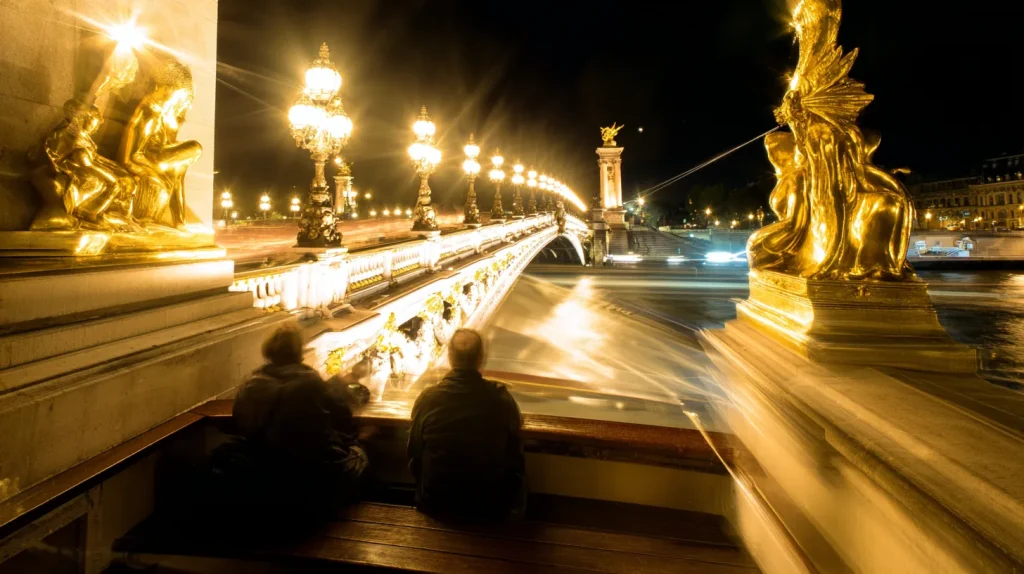
One thing worth knowing: the Seine cruise route covers roughly 13 kilometers of river, passing 37 bridges. The bridges are genuinely worth paying attention to — each one is architecturally distinct. Pont Alexandre III is the showpiece, built for the 1900 World’s Fair with gilded Art Nouveau lamps and four gold-leafed columns at either end. Pont des Arts (the pedestrian bridge once covered in love locks) is barely noticeable at river level but connects the Left and Right Bank at a narrow angle that creates an interesting visual frame. Pont Neuf, the oldest bridge, sits low over the water and looks most impressive when you’re looking straight at it from the boat.
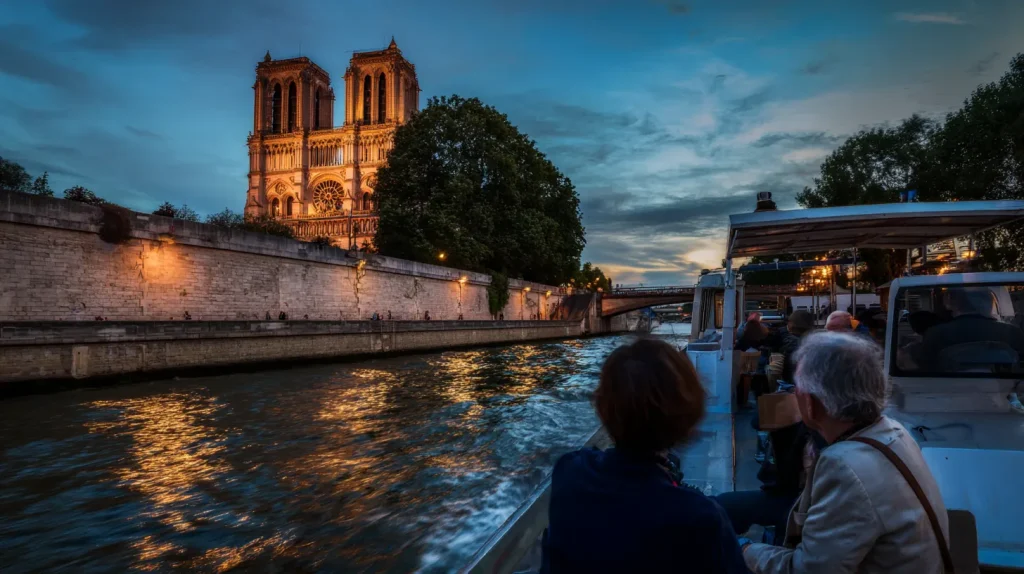
The towers of Notre-Dame are fully visible from the river in a way that’s hard to achieve from the island itself — the cathedral was designed to be approached from the water, as pilgrims once did, and the river perspective restores that original framing. If you visit Notre-Dame on foot and then see it from the cruise, the two views feel like different buildings.
The Best Time to Go: One Specific Answer
Every article about Seine cruises says “sunset is best.” That’s true, but vague. Here’s the specific version:
Book the cruise that departs 45–60 minutes before sunset. In summer (June–August), this means roughly an 8:30–9pm departure. In spring and autumn, earlier. The cruise takes an hour, which means you’ll be on the water as the city goes golden and return as the lights come on.
The Eiffel Tower’s hourly light show (5 minutes of sparkling lights, from dusk to midnight) runs on the hour. If your cruise timing works out, you might catch it from the water — one of the better views of the sparkle show if you position yourself on the right side of the deck.
Evening cruises feel qualitatively different from daytime ones. Paris is illuminated after dark in a way that changes the whole experience. Bridges are lit. The Louvre façade glows. Notre-Dame’s restored exterior lights up against the dark sky. The city looks like it’s performing — which, at night on the river, it kind of is.
Dinner Cruises: Worth It?
Both Bateaux Mouches and Bateaux Parisiens run dinner cruises at significantly higher prices — typically €60–135 per person depending on the menu level and operator.
The dinner cruise is a different product from the sightseeing cruise. You sit at a table, have a set menu meal, and watch Paris pass by the windows over two to three hours. Live music on some departures. Formal dress code suggested.
Worth it? It depends on what you’re after. As a romantic anniversary dinner or a special occasion, yes — the combination of fine dining on the water with the Paris skyline is genuinely memorable. As a “let’s tick the Paris dinner box” decision, probably not — the food on the cruise is good but not exceptional at those prices, and there are better restaurant experiences in Paris for less money.
The middle ground: the Bateaux Parisiens lunch cruise is typically priced lower than dinner and uses the same river route during daylight hours. If you want a meal on the water without the full dinner-cruise investment, this is a better-value version.
Practical Information
Bateaux Mouches: Port de la Conférence, Pont de l’Alma, 8th arrondissement. Metro: Alma-Marceau (line 9). High season departures every 30 minutes, 10am–10pm.
Bateaux Parisiens: Quai Branly, Trocadéro pier, 7th arrondissement. Metro: Trocadéro (lines 6 and 9).
Vedettes du Pont Neuf: Square du Vert-Galant, Île de la Cité, 1st arrondissement. Metro: Pont Neuf (line 7).
All three operators sell online at a small discount versus walk-up. For sightseeing cruises, booking same-day is usually fine except on summer weekends when specific slots fill. For dinner cruises, book at least a week ahead in high season.
Weather and cancellations: Cruises run in light rain. In heavy rain or thunderstorms, operators may delay or cancel. Check their websites for policies and have a backup plan if you’re visiting in unpredictable weather months (March, April, November).
Children: Children under 4 typically travel free. Reduced child rates apply from 4 upward.
Accessibility: Bateaux Mouches has accessible boarding facilities for wheelchair users. Vedettes du Pont Neuf’s smaller boats are less accessible. Contact operators directly if accessibility is a concern.
What to Bring and How to Dress
A few practical things that make the cruise more comfortable:
The upper deck is exposed. In spring, autumn, and any evening in summer, it’s cooler on the water than it feels on shore. Bring a light jacket or layer even on warm days — the breeze on the Seine in the evening drops the temperature noticeably.
Sunscreen matters for daytime cruises in summer. Sitting on the upper deck for an hour on a July afternoon with no shade and no escape is genuinely hot. Wear sunscreen and a hat.
The views are better from the upper deck than the enclosed lower deck. The lower deck has windows, but they’re not the same as open air. Unless the weather is making outdoor sitting genuinely unpleasant, spend the hour on top. You can always go down if it’s raining.
Photography: for the classic Eiffel Tower reflection shots from the water, position yourself on the left side of the boat as you depart from Bateaux Parisiens (Trocadéro), and on the right side as you pass the tower heading east on the return leg from Bateaux Mouches. The tower appears on both passes but the angles differ. Golden hour light comes from the west in the evening, so the tower faces are front-lit heading out and side-lit on the return.
Is a Seine River Cruise Worth Doing?
Honestly: yes, once. Especially if it’s your first Paris trip.
The Seine cruise isn’t the deepest experience Paris has to offer. The commentary is basic. The boats on the larger operators are genuinely crowded in high season. You can see every landmark they show you on foot, and you’ll get closer to most of them that way.
But the river perspective is different in kind from street level. The relationship between the bridges, the islands, and the embankment buildings is something you only fully understand from the water. Notre-Dame surrounded by the Seine on both sides looks the way it was meant to look. The Eiffel Tower from the water at dusk has a scale and geometry that no photograph fully conveys.
Go once. Book the sunset slot. Stand on the upper deck even if it’s a bit cold. That’s the version of this experience worth having.
And if you’re skeptical — if river cruises feel like exactly the kind of tourist thing you don’t do — just know that I was in the same camp. The hour goes by faster than you think. You come back having seen the city from an angle that no amount of walking and metro-riding gives you. That’s not nothing.
suggested topic — 3 Days in Paris: First-Timer Itinerary
FAQ
How much does a Seine river cruise cost in 2026?
Sightseeing cruises start around €15–17 per adult depending on the operator, with discounts for booking online. Dinner cruises range from €60–135 per person. Children under 4 typically travel free. [VERIFY current prices with each operator before publishing]
Which is better: Bateaux Mouches or Bateaux Parisiens?
Both run quality sightseeing cruises. Bateaux Parisiens has the advantage of departing from the Trocadéro with the Eiffel Tower directly in view as you leave. Bateaux Mouches has more frequent departures and is the larger operation. Vedettes du Pont Neuf is the smaller, more intimate option.
What time should I book a Seine cruise?
The 45–60 minutes before sunset slot is consistently the best — you’re on the water during golden hour and return as Paris lights up. In summer this means roughly 8:30–9pm. Evening cruises are more atmospheric than daytime ones.
How long does a Seine river cruise last?
Standard sightseeing cruises run approximately one hour. Dinner cruises are 2–3 hours. There are no stops during sightseeing cruises — you return to the departure pier at the end.
Do I need to book in advance?
For sightseeing cruises in low season or on weekdays, same-day booking is usually fine. Summer weekend sunset slots fill up and benefit from a day’s advance booking. Dinner cruises should be booked at least a week ahead in high season.