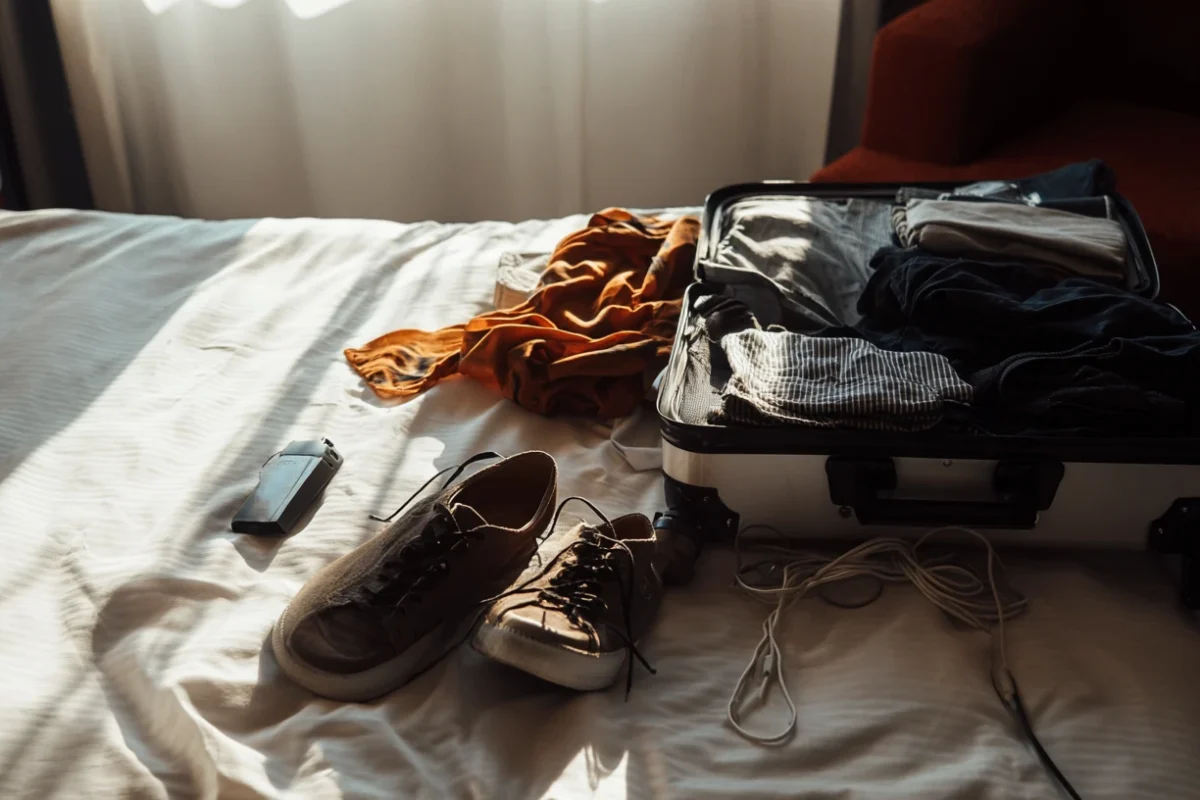
The shoes are always the mistake. Not the clothes, not the adapter, not the missing phrase book — the shoes. Specifically the nice ones you wore three times last year and decided would be fine in Paris. They weren’t fine. They destroyed your feet on the first morning and you spent the next six days looking for a pharmacy that sold blister plasters.
France is a walking country. Paris alone — if you’re doing it properly — will rack up 15,000 to 20,000 steps per day on pavement, cobblestones, museum marble, and metro stairs. Provence adds gravel paths and uneven village streets. The Riviera adds beach pebbles and harbor boardwalks. What you put on your feet matters more than anything else in your bag.
Start with shoes. Build everything else from there.
The Edit-First Principle
Before thinking about what to add to your bag, think about what most people overpack for France — and cut those things first.
Cut: High heels and dress shoes Paris cobblestones (especially in the Marais and Montmartre) are uneven, worn, and steep in places. Heels are genuinely difficult. Even locals who look impossibly chic are almost always in flat boots or loafers. The “nice dinner in Paris” fantasy doesn’t require stilettos. A clean pair of leather sneakers or ankle boots works for everything from the Louvre to a bistro dinner.
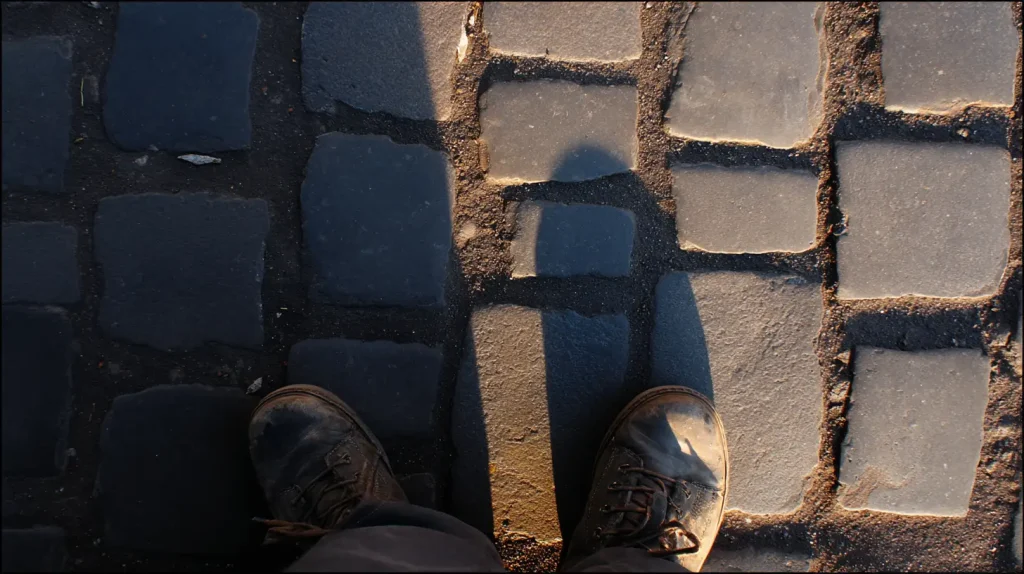
Cut: More than 3 pairs of shoes One pair of solid walking shoes or broken-in sneakers. One versatile pair for evenings (loafers, low ankle boots, clean trainers). If you’re going to the Riviera or beach towns, sandals as a third pair. That’s your limit. Shoes are heavy and they don’t compress.
Cut: Full-sized toiletries France has pharmacies (pharmacies — green cross signs) on virtually every street in every city and town. They stock excellent skincare, quality shampoos, toothpaste, sunscreen, and basic medications. Checking toiletries at the airport or buying travel sizes of things you can replace in any French pharmacy is almost always the better move. The quality of French pharmacy products is genuinely good — it’s one of the underrated pleasures of shopping there.
Cut: The “just in case” formal outfit Unless you have a specific event booked — a wedding, a Michelin-starred dinner reservation, a business meeting — France doesn’t require formal clothing. Even nice Paris restaurants are more relaxed about dress codes than people expect. Smart-casual covers almost every situation.
What to Actually Bring: The Core List
Footwear (as above) Broken-in walking shoes or comfortable leather sneakers. These are non-negotiable and cannot be improvised on arrival. Buy them, wear them for two weeks before you leave, and break them in properly.
Clothing strategy: The 5-4-3-2-1 approach This is the framework that fits into a carry-on for a 14-day trip:
- 5 tops (mix of short and long sleeve)
- 4 bottoms (2 trousers/jeans, 1 skirt or shorts, 1 smart option)
- 3 layers (light cardigan, mid-layer fleece or sweater, one waterproof outer)
- 2 pairs of shoes (plus sandals if needed)
- 1 scarf (doubles as warmth, modesty cover at religious sites, and general elegance)
France rewards a smaller wardrobe of better pieces over a large bag of items you’ll only wear once. The ability to move easily between cities on trains — without checked luggage fees or wasted taxi time — is worth the edit. You’ll also find you buy things in France. A scarf from a market, a linen shirt you found in a Marais shop, a bottle of olive oil that technically counts as luggage. Leave room.
The power adapter France uses Type C and Type E plugs at 230V, 50Hz — the standard across most of continental Europe. If you’re coming from the US, UK, or Australia, you need a plug adapter. Not a voltage converter — modern phones, laptops, and most electronics are labeled “100-240V” and handle French voltage automatically. Just the adapter. Buy one before you leave; the ones sold at airports are overpriced. One thing worth knowing: French Type E sockets have a grounding pin that protrudes from the socket itself, which trips up some cheaper universal adapters designed around the German Type F system — a proper Type C/E or E-compatible adapter avoids the issue. High-wattage single-voltage appliances (some hairdryers, curling irons) genuinely can be damaged by a straight plug adapter without a voltage converter, so check the label on anything power-hungry before packing it.
A scarf This sounds like a cliché but it earns its space. In France, a scarf serves as: warmth on cool evenings, a modesty cover at churches, a layer over bare shoulders at a nicer dinner, and — if you’re on the Riviera — something to sit on. One versatile scarf replaces at least two other packing decisions.
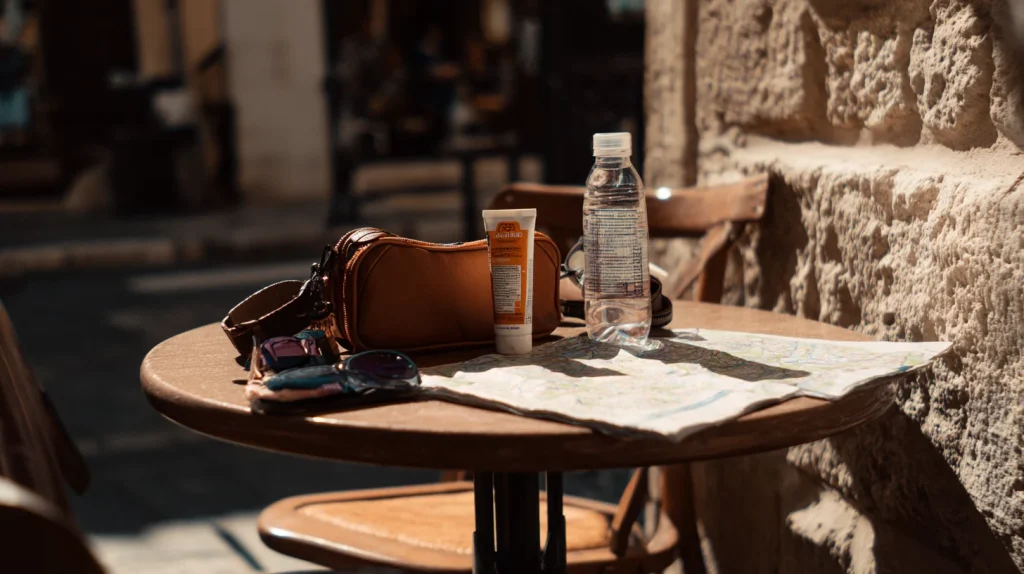
Comfortable day bag Beyond the crossbody for crowded areas, a compact daypack (15–20L) is useful for day trips out of cities — to Versailles, to a Loire Valley château, to a Provençal village. You want somewhere to put a water bottle, a layer you’ve taken off, a baguette, and whatever you’ve bought at the market. Don’t oversize it; anything larger than 20L becomes a burden on a full walking day.
A good daypack or crossbody bag Something that closes properly — a zipper rather than a snap or open top. Pickpockets in Paris, particularly on the metro, near the Eiffel Tower, and around Sacré-Cœur, target open bags and distracted tourists. A crossbody worn in front in crowded areas is the standard sensible move. You don’t need an elaborate anti-theft bag — just one that closes.
A reusable water bottle Paris has well over a thousand public drinking fountains scattered across the city — including the iconic green cast-iron Wallace Fountains as well as more modern refill points — free, clearly marked, and drinkable. Refilling a bottle instead of buying water saves money and plastic. Most of France has excellent tap water.
Packing by Season
France’s climate varies significantly by region and season. What works in July on the Riviera is completely wrong for October in Paris or February in Lyon.
Spring (March–May) The most unpredictable season. Warm days, cold evenings, rain at any point. Layer everything. A light waterproof jacket is non-negotiable. Comfortable walking shoes that can handle wet pavement. Avoid packing only for warm weather — even May in Paris can have cold grey stretches. The upside: spring layers pack down small and serve you across the widest range of conditions.
Summer (June–August) Hot in the south, warm in Paris with occasional rain. Breathable fabrics, light colors, sandals for the coast. A light cardigan or layer for air-conditioned museums, restaurants, and trains — France cranks the AC indoors in summer. Sunscreen is a must throughout the south. A hat.
Autumn (September–October) Often the most comfortable season for packing. Not yet cold, not summer. Long sleeves, a good mid-layer, one waterproof option. The same core wardrobe as spring but slightly heavier fabrics. September in Provence still feels like summer. October cools down noticeably, especially in the north — add a proper warm layer if you’re heading to Paris or Normandy in late October.
Winter (November–February) Paris in January is genuinely cold — typically 3–8°C — with wind and rain. A proper warm coat, thermal underlayers if you run cold, waterproof boots rather than trainers. The south of France is milder but many coastal towns are quiet and partially closed, so check before planning a southern winter trip.
What to Wear in France: The Style Reality
French style is often mythologized into something intimidating. The reality is simpler than the myth suggests.
French people dress with restraint. Solid colors over loud patterns. Fitted over baggy. Quality over novelty. The tourist who draws attention isn’t the one wearing the “wrong” brand — it’s the one in a matching athletic outfit, oversized novelty t-shirt, or full-cargo-shorts setup in a Parisian restaurant.
You don’t need to buy a beret. You don’t need a Breton striped top. You don’t need to look French — you just need to look considered. Clean, simple, and not aggressively casual.
At religious sites — churches, cathedrals, the Sacré-Cœur — shoulders and knees should be covered. Some sites (not all) enforce this at the door. A light scarf or cardigan solves this instantly.
One honest observation: Americans in particular tend to pack for physical comfort at the expense of blending in. Shorts are more common in Paris than they used to be, especially in summer. But they still read as tourist. That’s fine if that’s fine with you. Just know it.
The bigger style mistake isn’t wearing the wrong thing — it’s wearing too much of everything at once. A busy pattern top with cargo shorts and a large printed backpack is more conspicuous than simple dark jeans and a plain shirt. Restraint is the actual French style principle, not a specific item or brand.
And here’s something the Instagram packing guides won’t tell you: most French people are completely indifferent to what tourists are wearing. The “do I look too American?” anxiety is mostly self-generated. Focus on comfortable, clean, and functional — you’ll have a better trip.
France-Specific Items You Might Not Think Of
A Navigo Easy card for Paris Not something you pack from home, but buy it on your first day. It’s a reusable transit card for the Paris metro and buses, and it’s become considerably more necessary in 2025-2026 as Paris has phased out paper metro tickets in favor of digital cards and the RATP smartphone app. Available at any metro station.
suggested topic — How Much Does France Cost
Small bills and coins Some rural markets, smaller cafés, and parking meters are cash-only. French ATMs (distributeurs) are widely available — withdraw some euros on arrival rather than exchanging at the airport. Keep small bills; some vendors prefer not to break a €50.
Travel insurance documents Print the key page. French hospitals and pharmacies sometimes ask to see it. For UK citizens specifically: the UK’s Global Health Insurance Card (GHIC) is accepted in France and works much like the old EU EHIC, covering medically necessary state healthcare during a short stay at local resident rates. If you still hold an EHIC issued before it expired, that also remains valid until its printed expiry date — you don’t need to rush out and replace it early. Either way, the GHIC/EHIC is not a substitute for full travel insurance: it doesn’t cover medical repatriation, private treatment, or non-medical issues like trip cancellation or lost luggage, so bring proper travel insurance alongside it, not instead of it.
A French phrasebook or offline translation app Google Translate downloaded offline covers most situations. Even basic French phrases change the dynamic noticeably — “bonjour,” “s’il vous plaît,” “merci,” “l’addition” gets you a long way in places that have limited English.
What Not to Bring to France
- Multiple checked bags — France rewards traveling light. TGV trains have overhead racks but no checked luggage; a huge bag is a liability on trains.
- A hairdryer from home — Voltage differences aside, French hotels almost always provide them.
- Guidebooks heavier than your shoes — Download what you need; paper guides add weight for information that’s freely available on your phone.
- All your valuables — Leave jewelry, backup devices, and anything irreplaceable at home or in the hotel safe.
- Flip-flops for walking — They provide no support for cobblestones and are generally only useful at the beach or pool.
- More than 2 weeks of clothing — You can do laundry. Most mid-range hotels and Airbnbs in France have access to washing machines, and laundromats (laveries automatiques) are common in every city. A 14-day trip doesn’t require 14 outfits.
- Your entire skincare routine — Pack your absolute must-haves in travel sizes. French pharmacies carry excellent alternatives for everything else, often at better quality and lower price than what you’d bring.
suggested topic — Is France Safe to Visit? Honest Safety Advice for Travelers
FAQ
Do I need a plug adapter for France? Yes, if you’re coming from the US, UK, or Australia. France uses Type C and Type E plugs at 230V, 50Hz. Most modern electronics (phones, laptops, camera chargers) are dual-voltage and just need the physical adapter — not a converter. Check any high-wattage appliance’s label first, since single-voltage items can be damaged by a plug adapter alone.
What shoes are best for Paris? Broken-in leather sneakers or comfortable flat ankle boots. Avoid new shoes, high heels, and thin-soled sandals. Cobblestones are uneven and Paris walking days are long. Your feet will decide how much you enjoy the trip.
Is there a dress code for restaurants in France? For most restaurants, smart-casual is enough. Fine dining venues may suggest “smart” dress — no athletic wear, clean and neat. A very small number of top Michelin-starred restaurants in Paris have formal dress expectations, but this is the exception.
Should I pack sunscreen for France? Yes, especially for the south (Provence, Riviera) in summer. French pharmacies sell excellent sunscreen at reasonable prices if you’d rather not pack it. UV exposure in the south from June through August is significant.
Can I do France with just carry-on luggage? Yes, and it’s strongly recommended for a trip involving train travel between cities. A 40L backpack or small roller bag handles 10–14 days with the right clothing choices. The freedom of not waiting at baggage claim or paying checked luggage fees on budget European flights is real.
Plug type, voltage, and frequency verified against multiple current sources: France uses Type C and Type E at 230V/50Hz. UK GHIC/EHIC coverage in France verified against NHS and Expatica sources current to 2026 — GHIC is accepted, older in-date EHICs remain valid until their own expiry, and neither replaces comprehensive travel insurance. Paris’s public drinking fountain network (including the historic Wallace Fountains) is described in general terms here rather than with a single precise count, since figures vary somewhat by source and the city continues to add newer refill points alongside the historic ones.