A coffee at a Paris café will run you €3–5. The same coffee at a café in Avignon costs about €2. In a village in the Luberon, the owner might wave you off and charge €1.50 because you smiled when you walked in. France has a reputation as an expensive country, and that reputation is earned — in certain places, at certain times. But “France is expensive” flattens an enormous amount of nuance.
The real story is that Paris costs significantly more than the rest of France. That a budget traveler who does Paris first and then moves south often discovers they’ve been living at the wrong price point for the wrong half of their trip. And that a mid-range France trip — not luxury, not backpacker hostel — is genuinely achievable if you know where the money goes.
This is the breakdown.
The Short Answer: Daily Budgets by Travel Style
These are realistic ranges for a full day in France (accommodation + food + transport + activities). France-wide averages, not Paris-specific.
Budget traveler: €60–90/day (~$65–100) Hostel dorm or budget hotel, bakery lunches, one sit-down meal, free or low-cost sights, public transport.
Mid-range traveler: €120–200/day (~$130–220) 3-star hotel or Airbnb, café breakfasts, bistro lunches, proper dinners with wine, paid museum entries.
Comfortable/upper mid-range: €200–350/day (~$220–380) 4-star hotel, two full restaurant meals, private tours or premium experiences, flexibility on transport.
Luxury: €350+/day ($380+) 5-star hotels, Michelin-starred dinners, private transfers, everything pre-booked with zero stress.
Now for the part that matters more: what these numbers actually look like in practice.
The Paris Premium
Paris costs more. Not a little more — meaningfully more.
A mid-range hotel in Paris that you’d feel comfortable in runs €130–200/night in a decent arrondissement. The same standard of accommodation in Lyon or Montpellier runs €80–120. Avignon and smaller Provence towns can go lower.
A two-course lunch at a proper Paris bistro is €20–35 per person. In Lyon, the same quality of cooking at a bouchon (the city’s famous traditional restaurants) can be €18–25. In smaller towns, the midday plat du jour (dish of the day) at a café often runs €12–15 with bread and sometimes a carafe of wine.
Museum entry in Paris has gotten more complicated, and more expensive, in 2026 specifically:
- The Louvre introduced two-tier pricing in January 2026: €22 for EU/EEA residents, €32 for everyone else — a significant jump from the flat €22 that applied to all visitors previously. Under-18s are free for everyone; EU/EEA residents under 26 are free with ID.
- The Eiffel Tower now has three price points depending on how high you go: €14.80 for stairs to the 2nd floor, €23.50 for the elevator to the 2nd floor, and €36.70 for the full summit by lift.
- The Musée d’Orsay runs around €16 for standard adult admission.
- Versailles also moved to seasonal pricing in January 2026: the all-access Passport ticket costs €25 in low season (November-March) and rises to €32-35 in high season (April-October) and on Musical Fountains days, with a €3 discount for EU/EEA residents/nationals.
These add up fast. A “museum day” in Paris — say the Louvre plus one more site — can genuinely run €50-70+ per person before lunch, more if you’re a non-EU visitor at the Louvre.
If you’re spending 5 days in Paris and 9 days elsewhere, budget your Paris days separately. Assume your Paris daily spend will be 30–50% higher than the France average.
Where Your Money Goes: Category by Category
Accommodation
This is your biggest single cost. Here’s what to expect across different options in 2026:
- Hostel dorm bed: €25–45/night (Paris), €20–35 (rest of France)
- Budget hotel (2-star, private room): €70–100 (Paris), €55–80 (elsewhere)
- Mid-range hotel (3-star): €120–200 (Paris), €80–130 (elsewhere)
- Airbnb/apartment: Often better value for stays of 5+ nights, especially outside Paris
One honest insight: Paris hotel quality at the lower end is genuinely inconsistent. A “3-star” in Paris might be a fine, clean room — or it might be a cramped box with a shower the size of a closet. Read recent reviews carefully. The gap between a good budget hotel and a bad one at the same price point in Paris is wider than in most cities.
Location matters more than stars in Paris. A decent 2-star in the Marais or the 6th arrondissement beats a “3-star” near Gare du Nord or Montparnasse for the same money. You’ll spend less time on the metro and more time actually experiencing the city. Factor the neighborhood into your accommodation decision, not just the price per night.
Outside Paris, accommodation value improves dramatically. In Avignon, Lyon, or smaller Provençal towns, €90–110 will often get you a genuinely charming small hotel with a real breakfast and a room you’ll want to spend time in.
Food
France has three eating modes, and understanding all three changes your budget dramatically.
Street and bakery food: A baguette costs under €2. A croissant is €1–1.50. A pan bagnat or sandwich from a boulangerie is €4–6. You can eat breakfast and lunch entirely this way for €10–12 and eat extremely well.
Café and bistro dining: The midday “formule” (set menu — starter + main or main + dessert) at a local bistro is one of the great travel budget moves in Europe. Expect €14–22 for two courses, often with bread, sometimes with a small glass of wine included. This is how locals eat well without spending a lot.
Evening dining: Dinner at a decent restaurant with a glass of wine runs €25–45 per person. Paris skews toward the upper end. Lyon and Provence can be found at the lower end if you choose carefully.
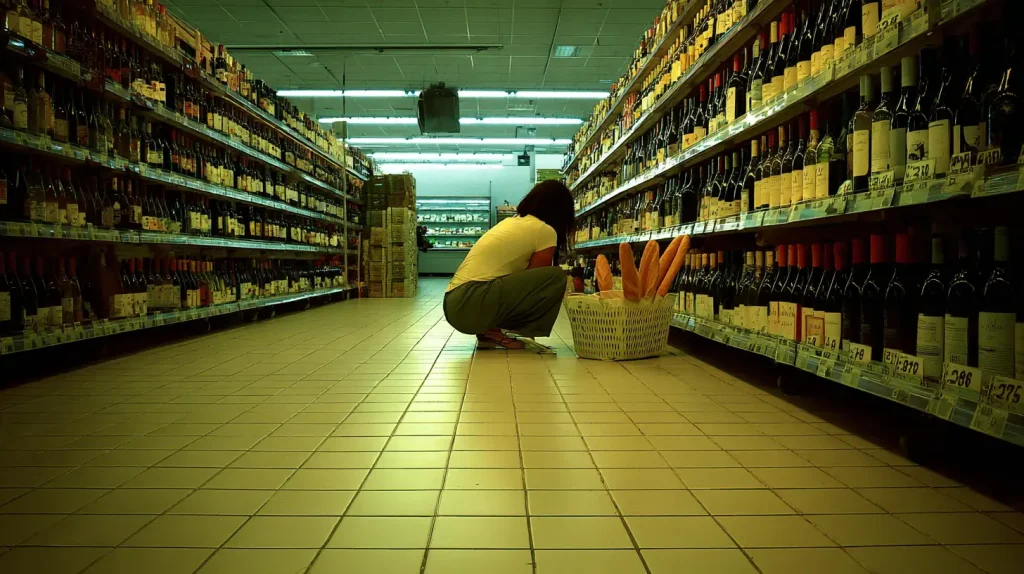
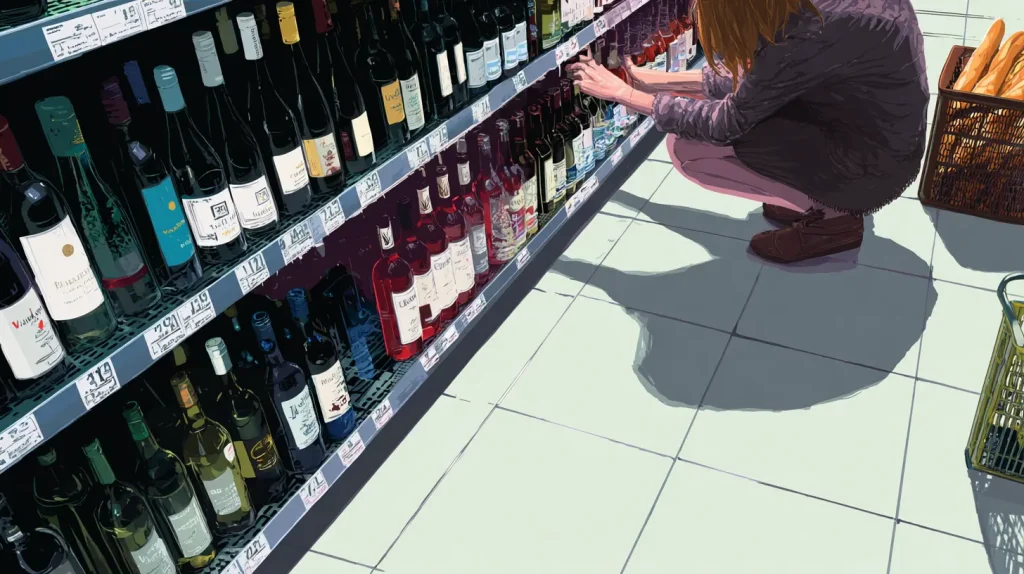
Wine is cheap in France relative to quality. A perfectly drinkable bottle from a supermarché (supermarket) costs €4–8. A house carafe at a bistro runs €6–12.
Transport
Within France: TGV high-speed trains are the backbone. Book early and they’re genuinely cheap — a Paris–Lyon ticket booked 6 weeks out can be under €30. Book the day before and it can be €80–120. The difference is real and it rewards planning.
In Paris — note the system changed significantly in 2025-2026: A single metro/RER/train ticket costs €2.55 as of the January 2026 price update; a single bus/tram ticket is €2.05. The old carnet (block of 10 discounted tickets) was discontinued in 2025 and no longer exists — there’s no bulk discount for occasional riders anymore, just single tickets or a pass. More significantly: magnetic paper tickets are being phased out entirely — they stopped working on buses in May 2026 and are set to stop working across the whole network (metro, RER, trains) in June 2026. You now need a Navigo Easy card (a reusable plastic card you load tickets onto) or the official RATP smartphone app; there’s no real workaround, so plan to get one shortly after landing.
For visitors staying a week, the weekly Navigo Découverte pass costs €32.40 (all zones, as of January 2026), plus a one-time €5 fee for the physical card itself and a passport photo — it becomes worthwhile from roughly the 13th trip in the week, so it pays for itself quickly on an active sightseeing trip. Note that it runs Monday to Sunday regardless of when in the week you buy it, not “7 days from purchase,” so time your purchase accordingly.
Airport transport has also changed: getting from CDG to central Paris via RER B is now a flat €14 fare (the old zone-based RER pricing for this route has been replaced with a simpler flat “Paris Region ↔ Airports” ticket), taking about 25-28 minutes to central stations. The RoissyBus alternative was permanently discontinued in March 2026, so RER B is now the main public transport option from CDG. A taxi runs roughly €50–70 depending on destination and time of day.
Car rental: Budget around €50–70/day for a small car, plus fuel and tolls. Fuel in France has risen noticeably and now runs closer to €2.00–2.20 per liter for both petrol and diesel as of mid-2026 — meaningfully higher than a couple of years ago, so budget more generously here than older guides suggest. Tolls on the autoroutes add up — a Paris–Marseille drive can add €50+ in tolls. A car makes no sense in Paris. It makes a lot of sense in Provence.
Attractions and Activities
France’s major monuments are not cheap, and several got more expensive in early 2026 specifically:
- Most large national museums in Paris: roughly €12–22
- Palace of Versailles: €25 (low season) to €32-35 (high season/Musical Fountains days) for the full Passport ticket, €3 less for EU/EEA residents
- Mont Saint-Michel Abbey: €11 for adults (the island and village themselves are free and open 24/7 — only the abbey charges entry); free for under-18s, EU citizens 18-25, and on the first Sunday of the month from November through March
What’s free: Many French national museums are free on the first Sunday of each month (though the Louvre’s free-Sunday policy is more limited — check current terms, as some free days have been narrowed to evenings on the first Friday). This includes the Louvre in some form, Musée d’Orsay, and Centre Pompidou. It’s worth building your Paris itinerary around this if your dates align. The permanent collections at some museums (Petit Palais, for example) are always free. Strolling along the Seine, visiting Montmartre, walking through the Marais — some of the best France experiences cost nothing at all. The view from the Sacré-Cœur steps at sunset costs nothing and competes with any paid viewpoint in Europe.
Real-World Budget Examples
7-day budget trip, Paris only:
- Hostel dorms: €35/night × 7 = €245
- Food (bakery + 1 sit-down meal daily): ~€25/day × 7 = €175
- Metro: a Navigo Découverte week pass (€32.40) plus the €5 card fee covers this comfortably
- 3 paid attractions: ~€60-90 depending on which (a Louvre visit alone as a non-EU visitor is now €32)
- Total: roughly €520-550 for the week, about €75-80/day
14-day mid-range trip (5 nights Paris + 9 nights south):
- Paris hotel (3-star): €150/night × 5 = €750
- South of France hotel: €100/night × 9 = €900
- Food: €45/day × 14 = €630
- Train travel (Paris–Avignon, Avignon–Nice): ~€100
- Activities: ~€150-180 (allowing for updated 2026 attraction prices)
- Total: roughly €2,530-2,560 for two weeks, about €180/day
These aren’t exact — they’re working estimates. The real number depends on where you eat, how much wine you drink, whether you’re an EU or non-EU visitor at pricing-tiered sites like the Louvre and Versailles, and whether you try to see every museum in Paris in five days.
What Catches People Off Guard
Skip-the-line passes. The Eiffel Tower, Louvre, and Versailles all have timed-entry systems now. If you don’t pre-book, you either stand in a very long queue (60-180 minutes in peak season is common) or you pay for a guided tour at a premium. Budget for pre-booked tickets, not queue prices.
Tipping. France does not have a strong tipping culture. Service is included in your bill by law (service compris). Leaving a euro or two for good service at a restaurant is appreciated but entirely optional. Tipping 15–20% the American way is not expected and will sometimes confuse French servers. This is a real cost saving over a multi-week trip compared to countries where tipping is mandatory. Over 14 days with two restaurant meals per day, that difference adds up to €50–100 that stays in your pocket.
Luggage storage. Lockers at major train stations cost €5–10 for a half day. Budget for these if you have checkout-before-evening-train situations — which you probably will.
Café terrace tax. Sitting outside at a Parisian café costs slightly more than sitting inside, which costs more than standing at the bar. It’s a small difference per coffee but it’s real.
The airport connection cost. Getting from Paris CDG airport to the city center by RER B train now costs a flat €14 (this replaced the older zone-based fare in 2026 — budget slightly more than older guides suggest). A taxi runs €50–70 depending on destination and time of day. Many travelers don’t budget this and it’s a surprise at both ends of the trip.
Restaurant bread. In France, bread at restaurants is usually free and arrives automatically. But in tourist-heavy areas, some restaurants now charge for bread or for the couvert (a cover charge that includes bread). It’s usually small — €1–3 — but worth knowing exists.
Grocery stores as a budget tool. French supermarkets (Monoprix, Franprix, Carrefour, Intermarché) sell excellent cheese, charcuterie, bread, and wine at prices that make restaurant dining look like luxury spending. A picnic assembled from a supermarket or market — baguette, local cheese, some jambon, a bottle of Côtes du Rhône — costs €8–12 and is often a better lunch than something you’d pay €25 for in a tourist-adjacent café.
France rewards the traveler who slows down enough to shop like a local. You’ll eat better, spend less, and end up sitting in a park or on a hillside overlooking something beautiful, which is usually the best meal you’ll have anyway.
Is France Expensive Compared to Other European Countries?
Relative to Western Europe, France sits in the middle range. It’s cheaper than Switzerland, Norway, or the UK for most costs. It’s more expensive than Portugal, Spain, or Eastern Europe. It’s roughly comparable to Germany and the Netherlands, though Paris runs more expensive than Berlin or Amsterdam at the lower price points.
The honest answer to “is France expensive?” is: Paris is expensive, and got a bit more expensive at its flagship sites in 2026 specifically. The rest of France is manageable and sometimes surprisingly good value, especially if you eat the way locals eat — market produce, bakery lunches, the midday formule — rather than defaulting to tourist-facing restaurants near the major sights.
FAQ
How much spending money do I need per day in France? For a comfortable mid-range trip including food, local transport, and activities, budget €120–180/day outside Paris, and €160–220/day in Paris. If you’re on a tight budget and willing to stay in hostels and eat from bakeries, €60–80/day is workable.
Is Paris more expensive than the rest of France? Significantly. Expect Paris accommodation to cost 30–50% more than equivalent quality elsewhere in France, and restaurant prices to run 20–30% higher. Attractions in Paris are also more expensive than regional museums and sites — and as of 2026, some flagship sites (Louvre, Versailles) charge non-EU visitors noticeably more than EU/EEA residents.
What is the cheapest way to eat well in France? The midday formule at a local bistro or brasserie is one of the best value-for-money meals in Europe. Two courses with bread for €14–20, often at restaurants that would cost twice that in the evening. Supplement with bakery food for breakfast and you eat extremely well on €25–30 per day.
Do I need to tip in France? No. Service is legally included in all restaurant bills in France. Leaving small change or rounding up is appreciated but not expected. The American practice of tipping 15–20% is not the norm.
Can I do France on a backpacker budget? Yes, especially outside Paris. Hostels, bakery lunches, free museum Sundays, and careful train booking make €60–75/day workable. Paris requires more — budget €80–95/day minimum for a hostel-based trip there, and slightly more again if your itinerary includes non-EU-priced tickets to the Louvre or Versailles.
Museum, palace, and transport prices verified August 2026 directly against official sources: the Louvre and Château de Versailles’s own ticketing pages, the Eiffel Tower’s official site, the Centre des Monuments Nationaux for Mont Saint-Michel, and RATP/Île-de-France Mobilités for Paris transport fares. Two changes are worth flagging specifically because they invalidate older advice still circulating online: the Louvre and Versailles both introduced EU/non-EU tiered pricing in January 2026, and Paris transport moved away from paper tickets and the old carnet system in 2025-2026 in favor of Navigo Easy cards and the RATP app. Fuel prices are current as of July 2026 and fluctuate weekly with global crude prices.