The waiter brings the raw steak to the table before cooking it. This is standard practice at any serious Florentine steakhouse — not a performance, not a quirky local tradition for tourists to photograph. It is the way good restaurants here show you what you are about to pay for and give you a moment to confirm the weight and quality before it goes on the grill.
The steak is enormous. If you have not ordered a bistecca alla Fiorentina before, the size is the first thing that surprises you. Most people who have seen it only in photographs have no reliable frame of reference for what over a kilogram of T-bone looks like in three dimensions. It is a large wooden board occupying a significant portion of the table.
The second surprise is the colour of the inside when it arrives cooked — deep red, barely warm in the centre, nothing like the medium you might have intended to ask for. The outside has a strong char. The inside is raw-rare in the old meaning of the word.
This is the correct way to eat it. You should know that going in.
What Bistecca alla Fiorentina Actually Is
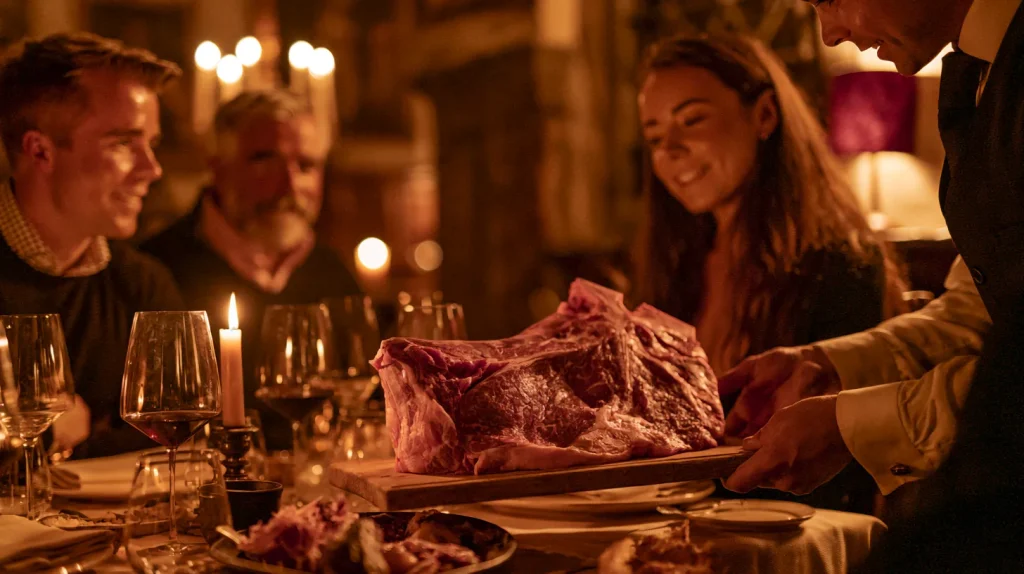
Bistecca alla Fiorentina is a T-bone steak cut from the loin of Chianina cattle — an ancient white breed from the Val di Chiana in southern Tuscany — or from Marchigiana or Romagnola cattle, both of which are accepted alternatives. The breed matters because the size, muscle composition, and flavour profile of these cattle are specific to the tradition. Worth knowing before you order: not every restaurant serving a “bistecca alla fiorentina” is actually using Chianina or one of its accepted alternatives — some source cheaper beef from elsewhere in Europe or South America and charge Chianina-adjacent prices, or undercut genuine Chianina at a suspiciously low rate. If the price looks unusually low (well under roughly €35-40/kg) or unusually high without explanation, it’s reasonable to ask which breed and where it’s from.
The cut is a T-bone: two muscles separated by a T-shaped bone — the sirloin (controfiletto) on one side and the tenderloin (filetto) on the other. Both muscles cook simultaneously over the grill, which is why the thickness matters so much. Too thin and the exterior chars while the interior overcooks. The traditional minimum thickness is described as three to four fingers — this is not a figure of speech in Florentine cooking, it is treated as an actual specification by serious trattorias. A thinner steak is not a bistecca alla Fiorentina in any meaningful sense, whatever the menu says.
The cattle: Chianina is the traditional and most prestigious breed, a large white animal that has been raised in the Val di Chiana since ancient times. The breed is known for its lean, well-marbled meat and its relatively mild flavour compared to heavily aged beef from other traditions. Marchigiana and Romagnola are accepted alternatives with slightly different flavour profiles — your server can usually tell you which breed you are eating.
Ageing: the best bistecca is dry-aged, commonly cited in a range from around 15 days up to 30-45 days depending on the restaurant and the specific cut. This concentrates the flavour and tenderises the muscle. Restaurants that age their own meat, rather than buying it already cut, tend to produce better results. Asking about the ageing process is a reasonable question and any confident kitchen will answer it.
The minimum weight is typically around 0.8-1.2 kilograms at the low end, and most steaks served come in at 1.2 to 2 kilograms. It is shared. A bistecca alla Fiorentina is designed for two to four people. Ordering one per person is both expensive and unnecessary — even two people sharing a 1.4 kg steak will finish dinner full.
The Cooking Rule
Bistecca alla Fiorentina is cooked over white-hot charcoal or wood embers — a few minutes per side at high heat — and served rare (al sangue, literally “at blood”). The interior is red and warm, not pink, not brown. The outside has a strong char from the grill. The seasoning is coarse salt and good olive oil, applied after cooking, and little else. No heavy sauce, no dressing.
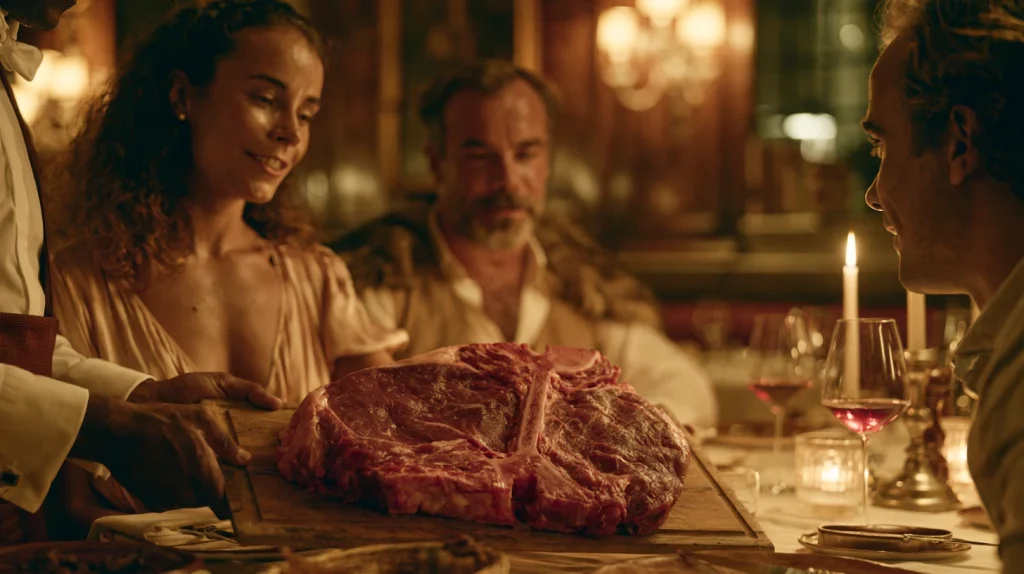
Many Florentine trattorias will refuse to cook a bistecca well-done, and they are within their rights. The argument is that a well-done bistecca destroys the texture of a cut that is expensive and has been carefully aged. If you genuinely cannot eat rare meat, bistecca alla Fiorentina is the wrong dish. Order the ribollita or the pappardelle instead. There is no shame in this — Florentine cooking has plenty of other things worth eating.
If you can eat medium-rare at a stretch, you will probably be fine with a bistecca. When the steak rests for several minutes after coming off the grill and before being sliced — which any attentive kitchen will do — the carry-over heat continues to work through the meat and the colour shifts from raw-rare to a deep, dark pink-red that most people find acceptable if not exactly comfortable.
If you are eating it in a group, the steak will be sliced off the bone and served in pieces of varied thickness. The thinner slices from the edges cook through more than the thick centre cut. If you have a preference, mention it when the server is cutting — they are used to people asking for the outside pieces.
Ask for it ben al sangue if you want the restaurant’s rare (slightly less bloody than their default). Make peace with the idea before you sit down and the meal is more enjoyable.
Pricing: The Per-Kilo System
Bistecca alla Fiorentina is priced by weight. Current typical pricing across reputable Florentine trattorias runs roughly €45-70 per kilogram, with some historic or higher-end places reaching €70-80/kg for premium aged Chianina. Anything advertised much below about €35/kg is worth treating with some suspicion about what breed and ageing you’re actually getting; genuinely cheap “Fiorentina and wine for €30” tourist-menu deals are a red flag rather than a bargain.
This is not a per-person price. A 1.4 kg steak at €55 per kilo costs €77 for the whole cut, split between two or three people.
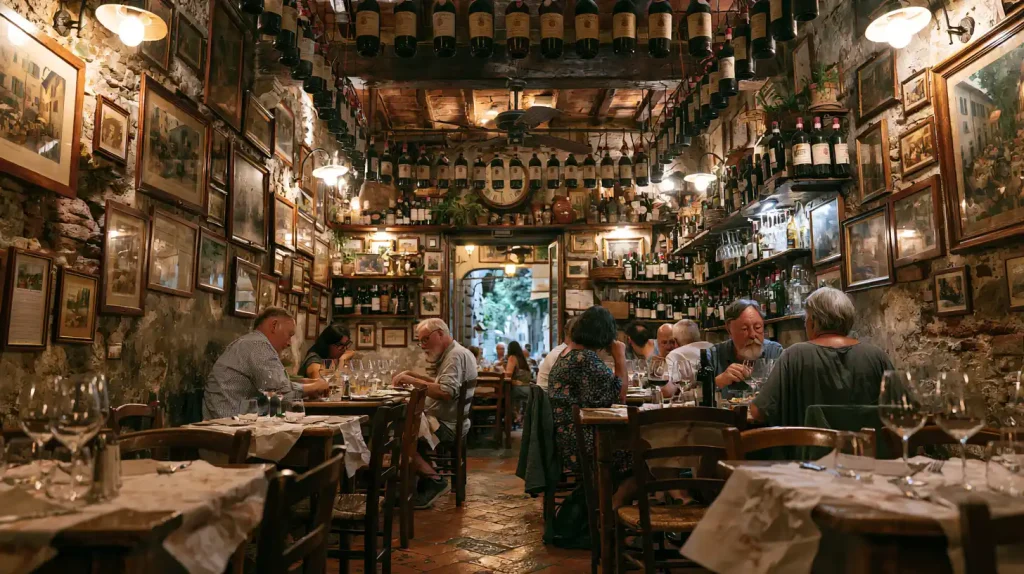
At good trattorias, the server will either tell you the weight of available steaks at the start of the meal or weigh your chosen cut tableside and confirm the price before it goes on the grill. This is normal procedure and is not a negotiation — you can decline and choose a smaller or larger cut if one is available, or order a different dish entirely. You agree to the price, the steak is cooked to order, and it arrives sliced off the bone and fanned across a board.
A 1.2-1.5 kg steak between two people is a standard pairing. With starters, one primo, sides, wine, and dessert, a full trattoria dinner built around the bistecca typically runs somewhere in the €50-80 per person range at a mid-range traditional restaurant, depending heavily on the specific cut ordered and how much else you add to the meal. At restaurants with premium certified cuts and longer ageing, the per-person total climbs further.
Lunch is cheaper at those trattorias that serve bistecca at midday — not all of them do, since the grill setup is significant — but the lunchtime menu and less-formal atmosphere reduces the total cost.
Where to Eat It
Trattoria da Burde (Via Pistoiese 154, near Porta al Prato) has been operating since 1901 and holds a Michelin Bib Gourmand. This is not city-centre convenient — it is a bus or taxi ride from the tourist core — and the dining room is not designed for visitors. It is designed for people who want to eat. The bistecca is well-aged and the antipasti are worth arriving hungry for. Open for lunch daily except Sunday, with dinner service on Fridays; book ahead, as this is a loyal, regular clientele that fills tables.
Trattoria dall’Oste has multiple Florence locations, so confirm the specific address before booking — the branch on Via degli Orti Oricellari has been recognised among top steak restaurants internationally and serves certified Chianina and Marchigiana cuts with serious ageing. Consistently recommended by locals and food writers as a reference point for the Fiorentina in the city centre.
Regina Bistecca (Via Ricasoli 14r, near the Duomo/Accademia area) focuses on research into meat quality and ageing, with menu notes explaining the provenance of each cut. More formal than a traditional trattoria, and more expensive, but useful if understanding the product is part of the point.
Trattoria Mario (Via Rosina 2r, San Lorenzo, open since 1953) is the opposite: communal tables, no reservations, bare walls, lunchtime only — open daily except Sunday, roughly midday to mid-afternoon. Famous for decades as a working-class lunch spot that happens to serve very good food. The bistecca is not always available — it is a full-menu trattoria, not a steakhouse. Go for the ribollita or the pasta if the steak is off.
Buca Lapi (Via del Trebbio 1r, near Palazzo Antinori) has been open since 1880 and is set in a vaulted wine cellar beneath the historic Palazzo Antinori. It is historic, not cheap, and popular with Florentines who want to take visitors somewhere that has a genuine story. Book ahead — this is one of the most in-demand tables in the city for the dish.
Trattoria Sostanza (Via del Porcellana 25r), also called “il Troia” by locals, is one of the oldest continuously operating trattorias in Florence — open since 1869. The bistecca here has a reputation that goes back generations, and the room has barely changed; the butter chicken and artichoke dishes are also well worth ordering. Open for lunch and dinner Monday-Saturday, closed Sunday. It is worth the experience even at a higher price point than a simple neighbourhood trattoria.
Building a Full Trattoria Meal
A bistecca alla Fiorentina dinner is not just the steak. The traditional structure of a Tuscan trattoria meal around the steak:
Antipasti (starters): Crostini neri — chicken liver pâté on toasted bread — is the canonical Florentine starter. Other options: prosciutto with melon or figs in summer, lardo di Colonnata if the restaurant has it, bruschetta with tomato. You do not need to order all of these. One shared plate is enough.
Primo (first course): Often optional if you are going straight to the bistecca. If you order a primo, ribollita (thick bean and bread soup), pappardelle al cinghiale (wide pasta with wild boar ragù), or pici cacio e pepe are all correct choices that do not fight with what comes next.
The bistecca: Already described. The steak arrives with nothing — it is the main event on its own. The sides are ordered separately.
Contorni (sides): Fagioli all’uccelletto (white beans cooked with tomato and sage) is the traditional accompaniment. Roasted potatoes, sautéed spinach with garlic, or grilled vegetables all work. Order one or two to share.
Wine: The canonical pairing is Chianti Classico — the wine denomination covering the hills between Florence and Siena — or Brunello di Montalcino if the occasion warrants the extra cost. A house Chianti served in a small ceramic jug (a typical trattoria move) is fine and will not embarrass the steak in any meaningful way.
Dessert: Cantuccini with Vin Santo — small dry almond biscuits dipped in sweet dessert wine — is the standard Tuscan dessert finish and does not require much space after a bistecca. If you want something more substantial, panna cotta or a simple almond tart.
Practical Notes for the Meal
Reservations are worth making for any dedicated steakhouse, particularly on Friday and Saturday evenings — several of the restaurants above, especially Buca Lapi and dall’Oste, are booked out well in advance during busy periods, so don’t leave this to the day of. Many trattorias fill by 8pm and Florentines eat late — arriving at 7pm when the door opens gives you the calmest version of the experience and the best chance of a relaxed meal without feeling the table pressure of a fully booked room.
If you do not have a reservation and arrive without one at a popular place on a busy evening, be honest with the host about your situation rather than expecting a table. Some trattorias hold back one or two tables for walk-ins; most do not on weekends.
Dress code: Florentine trattorias are smart-casual. Clean clothes and good shoes are the standard — not a jacket requirement, not swimwear, not shorts at the high-end places. Read the room when you arrive; if everyone else is in linen shirts and summer dresses, adjust your next visit accordingly.
The bistecca is not a daily lunch proposition for most visitors — both in terms of cost and in terms of how you feel for the next few hours. Build your day so that a long walk follows rather than a museum with four floors of stairs.
One honest note: the best bistecca alla Fiorentina is not necessarily at the most famous or most centrally located restaurant. Trattoria da Burde, out near Porta al Prato on the western edge of the centre, is not on any obvious tourist trail and most visitors never go. The steak is as good as anywhere in the city and the room is full of Florentines eating lunch. The further you walk from the Duomo and the main streets, the more the food tends to reflect a kitchen that is cooking for people who will come back next week rather than people who are flying home tomorrow. That is, almost always, the better kitchen.
suggested link — Panini & Mercato Centrale Florence: What to Eat and Where
Per-kilo pricing, restaurant addresses, and hours verified August 2026 against multiple current sources including Michelin Guide listings for Trattoria da Burde. Individual restaurants’ hours and specific prices can change seasonally or year to year — confirm directly when booking, especially for the historic, high-demand tables like Buca Lapi and Sostanza.