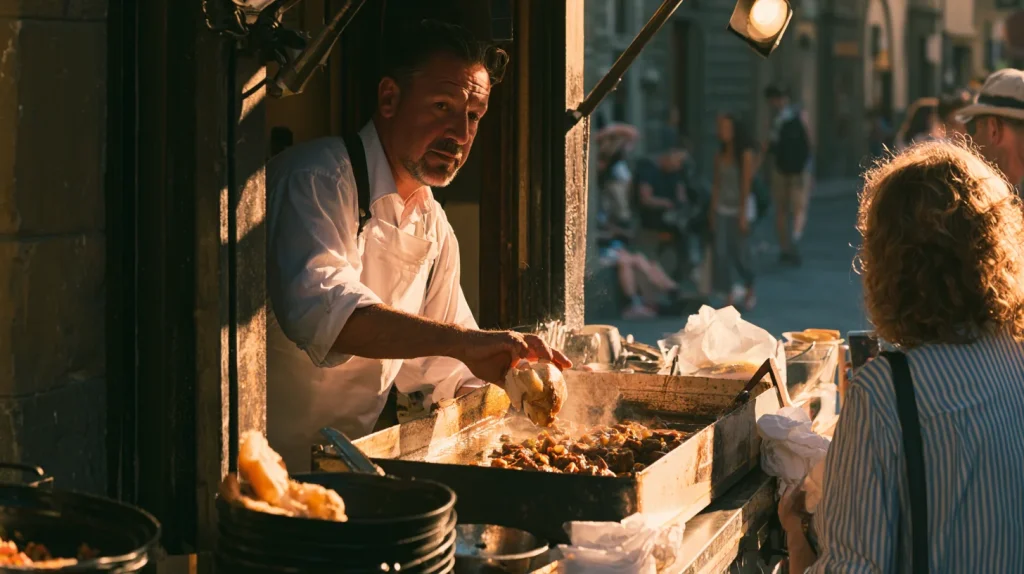
At Da Nerbone, there is a counter on the ground floor of the Mercato Centrale where a man dips a bread roll into a tray of warm broth, fills it with sliced boiled beef or a piece of lampredotto, passes it across the counter, and asks if you want green sauce or salsa piccante on top. The whole transaction takes about 45 seconds. It costs around €5-6. This is one of the better lunches you will eat in Florence, and most people walk past it to go upstairs.
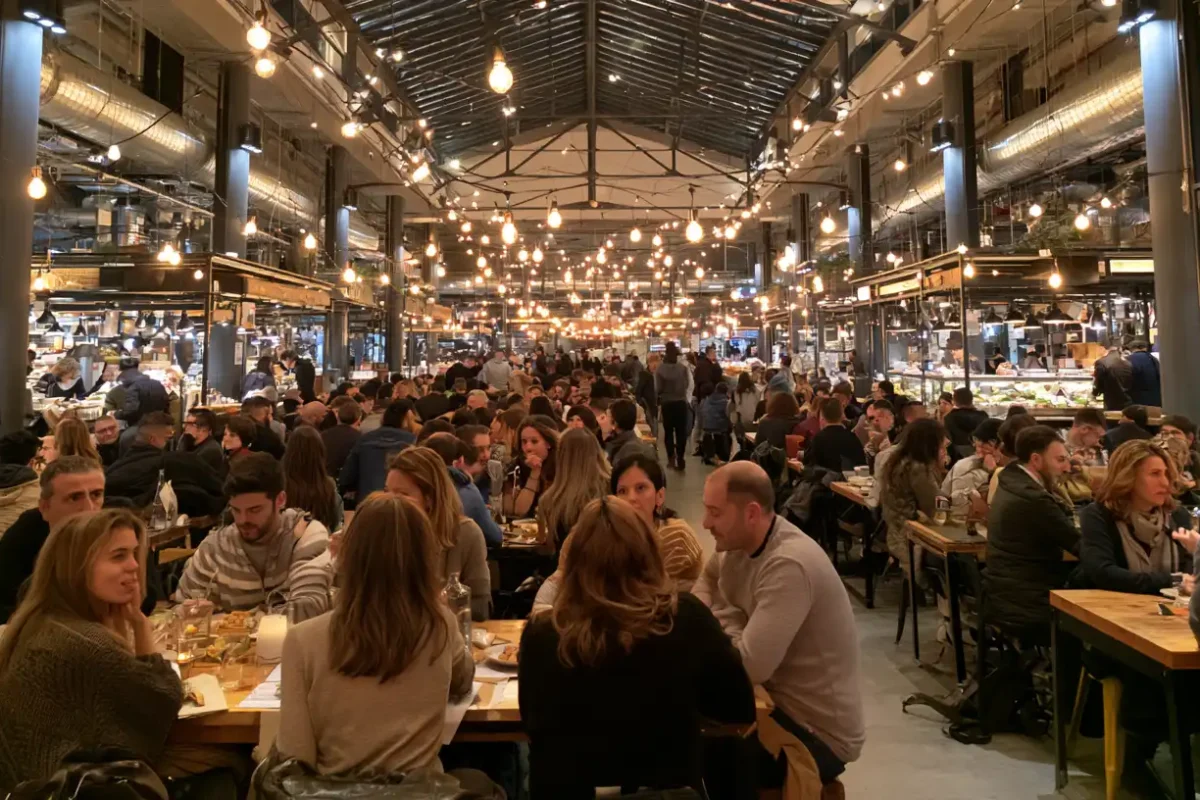
The upstairs is where TripAdvisor reviews send you. It is brightly lit, comfortable, and open until midnight. The food is good. But the ground floor is where the interesting version of Florentine market eating actually happens, and it closes in the early afternoon, which is why most visitors miss it.
The Mercato Centrale is two buildings that happen to share a roof. The cast-iron-and-glass hall was built in 1874 and runs as a working market on the ground floor — butchers, cheesemongers, fresh pasta makers, lampredotto stalls. In 2014, the upper level was converted into a food hall with 24-plus artisan counters serving everything from fresh pasta to truffle dishes to gelato. The upstairs is open from 10am to midnight, seven days a week. The ground floor market keeps standard market hours — open into the early afternoon, and closed on Sundays.
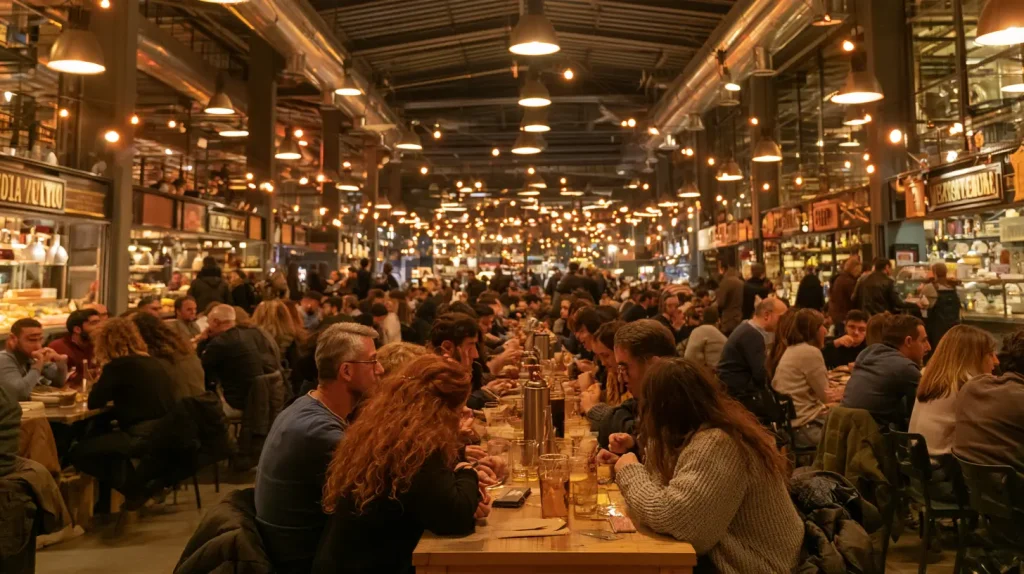
They are different experiences with different value propositions, and most travel advice does not make that clear enough. Understanding the distinction before you arrive means you can plan your visit to catch the better half.
The Ground Floor: What It Actually Is
The ground floor of the Mercato Centrale is a working market. Butchers. Cheesemongers. Fishmongers. Vendors selling dried pasta, cured meats, olive oil, fresh truffles in season, fresh pasta sheets, bread, and Tuscan specialties. The stalls have been here in various configurations since the 19th century and are used by Florence residents doing their shopping alongside whatever tourists find their way down from street level.
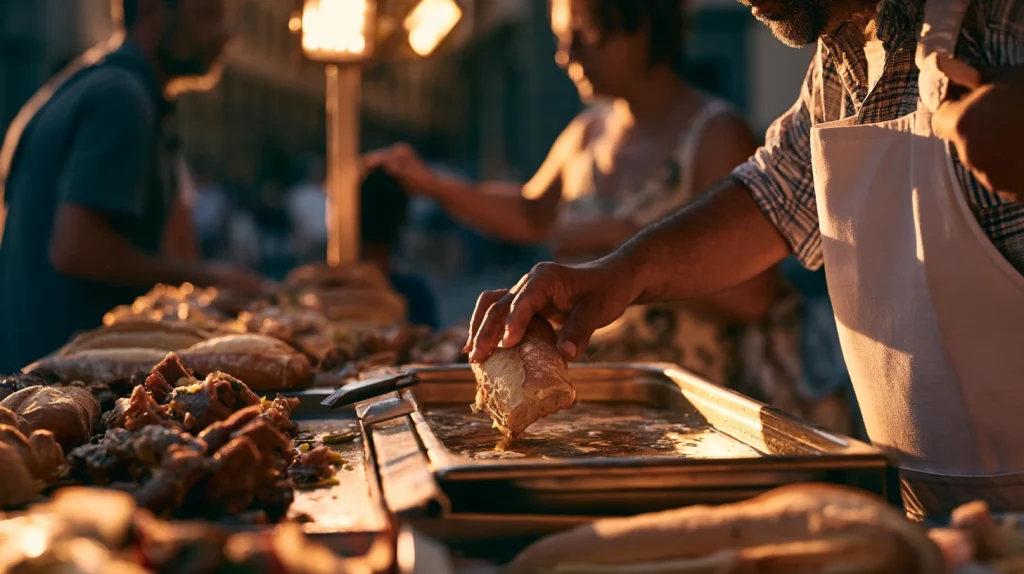
Da Nerbone — look for the counter with the long queue near the entrance, since exact stall numbering has shifted over the market’s history — is the institution. It has operated from the same ground floor spot since 1872, two years before the market building itself opened, through four generations of Florentine market life, a catastrophic 1966 flood that sent water through the Mercato to ceiling height, and several recessions. The menu is intentionally short: boiled beef sandwich (panino di bollito, around €6), a lampredotto sandwich (around €5), a bowl of stewed tripe (trippa alla fiorentina), and a rotating daily plate. The beef is slowly simmered brisket, sliced very thin, packed into a crusty semelle roll that the server dips briefly in the hot cooking broth before handing it across the counter.
You want this dipped. Ask for bagnato (wet). Some visitors ask for asciutto (dry) thinking the dipped version sounds messy, and they are wrong to do this — the broth-dampened bread is the point. Add green salsa verde and a small amount of the chili salsa piccante. Eat it standing up at the nearest available surface.
Da Nerbone is open Monday to Saturday, roughly 7am/9am to 2pm depending on the day, and closed Sundays. Queues peak around midday; arriving before 11:30am or after roughly 1:30pm avoids the worst of it, and the kitchen can run low on options by mid-afternoon regardless. If you arrive right at closing, you will find shutters down and a significant personal disappointment. Plan accordingly.
Beyond Nerbone, the ground floor is worth walking through slowly as a market even if you are not eating. The produce sections in the outer ring of the hall carry the kind of seasonal Tuscan ingredients that are worth knowing about — white truffles in October and November (expensive, but available in small amounts), dried porcini, various herbs, and a width of fresh and dried pasta shapes that goes well beyond what you find in other Italian cities.
A section of high-quality butchers sells Chianina cuts and aged meats — the same product going into the bistecca at the trattorias around the city, available to see and buy here at the source level. The fresh pasta stalls carry shapes you will not easily find outside Tuscany: pici (thick hand-rolled spaghetti), wide pappardelle, and egg pasta in various widths. The cheese vendors have Pecorino in multiple ages from fresh and soft through semi-aged (medium sharpness) to stagionato (very aged, hard, intensely flavoured). Buying a wedge of older Pecorino, some cured meat, and a bread roll for a handful of euros and eating in a nearby piazza is a legitimate and excellent alternative to a sit-down lunch when the weather is good.
Lampredotto: What You Need to Know Before Ordering It
Lampredotto is the abomasum — the fourth and final stomach — of a cow. It is simmered for hours in a broth of tomatoes, onions, celery, and parsley until tender. It is then sliced, packed into a crusty bread roll (the semelle, a specific Florentine bread), dipped in the broth, and handed to you. You add condiments at the cart.
It sounds challenging. The taste is milder than you might expect — soft, savoury, deeply meaty in the way that broth-braised things are. The texture is the element that requires some preparation: it is soft and slightly gelatinous. People who eat it regularly eat it quickly and cheerfully. People eating it for the first time are often surprised it is as good as it is.
You should try it. That is an opinion stated plainly, and one worth offering because most travel guides hedge it with qualifiers about offal sensitivity and personal preference. The lampredotto at a good Florentine cart does not taste like the idea of cow stomach. It tastes like something rich and meaty and brothy, with the texture of a slow-braised filling and a flavour that is specific and satisfying. The bread absorbs the broth it is dipped in. The green sauce cuts the richness. You eat it in four or five bites standing at the side of the cart.
If it is your first time and you want to understand why this is important to Florentine food culture, here is the short version: lampredotto was historically the food of working-class Florence — cheap protein from the parts of the animal that the wealthy did not eat, sold from carts in the markets and streets since at least the 16th century. The tradition has persisted not because it is fashionable but because it is good and the people who grew up eating it keep eating it. A city that maintains a centuries-old street food tradition in its original form rather than reimagining it for a food hall is worth paying attention to.
If you genuinely cannot commit to lampredotto, order the bollito instead — the boiled beef brisket sandwich from the same cart, which is milder and entirely recognisable to anyone who has eaten a slow-cooked beef sandwich in any culinary tradition.
Where to Eat Lampredotto Beyond the Market
The Mercato Centrale has Da Nerbone. But the lampredotto cart culture extends across Florence, and several other stalls have their own strong followings.
Trippaio del Porcellino (near the Mercato Nuovo loggia, home of the bronze boar statue) is considered by many Florentines to be among the best lampredotto in the city. It runs as a cart rather than a sit-down counter, largely cash-based, and does not have anywhere comfortable to sit — you stand at the side of the cart or find a nearby step. The broth has a strong reputation and the salsa verde is made fresh.
I’ Trippaio di San Frediano, in the Oltrarno near the Brancacci Chapel, is the right choice if you are spending the afternoon in the southern part of Florence and want the full lampredotto experience without crossing back to the north bank. The neighbourhood is quieter, the cart has fewer tourists, and the product is the same tradition.
Other lampredotto and trippa carts operate around the San Ambrogio market and elsewhere in the city — this is a living street food tradition with several long-running vendors rather than a single fixed list, so ask locally or check current recommendations, since individual carts’ hours, cash-only policies, and exact locations shift more often than a sit-down restaurant’s would.
As a general rule: these carts are cash-friendly (some cash-only), open morning through early afternoon, and close when they sell out. Go before 1pm if you want the full range of the day’s offering. The best lampredotto of the day is typically mid-morning, when the broth is at full temperature and the day’s supply has just been loaded.
The Upstairs Food Hall: Honest Assessment
The upstairs food hall is a different proposition from the ground floor market. It is clean, well-organised, and open late — useful if you arrive in Florence hungry at 9pm and want something better than a tourist menu. The 24-plus counters cover a real range: hand-rolled pasta, wood-fired pizza, Florentine steak, vegetable dishes, Sicilian arancini, fresh juice, gelato, coffee.
The food is genuinely good rather than outstanding. The prices are moderate — pasta dishes and taglieri (cheese-and-salumi boards) generally run in the €10-20 range depending on the stall, a glass of wine from the wine bar counter a few euros more or less — roughly what you would pay at a mid-range restaurant, sometimes slightly more. The atmosphere is that of a well-run food court: communal tables, varied noise levels, easy to navigate if you do not speak Italian. It is aimed at visitors in a way that the ground floor is not, and there is nothing wrong with that.
The honest comparison: if you have the time and are in Florence before 2pm, eat on the ground floor or at a lampredotto cart in the surrounding streets. This is where the food is most specific and most interesting. If you arrive in the evening, or want a no-stress meal where you can combine two or three different dishes from different stalls without committing to a full trattoria experience, the upstairs food hall works well and does not require much navigational effort. It is a reasonable place to eat dinner on a night when you want to keep things simple.
One thing the upstairs does well: it is a good option for groups with different food preferences, since the stall format means one person can get pasta, another can get a salad, and a third can get pizza, all for a similar budget at a shared table. This kind of flexibility is not available at a traditional trattoria.
Other Florentine Sandwiches Worth Knowing
The panino culture extends beyond lampredotto.
Schiacciata is a flat Tuscan bread — similar in texture to focaccia but thinner, drier, and crunchier at the edges, made with good olive oil and coarse salt. It is Florence’s everyday bread for sandwiches, and bakeries across the city make it fresh in the morning and sell it by weight or as pre-made sandwiches. A schiacciata filled with prosciutto and fresh mozzarella from a good bakery is typically a €3-6 lunch and is better than most things sold in the tourist corridors at three times the price. For a sweet version, look for schiacciata con l’uva in autumn — the same bread with whole grapes pressed into the dough and baked, which sounds odd and tastes very good.
Crostini neri — chicken liver pâté spread on small toasted bread rounds — appears at every trattoria and at many market stalls as a starter. It is not technically a sandwich but it is part of the Florentine bread-and-something culture that runs through the whole city’s eating habits. The pâté is made from chicken livers cooked with capers, anchovies, and white wine; it is not particularly strong or gamey, just deeply savoury and very Florentine.
Ribollita served in bread: some of the older sandwich shops and market stalls serve ribollita — the thick Tuscan bean and bread soup — in a hollowed bread roll rather than a bowl. The soup is already so thick that it barely needs the container. This is a lunch rather than a snack and typically costs somewhere in the €5-8 range depending on the vendor.
The San Lorenzo market area (the surrounding streets around the Mercato Centrale on Via dell’Ariento and Via Sant’Antonino) has enough sandwich shops and food stalls that you can eat an entire day’s worth of meals within a five-minute radius. The quality varies considerably. Anything with a handwritten sign in Italian rather than a laminated English-language menu is statistically more likely to be the correct choice.
Da Nerbone’s prices and hours verified August 2026 against current listings (Monday-Saturday, roughly 7am/9am-2pm, closed Sundays; panino di bollito and lampredotto both in the €5-6 range). Other cart locations, cash policies, and exact prices for schiacciata and ribollita are typical ranges rather than fixed figures, since these are informal, cash-based vendors whose specifics shift more often than a sit-down restaurant’s — confirm locally if a specific stop is essential to your plans.