Rome is not the cheapest city in Europe. It’s also not as expensive as people fear — if you know which prices are inflated by location and tourist demand, and which are genuinely fixed. A coffee at a café facing the Pantheon costs four times what it costs at a bar two streets back. The coffee is identical. This is the most compressed version of Rome budget advice available: location inflates price, and Rome’s best food is never at the tourist-facing spot.
This guide gives real, verified price figures as of August 2026, a realistic daily budget target at three levels, and specific strategies for reducing spend without reducing the quality of the experience. The goal is not to visit Rome cheaply in a way that means missing things — it’s to stop paying for the location premium that Rome’s tourist infrastructure adds to everything it can.
suggested topic — Where to Stay in Rome: A Neighbourhood Guide That Tells You the Truth
What a Day in Rome Costs at Three Budget Levels
These figures are per person and reflect current 2026 pricing where verifiable (attractions, transport). Café, trattoria, and gelato prices are typical ranges rather than fixed rates, since they vary by establishment — but the location-premium pattern described below is consistent everywhere in the city.
Budget traveller (€60-85/day): Hostel dorm bed (€30-55, average around €40 in high season), breakfast from a bakery or bar (€3-5), lunch from a forno/street food (€5-8), one afternoon snack or gelato (€3-4.50), dinner at a neighbourhood trattoria or takeaway (€12-18), one paid attraction per day (the Colosseum combo ticket is €18; the Pantheon is €7). Transport is mostly walking; occasional single ticket (€1.50).
Mid-range traveller (€130-190/day): Budget hotel or apartment (€60-100), sit-down breakfast or café (€5-10), two sit-down meals with wine (€25-40 each), two paid attractions (Colosseum €18 + Borghese Gallery €18, or similar), occasional taxi.
Comfortable traveller (€200-300/day): Mid-range hotel (€100-160), meals at recommended trattorias (€35-60 per meal), all major sites pre-booked (Vatican Museums €20-25, Borghese €18, Colosseum €18-24), occasional guided tour or private experience.
The biggest single variable is accommodation, which can range from roughly €30 (hostel dorm) to €200+ (city-centre hotel) per night. Everything else — food, transport, sites — is fairly controllable with the right approach.
A practical note: Rome is not a city where you need to spend more to have better experiences. The Colosseum costs the same whether you’re on a tight budget or not. The carbonara at a neighbourhood trattoria is better and cheaper than the version at a tourist-facing restaurant. The piazzas are free. The budget-conscious and the comfortable traveller are often looking at the same things from the same vantage point.
Where Rome Inflates Prices (and Where It Doesn’t)
Heavily inflated by location:
A coffee sitting at a table outside in Piazza Navona costs €4-8. The same coffee at the bar counter two streets away costs €1-1.50. Sit-down table service at a piazza-facing café typically adds a coperto (cover charge) of €2-5 per person on top of drink prices. This is legal, should be disclosed on the menu, and is the primary mechanism by which tourist Rome extracts money from people who don’t know to look.
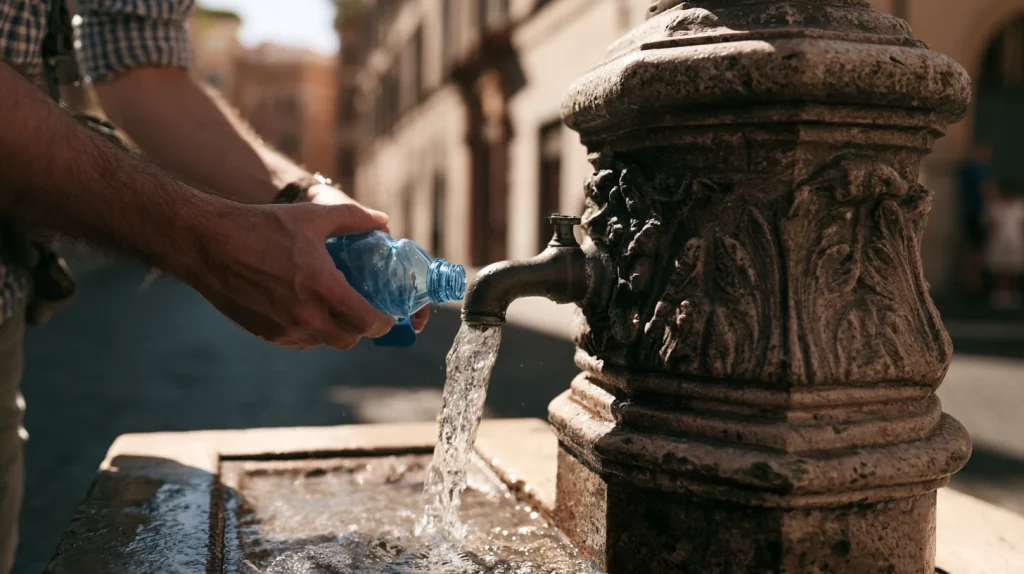
Water at a restaurant: €2-4 for a bottle that costs a fraction of that in a supermarket. Ask for tap water (acqua del rubinetto) — technically fine and completely safe, sometimes declined by restaurants that prefer to sell water, but always worth asking. If they won’t give tap water, you can fill your bottle at the nasoni outside after dinner.
Rome has over 2,500 nasoni — the small iron drinking fountains that appear throughout the city, identifiable by their curved iron neck and continuous slow flow. The water comes from the same ancient aqueduct system, cleaned and tested by the city, and it is cold and good. Carry a reusable bottle. Refill every time you pass one. Over three days this saves a meaningful amount versus buying bottled water, and the water quality is better.
Reasonably priced regardless of location:
Pizza al taglio from a serious forno: roughly €1.50-2.50 per 100 grams regardless of neighbourhood. A supplì from a market stall: around €1.50-2.50. An espresso at the counter: €1-1.50 almost everywhere that isn’t a major piazza tourist trap. A carafe of house wine at a neighbourhood trattoria: typically €5-10.
Where you shouldn’t cut corners:
Paid attractions. The Colosseum (€18 standard, includes Roman Forum and Palatine Hill), the Vatican Museums (€20 on-site, €25 online), the Borghese Gallery (€18, reservation mandatory), and the Pantheon (€7 as of July 2026) are all genuinely worth paying for. Trying to skip these to save the entry fee saves money but misses the point of being in Rome. Budget for the sites; save elsewhere.
Free Things in Rome Worth Your Time
Rome has a remarkable amount that costs nothing:
The piazzas: Piazza Navona, Campo de’ Fiori, Piazza della Rotonda, Piazza del Popolo — all free to walk through, sit in, look at. The Bernini Fountain of the Four Rivers in Piazza Navona is a work of art requiring no ticket.
The churches: Rome has more than 900 churches, the vast majority free to enter. This is not a small thing — Rome’s churches contain some of the most significant art in Europe, and none of it requires a ticket.
San Giovanni in Laterano, Rome’s official cathedral (not the Vatican — many visitors don’t know that St Peter’s is a papal basilica rather than the city’s cathedral), contains mosaics and papal art across 1,700 years of history. Santa Maria Maggiore has 5th-century apse mosaics that are among the oldest Christian mosaics in Rome. Santa Maria del Popolo, at the northern end of Via del Corso, has two Caravaggios in the Cerasi Chapel — the Crucifixion of Saint Peter and the Conversion of Saint Paul — that many people who pay for a Caravaggio exhibition elsewhere in the world walk past for free.
St. Peter’s Basilica: Free entry, though there is a security queue. The building is extraordinary — Michelangelo’s Pietà, Bernini’s baldachin, the scale of the interior. The dome climb costs extra (verify current price on-site, as it periodically changes) but the ground-level entry is free.
The Pantheon: As of July 2026, standard entry costs €7 for adults (up from €5 previously). EU citizens aged 18-25 pay €2. Entry is free for everyone on the first Sunday of each month, for visitors under 18, and for residents of the Municipality of Rome. On free days, online booking isn’t available — you queue for a free ticket at the entrance instead. Note: the Pantheon is not included in the Roma Pass.
Domenica al Museo: On the first Sunday of each month, Italy’s state-run museums offer free entry — a national cultural policy that covers the Capitoline Museums, Palazzo Massimo alle Terme, Palazzo delle Esposizioni, and many others. Borghese Gallery participation and Vatican Museums participation vary — the Vatican Museums are not state-owned and generally hold their own last-Sunday-of-the-month free morning instead (verify the current calendar before relying on it, as exceptions apply around Easter and major holidays).
To take advantage: check which sites are included for your travel dates, book any required timed slots in advance (some free-day sites still require reservation), and arrive early. The free day is well-known in Rome and sites are busier than a normal paid day.
The Janiculum Hill (Gianicolo): The best panoramic view of Rome, free, accessible by foot or bus. Less known than the Aventine Hill viewpoints but more dramatic in scope. A cannon is fired at noon daily — this is not a metaphor.
The Appian Way: The park is free to walk and cycle. The ancient road surface is free to walk on. The individual catacombs and monuments charge entry, but the road itself costs nothing.
Budget Eating Strategy
The sequencing that works for a budget week in Rome:
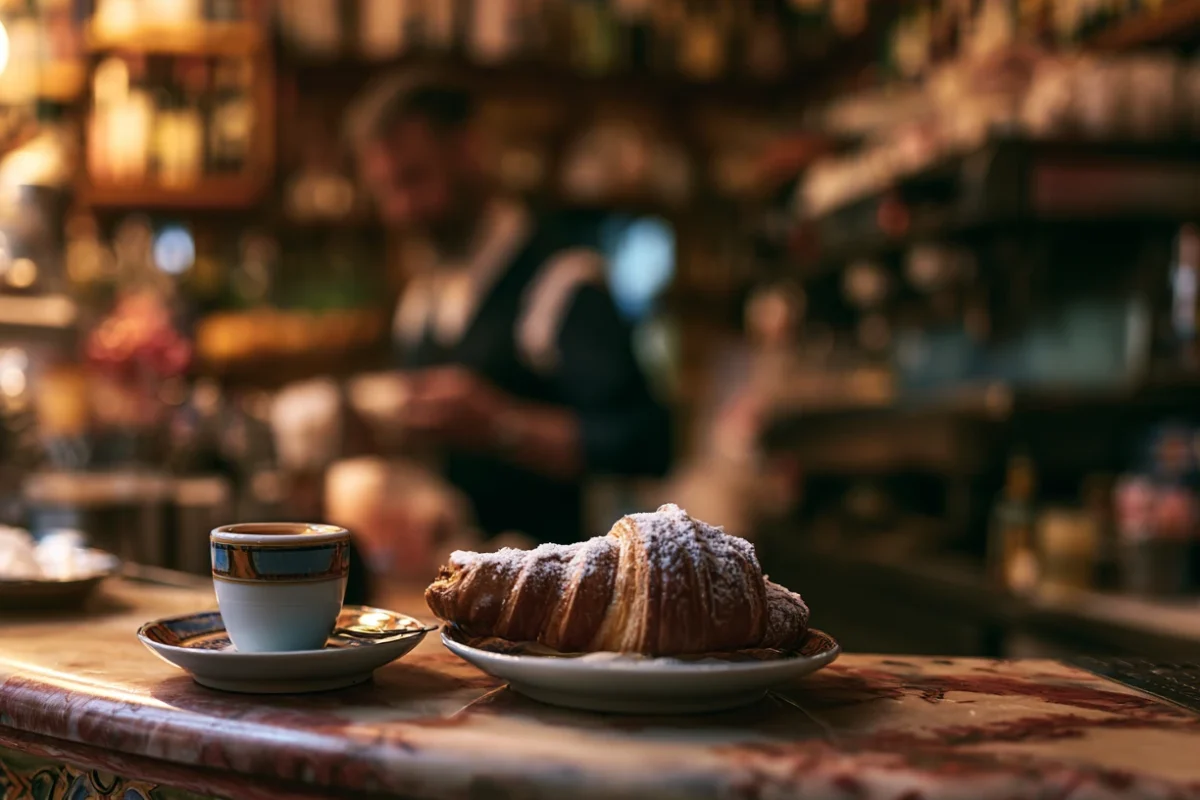
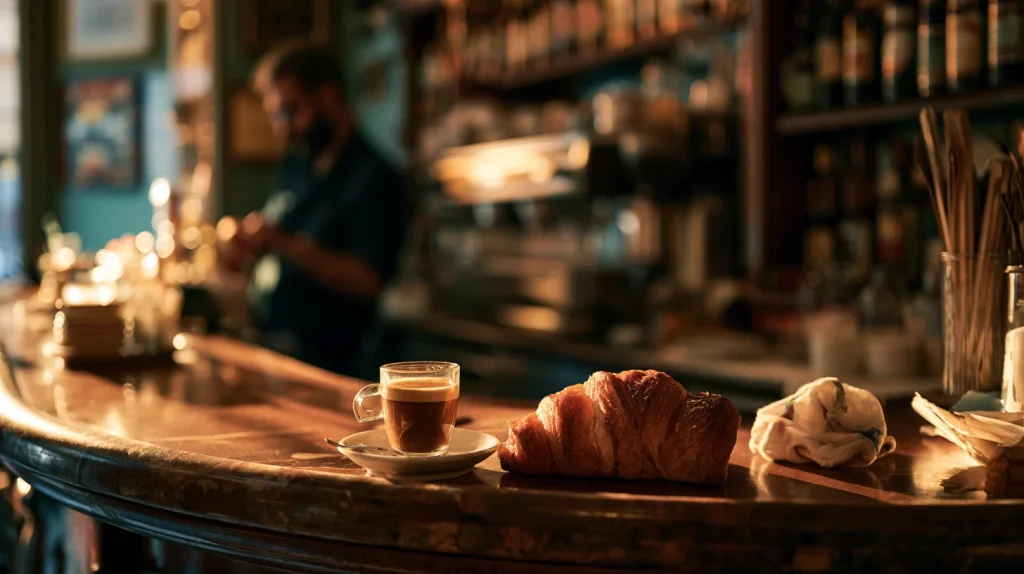
Breakfast: At a neighbourhood bar, standing at the counter — never at a piazza café. One espresso and one cornetto (the Italian version of a croissant, slightly brioche-like, often filled with jam, custard, or Nutella): typically €3. This is how Romans start the day, and it’s one of the more reliably good budget experiences available anywhere in Europe. The coffee is good. The cornetto is good. The whole thing takes eight minutes.
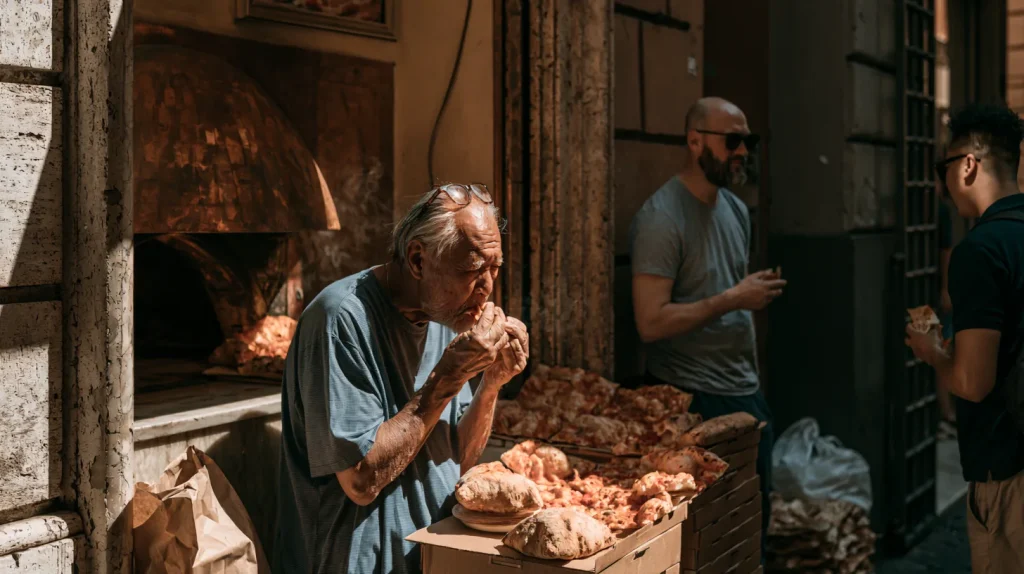
Lunch: Pizza al taglio or supplì from a forno or the Testaccio market. Roughly €5-8 for a satisfying lunch eaten standing outside. This is the best-value meal in Rome and requires no compromise on quality.
Dinner: A neighbourhood trattoria. The house wine, a primo (pasta), sometimes a secondo (meat or fish). With a carafe of house white or red: roughly €15-25 per person at a genuine neighbourhood spot in Testaccio, Prati, or Pigneto; €30-40 at something slightly more polished. The difference in food quality between a €15 dinner and a €40 dinner in Rome is considerably less than you’d expect — the city’s trattoria culture is deeply conservative about what a good plate of pasta should taste like. The difference between a tourist-facing restaurant on a piazza and a neighbourhood one two streets away is significant, and it mostly goes the wrong direction in terms of quality-to-price.
Gelato: Budget for one good gelato per day (roughly €3-4.50 for a single or medium scoop at an artisan gelateria). Eat the real version, not the tourist version with the piled-up mounds and vivid artificial colours. The difference in flavour is considerable and the price difference is minimal. The guide to identifying the right gelateria is in the Rome gelato guide on this site.
[PHOTO: realistic photography, Rome neighbourhood bar counter espresso cornetto Italian breakfast early morning, a traditional Roman bar counter in early morning with an espresso and cornetto on the counter and the barista visible behind in warm interior light documentary photography Canon EOS R5 35mm –ar 16:9 –style raw –v 6.1 | Alt text: Traditional Roman bar counter in early morning with espresso and cornetto barista visible behind warm interior light]
Accommodation Tips for Budget Travellers
The neighbourhoods with the best value accommodation are Prati (good mid-range hotels, some holiday apartments, residential calm) and Testaccio (apartments at lower prices, very local neighbourhood). Both are discussed in the Where to Stay guide.
For genuinely budget accommodation, hostel dorm beds in Rome currently average around €35-40 per night, with a realistic range of roughly €30-55 depending on season, location, and hostel quality. Private hostel rooms typically start around €90 per night. The best value hostels are typically not in the most central areas — expect to add a 10-15 minute bus or Metro commute from a good hostel to the major sites.
Holiday apartments (via the standard booking platforms) often offer better value per person than hostels for groups of two or more, particularly for stays longer than three nights. A central one-bedroom apartment averages roughly €160-240 per night in 2026; apartments in Testaccio or Pigneto tend to run lower, which splits to a competitive per-person rate for two people, with the added benefit of a kitchen for breakfast and lunch.
Book accommodation in advance. Rome’s centre has limited supply relative to demand and last-minute pricing reflects this, particularly in spring, autumn, and around public holidays.
The Roma Pass and Combo Tickets
The Roma Pass gives free entry to museums, discounted entry to others, and unlimited public transport for 48 or 72 hours. As of 2026, the 48-hour pass costs roughly €35-38 and includes one free attraction entry; the 72-hour pass costs roughly €52-63 depending on the vendor and includes two free attraction entries. Prices vary slightly between the official site and resellers, so check turismoroma.it directly before buying. Note: the Vatican Museums, Sistine Chapel, and St Peter’s Basilica are not included in the Roma Pass, and neither is the Pantheon.
A rough calculation: if you’re going to the Colosseum (€18, which already includes the Forum and Palatine Hill) and the Borghese Gallery (€18), plus using the Metro several times, the 72-hour Roma Pass may be worth it once you factor in the transport savings and any discounted third site. If you’re only visiting one major site and mostly walking, it probably isn’t — a standard single BIT transport ticket is only €1.50, and a 24-hour transport pass is €8.50 on its own.
The Colosseum-Forum-Palatine combo ticket (covering all three) is generally the better individual value for anyone not planning several other museum visits — it’s a single €18 ticket for three major sites, since the Forum and Palatine Hill are included in the Colosseum price by default.
FAQ
Is Rome more expensive than other major European cities? More expensive than Lisbon or Budapest, broadly comparable to Barcelona, cheaper than London, Paris, or Amsterdam. In the tourist-facing areas it feels expensive because of the location premium applied to everything. In residential neighbourhoods, the cost of eating and drinking is lower than in equivalent London or Paris equivalents.
Can you visit Rome for free? A day in Rome could theoretically cost only transport and food — the churches, piazzas, viewpoints, and street life are all free. If you time your trip to include the first Sunday of the month, key state museums open for free. The major individual site visits (Colosseum, Vatican, Borghese) are hard to avoid paying for and worth paying for — though at €7-25 each, none of them will break a reasonable daily budget.
What’s the single biggest budget mistake in Rome? Sitting down at a table in a tourist-area café without checking the menu first. Prices are required by Italian law to be displayed, but they’re often in small print or buried in a long laminated menu at the back. Always check before you sit. The coperto charge (cover charge, typically €2-5 per person), the service charge sometimes added on top, and the tourist-location markup can turn a simple two-coffees-and-water into a €20 experience you didn’t intend and didn’t enjoy. The rule is simple: if a café has a clear view of a famous monument, check the prices before ordering. Always.
Is tap water safe in Rome? Yes. The nasoni fountain system has supplied the city with clean cold drinking water since the 19th century. Carry a reusable bottle and refill freely throughout the day. This alone saves a few euros a day versus buying bottled water.
Prices last verified August 2026 against official sources and current-year travel guides for the Colosseum, Vatican Museums, Borghese Gallery, Pantheon, Roma Pass, and ATAC transport fares. Café, trattoria, gelato, and hostel prices are typical market ranges rather than fixed official rates and should be treated as estimates — always check current pricing before publishing or budgeting precisely, as these move seasonally.