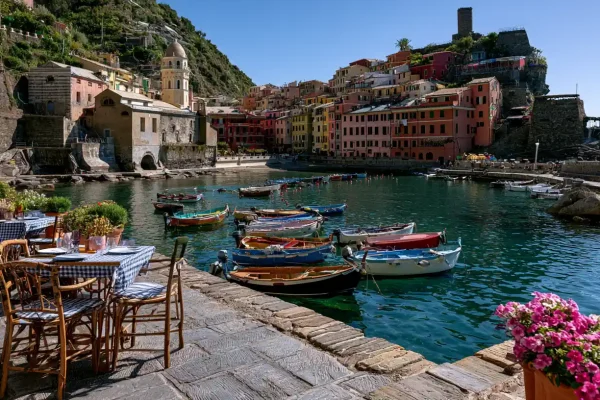
There is a price of coffee in Florence that costs €1 to €1.20, consumed in 45 seconds standing at a marble counter, and it is an excellent coffee. There is another price of coffee in Florence that costs €4 to €6, consumed at a table outside a café near the Duomo, and it is the same coffee. The €4 version comes with the view and the chair and the right to sit there as long as you want. Both are legitimate choices. Knowing which one you are choosing — and why — is most of the practical knowledge needed to visit Florence on a real budget.
The city has a well-established two-track economy: one price for locals and one for tourists who have not learned the difference. The gap between them is real and persistent, and it runs through almost every category — coffee, food, accommodation, even which church you enter and whether you pay to go in.
The good news is that Florence is not actually a city where you need a lot of money to have a good time. The museums that require admission are the ones that need it: the Uffizi and Accademia are genuinely extraordinary and worth paying for. But the city itself — the streets, the Arno, the piazzas, the neighbourhood bars, the markets, the churches, the views from Piazzale Michelangelo at sunset — costs nothing.
This guide is about operating on the local track as much as possible.
The Bar Counter Rule
In most Italian bars and cafés — not just in Florence — there are two prices for the same item: the counter price (at the bar, standing) and the table price (seated, served to you). In Florence, the difference can be 200-400% for coffee in tourist-area venues, though it is more typically 30-50% elsewhere.
At the counter: espresso €1.20-1.50, cappuccino €1.80-2.20, a cornetto (croissant) €1.50-2. This is breakfast — the same breakfast every working Florentine has every morning. Stand at the counter, say “un caffè” or “un cappuccino,” drink it, pay at the register, leave. The whole process takes three to five minutes and costs €2.50 with a pastry.
At a tourist-area café table: the same cappuccino costs €3.50-5, plus a coperto (table service charge) of €1.50-3 per person in some venues. The croissant is €2.50. Breakfast for two at a tourist café table near the Duomo costs €15-20. At a neighbourhood bar counter one street back from the main tourist circuit: €5-6 for two.
Apply this rule every morning and the savings over a week are real. Seven mornings at a bar counter instead of a tourist café table saves €50-80 for two people — nearly a full museum admission each.
Some bars to look for: places without laminated menus in the windows, where the clientele is a mix of office workers and construction workers, where the barista knows the regular orders. The further from the Duomo and the Accademia you walk, the more likely you are to find them. The Santa Croce neighbourhood, the Oltrarno, the area around Santa Maria Novella station — all have excellent neighbourhood bars where the tourist markup has not yet arrived.
Aperitivo as Dinner
The Florentine aperitivo tradition — specifically the version that includes substantial food — is one of the most useful budget hacks in the city, and it is not widely known outside Italy.
From around 6:30pm to 9pm, bars in Florence (particularly in the Oltrarno and Santa Croce neighbourhoods) serve an aperitivo that consists of a drink plus access to a table of food: crostini, pasta, vegetables, sometimes more substantial items. The drink costs €7-10. The food is included with the drink price and is, at the better venues, enough for a light dinner.
The system works as a genuine meal replacement if you arrive hungry and choose a venue that puts out substantial food rather than just olives and crisps. The bars around Piazza Santo Spirito and along Via dei Serragli in the Oltrarno are known for good aperitivo spreads. Go at 6:30pm when the food is fresh and the tables are less crowded.
A spritz plus aperitivo food costs €8-10. A comparable meal at a sit-down trattoria costs €20-30 with wine. This is not a compromise — the aperitivo is a genuinely enjoyable social experience that also happens to be cheap.
One honest note: not all aperitivo is equal. Some bars serve thin crostini with a smear of pâté and call it aperitivo. Others put out pasta, frittata, salad, and substantial plates. Look at what is already on the table before you order your drink. If the food looks thin, move on. In Piazza Santo Spirito specifically, the bars on the western side of the piazza tend to offer more substantial spreads than those facing the church.
Domenica al Museo: The Free Museum Sunday
On the first Sunday of each month, Italy’s state-run museums offer free admission — this programme is called Domenica al Museo and applies to major Florence museums including the Uffizi, the Accademia, the Bargello, and others (confirmed current for 2026 via cultura.gov.it; the Uffizi and Accademia allow walk-up entry on these Sundays without advance booking).
If your Florence visit includes the first Sunday of a month, plan museum days around it. The Uffizi on a free Sunday is busy — significantly more crowded than a paid-admission day — but the admission savings of €25 per person (the standard adult admission price; €29 if booked online in advance) are real. Go at 8:15am when the doors open and you get 90 minutes of the museum in morning light before the free-Sunday crowd builds.
For a two-person trip, Domenica al Museo at the Uffizi and the Accademia (if you time both on the same day) saves €80-100 on museum admissions alone. That is a substantial portion of a day’s budget.
If your dates do not align with the first Sunday, the Firenze Card (firenzecard.it) covers 72 hours of access to 60+ museums and sites without individual ticket purchases. At €85, it pays for itself if you visit four or more paid attractions in three days.
Free and Cheap Sights
Florence has a larger quantity of free significant attractions than its reputation as an expensive city suggests.
Free of charge: The Duomo interior (no reservation or ticket required for the free nave; the exterior and interior nave are free, but the dome, bell tower, baptistery, museum, and crypt/Santa Reparata require a paid, timed-entry pass starting at €15, per duomo.firenze.it). Piazza della Signoria with the outdoor Loggia dei Lanzi sculptures — a significant open-air collection. Piazzale Michelangelo and San Miniato al Monte. The Rose Garden below the piazzale (free entry, open year-round; hours vary by season, roughly 9am-5pm in winter to 9am-8pm from May to September). The Ponte Vecchio crossing. Most churches, including San Miniato, Santo Spirito, and Santa Maria Novella basilica (though the basilica and museum complex charges €7.50 admission for the interior, museum, and cloisters, per smn.it).
Cheap: The lampredotto sandwich from Nerbone or a street cart: €3-4. A schiacciata sandwich (Tuscan flatbread stuffed with cured meat or cheese, from a neighbourhood bakery): €3-5. Coffee and pastry at a bar counter: €2.50. Sant’Ambrogio market lunch from the market stalls: €5-8. Pizza al taglio (pizza by the slice, sold by weight from tray ovens in bakeries and dedicated shops): €3-5 for a substantial piece.
San Miniato al Monte is worth singling out. The church sits at the top of the hill above the Oltrarno, a 25-minute walk from the Ponte Vecchio via the steps and the Via di San Miniato al Monte. The Romanesque façade with its geometric marble patterns is one of the best examples of that style in Tuscany, and the interior — with its raised choir, crypt, and 13th-century mosaic — is free to enter. The walk up passes the Rose Garden and gives views of the city from a quieter vantage point than Piazzale Michelangelo. Go on a weekday afternoon in spring or autumn and you may have the hillside largely to yourself.
Where to Save on Accommodation
Accommodation is the largest single budget item in Florence. Two strategies reduce it significantly:
Season: visiting November through mid-March reduces accommodation prices by 30-50% compared to June-August. A hotel that costs €200/night in July costs €100-120 in November. For a week-long trip, the seasonal savings alone cover most other expenses.
Neighbourhood: the Oltrarno and Santa Maria Novella areas run 15-25% cheaper than equivalent quality in the centro storico. A room that costs €180/night beside the Duomo costs €130-145 in the Oltrarno with a 10-minute walk to the same museums.
Hostel dormitories in central Florence run €30-50/night. For solo travellers or those comfortable with shared rooms, this brings the accommodation cost down to a level that allows genuinely good food and a paid museum or two each day.
For private rooms on a budget: the Oltrarno has a number of small family-run B&Bs and guesthouses that run €80-120 for a double in shoulder season. They are not boutique hotels, but they are clean, well-located, and frequently better value than the equivalent Airbnb option once cleaning fees are included. The area around Piazza Tasso and Borgo San Frediano specifically has several options at the lower end of the Oltrarno market.
Building a Daily Budget
A realistic low-budget day in Florence:
Breakfast at a bar counter: €2.50
Lampredotto or schiacciata lunch: €4-5
Free sight in the afternoon (Piazzale Michelangelo, a church, the Loggia dei Lanzi)
Aperitivo dinner: €8-10
One gelato at an artisan gelateria: €3
Total spend on food and activities: €18-20. Add hostel accommodation at €35-45 and transport at €0 (walking). A solo budget day in Florence at this level costs €55-65 and is not a day of deprivation — it is lampredotto at Nerbone for lunch, a free afternoon at San Miniato al Monte, aperitivo at a Piazza Santo Spirito bar in the evening, and a gelato on the way back.
For a couple sharing a private room (€100-130 split two ways), the per-person day budget lands at €80-100 including a paid museum every second day. The Uffizi every other day at €25 per person is a reasonable pace anyway — two consecutive days at the Uffizi is too much. The budget naturally accommodates the right rhythm.
The one category where budget travel in Florence genuinely costs money: the Uffizi and the Accademia. Both are worth the full price. There is no legitimate substitute for seeing Botticelli’s Primavera or Michelangelo’s David and both museums charge what they charge because the collections genuinely warrant it. Budget for these from the start and do not try to substitute with second-tier alternatives.
Practical Money Notes
Drinking water: Florence’s tap water is clean and drinkable. Public drinking fountains — in Florence these are the fontanelli d’Alta Qualità (free-of-charge, run by the water utility Publiacqua), a different network from Rome’s cast-iron “nasoni” — are scattered throughout the historic centre and refilling a bottle at one costs nothing. Buying bottled water at tourist-area restaurants at €3-4 per person adds up to €20-30 over a week. Carry a bottle and use the fountains.
Lunch vs. dinner: eating the same meal at a sit-down trattoria at 12:30pm versus 7:30pm in the evening typically costs 20-30% less at lunch. Many trattorias serve a set-price lunch menu — called pranzo fisso or menu del giorno — of two courses plus house water and bread for €12-15. The same two-course à la carte dinner would be €25-35. Making lunch the sit-down meal of the day and eating cheaply in the evening reverses the usual tourist pattern and saves significantly.
Markets: the Sant’Ambrogio covered market in the Santa Croce neighbourhood is Florence’s less-visited local food market — smaller than the Mercato Centrale, more honestly priced for residents, and open Monday to Saturday, 7am-2pm (closed Sundays and holidays). Buying good cheese, a piece of cured meat, and bread from the vendors inside and eating in the piazza outside the market costs €6-9 for a substantial and genuinely good lunch. Br
Prices last verified August 2026
Prices and visitor information were verified directly against official sources including the Uffizi Galleries’ ticketing platform (uffizi.it), the Firenze Card website (firenzecard.it), Florence Cathedral’s official site (duomo.firenze.it), the Basilica of Santa Maria Novella’s ticket page (smn.it), the City of Florence (comune.fi.it), and the Sant’Ambrogio market (mercatosantambrogio.it). Museum admission fees, the Firenze Card price, Domenica al Museo terms, Duomo free-entry arrangements, and market and garden opening hours are current as of publication. Bar coffee prices, aperitivo prices, pizza al taglio prices, pranzo fisso prices, and accommodation price ranges are typical figures drawn from current local sources rather than fixed official rates, and should be checked again closer to your travel dates.
suggested topic — Panini & Mercato Centrale Florence: Lampredotto, Nerbone, and Where to Eat
suggested topic — Florence Hidden Gems: What Most Visitors Miss and Why They Regret It