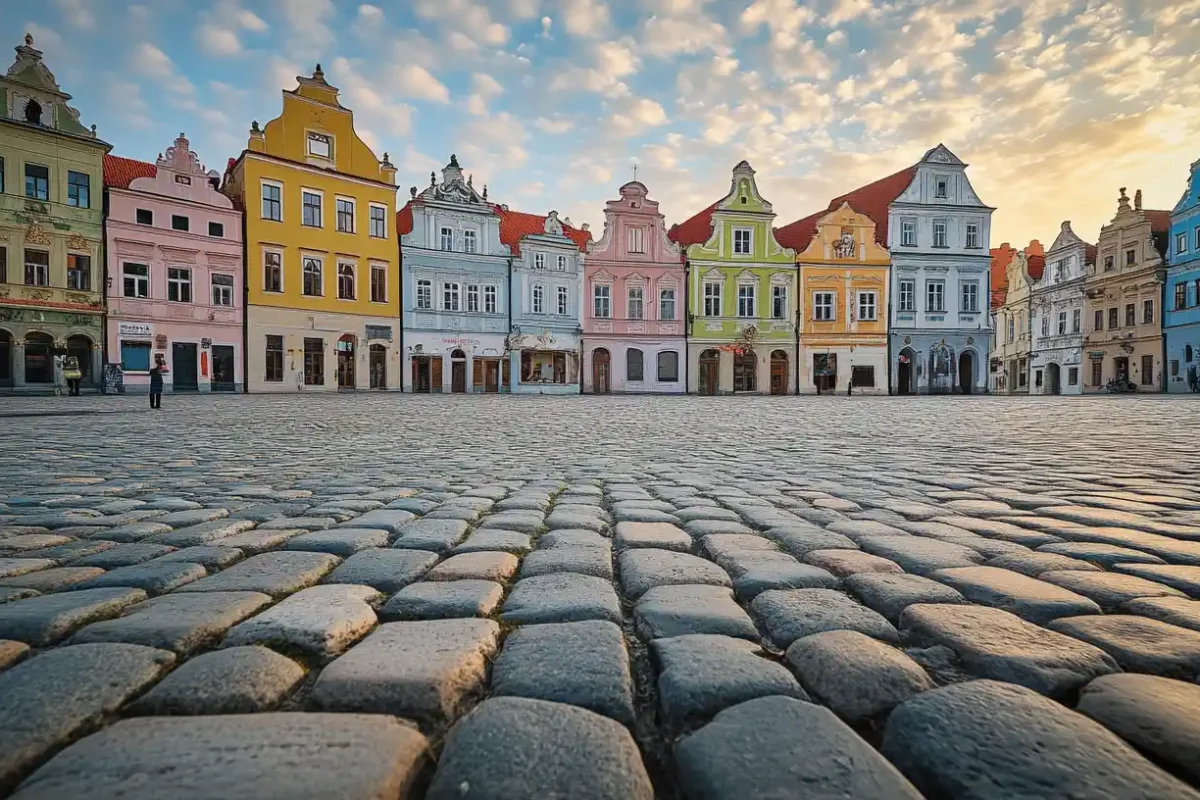
The square in Telč is 300 meters long, lined on both sides with Renaissance and Baroque burgher houses in pastels — pale yellow, mint green, rose, terracotta — each with a different gabled roofline, each competing with its neighbor for architectural distinction. At each end of the square are the main entrance gate and the Renaissance château. In between are covered arcades with small cafés and a fountain. The whole ensemble was built after a fire in the 14th century, laid out by a single patron with Italian Renaissance sensibilities, and has been almost entirely unchanged since 1600. It is genuinely one of the most beautiful town squares in Europe. Almost no Americans have ever been there.
| Best time to visit | April–October; Christmas market in December |
|---|---|
| Getting there | Rent a car from Prague or Brno; or bus from Brno (2 hrs) |
| Budget per day | $50–90 USD (very affordable by Czech standards) |
| Visa for Americans | No visa required; Schengen 90-day rule applies |
| Language | Czech; English understood at hotels; basic Czech useful in restaurants |
| Currency | Czech Koruna (CZK); cards accepted; about 23 CZK to $1 USD |
Is Telč Worth the Effort to Reach?
If you care at all about Renaissance architecture and quiet medieval towns, yes — it’s better than Ceský Krumlov for atmosphere precisely because it hasn’t been as thoroughly colonized by tourism. The challenge is transport: Telč is not on a major railway line, sits somewhat off the tourist circuit between Prague and Vienna, and is most easily reached by car. Bus connections exist from Brno and Jihlava, but they’re slow and infrequent. Accept this friction upfront. The reward is a UNESCO square with almost no tour groups, real Czech prices ($4 lunch, $8 hotel dinner), and the sense that you actually found something rather than followed a trail of breadcrumbs.
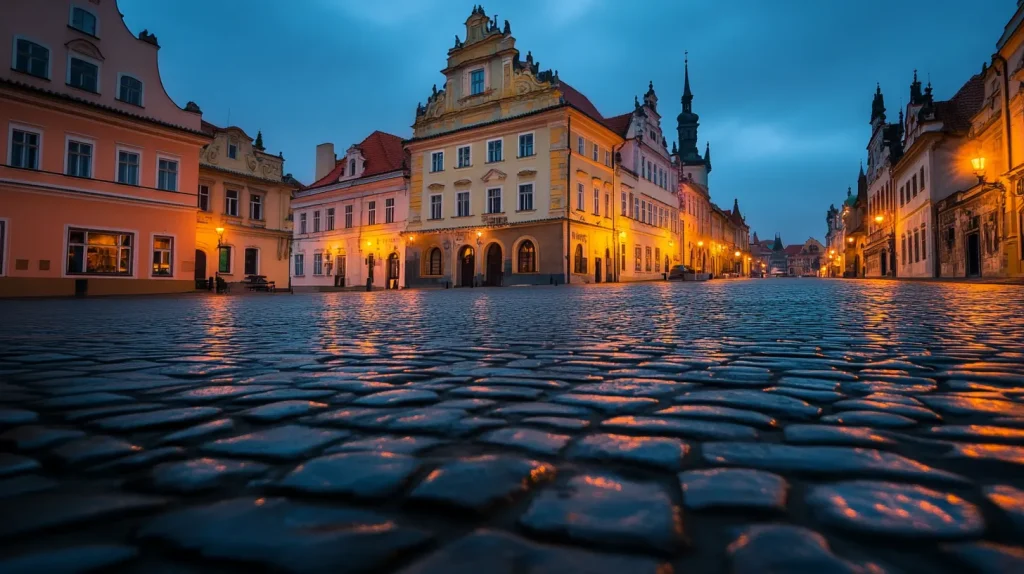
Zachariáš of Hradec Square
The square is named after the 16th-century nobleman who rebuilt Telč after a fire in a Renaissance style inspired by his travels in Italy. Every house along the square was built or rebuilt between 1553 and 1589, which is why the architectural coherence is so striking — this isn’t the usual accumulation of centuries of different styles but a planned Renaissance urban project executed within a single generation. Each house is slightly different in its facade treatment (some have sgraffito painted decorations, others have plain plaster in their distinctive colors), but the overall rhythm is unified.
Walk the square from the fountain end toward the château. Stop at House No. 61 — a Gothic-Renaissance mansion with Old Testament scenes painted in sgraffito across its upper facade and a Venetian-inspired step gable. It’s considered by many historians to be the finest Renaissance bourgeois house in the Czech Republic. The ornate decoration was built to demonstrate wealth and social standing — the gable is literally taller than the actual roof behind it, a piece of architectural theater that was apparently unironic in the 16th century.
The covered arcades running along both sides of the square are still in use as the town’s commercial ground floor — small shops, a pharmacy, a café, a bakery. Walk them slowly. The carved pillar heads are worth looking up at.
Telč Château
The château at the western end of the square is a Renaissance palace that Zachariáš built alongside the town renovation, heavily influenced by Venetian and Florentine Renaissance style. Tours run in English (check the current schedule at the ticket office — English tours are less frequent than Czech) and cost about CZK 200–300 ($8.70–13 USD) depending on the route. There are two tour options: Tour A covers the Renaissance and Baroque state rooms; Tour B covers a different section with portrait galleries and period furnishings. If you do one, do Tour A for the frescoed halls.
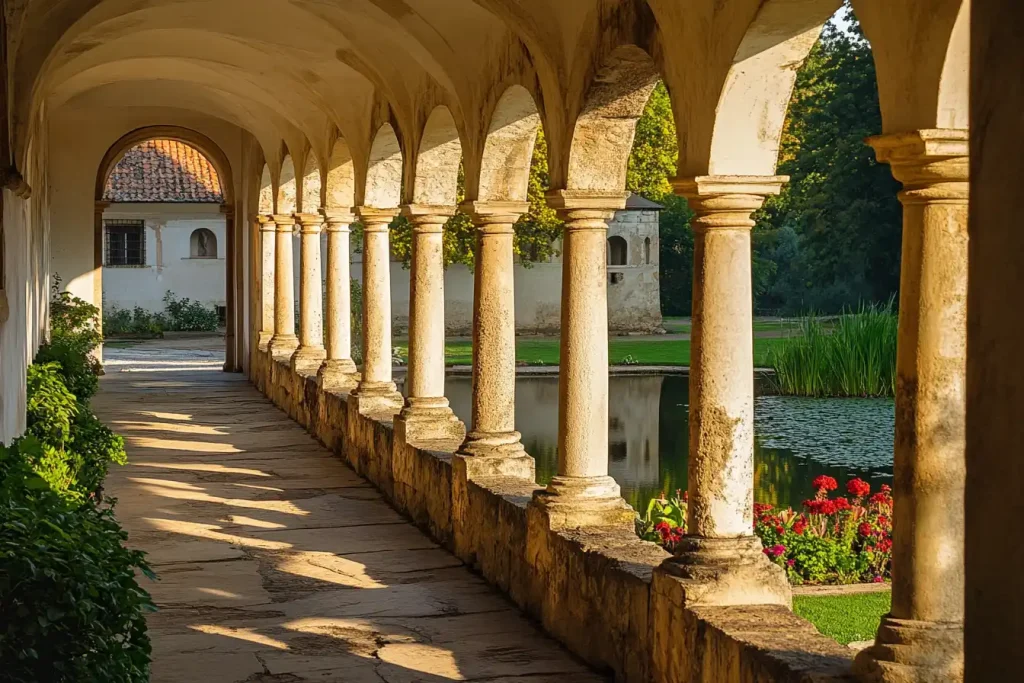
The château garden is free to enter and worth 20 minutes — manicured Renaissance-style with a small fish pond and views of the outer fortifications. Telč was originally built on an artificial island formed by damming local streams, and the surrounding ponds (three of them) are still visible from the garden walls.
The Underground Passages
Below the main square runs a network of medieval passages and cellars that were used for storage, escape routes, and fire protection. The Telč Underground (Podzemí Telče) opens from the square and offers a guided tour with a flashlight through tunnels that require serious crouching in sections. The entrance includes a modern interactive exhibit about the town’s history (Czech language only, but the visuals are clear enough). Entry costs about CZK 100 ($4.35 USD). Not for the genuinely claustrophobic — some passages are less than a meter high.
Walking to the Mother of God Church
A 20-minute walk from the square along the old Staré Město pond leads to the Church of the Mother of God, reached via a path lined with baroque statues of saints. The walk is quieter than the center and gives you views over the water to the castle and town. The church itself is small, the statues are weathered but still present, and the pond reflection on a still morning gives the best wide shot of Telč’s skyline — a composition not visible from the square itself.
Getting to Telč from the US
Fly to Prague (PRG) or Vienna (VIE) — both have good direct US connections. From Prague, a rental car takes about 2 hours via highway and regional roads. From Vienna, it’s about 2.5 hours. Bus connections from Brno work if you’re already in the Moravian capital — roughly 2 hours, about CZK 150 ($6.50 USD). Trains are slower and require a change. A rental car from Prague or Brno is the practical choice and opens up the surrounding Moravian region for exploration.
Where to Stay
Telč is small enough (6,000 residents) that there are limited accommodation options, but staying overnight here is strongly recommended — the square at night after day visitors leave, lit by the old streetlamps, is a completely different and much more atmospheric experience.
Budget ($30–50/night): Small pensions around the square and just outside the historic center. Penzion Na Nádvoří and similar local guesthouses have rooms from CZK 700–1,200 ($30–52 USD).
Mid-range ($60–100/night): Hotel Černý Orel on the main square — directly on Zachariáš Square, historic building, breakfast included, best location in town.
Splurge ($110+/night): The Zámecký Hotel in the château complex itself — genuinely sleeping inside a Renaissance palace, more about the location than the room amenities.
Best Time to Visit
May–September for the best weather and all facilities open. July–August is peak Czech tourist season — Telč gets more crowded, especially on weekends. June and September are ideal: warm enough to sit in the square, uncrowded enough to photograph without groups in the frame. The Christmas market in December transforms the square into something genuinely magical — stalls in the arcades, lights reflecting off the colored facades, mulled wine. Worth timing a Czech Christmas market trip specifically here rather than Prague.
Practical Tips
Telč is a day trip destination for most visitors — arrive early (before 10am) when the square is empty and the light is perfect. If you stay overnight, have dinner at Taberna Norler at the end of the square (Czech cuisine, CZK 200–400 per main / $8–17 USD, local wine list). The bread soup in a bread bowl is a reliable and filling order.
Nearby worth adding to your itinerary: Slavonice (40km south) — a smaller Renaissance town with a similarly preserved square and the best-kept secret in Czech architecture. Třebíč (70km north) — a UNESCO site with a remarkable preserved Jewish quarter. Either makes a good addition to a Telč car trip from Prague or Brno.
The thing most tourists get wrong: visiting Telč purely as a day trip from Prague and not staying overnight. The square in the golden hour before dinner, when the coaches have gone and the resident pigeons outnumber the visitors, is when this place actually reveals itself.
Frequently Asked Questions
How do I get from Prague to Telč?
Rent a car — the most practical option. About 2 hours on the D1 highway toward Brno, then regional roads south. Bus connections from Brno work if you’re already there (2 hours, about $7 USD). Direct trains from Prague are slow and require changes — not recommended. A day tour from Prague combining Telč and Třebíč (two UNESCO sites) is available and handles the transport problem.
Is Telč worth visiting over Ceský Krumlov?
Different experiences. Ceský Krumlov is more dramatic visually (castle on a river bend, hillside town), better connected by transport, and significantly more crowded. Telč has a quieter, more genuinely local atmosphere, is harder to reach, and the main square is arguably better Renaissance architecture. If you have to choose one, Ceský Krumlov is easier. If you can do both, Telč is the one most travelers haven’t seen.
How long do I need in Telč?
A half-day covers the main square, château exterior, and a café. A full day lets you do the château interior tour, the underground passages, and the walk to the Mother of God Church. Overnight is ideal for the evening square atmosphere and morning light photography. Two days is plenty.
What is the admission fee for Telč Château?
About CZK 200–300 ($8.70–13 USD) depending on which tour option. English-language tours run less frequently than Czech — check the schedule at the ticket office on arrival. The château garden is free to enter and worth including. Château open April–October; closed Mondays.
What is special about Telč’s architecture?
The entire main square — Zachariáš of Hradce Square — was rebuilt in a consistent Renaissance style by a single patron between 1553 and 1589, inspired by Italian Renaissance architecture he encountered on travels. Unlike most European squares that accumulated different styles over centuries, Telč’s square has architectural coherence from a single generation of construction. Each house has different gabled rooflines and facades competing in Renaissance style, creating a variety-within-unity effect. UNESCO designated it a World Heritage Site in 1992.