Bornholm is in the middle of the Baltic Sea — closer to Sweden, Poland, and Germany than to the rest of Denmark — and it produces more sunshine hours than almost anywhere else in the country. This geographic accident created a micro-Mediterranean feel on a Danish island: sandstone cliffs, white sandy beaches on the south, smokehouse herring everywhere, an arts colony that’s been here since the 19th century, and four medieval round churches that look like nowhere else in Scandinavia. Most of the travelers who go are German, Swedish, or Polish. Americans almost never show up. That’s a gap worth filling.
| Best time to visit | June–August (warmest; festivals); May/September quieter |
|---|---|
| Getting there | Ferry from Ystad, Sweden (80 min); or fly from Copenhagen (35 min) |
| Budget per day | $100–150 USD (cheaper than most of Denmark) |
| Visa for Americans | No visa required; Schengen 90-day rule applies |
| Language | Danish; English widely spoken |
| Currency | Danish Krone (DKK); cards everywhere |
Is Bornholm Worth the Trip?
For the right traveler — yes, genuinely. The island does something that most Scandinavian destinations don’t: it combines serious nature (rocky coastline, dark forests, dramatic light), serious food (the smokehouse culture is real, the local restaurant scene punches above its size), and genuine history without charging premium Scandinavian prices for everything. It’s also compact — 588 km² means you can cover it meaningfully by bike in two days. The honest caveat: Bornholm in winter is quiet to the point of being bleak, and outside summer a significant number of restaurants and attractions close. July is peak season; September is probably ideal.
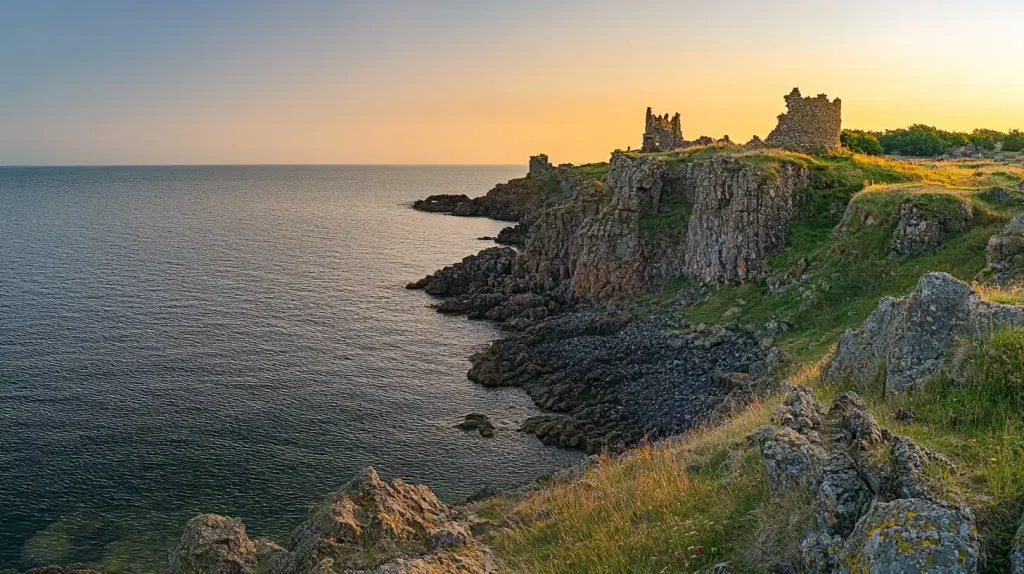
Hammershus Castle
At the northwestern tip of the island, on a basalt headland above the sea, Hammershus is the largest medieval castle ruin in Northern Europe. The castle dates to the 13th century and changed hands between Denmark and Sweden multiple times before being deliberately demolished for building material in the 1700s — a decision someone later regretted. What remains is extensive: towers, walls, the outline of the great hall, and commanding views over the Baltic that make clear why this site was worth fighting over for 400 years.
Entry is free. The ruins can be walked in 45–60 minutes. Come in the afternoon when the western light hits the sandstone directly. There’s a small café at the entrance, a bicycle path that runs the whole northern coast from Allinge to the castle, and if you continue past the ruins toward the sea, a path leads down to Hammers Knude — a series of extraordinary rock formations at the water’s edge that most visitors skip entirely.
The Round Churches
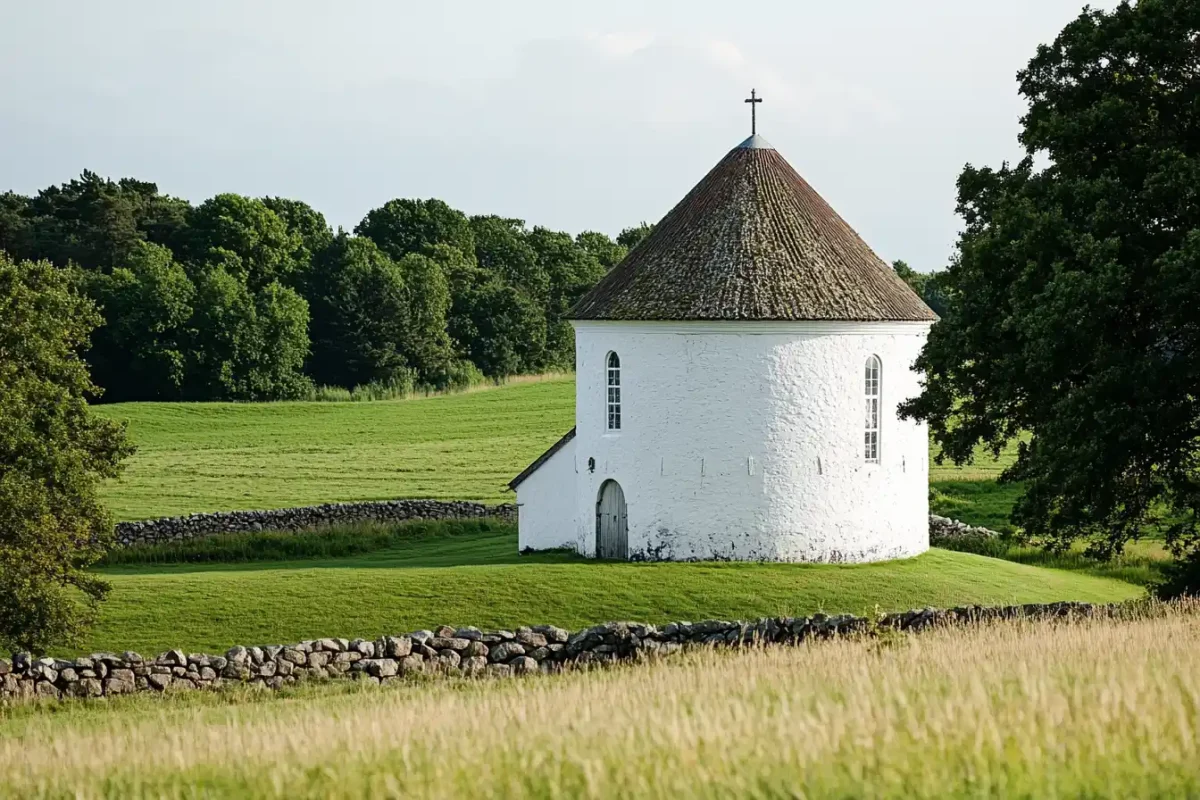
Bornholm has four of them: Ols, Nylars, Nyker, and Østerlars. They’re from the 12th and 13th centuries, built in a thick round-tower style found nowhere else in Scandinavia. The most photogenic is Østerlars Kirke, in the middle of the island’s farmland — white-plastered walls, a conical roof, and a peculiar pillar inside the round nave that carries the upper floor. The interior frescoes are original medieval paintings. All four churches are still active Lutheran parishes. Entry is by donation — a few coins in the box.
The Smokehouses and Food Scene
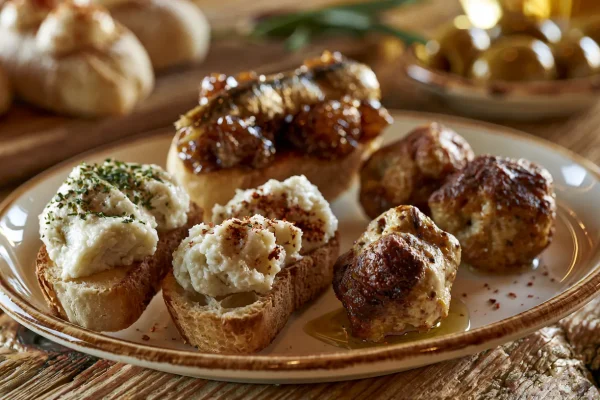
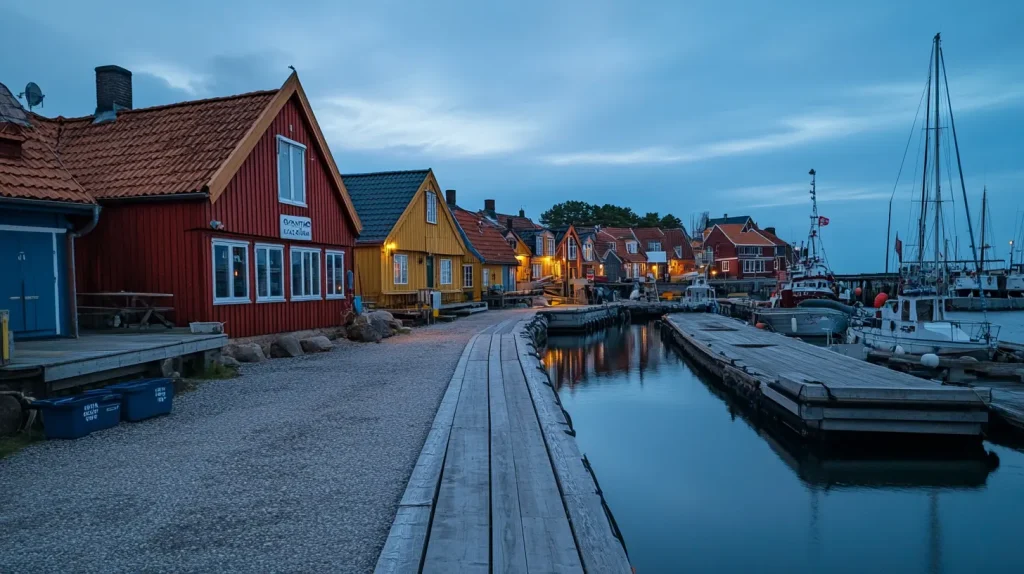
Bornholm’s smoked herring (røget sild) is a genuine regional institution. The traditional smokehouse — a rögeri — burns alder wood and processes fresh herring in batches, sold directly from the window wrapped in newspaper. In Gudhjem, on the northeast coast, several historic smokehouses are still operating. The island’s most famous dish is Sol over Gudhjem (“sun over Gudhjem”): a piece of smoked herring, a raw egg yolk, chopped red onion, and chives on rye bread. It costs about 60–80 DKK ($8–11 USD) at any harbor café and is one of those regional foods that genuinely tastes of its place.
Beyond the smokehouses, Bornholm has an unusually strong local food scene for an island of 40,000 people. The Michelin restaurant Kadeau (which earned two stars at its Copenhagen branch) started here, and the ethos of hyper-local cooking has spread. Reservations at the better places fill weeks ahead in July and August.
Beaches and Cycling
The south coast of Bornholm has a series of sandy beaches — Dueodde is the longest and most famous, with white sand and a lighthouse — that look genuinely Mediterranean in good light. The northeast coast is rockier and more dramatic. A dedicated cycling path (Rundtur) circles the entire island over roughly 100km; most cyclists do sections rather than the full loop. Rental bikes are available in Rønne (the main town) and most villages. A one-day bike rental costs about 100–150 DKK ($14–20 USD).
Getting to Bornholm from the US
Fly to Copenhagen (CPH) — good direct connections from New York, Chicago, and other US hubs, typically $650–950 round trip. From Copenhagen, the fastest route to Bornholm is a domestic flight from Copenhagen Airport directly to Rønne Airport (BNN) — 35 minutes on Danish Air Transport. Alternatively, take a train to Ystad in southern Sweden (about 1.5 hours from Copenhagen with the bridge crossing) and the high-speed ferry from Ystad to Rønne, which takes 80 minutes and costs about 160–250 DKK ($22–34 USD) for foot passengers.
Where to Stay
Budget ($70–110/night): Simple guesthouses and apartments throughout the island; Rønne has the most options. Danhostel Bornholm in Rønne is a reliable budget base.
Mid-range ($130–200/night): Staying in one of the island’s smaller harbor towns — Gudhjem, Svaneke, or Allinge — gives much more atmosphere than Rønne. Small boutique hotels and converted farmhouses throughout.
Splurge ($200+/night): Stammershalle Badehotel near Gudhjem — a restored Victorian seaside hotel with sea views and an excellent restaurant using island produce.
Best Time to Visit
June–August is the main season, with the warmest temperatures (20–25°C), all attractions open, and the summer solstice light that Bornholm is famous for — the island sits far east in Denmark’s time zone, so the sun rises very early and sets very late. July and early August are peak; book accommodation months ahead. September is excellent: warm enough to swim, far fewer tourists, and the harvest season means local produce is at its best. May is pleasant but some facilities are still opening for the season. December–February is quiet to the point of closing, with limited ferry services.
Practical Tips
Renting a car or cycling are the practical ways to explore. Public buses exist but are slow and don’t reach the round churches or most beaches conveniently. A car gives you maximum flexibility; a bicycle gives you the most satisfying experience if you have two or more days and decent weather. The island is flat enough that cycling is genuinely manageable.
The island’s arts town of Svaneke is worth an afternoon — it’s been a center for glass-blowing, ceramics, and crafts since the 1960s and several studios are open to visitors. Not a shopping detour; more of a living workshop experience.
Frequently Asked Questions
How do I get from Copenhagen to Bornholm?
Two main options: fly (35 minutes from Copenhagen Airport on Danish Air Transport) or train to Ystad, Sweden plus the high-speed Bornholmslinjen ferry (80 minutes). The ferry from Ystad is the more popular and scenic choice and allows you to bring a bike. Total journey time door-to-door is about 2.5–3 hours from central Copenhagen either way.
What is Bornholm famous for?
Smoked herring and the unique Sol over Gudhjem dish, the four medieval round churches (particularly Østerlars Kirke), the Hammershus castle ruin (largest in Northern Europe), the island’s exceptional Baltic light that attracted a 19th-century artists’ colony, and its fine-sand beaches on the south coast at Dueodde.
How many days do I need on Bornholm?
Three to four days is ideal — enough to cycle a good portion of the coast, visit the round churches, explore Hammershus, eat in the harbor towns, and spend time on the beach without rushing. Two days is possible with a car. One day as a day trip from Copenhagen is logistically too tight.
Is Bornholm expensive?
Less expensive than most of Denmark. Expect $100–150 USD per day including accommodation, meals, and bike rental. Smoked herring at a smokehouse window is under $15; a sit-down restaurant dinner runs $35–55 per person. Much more affordable than Copenhagen.
What is Sol over Gudhjem?
Sol over Gudhjem (“sun over Gudhjem”) is Bornholm’s signature dish: smoked herring on rye bread, topped with a raw egg yolk, chopped red onion, radishes, and chives. The egg yolk is the “sun.” It’s served at virtually every café in the harbor towns and costs about $8–11 USD. Order it at one of the working smokehouses in Gudhjem for the most authentic version.