Ticino is the Swiss canton south of the Alps — the palm trees and Italian-speaking part of Switzerland that most people don’t realize exists. Lake Lugano, Lake Maggiore, the Verzasca valley with its aquamarine river, Bellinzona’s three UNESCO castles, the Centovalli railway — all of it is legally Switzerland but feels entirely Italian. It has Swiss infrastructure (trains run on time, trails are maintained, tap water is impeccable) combined with Italian weather, architecture, food, and pace. That combination is rare and genuinely enjoyable. If you’ve ever wanted to be in Italy but in a version where things actually work as advertised, Ticino is your answer.
| Best time to visit | April–June and September–October; July–August is hot and crowded |
|---|---|
| Getting there | Train from Zurich to Bellinzona or Lugano via Gotthard (2.5–3 hrs) |
| Budget per day | $130–200 USD (Switzerland prices; cheaper than Geneva/Zurich) |
| Visa for Americans | No visa required; Schengen 90-day rule |
| Language | Italian (official); English widely spoken in tourism sector |
| Currency | Swiss Franc (CHF); strong — roughly parity with USD |
Is Ticino Worth the Detour from Zurich?
Without question. The main objection is cost — Switzerland is expensive, and Ticino is Switzerland — but within that constraint, Ticino delivers genuinely more interest per franc than Zurich or Geneva. Two days in Bellinzona and the Verzasca valley, plus a half-day in Lugano, covers the highlights. You could extend to five days and not run out of material. The train through the Gotthard Base Tunnel or the older Gotthard route (the scenic switchback version — take this one) is itself remarkable.
Bellinzona: Three UNESCO Castles
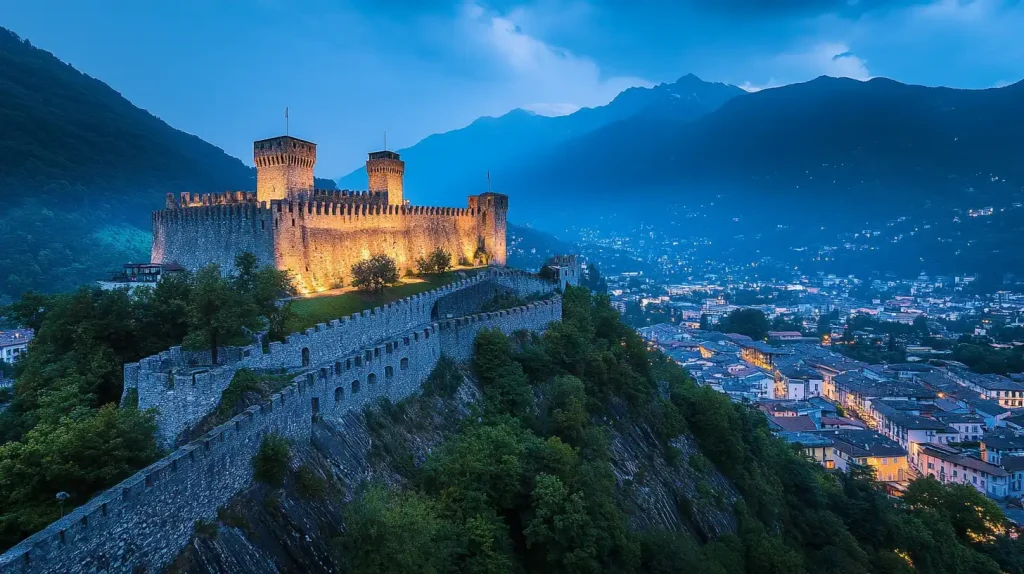
The capital of Ticino has a population of 45,000 and three medieval castles on the list of UNESCO World Heritage Sites — an unusual density even by Swiss standards. Castelgrande, Montebello, and Sasso Corbaro were built by the Visconti family in the 14th and 15th centuries to control the pass through the Alps. They’re connected by a medieval wall and cover the hillside above the old town.
Castelgrande is the largest and the easiest to reach by lift from the town center; its courtyard has a restaurant and views over the rooftops. Montebello and Sasso Corbaro require walking uphill (30–45 minutes combined) but the ramparts trail between them is excellent. Entry to all three is CHF 12 ($13 USD); combined ticket available. Allow half a day for the full circuit. Bellinzona’s old town below — colonnaded streets, a Saturday market, no tourist shops — is better than most Italian cities I can name.
Verzasca Valley
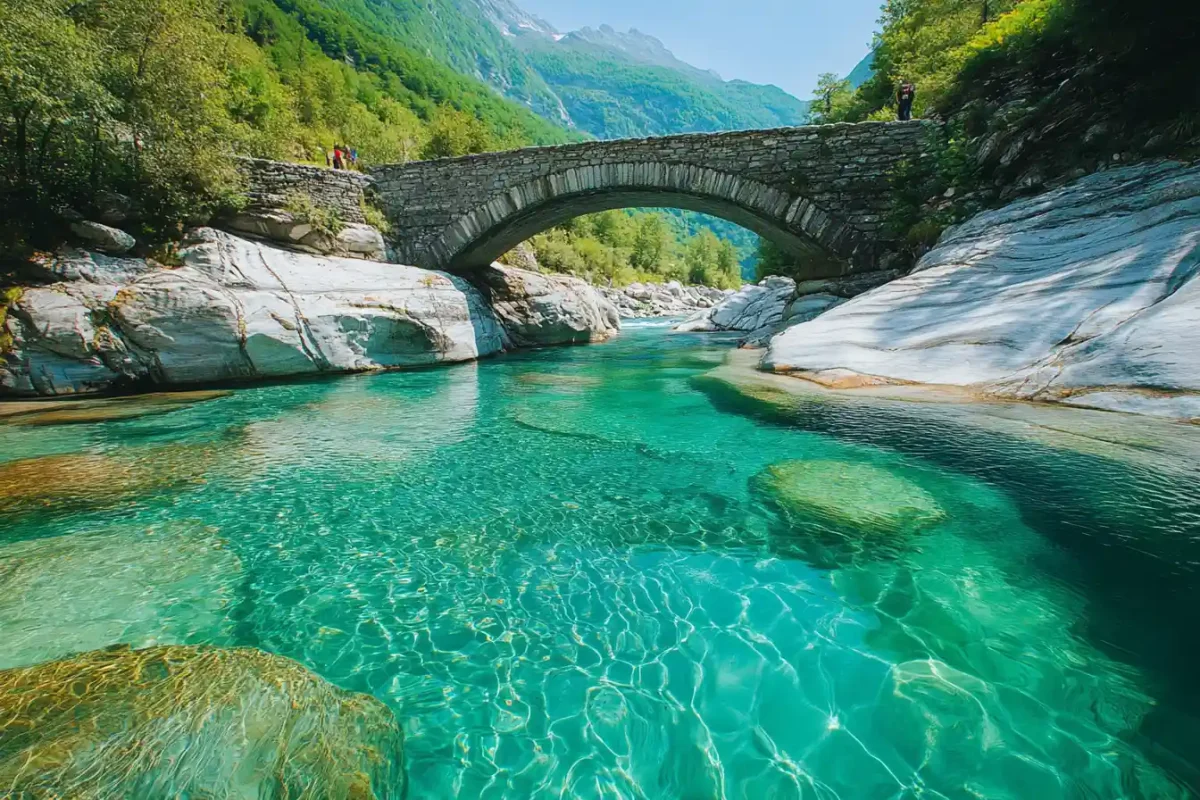
This is the best valley in Switzerland that nobody outside Switzerland knows about. Drive or take a PostBus 30km north from Locarno and you arrive in a world of improbably clear turquoise-green water flowing over white marble riverbed, medieval stone bridges, and abandoned villages clinging to granite slopes. The river shifts from green to blue to white depending on depth and angle. On a hot July day, local children jump from the Roman bridge at Lavertezzo into water that’s cold enough to briefly stop your breath. It’s one of the more spectacular free swimming spots in the Alps.
The Verzasca Dam, at the valley entrance, is where James Bond jumped in the opening of GoldenEye. Bungee jumping here is still offered, costs around CHF 180–220 ($195–240 USD), and is either a reason to visit or an excellent reason not to. The dam is impressive regardless.
Lugano and the Lakes
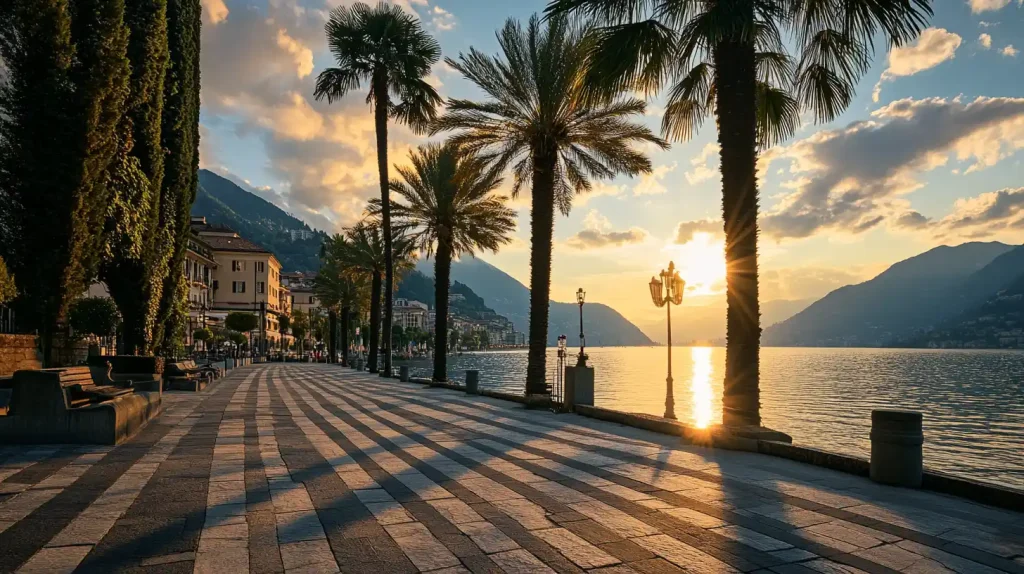
Lugano sits on a sheltered bay of Lake Lugano, surrounded by Monte San Salvatore and Monte Brè — both accessible by funicular. The lakefront is Italian in style: palm trees, gelaterias, aperitivo bars opening at 6pm, boat taxis crossing to Gandria (a stone fishing village on the Italian border, no cars, excellent lunch). The town center has good museums (the LAC contemporary arts center is excellent) and the quality of the food in the lakefront restaurants is noticeably higher than the surrounding towns for the prices.
From Lugano, a 45-minute boat trip across the lake reaches Campione d’Italia — an Italian enclave inside Switzerland, technically a piece of Italy surrounded entirely by Swiss territory. It has its own casino (the reason for its existence) and a peculiar identity: it uses the euro and Italian law but Swiss timezone and postal codes. The Municipio building by Mario Botta is worth seeing if you care about architecture.
The Centovalli Railway
Running between Locarno (Ticino) and Domodossola (Italy), the Centovalli (“Hundred Valleys”) railway takes 1 hour 45 minutes across some of the most dramatic mountain terrain in the Alps — viaducts over deep gorges, tunnels through granite walls, views down into valleys that look vertical from the train window. A through ticket from Locarno to Domodossola costs CHF 20–30 ($22–33 USD). It’s covered by Eurail/Swiss Pass. Take it one way and return by a different route. The experience is extraordinary for something most tourists entirely skip.
Getting to Ticino from the US
Fly to Zurich (ZRH) — direct from New York, Chicago, San Francisco, and other major US cities, typically $700–1,000 round trip. From Zurich Hauptbahnhof, Swiss Federal Railways runs fast trains to Bellinzona (2.5 hours, CHF 47) and Lugano (3 hours, CHF 52). The scenic Gotthard route through the old mountain pass (rather than the base tunnel) takes about 30 minutes longer but is one of the great Swiss rail journeys — book the panorama car if available.
Where to Stay
Budget ($100–140/night): Simple hotels in Bellinzona and Locarno — both are smaller and cheaper than Lugano. Hotel Internazionale in Bellinzona is well-located and honest value.
Mid-range ($160–240/night): Lugano’s mid-range hotels along the lake have excellent locations. Hotel International au Lac is reliable, central, with lake views.
Splurge ($300+/night): Hotel Villa Principe Leopoldo, Lugano — a converted 19th-century villa on a hill with panoramic lake views and an excellent restaurant. This is the splurge that delivers on its price.
Practical Tips
Switzerland is expensive — accept this upfront. A lunch at a standard restaurant runs CHF 25–40 ($27–43 USD). Groceries from the Co-op or Migros supermarkets are excellent quality and reasonable by Swiss standards. A picnic lunch assembled from a supermarket + fresh bread from a bakery is both the local practice and significantly cheaper than restaurant eating every meal.
The Swiss Travel Pass gives unlimited train/bus/boat travel within Switzerland and may be worth it for a multi-day Ticino visit. Day passes and point-to-point tickets also work; compare costs before buying.
Frequently Asked Questions
What language do they speak in Ticino Switzerland?
Italian. Ticino is the Italian-speaking canton of Switzerland — the only one. Official language is Italian; most people in the tourism sector also speak English, and German is widely understood given Switzerland’s linguistic diversity. If you speak even basic Italian, it helps. French will not.
Is Ticino more like Italy or Switzerland?
Culturally and architecturally Italian; administratively and infrastructurally Swiss. The trains run exactly on time, the trails are impeccably maintained, and the tap water is safe everywhere — that’s the Swiss part. The food, pace, language, architecture, weather, and attitude are entirely Italian. This combination is what makes Ticino distinctive.
What is the Verzasca Valley known for?
The Verzasca Valley (Valle Verzasca) is known for its extraordinarily clear turquoise-green river, white marble riverbeds, the medieval stone bridge at Lavertezzo where locals swim, and the Verzasca Dam where the James Bond GoldenEye opening scene was filmed (and where bungee jumping is still available). It’s accessible from Locarno by PostBus or car in about 30 minutes.
How do I travel from Zurich to Ticino?
Swiss Federal Railways (SBB) runs regular trains from Zurich to Bellinzona (2.5 hours, ~$50 USD) and Lugano (3 hours, ~$55 USD). The scenic old Gotthard route with its spiral tunnels and viaducts takes slightly longer but is architecturally extraordinary — worth requesting specifically. Trains are hourly throughout the day.
Can I cross into Italy from Ticino easily?
Yes. The Italian border is immediately adjacent to several Ticino towns — Lugano is minutes from Italy, and Locarno is practically on the border. Day trips to Como, the Lago Maggiore Italian side, and Verbania are easy. Passport required (Switzerland is not EU/Schengen despite sharing the border), but the crossing is fast.