Liechtenstein has 38,000 people, no airport, and covers an area roughly the size of Washington D.C. It is — in the conventional travel sense — not a destination. Yet it draws visitors from around the world for reasons that are almost entirely passport-stamp related, and that’s fine, but there’s more here than a border crossing: a well-preserved medieval castle above a neat capital, wine produced in quantities so small the bottles almost never leave the country, a serious fine arts museum, hiking in the Rhine valley, and the strange appeal of a place that runs on its own internal logic with quiet confidence. Vaduz, the capital, can be done in half a day. The country can be done in one very good day. The question is whether the effort is worth it from wherever you’re coming from.
| Size | 160 km² — about the size of Washington D.C. |
|---|---|
| Population | ~38,000 |
| Getting there | Train to Sargans (Switzerland), then bus 11 to Vaduz (~25 min); or bus from Zurich 2 hrs |
| Budget per day | $120–180 USD (Swiss pricing applies) |
| Visa for Americans | No visa; same as Switzerland (Schengen) |
| Language | German; English widely understood |
| Currency | Swiss Franc (CHF) |
Is Liechtenstein Worth Visiting?
Honestly — as a standalone destination, no. As a half-day addition to a broader Switzerland or Austria itinerary, yes. The country is genuinely pleasant: Vaduz is clean and well-organized, the castle looming above the Rhine valley is a good castle, the Kunstmuseum Liechtenstein (fine arts museum) is a serious institution that belongs in a much larger city, and the hiking trails above the valley floor are excellent. But it’s small. You’ll be done with Vaduz in three hours. The main reason to come is the combination of novelty (one of the smallest countries in the world, run by a reigning prince, one of only two doubly-landlocked nations), passport-stamping, and the satisfaction of checking something unusual off your European itinerary without suffering for it.
Vaduz: What’s Actually There
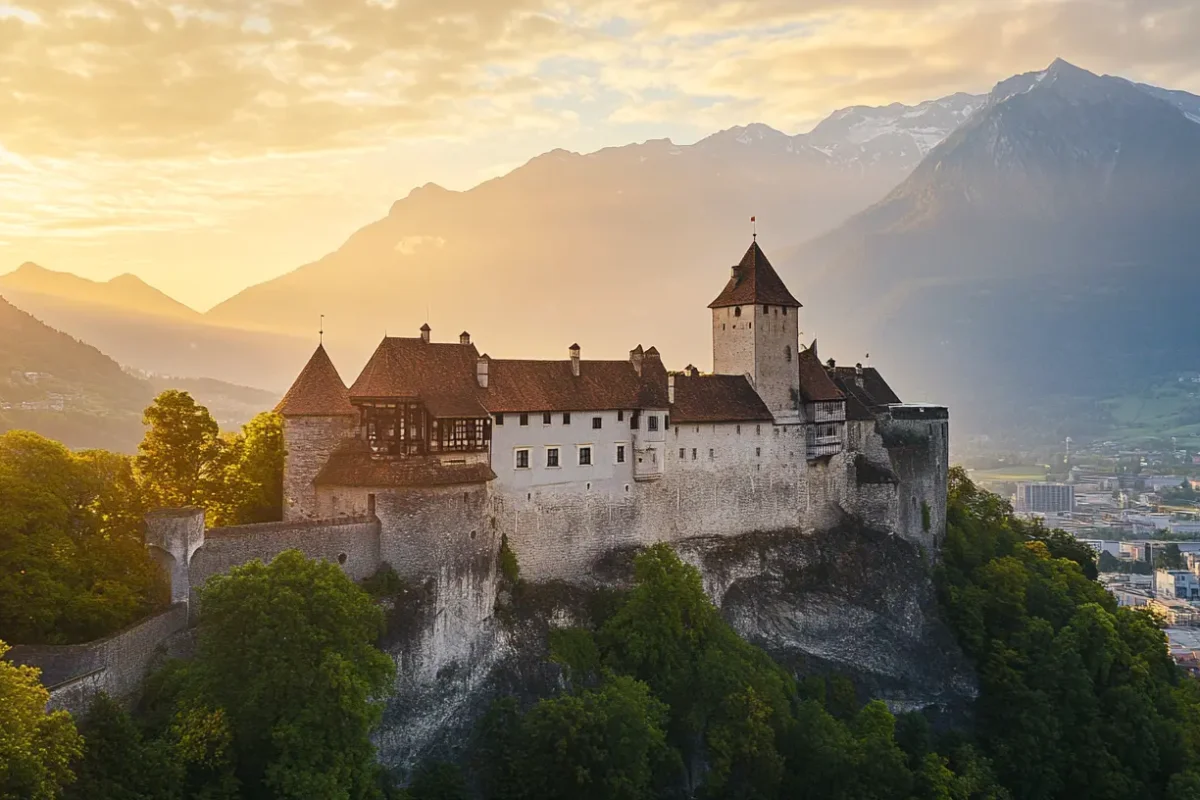
Vaduz Castle (Schloss Vaduz) is the residence of the reigning Fürst (Prince) of Liechtenstein and not open to the public — but you can walk to the gate and view it from outside, and the path up from the main street is a proper hill walk with expanding Rhine valley views. It takes 20 minutes to climb from the city center and 20 minutes back; the views from the castle ridge justify the effort entirely.
The Kunstmuseum Liechtenstein on the main street holds a collection that includes works by Rubens, Rembrandt, and Van Dyck (the royal family assembled one of Europe’s finest private collections over centuries), plus a serious program of contemporary exhibitions. Entry CHF 15 ($16 USD). Closed Mondays. For a country of 38,000 people, this is a remarkable institution — better than the national museums of several European countries I can name.
The Liechtenstein National Museum in the old city hall building covers the country’s surprising history: from a backwater purchased by the wealthy Liechtenstein family in 1719 for the prestige of an imperial seat to its current status as a wealthy tax haven with the highest per-capita income in the world. The story is weirder than you’d expect. Entry CHF 10 ($11 USD).
Get a passport stamp at the Vaduz Tourist Information center — it costs CHF 3 and is the souvenir most visitors take home. Not officially in your passport (Liechtenstein is Schengen zone, no border control), but the tourist office happily stamps a page for the asking.
Wine
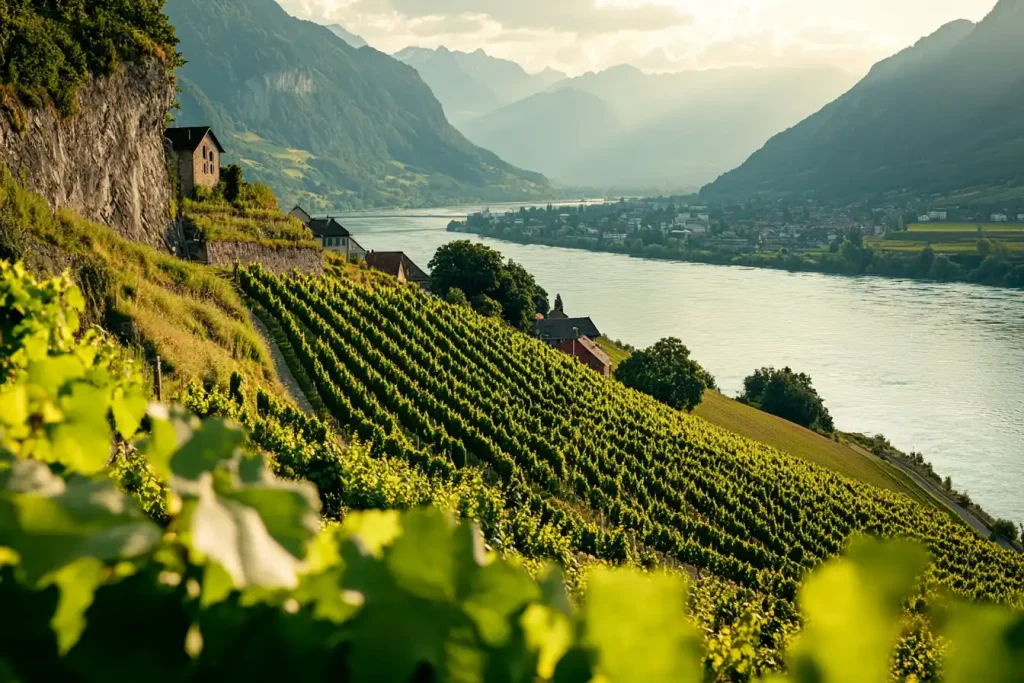
Liechtenstein produces around 25,000 liters of wine per year from vineyards on the Rhine valley slopes. The dominant variety is Pinot Noir (Blauburgunder), and it’s taken seriously by local standards — a bottle costs CHF 18–28 ($19–30 USD) and is almost impossible to buy outside the country. The Hofkellerei des Fürsten (the princely winery, directly owned by the royal family) offers tastings in summer. The wine is genuinely good rather than novelty-good. Buy a bottle at the winery shop or the tourist office wine store; it won’t be available when you get home.
Hiking Above the Rhine
The best version of Liechtenstein that most visitors skip: the hiking trails above Vaduz on the mountain slopes, passing through the villages of Triesenberg and Malbun. Malbun is a small ski resort in winter and a hiking base in summer, reached by a PostBus from Vaduz in about 20 minutes. From Malbun, a network of marked trails covers the upper valley walls with Rhine plain views that extend into Germany, Switzerland, and Austria — on clear days, four countries from one viewpoint. The Drei Schwestern (Three Sisters) ridge trail is the classic route: 4 hours, moderate difficulty, marked throughout.
Getting to Liechtenstein from the US
Fly to Zurich (ZRH) — direct from multiple US hubs, typically $700–1,000 round trip. From Zurich, take an S-Bahn regional train to Sargans (about 70 minutes, CHF 20), then the postbus 11 from Sargans to Vaduz (30 minutes, CHF 4). Total journey from Zurich airport: about 2 hours. Alternatively, take the direct PostAuto bus from Zurich Hauptbahnhof to Vaduz — about 1.5 hours, CHF 15. No border crossing formalities.
Where to Stay
Most visitors do Liechtenstein as a day trip from Zurich, Innsbruck, or St. Moritz — there’s no real logistical reason to stay unless you specifically want to say you did. If you do:
Budget ($100–130/night): Hotel Landgasthof Au in Vaduz — a traditional inn with honest rooms, good breakfast, and a restaurant serving Liechtensteiner cuisine.
Mid-range ($160–220/night): Hotel Real in the center of Vaduz — modern, clean, well-regarded restaurant, best location in the capital.
Splurge ($300+/night): Park Hotel Sonnenhof — a hilltop hotel above Vaduz with Rhine valley views, spa, and probably the finest restaurant in the country. The view at breakfast warrants the price alone.
Best Time to Visit
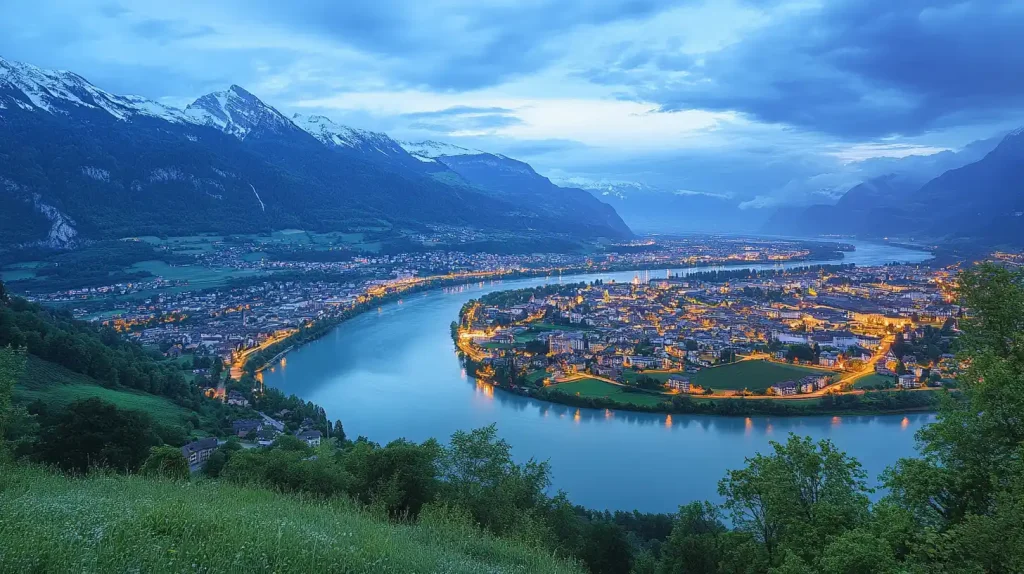
May–September for hiking and the full range of outdoor activities. The Staatsfeiertag (National Day) on August 15 is a genuine local celebration — the reigning prince traditionally opens his castle grounds for a public garden party with fireworks over the Rhine. It draws thousands of people for what is essentially a royal barbecue. Genuinely unusual experience. Winter is quiet (Malbun for skiing) but Vaduz itself is dull.
Practical Tips
Swiss francs work everywhere; credit cards accepted. The country is extremely safe — crime statistics are essentially zero. The language is a distinct Alemannic German dialect; standard German and English both work fine. There’s almost nothing that can go wrong in Liechtenstein, which is either reassuring or slightly anticlimactic depending on your travel style.
Frequently Asked Questions
Is Liechtenstein worth visiting?
As a half-day detour from Switzerland or Austria — yes, for the novelty and the Kunstmuseum. As a standalone destination requiring a special trip — no. The country covers 160 km² and can be seen in a day. The combination of novelty (one of the world’s smallest nations, a reigning prince, no army since 1868), a genuine fine arts museum, good wine, and excellent hiking makes it worth the two-hour trip from Zurich.
How do I get a passport stamp in Liechtenstein?
Go to the Vaduz Tourist Information center and ask — they’ll stamp a page of your passport for CHF 3. This is not an official government border stamp (Liechtenstein is Schengen, so there’s no passport control) but it’s the closest thing available and universally recognized among travelers as the official Liechtenstein souvenir. The office is on the main street, Städtle, in Vaduz.
What is Liechtenstein known for?
Being one of the world’s smallest countries (6th smallest by area), being doubly-landlocked (surrounded entirely by Switzerland and Austria, which are themselves landlocked), having one of the highest per-capita GDPs in the world, making unusually good Pinot Noir wine in tiny quantities, having a reigning monarch (Fürst Hans-Adam II) who still lives in the hilltop castle, and maintaining no military since 1868.
How do I get from Zurich to Liechtenstein?
Train from Zurich Hauptbahnhof to Sargans (~70 min), then PostBus 11 to Vaduz (~30 min). Total about 2 hours, total cost about CHF 24 ($26 USD) round trip. Alternatively, direct PostAuto bus from Zurich Hauptbahnhof to Vaduz takes about 1.5 hours.
Do you need a visa to visit Liechtenstein?
No. Liechtenstein is part of the Schengen Area, so the same visa rules as Switzerland apply. Americans can visit for up to 90 days within any 180-day period with no visa. There is no border control between Switzerland and Liechtenstein.