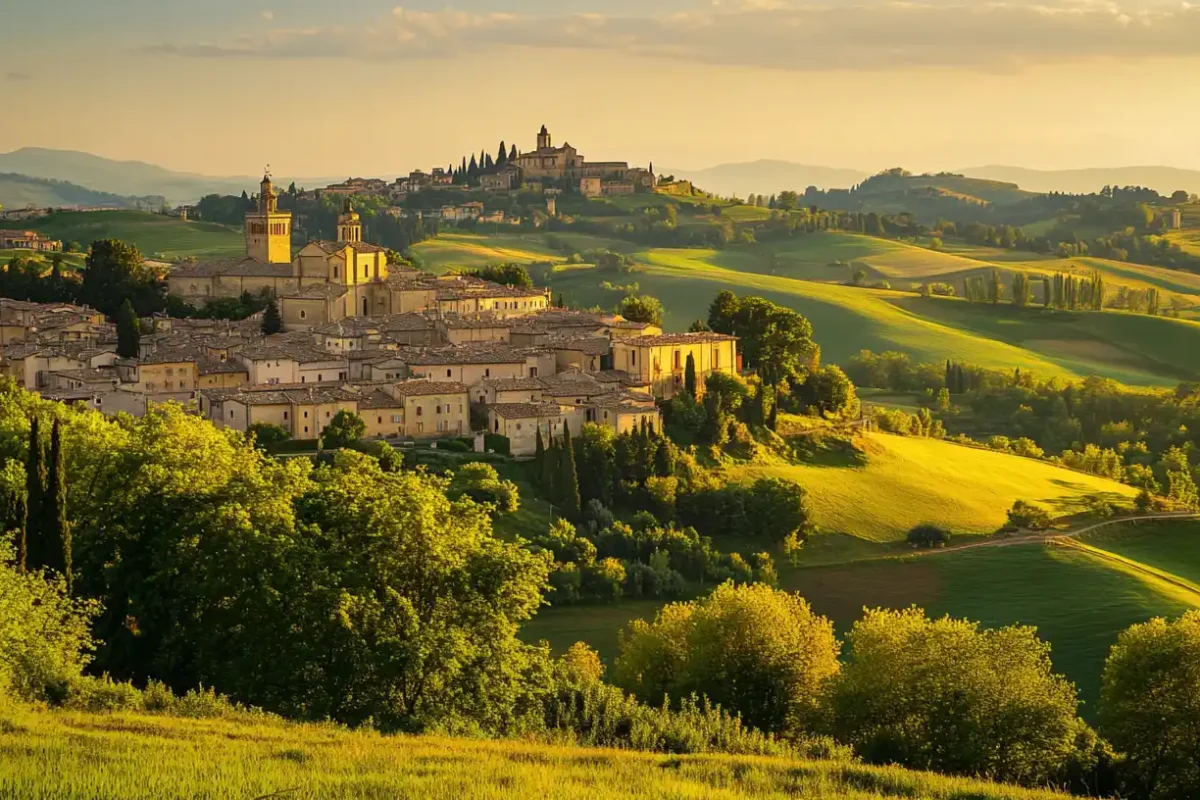
Le Marche (pronounced “leh mar-keh”) is the Italian region most Italians tell you to visit when you ask where real Italy has survived: between the Apennine mountains and the Adriatic, largely inaccessible by major railway, missed by the tourist routes that run from Rome north through Tuscany to Venice. It has the rolling hill towns of Tuscany, the Adriatic coastline, the Monti Sibillini national park, the birthplace of Raphael, the best-preserved Renaissance city center in Italy (Urbino), and one of the rarest wines in the world — Lacrima di Morro d’Alba, grown from a grape variety found almost nowhere else on earth. The typical American who visits Le Marche either owns a property there or discovered it by accident. Both are correct.
| Best time to visit | May–June and September–October; July–August crowded on coast |
|---|---|
| Getting there | Fly Ancona (AOI) or Rome (FCO) then drive north; or Bologna then drive south (2.5 hrs) |
| Budget per day | $90–140 USD; cheaper than Tuscany for comparable quality |
| Visa for Americans | No visa; Schengen 90-day rule applies |
| Language | Italian; English limited outside major hotels — a bit of Italian goes far |
| Currency | Euro; cards accepted; carry cash for markets and smaller towns |
Why Le Marche Over Tuscany?
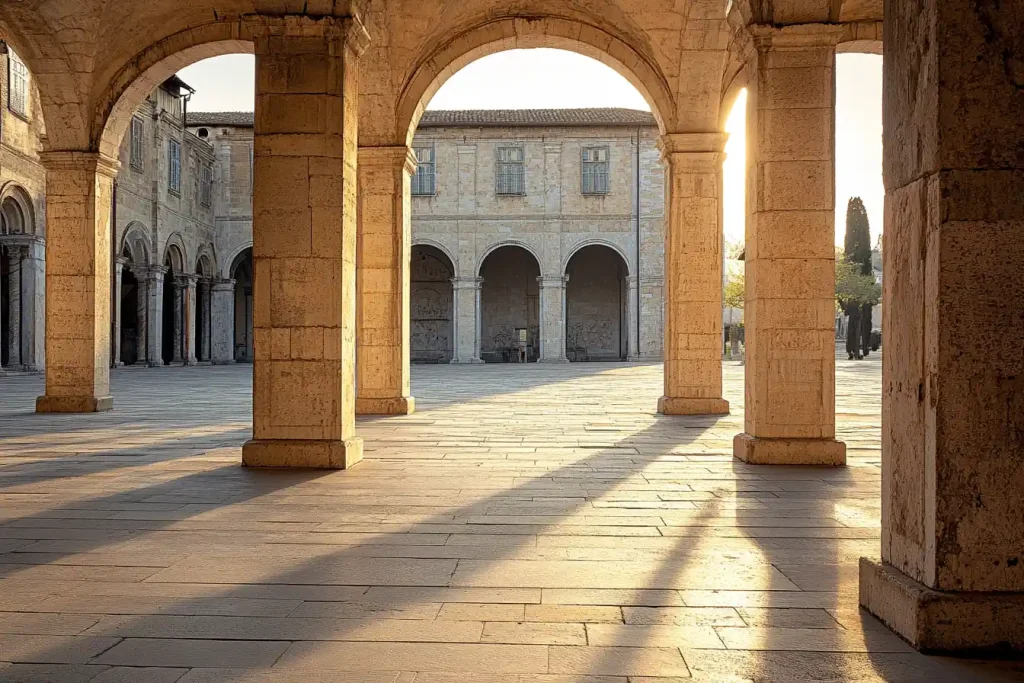
The honest comparison: Le Marche delivers the same fundamental ingredients as Tuscany — Renaissance hill towns, excellent local food, world-class art in unexpected places, rural landscape of sustained beauty — with two significant differences. First, prices are 30–40% lower for accommodation, food, and wine. Second, you won’t spend your trip competing with other tourists for the same narrow streets and restaurant tables. Tuscany in July is magnificent and deeply crowded. Le Marche in July is magnificent with breathing room. The trade-off: Le Marche requires a rental car (trains reach the coast but not the interior towns) and more planning, since the tourist infrastructure is less developed. That friction selects for visitors who genuinely want to be there rather than visitors following a trail of recommendations.
Urbino
Urbino is the jewel of the region — a Renaissance city built on a hilltop by Federico da Montefeltro, Duke of Urbino, in the 15th century, who assembled one of the most remarkable courts in Italian history: painters (Piero della Francesca spent years here), architects (Bramante trained here), mathematicians, humanists. Raphael was born here in 1483. The Palazzo Ducale (Ducal Palace) contains the Galleria Nazionale delle Marche — one of the finest regional art collections in Italy, with works by Raphael, Titian, Piero della Francesca, and Giovanni Bellini. Entry €8 ($8.70 USD). The palace’s studiolo — Federico’s private study, decorated with intarsia woodwork so precise it creates three-dimensional illusions — is one of the finest pieces of Renaissance decorative art in existence.
The city itself is a UNESCO World Heritage Site: brick facades, medieval towers, a main piazza that feels appropriately humanist-proportioned (large enough for civic life, not so large as to dwarf the people in it), and a student population from Urbino’s university that keeps the cafés and osterie genuinely lively. An overnight here is significantly better than a day trip.
Ascoli Piceno
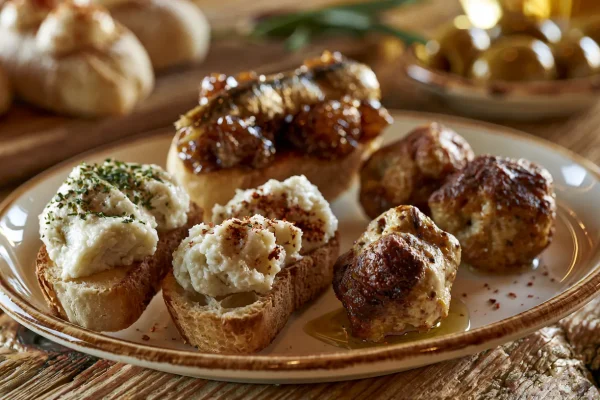
In the south of Le Marche, Ascoli Piceno is the most underrated piazza in Italy — Piazza del Popolo, built entirely in travertine marble, columns and arches in geometric precision, the Church of San Francesco at the far end. The whole square has a luminous, slightly lunar quality in afternoon light. Ascoli is also where olive ascolane were invented — deep-fried, meat-stuffed olives served as street food for 1–2 euros a piece. They’re available everywhere in Italy now, but the originals are here and notably better.
The city is 90 minutes from Ancona and 30 minutes from the Adriatic coast — a good base for a combination of interior towns and beach days.
The Riviera del Conero
South of Ancona, Monte Conero is a limestone promontory that falls directly into the Adriatic — the only section of the northern Adriatic coast that isn’t flat. The beaches below (Spiaggia delle Due Sorelle, accessible only by boat; Spiaggia di Portonovo) are some of the finest in Italy and still require effort to reach. The Monte Conero regional park has hiking trails through holm oak forest above dramatic cliff drops. The towns of Sirolo and Numana sit above the sea with excellent views and legitimate restaurants serving Adriatic fish that hasn’t traveled far.
Monti Sibillini National Park
The southern Apennines along the Le Marche–Umbria border form the Monti Sibillini National Park — wolves, beech forest, medieval villages clinging to ridgelines, the mythical cave of the Sibyl (consulted by pilgrims from across medieval Europe), and in late May, wildflower fields of almost hallucinatory density across the Piano Grande plateau. The wildflower bloom is one of Italy’s least-known natural spectacles — a carpet of poppies, corn flowers, and local varieties visible from the road above Castelluccio. Arrive in late May; the bloom timing varies by year.
Wine: Lacrima di Morro d’Alba
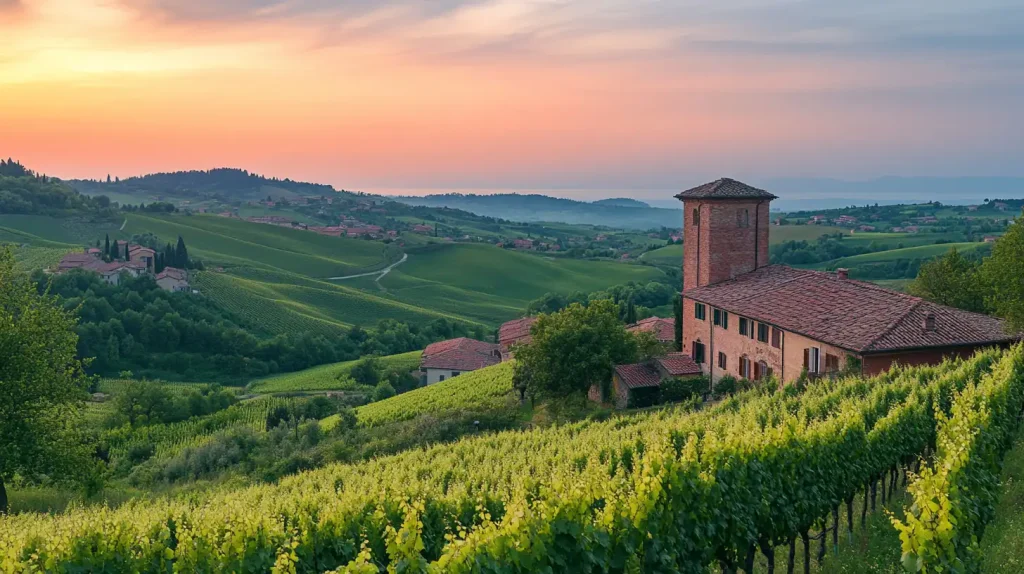
Lacrima di Morro d’Alba is a red wine produced from a grape variety of the same name grown in a very small area around the town of Morro d’Alba in northern Le Marche. The wine is intensely perfumed — violet, rose, cherry, with an almost thick floral quality unlike any other Italian red — and produced in quantities too small to appear reliably on export markets. A bottle costs €10–18 retail in the region. Buy at least four; you won’t find them at home. Stefano Mancinelli is the producer most associated with the wine’s revival; the winery does visits and tastings.
Getting to Le Marche from the US
Fly to Rome (FCO) or Bologna (BLQ) — both have good US connections, typically $700–1,000 round trip. From Rome, drive north on the A24/A25 or take a train to Ancona (2.5–3 hours) then rent a car. From Bologna, drive southeast on the A14 toward Ancona (2.5 hours). Ancona’s Falconara Airport (AOI) receives some European connections and is the most convenient arrival for Le Marche specifically, though international options from the US are limited. A rental car is essential for anything beyond the Adriatic coast towns.
Where to Stay
Budget ($60–90/night): Agriturismos (farm stays) throughout the region — simple rooms in converted farmhouses, breakfast included, homemade wine and olive oil at dinner. Genuinely the best budget option in rural Italy.
Mid-range ($100–160/night): Boutique hotels in the hill towns — several in Urbino and Ascoli Piceno. The Locanda di Villa Torraccia near Macerata has consistent reviews for value and setting.
Splurge ($200+/night): Villa rentals with pools in the Marche countryside — available through several rental agencies specializing in the region. For a week in a farmhouse in the hills with a pool and enough rooms for a group, Le Marche offers significantly better value than Tuscany at the same quality level.
Frequently Asked Questions
How do I get around Le Marche without a car?
With difficulty. Trains connect Ancona, Pesaro, and the Adriatic coast towns reliably. Regional buses link some hill towns but on infrequent schedules. For Urbino, Ascoli Piceno, the Conero Peninsula, and particularly the Sibillini mountains, a car is not optional — it’s the only practical way to experience the region. Rent from Ancona, Bologna, or Rome airports.
What is Le Marche Italy known for?
Urbino (UNESCO Renaissance city, birthplace of Raphael, Ducal Palace with one of Italy’s finest art collections), Ascoli Piceno’s travertine Piazza del Popolo, the Riviera del Conero limestone coast, the Monti Sibillini national park, the Piano Grande wildflower bloom in late May, truffle production (white truffle festival in Sant’Angelo in Vado in October), Lacrima di Morro d’Alba wine, and olive ascolane (meat-stuffed fried olives, originated here).
Is Le Marche cheaper than Tuscany?
Yes — significantly. Accommodation, restaurant meals, and wine are all 30–40% cheaper than comparable quality in Tuscany. An agriturismo in Le Marche that might cost $80/night would cost $130 in Chianti. The quality difference is minimal; the crowd difference is substantial.
What is the best time to visit Le Marche?
May–June for the wildflowers at Piano Grande, mild temperatures, and pre-peak tourist season. September–October for harvest season, wine events, white truffle festival, and excellent weather. July–August on the Adriatic coast is packed with Italian summer vacationers. The interior hills are always quieter than the coast but July–August is generally hot (35–38°C) everywhere.
Can I visit Le Marche as a day trip from Rome?
Possible for Ascoli Piceno (3.5 hours by car or train) but genuinely not recommended — the region rewards overnight stays and slow exploration. A day trip only reaches one town with minimal time. Two or three nights based in Urbino or Ascoli Piceno, with day drives through the surrounding countryside, is the minimum that does the region justice.