Slow travel is not a new concept — it’s the oldest kind of travel, the kind that existed before package tours and budget airline connections made it possible to see six cities in seven days. At its core, it means staying in fewer places longer, engaging with daily life rather than highlights, and measuring a trip’s success by depth of experience rather than number of sights checked off. In practice for an American traveling in Europe, it means choosing a base in a smaller city or a rural area, renting an apartment rather than a hotel, buying your vegetables at the local market, learning where the good bakery is, and watching how the afternoon light changes over the same piazza three days in a row. None of this is complicated. The complicated part is giving yourself permission to not see everything.
| Ideal duration | 10 days minimum per location; 3–4 weeks per country for real depth |
|---|---|
| Best slow travel regions | Le Marche Italy, Albanian Riviera, Greek islands (non-Santorini), Pelion, Andalusia villages |
| Best months | May–June and September–October — avoiding peak-season crowds |
| Average budget | $60–100/day all-in for apartment-based slow travel in southern Europe |
| Who it works for | Remote workers, retirees, anyone with 3+ weeks and flexibility |
What Slow Travel Actually Means (and Doesn’t)
The internet has somewhat distorted slow travel into a lifestyle brand — digital nomads with MacBooks in Bali cafés, “living like a local” in Airbnb apartments. This is fine but it’s not the only version. Slow travel is simply the decision to go fewer places more thoroughly. A two-week trip to one Italian region rather than Rome-Florence-Venice-Cinque Terre is slow travel. A month in a Spanish village studying ceramics is slow travel. A week in a Pelion Peninsula village in Greece without once Googling “things to do” is slow travel. The common thread is presence over productivity, routine over itinerary.
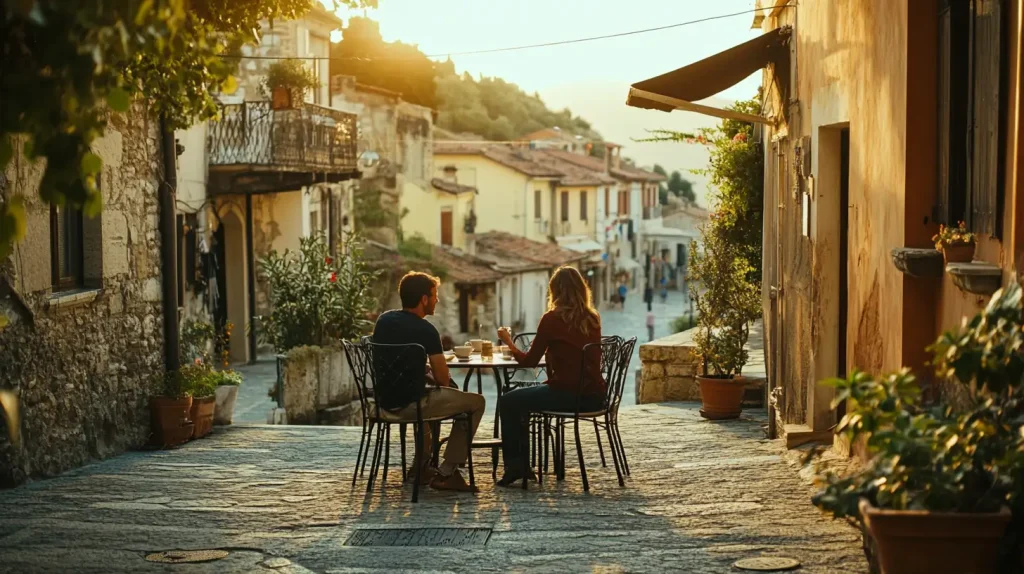
What slow travel is not: cheap travel disguised as a philosophy, a solution to every vacation problem, or a requirement to be bored. Slow travel can be expensive (renting a good apartment for a month in Tuscany costs real money) and it can absolutely include day trips, cultural activities, and ticking off things you genuinely want to see. The difference is the pace and the base.
Why It Works Better in Europe Than Almost Anywhere
Europe’s combination of excellent train connections, short distances between genuinely different cultures, high density of interesting smaller cities, and deep tradition of tourism infrastructure at every level makes it the ideal slow travel region. You can be in a village in the mountains of Le Marche that has seen very few international visitors, 40 minutes from a medieval town, 90 minutes from the Adriatic coast, and 2 hours from a major city with international flights. The village has a trattoria with 8 tables that’s been run by the same family for three generations. This setup doesn’t exist with the same density anywhere else in the world.
The Best Slow Travel Regions in Europe Right Now
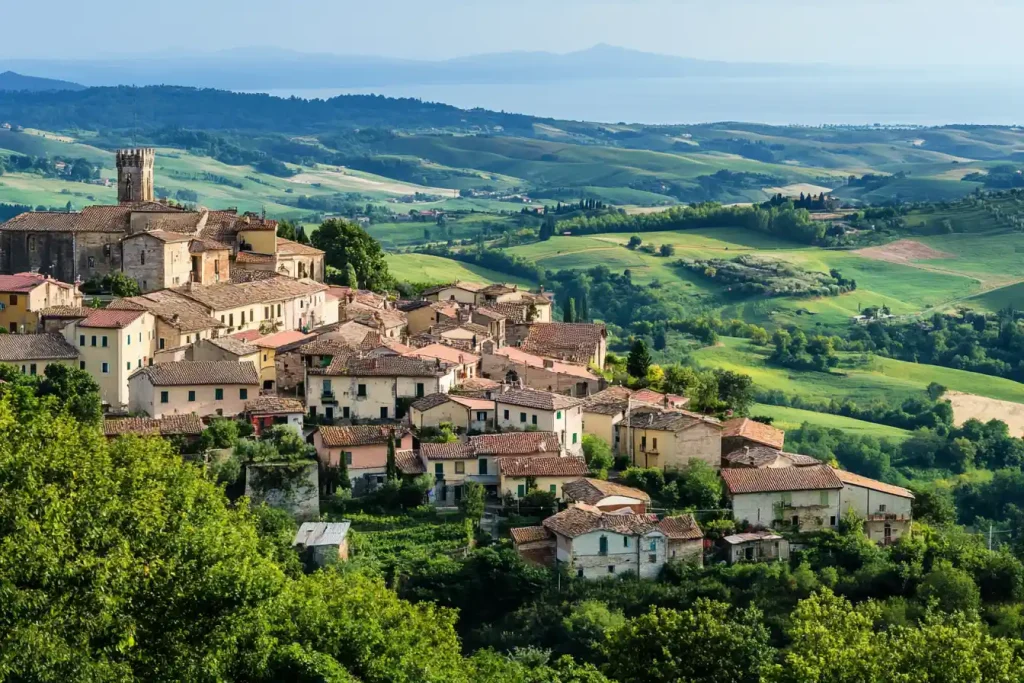
Le Marche, Italy: The Italian region that delivers everything Tuscany does (rolling hills, Renaissance towns, excellent wine and food) without the overtourism and at significantly lower prices. Ascoli Piceno, Urbino, the Conero Riviera coast. A month in a rented farmhouse here, with a car and no fixed agenda, represents the European slow travel ideal. [LINK: your post about Le Marche Italy]
The Pelion Peninsula, Greece: A mountainous hook of mainland Greece between Athens and Thessaloniki, 24 stone villages, two coastlines with dramatically different characters (calm lagoon west, dramatic Aegean east), the Mamma Mia filming village of Damouchari, Mylopotamos beach with a waterfall onto the sand. Car essential. Almost no Americans. [LINK: your post about Pelion Greece]
Albanian Riviera: The stretch of Albanian coast from Vlora to Saranda — limestone cliffs, clear water, small fishing villages, accommodation at a quarter of Greek prices, genuinely excellent seafood. Under-discovered even by European standards. Infrastructure improving rapidly; visit before it catches up.
The Azores (São Miguel): Nine volcanic islands in the Atlantic that are Portuguese territory. São Miguel alone has enough — volcanic lakes, hot spring pools, whale watching, hydrangea roads, the best coffee in Portugal — for two weeks. Flights from Boston direct in summer.
Rural Andalusia: The white villages (pueblos blancos) of southern Spain — Ronda, Grazalema, Zahara de la Sierra — in the mountains between Sevilla and the coast. An hour from the famous tourist trail, an entirely different Spain. A week based in Ronda and exploring the surrounding villages by car requires no further agenda.
Practical How-To: Setting Up a Slow Travel Base
Accommodation: Apartments over hotels. A week in an apartment costs the same as 4–5 nights in a hotel and gives you a kitchen (significant food savings), more space, and the feeling of actually living somewhere rather than passing through. Airbnb, Booking.com, VRBO, and local platforms all work. For longer stays (2+ weeks), contact property owners directly after finding them on a platform — they often offer discounts for longer-term bookings not listed publicly.
Transport: The car question matters most. In Italy, Greece, Spain, and Portugal, a rental car unlocks the villages that make slow travel distinctive. Without one, you’re restricted to train-connected cities. With one, you have unlimited flexibility to follow a recommendation, chase a viewpoint, or simply drive until the landscape compels you to stop. Book well ahead in summer; compare airport pickup vs. in-city rental for best rates.
Work compatibility: If you’re combining work and slow travel (the digital nomad model), verify internet quality before committing. Use a SIM card from a major carrier rather than relying on apartment WiFi. European SIMs with data are inexpensive and solve most connectivity problems. Most European cafés have workable WiFi but treating a café as your office all day is poor etiquette — order multiple things and notice when the place gets busy.
The Budget Reality
Slow travel in southern Europe is less expensive than fast travel in western Europe, not because the places are cheap but because you stop paying for hotels every night and eating at restaurant-tourist-menus every meal. A month in a rented apartment in Le Marche, Pelion, or rural Andalusia, cooking most meals and eating out three to four times per week, typically costs $2,000–3,500 USD all-in for a solo traveler or $3,000–5,000 for a couple — including the apartment rent. Compare that to a two-week packaged Italy tour.
Frequently Asked Questions
What is slow travel and how is it different from regular travel?
Slow travel means spending more time in fewer places — usually one or two destinations per trip instead of five or six — with the goal of genuine engagement rather than sightseeing throughput. In practice: renting an apartment rather than a hotel, staying long enough to develop routines (the bakery you return to, the market day you plan around), and prioritizing depth of experience over the number of UNESCO sites visited.
Is slow travel cheaper than normal travel?
In southern and eastern Europe, often yes — apartment rental over multiple nights beats hotel nightly rates, cooking some meals reduces restaurant spend significantly, and you’re not paying for new activities every day. In expensive destinations (Paris, Zurich, London), slow travel can cost more per day than budget fast travel. The sweet spot is southern Italy, Greece, Portugal, Spain, and the Balkans, where quality apartments rent for $50–100/night and local food costs a fraction of tourist restaurant prices.
What is the best European country for slow travel?
Italy and Portugal consistently top the list — both combine density of interesting places, excellent food, manageable climate in spring and fall, reasonable costs outside major cities, and the kind of daily rhythm that rewards staying rather than rushing. Greece is exceptional in late spring and early fall outside the main islands. Albania has become a genuine slow travel option with very low costs and rapid infrastructure improvement.
How long should a slow travel trip to Europe be?
Minimum 10 days to feel the pace shift. Two to three weeks to genuinely settle into a place. A month to start feeling like a temporary local. Most Americans have limited vacation time, which makes 10–14 days the realistic minimum for a slow travel trip that doesn’t feel rushed by the approach you’re trying.
Can I do slow travel with kids?
Slow travel often works better with children than fast travel. Kids are worse at the “see six cities in eight days” model than adults (transitions are hard) and better at the “we’re living here for two weeks” model (they make friends, develop routines, engage with local children). A rented farmhouse in the Italian countryside or a village apartment in Portugal with a good beach nearby is an excellent family base. The main requirement: a kitchen, outdoor space, and proximity to a food market so you’re not restaurant-dependent for every meal.