Basilicata is the smallest and least-visited region of mainland Italy — a wedge of southern Apennines and ancient hill towns between Calabria, Campania, and Puglia, with a short coastline on both the Ionian and Tyrrhenian seas. It has two things that no other Italian region has: Matera, the cave city that is one of the oldest continuously inhabited human settlements on earth and was the European Capital of Culture in 2019, and Craco, a medieval ghost town abandoned after a landslide in 1963, left exactly as it stood when the last residents walked out. Combine those with Maratea (the Italian Riviera alternative on the Tyrrhenian coast), Pollino National Park, and a local food culture almost unknown outside Italy, and Basilicata becomes the Italian region most worth adding to an itinerary that has already done the obvious places.
| Best time to visit | April–June and September–October; July–August hot and busier |
|---|---|
| Getting there | Fly Bari (BRI) or Naples (NAP); Matera has no direct rail — bus or car from Bari (1.5 hrs) |
| Budget per day | $70–120 USD (less expensive than Tuscany or Rome) |
| Visa for Americans | No visa; Schengen 90-day rule applies |
| Language | Italian; English limited outside tourist hotels in Matera |
| Currency | Euro; cards widely accepted; carry cash for markets |
Why Basilicata Over Better-Known Southern Italy?
The honest argument: Basilicata gives you something Puglia and Campania — both genuinely excellent regions — don’t. Matera is categorically different from any other city in Italy and any other city in Europe. Craco is a completely unique landscape: a medieval hill town frozen in 1963 and now being slowly reclaimed by time, used as a film set (Mel Gibson’s The Passion of the Christ, several Bond films) and genuinely eerie without being performatively so. Pollino National Park has wolves and golden eagles in the wildest mountains in the south. And Maratea, on the Tyrrhenian coast, has a coastline that looks like Amalfi but costs 30% less and has a tenth of the visitors. The price of all this: less tourism infrastructure, fewer English menus, a requirement for a rental car to navigate between the scattered towns.
Matera: The Cave City
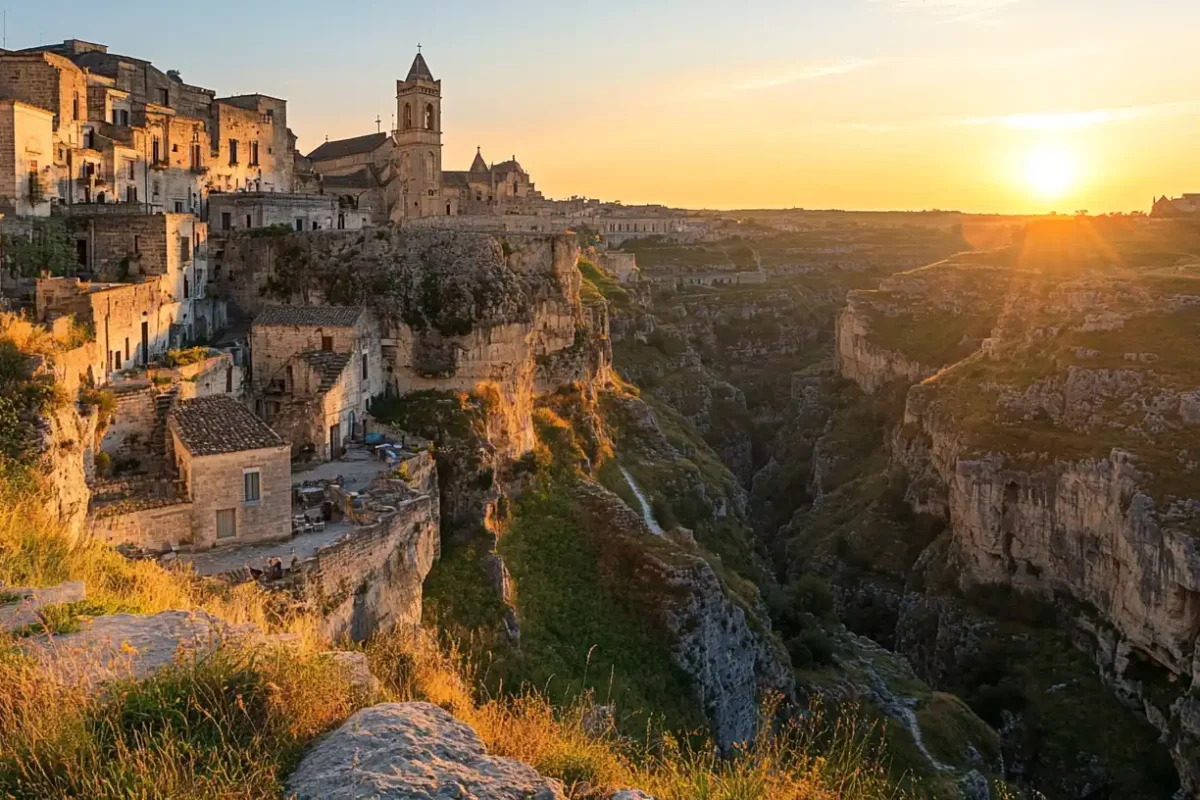
Matera’s sassi — the two ravines of cave dwellings (Sasso Barisano and Sasso Caveoso) carved into the tufa limestone gorge — were inhabited continuously from the Paleolithic period through 1952, when the Italian government forcibly relocated the remaining 15,000 residents into modern housing, considering the conditions a national shame. The caves the residents left behind have been gradually reclaimed as hotels, restaurants, galleries, and a museum — with the original cave interiors preserved intact to show the conditions people actually lived in within living memory.
Carlo Levi’s book Christ Stopped at Eboli (1945) documented the poverty and isolation of this region; the political scandal around Matera’s cave dwellings reached international attention through his writing. The city was named European Capital of Culture for 2019, which accelerated its transformation into a tourist destination without entirely sacrificing what makes it extraordinary.
Walk through the sassi for at least 3 hours before entering any specific site. The landscape is the sight: 9,000 years of human occupation visible in the density and variety of the carved structures. The rock churches (Rupestrian churches) carved into the gorge walls — some with original Byzantine frescoes — are the most remarkable specific sites. The Casa Grotta di Vico Solitario (a preserved cave house showing conditions from the 1950s, €3) is the most human document in the city.
Craco: The Ghost Town
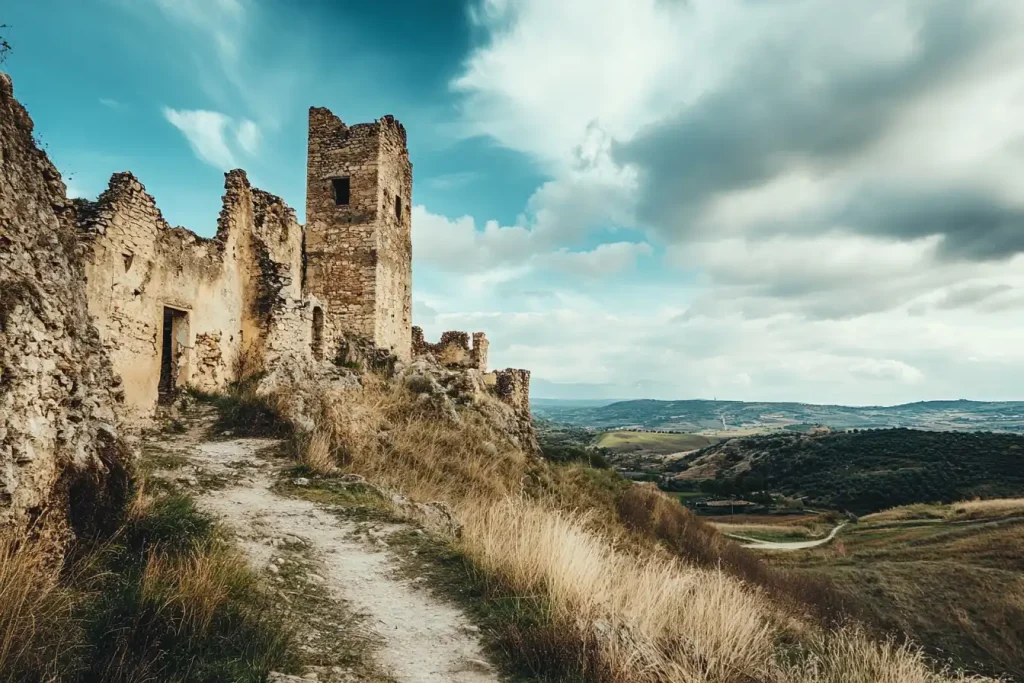
About 40km southwest of Matera, Craco is a medieval hill town that was abandoned between 1963 and 1980 following a series of landslides triggered by underground erosion. The 1,800 residents left in stages; the town was finally completely cleared by a flood in 1980. It has sat empty since — weathering but structurally partially intact, its church tower still visible against the clay badlands landscape behind it. The effect is deeply strange and undeniably compelling.
Guided tours of the interior of Craco run from the visitor center at the base (€10–15 per person). Access is guided-only for safety reasons — some structures are unstable. The tour takes about 90 minutes and includes access to areas not visible from the approach road. The Craco Parco Museale organizes official tours; book ahead in summer. For photography, the exterior views from the approach road are free and equally powerful.
Maratea and the Tyrrhenian Coast
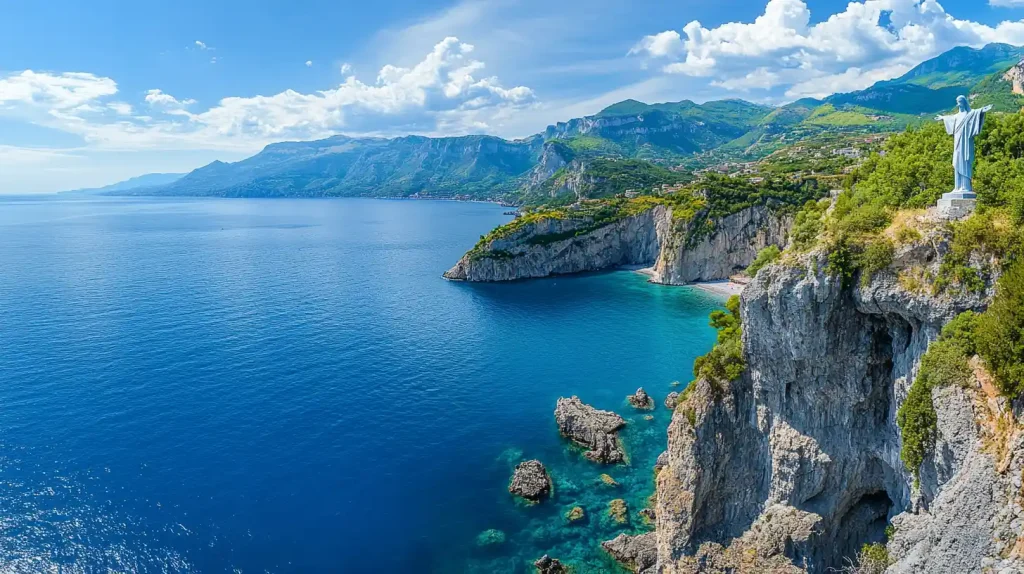
On the narrow Basilicata coastal strip facing the Tyrrhenian Sea, Maratea is a collection of small villages descending to crystalline water, with a massive Christ statue (slightly smaller than Rio’s, somewhat less famous) visible from offshore. The coastal road between Porto di Maratea and the marina passes through some of the finest scenery in southern Italy — limestone cliffs, clear blue water, small coves accessible by boat or path. It’s a genuine rival to the Amalfi Coast aesthetically, at a fraction of the tourist intensity. The town itself is modest; the appeal is the coast and the seafood restaurants in the harbor.
Getting to Basilicata from the US
Fly to Bari (BRI) — connections via Rome, Milan, or Frankfurt — typically $650–950 round trip from US hubs. From Bari, Matera is 65km by car (1.5 hours, no direct train — the FAL railway from Bari connects to Altamura then transfer, total about 1.5 hours and $5 USD). Alternatively, fly into Naples (NAP) and drive south to Maratea (1.5 hours) or east to Matera (2.5 hours). A rental car from Bari or Naples is essential for exploring beyond Matera.
Where to Stay
Budget ($50–80/night): Hotel Roma near Matera’s Piazza Vittorio Veneto — simple, central, well-reviewed. Several B&Bs in the modern city are priced well and a short walk from the sassi viewpoints.
Mid-range ($90–150/night): Sextantio Le Grotte della Civita — a cave hotel inside the sassi, converted from actual cave dwellings. Staying inside a 9,000-year-old continuously inhabited cave that was someone’s home within living memory is an experience with no equivalent anywhere in Italy. Not cheap but not Venetian hotel prices either.
Splurge ($200+/night): Palazzo Viceconte — a converted 17th-century palace on the sassi edge with the best view of the cave city from a pool terrace.
Practical Tips
Matera has no train station in the main city — arrivals are by bus from Bari, private car, or the FAL railway to Matera Centrale (2km from center). This is the most common source of confusion for first-time visitors. Plan your transport before arrival.
The famous lucanica sausage (a dry, paprika-spiced pork sausage from Basilicata), fresh pasta with lamb ragù, and Aglianico del Vulture wine (a serious southern red from volcanic soils near Potenza) are the local food reasons to eat well here. A full dinner with wine at a good Matera restaurant runs €25–40 per person — significantly less than Rome or Florence at comparable quality.
Frequently Asked Questions
What is Matera Italy famous for?
Matera is famous for its sassi — cave dwellings carved into two ravines of tufa limestone, inhabited continuously for approximately 9,000 years and designated a UNESCO World Heritage Site in 1993. The caves range from Paleolithic hand-carved shelters to elaborate cave churches with Byzantine frescoes to 20th-century inhabited cave houses evacuated by government order in 1952–1963. It was European Capital of Culture in 2019.
How do I get to Matera from Bari?
By car: 65km, about 1 hour via the SP7 road. By FAL regional railway from Bari to Altamura, then connecting to Matera — total about 1.5 hours and $5 USD. By SITA bus from Bari central bus station to Matera — roughly 1.5 hours. There is no mainline train directly to Matera. Most visitors either drive or take the FAL railway.
Is Craco open to visitors?
Yes, with guided tours only. The Craco Parco Museale operates official guided tours from the visitor center at the base of the hill — €10–15 per person, about 90 minutes. Booking ahead is recommended in summer. Access to the interior of the abandoned town is guided-only for structural safety reasons. The exterior and approach road provide strong photographic viewpoints for free.
What is Basilicata Italy like?
Basilicata (also historically called Lucania) is the least-visited region of mainland Italy — a mountainous inland region with a small coastal strip, ancient hill towns, and a culture of extreme self-sufficiency born from centuries of poverty and isolation. It has no major international airports, requires a car for most movement, and has preserved a food culture (lucanica sausage, Aglianico wine, fresh pasta traditions) that northern Italian regions have largely lost to tourism pressure.
Can I visit Matera as a day trip from Bari or Puglia?
Technically yes — a day trip from Bari takes about 1.5 hours each way and gives you a full afternoon in Matera. But it’s strongly recommended to stay overnight. Matera’s atmosphere in the early morning (the sassi before day-trippers arrive) and at night (the cave city lit with lanterns) are completely different from and better than the midday visit most day-trippers experience.