The Belgian Ardennes is the part of Belgium that travel writing ignores entirely. The country gets covered as a beer-and-chocolate-and-bruges destination, and the southeastern corner — 11,000 square kilometers of dense forest, river gorges, limestone caves, and castle-topped hills along the borders with Luxembourg and France — goes almost completely unreported in English. This is also the ground where the Battle of the Bulge was fought in the winter of 1944–45. The American military cemeteries are here. The forests are quiet. The hiking is genuinely good.
| Best time to visit | April–June and September–November |
|---|---|
| Getting there | Fly to Brussels (BRU), train or rental car to La Roche-en-Ardenne (~2.5 hrs) |
| Budget per day | $70–130 USD (mid-range) |
| Visa for Americans | No visa required; Schengen 90-day rule applies |
| Language | French (Wallonia); some German near eastern border. English understood at hotels |
| Currency | Euro; cards accepted widely; some small businesses cash-only |
Is the Belgian Ardennes Worth the Trip?
For a dedicated hiking trip or a European road trip extension, yes. As a standalone destination for Americans flying specifically to hike Belgium — the country is small and the Ardennes, while genuinely beautiful, won’t compete with the Alps or the Scottish Highlands for drama. But if you’re already in Brussels, or combining Belgium with the Netherlands and Luxembourg, the Ardennes is the best reason to rent a car and point it south for a few days. It’s accessible, cheap by Western European standards (€10–15 lunch, €80–120/night guesthouses), and almost entirely free of American tourists.
The Ninglinspo Trail
The Ninglinspo is Belgium’s only mountain river — “mountain” by Belgian standards, which means it runs fast over limestone boulders through a wooded gorge. The trail that follows it is consistently rated as one of the best walks in Belgium, and the praise is earned. The trailhead is at the Sedoz car park outside Aywaille, about 40 minutes from Liège by car.
The 10km loop follows the river upstream through a sequence of small waterfalls, clear pools, and narrow rocky passages. You’ll scramble over boulders, cross the river multiple times on stones, and at one point walk behind a waterfall on a narrow ledge. The shoes get wet. Plan for 4–5 hours. The Drouet viewpoint at the upper end of the circuit gives the best panoramic view of the valley.
One practical note: this trail is extremely popular on summer weekends and Belgian public holidays. If you go on a weekend in July, bring patience — the best scrambling sections can back up with slow walkers. Midweek visits or arrival before 9am change the experience entirely. On a Tuesday in September, I had the river section completely to myself.
La Roche-en-Ardenne and the Ourthe Valley
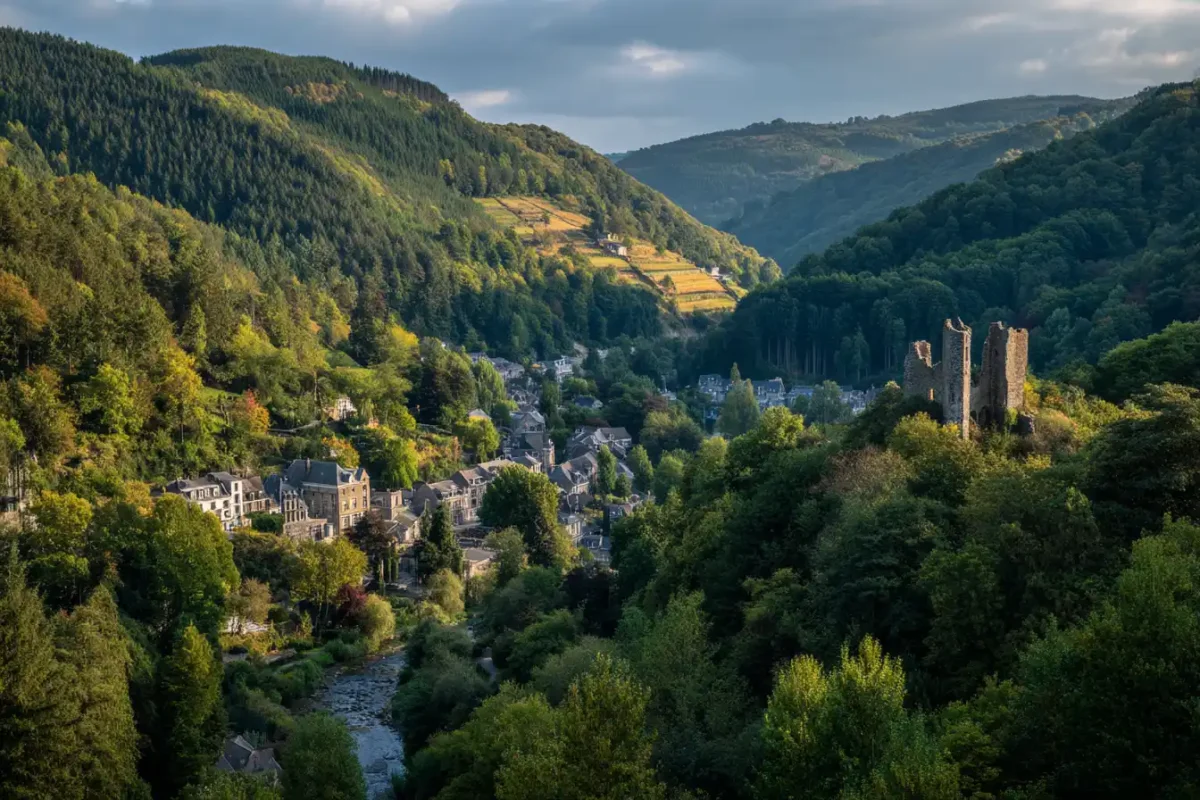
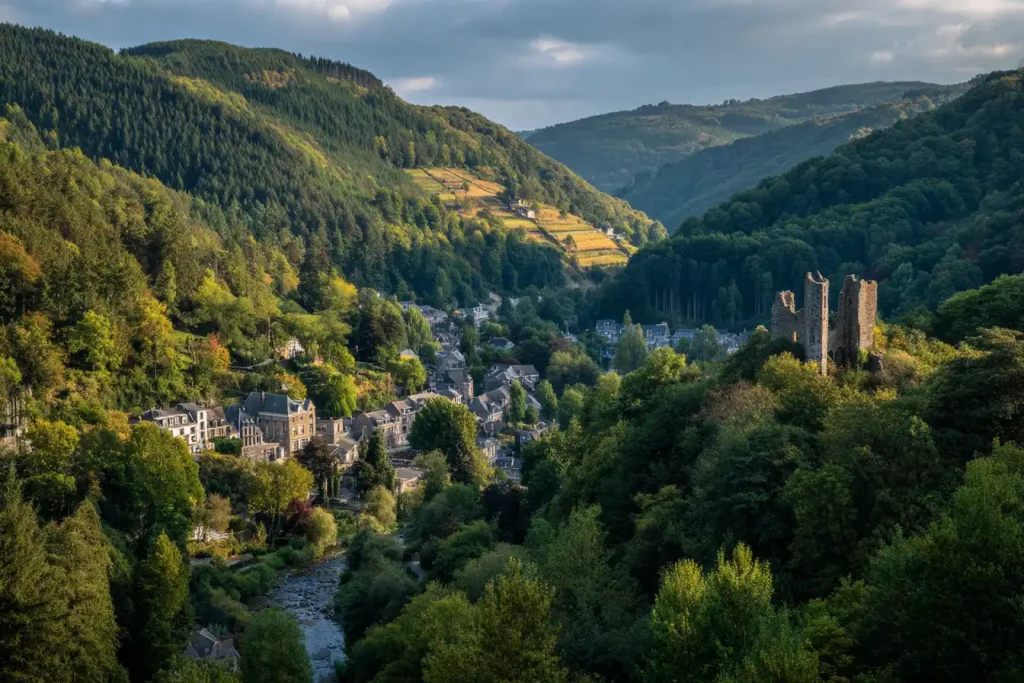
La Roche-en-Ardenne is the practical base for the western Ardennes — a small market town in the Ourthe valley with a ruined medieval castle on the hill above it, a good range of guesthouses and restaurants, and trails radiating in every direction. Population is about 4,000; it has the feel of a living town rather than a tourist staging post.
The 12km Ourthe Loop hike from La Roche follows the river downstream through the valley and loops back on the opposite bank — 4 hours, some challenging climbs with good ridge views. The castle above town (Château de La Roche) costs about €6 ($6.50 USD) to visit and gives the best views of the valley from above.
The WWII context: the town of La Roche was heavily bombed and rebuilt in the 1940s. The Musée de la Bataille des Ardennes (Battle of the Bulge museum) in town costs about €10 ($11 USD) and is one of the better small WWII museums in Belgium — well-organized, with vehicles, uniforms, and clear maps of the December 1944–January 1945 campaign that cost 76,000 American casualties. For American visitors, this context adds a layer to the landscape that a French or German hiker doesn’t have.
Han-sur-Lesse: The Caves
Han-sur-Lesse has the best cave system in Belgium — an underground river that flows through massive limestone caverns complete with stalactites, stalagmites, and the kind of formations that take 100,000 years to grow. Tours run hourly, cost about €20 ($22 USD) for adults, and involve a boat entry through the cave mouth. The tour takes about 1.5 hours and covers roughly 2km underground. The humidity is constant (about 95%); the air smells mineral-clean rather than musty. It’s cool enough underground that a light layer is useful even in summer.
The adjacent wildlife park (Parc Animalier) allows you to see European bison, deer, wild boar, and a small wolf pack in large natural enclosures. Combine it with the caves for a full day — the combo ticket runs about €27 ($30 USD).
Getting to the Ardennes from the US
Fly to Brussels (BRU) from JFK, Boston, or Washington — direct flights on Brussels Airlines or United, typically $600–900 round trip. From Brussels, the Ardennes is most easily reached by rental car (€40–60/day), taking about 2–2.5 hours to La Roche-en-Ardenne via the E411. Public transport is technically possible — train to Liège, then buses — but connections are slow and infrequent, especially within the park itself. Rent the car.
Where to Stay
Budget ($50–80/night): Camping and basic guesthouses (gîtes) throughout the Ardennes. Belgium has excellent cycling and hiking gîtes at very reasonable prices — search bnb-ardenne.be.
Mid-range ($90–150/night): La Roche-en-Ardenne has several well-reviewed hotels including Hostellerie Lires and Hôtel des Ardennes. Meals included or available on-site.
Splurge ($160+/night): Château de Palogne outside Hamoir — a genuine 14th-century fortress converted to boutique hotel, on the Ourthe River. One of the more unusual places to stay in Belgium.
Best Time to Visit
May–June: Forests are intensely green, river levels are good, wildflowers are out, temperatures are pleasant (15–22°C). Not too crowded.
July–August: Warm and busy. Belgian holiday season brings families to the Ardennes in large numbers, especially to Han-sur-Lesse and La Roche. Some trails get crowded on weekends.
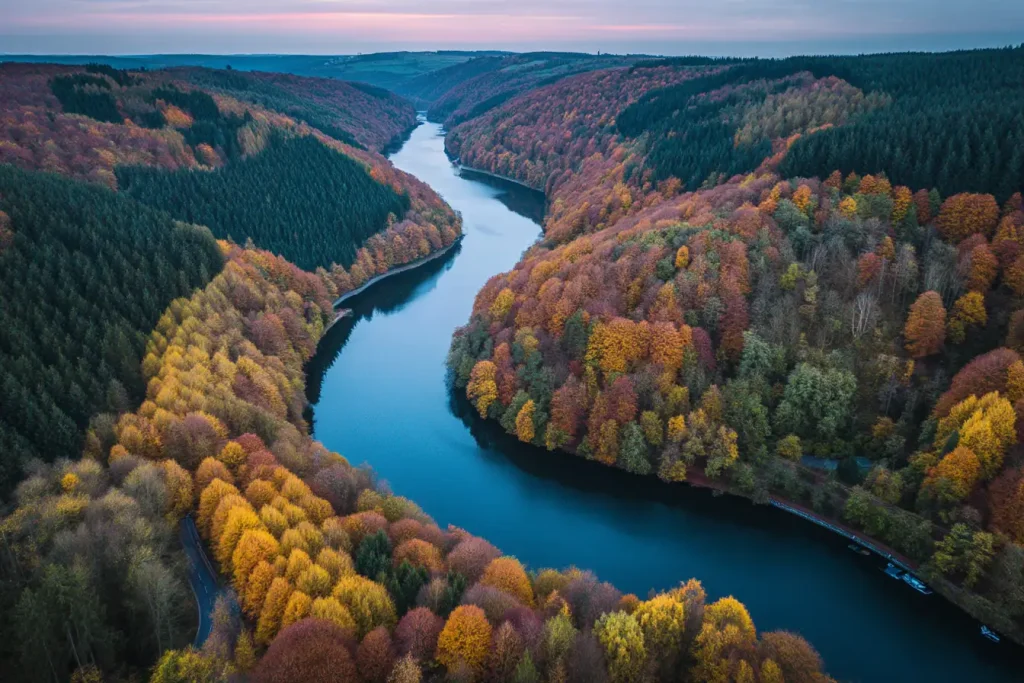
September–October: The best months. Autumn colors from mid-September are exceptional in the dense Ardennes forest — yellows, oranges, and russets extending across the valley views. Temperatures drop but stay hiking-friendly. Wild boar and deer are more active as the forest thins out.
Winter: Cold, quiet, sometimes snowy. The caves are open year-round. Some guesthouses close December–February. The Battle of the Bulge took place in these forests in December–January 1944/45 — visiting in winter adds a visceral layer to the WWII history sites.
Practical Tips
A car is essentially required for getting real value from the Ardennes. Public buses exist but run infrequently and don’t cover the trailheads. Rent in Brussels or Liège.
The Ardennes is genuinely wetter than coastal Belgium — carry a waterproof layer on all hikes. The Ninglinspo trail will get your feet wet regardless. Budget accordingly for trail footwear.
Regional food worth ordering: Ardennes pâté (a cured game meat pâté, serve with bread and cornichons), smoked trout from local fish farms, and local beers from smaller Walloon breweries. The cooking is French-influenced and noticeably richer than the food in Brussels or Bruges.
The thing most tourists get wrong: treating the Ardennes as a day trip from Brussels. The best trails are 1.5–2.5 hours from Brussels by car, which means you lose half a day on each end. Stay at least two nights to make the trip worthwhile.
Frequently Asked Questions
How do I get to the Belgian Ardennes from Brussels?
Rent a car (€40–60/day) and drive the E411 south to La Roche-en-Ardenne (about 2–2.5 hours). Public transport is possible (train to Liège, then buses) but slow and inconvenient for reaching trailheads. A car is the practical choice.
What is the best hiking trail in the Belgian Ardennes?
The Ninglinspo Trail near Aywaille is consistently the top-rated — 10km loop following Belgium’s only mountain river, with waterfalls, swimming holes, and scrambling. The Ourthe Valley Loop from La Roche-en-Ardenne is a close second for ridge views and river scenery.
Is the Belgian Ardennes safe?
Very safe. The main hazard on trails is slippery wet rock, especially near the Ninglinspo waterfalls — proper hiking shoes are important. Wildlife in the forests includes wild boar and deer; they’re generally not aggressive. The Belgian army uses part of the High Fens nature area for exercises — some trails have restricted days, marked with signs.
How much does Han-sur-Lesse cave tour cost?
About €20 ($22 USD) for the cave tour alone, or €27 ($30 USD) for the combined cave and wildlife park ticket. Tours run hourly throughout the day. Booking ahead recommended in July–August.
What is the Battle of the Bulge and why is it significant for American visitors?
The Battle of the Bulge (December 1944–January 1945) was the largest American battle of World War II. Germany’s final major western offensive pushed through the Ardennes forests, and American forces held and eventually counterattacked at significant cost — 76,000 American casualties. Bastogne (30km from La Roche) was the center of American resistance. Several museums and memorials in the Ardennes document this history.