3 Days in Amalfi Coast: First-Timer Itinerary and Top Highlights
The Amalfi Coast is a 40-kilometer stretch of coastline that takes a minimum of two hours to drive end to end in summer traffic, and that is on a good day. Most first-timers underestimate the travel time between towns and spend their trip sitting on a bus watching beautiful scenery they are too anxious to enjoy because they are worried about missing the next connection. Three days works well here, but only if you compress your geography and choose a good base.
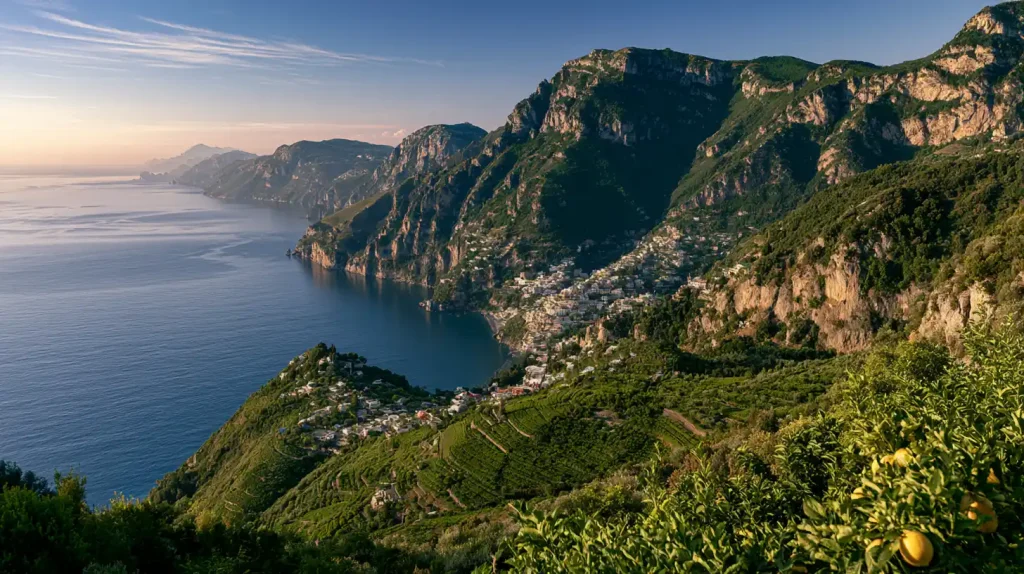
The classic three-day plan focuses on the three towns that define the coast’s character: Amalfi town, Ravello, and Positano. Each is genuinely distinct. Amalfi is the historic maritime republic with the cathedral and the harbor. Ravello is the hilltop village above the coast with the villa gardens and the music festival. Positano is the vertical fishing village that became an international symbol of coastal Italy. Three days — one town per day with some flexibility — covers all of them at a pace that allows you to actually experience each place rather than just photograph it.
Where to Base Yourself
This is the most important decision for a three-day visit.
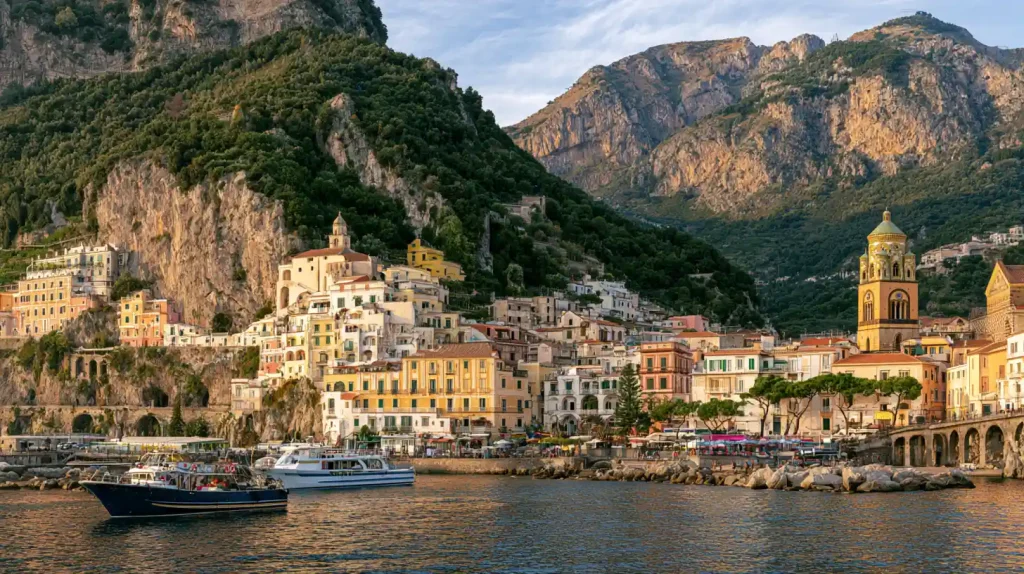
Amalfi town is the most practical base. It sits in the middle of the coast, ferries and buses go in both directions, and accommodation is slightly less expensive than Positano. The cathedral square is literally where everything converges. The downside: Amalfi itself is busy in high season and the waterfront area can feel crowded by late morning.
Positano is a beautiful but expensive and logistically awkward base. Accommodation is very pricey, the vertical layout means every errand involves stairs, and getting to Ravello requires a bus to Amalfi and then another bus up to Ravello. Worth it for a special trip or a splurge; harder to justify on a tight budget.
Sorrento is the practical budget compromise. Accommodation is cheaper, the town is easier to navigate, and both ferries and SITA buses connect to Positano and Amalfi daily. The trade-off: each day starts with a 40-60 minute commute to the coast. For three days, this adds up to real time lost.
Praiano is the sleeper option — a small village between Positano and Amalfi that most tourists pass through. Accommodation costs noticeably less than Positano, the local beach is quiet, and the SITA bus stops right in the village. Good base for anyone who wants a genuine slower pace.
The recommendation for most first-timers: base in Amalfi town for the first two nights and move to Positano for the third night — or just day-trip Positano from Amalfi. This gives you central positioning for the first two days and a proper Positano experience at the end without paying Positano prices for your whole stay.
suggested topic — Where to Stay in Amalfi Coast
Day One: Amalfi Town and Ravello
Start in Amalfi. The town is more interesting than it gets credit for among visitors who blow through it on the way to Positano.
Morning in Amalfi
The Cathedral of Sant’Andrea dominates the main piazza with a Moorish-influenced facade and a long staircase that doubles as a stage for the square’s social life below. Go inside — the Chiostro del Paradiso (Cloister of Paradise), just off the cathedral, is a 13th-century Arab-Norman cloister with interlaced arches and a garden of ancient sarcophagi. The cloister is one of the most quietly impressive things on the coast and almost no one comes specifically to see it. Admission to the cathedral and cloister is around 3-4 EUR. Worth it.
The old town behind the piazza is easy to explore on foot — small lanes, paper shops (Amalfi has a 1,000-year history of paper making and artisan stationery is still made here), and a few good pasticcerie for breakfast. Try Pasticceria Pansa on Piazza Duomo for the delizia al limone. Walk through to the Valle dei Mulini, the valley of the old paper mills, for a fifteen-minute walk into a forested gorge that feels nothing like the tourist coast. The mills are partially restored and atmospheric even on a grey day.
Atrani, the village immediately east of Amalfi, is a five-minute walk along the coast path or beach. It is smaller, quieter, and has a lovely small piazza with a church and a bar or two. Most visitors walk straight past it. The seafood restaurants here are considerably cheaper than Amalfi’s waterfront.
Afternoon: Ravello
Take the SITA bus from Amalfi’s main piazza up to Ravello — about 25-30 minutes, roughly 1.50 EUR. The bus drops you at the edge of the village.
Visit Villa Rufolo first (tickets 8 EUR) for the Moorish cloister and the belvedere terrace with the festival stage. Then walk 15 minutes through the village to Villa Cimbrone (tickets 7-10 EUR) for the Terrace of Infinity — the marble busts lined along the balustrade with the sea below. This is one of the best views in southern Italy.
Allow two hours for both villas plus coffee in Piazza Duomo and a wander through the village lanes. Ravello is a very walkable place and the residential streets away from the main tourist path are quiet and genuinely lovely. Go inside the cathedral — two 12th-century marble pulpits with intricate mosaic work, one featuring an eagle lectern, are some of the finest medieval craftsmanship in the south. Most visitors walk straight past without going in. The pulpits alone justify five minutes.
Last bus back to Amalfi: around 22:00 in high season. Do not miss it.
Dinner in Amalfi
Eat at Marina Grande restaurant in the old fishermen’s quarter — the fritto misto is excellent, mains are honest, and the waterfront setting is good. Book ahead in peak season.
Day Two: Positano
Take the ferry from Amalfi to Positano rather than the bus. The ferry takes about 25-30 minutes and arrives at Marina Grande beach, giving you the full cinematic approach to the village. Ferry tickets cost around 8-12 EUR depending on the operator. Ferries run from April through October — check the schedule the evening before.
Morning: Explore Positano
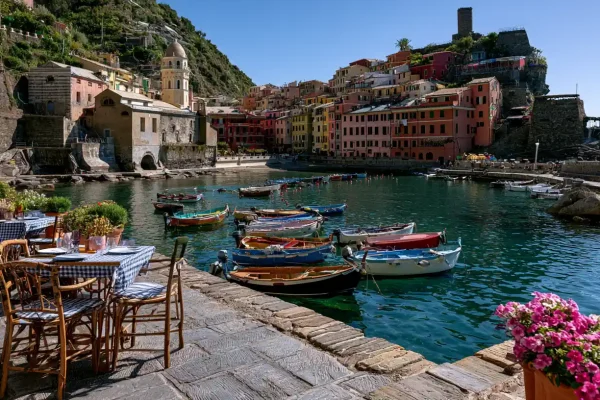
Walk up the main staircase from the beach to the Church of Santa Maria Assunta (free entry, Byzantine Madonna, Roman archaeological ruins adjacent). Continue up through the village lanes to the viewpoints over the rooftops.
The internal orange bus runs a short circuit from the top of town (the SS163 road stop) down to the beach — 2.50 EUR each way. Useful for getting back up if your knees are already complaining.
Midday: Fornillo Beach
Walk the cliff path from Marina Grande to Fornillo Beach — about ten minutes. Quieter than the main beach, cheaper restaurants, a better swimming experience. Rent sunbeds (15-20 EUR per pair) or use the free public section. Swim. Eat at a beach restaurant. This is what the Amalfi Coast is actually for.
Afternoon: Boat Tour or Arienzo Beach
From Marina Grande, a two-hour group boat tour around the Positano coastline costs around 25-35 EUR per person and takes in sea caves, the Faraglioni-adjacent rocks, and coves accessible only by water. If the budget allows, this is the afternoon activity to choose. The views of Positano from the water are better than any view from land.
Alternatively: walk down the 300 steps to Arienzo Beach and spend the afternoon there in near solitude. Bring water.
Evening
If you are staying in Positano, the evening is when the village becomes its best self — quieter, warmer light, the day-trippers gone. Dinner at Da Vincenzo or Lo Guarracino. Budget 35-50 EUR per person.
If you are day-tripping from Amalfi, catch the late-afternoon ferry back. The 5:00-6:00 PM departure from Positano fills fast in summer — arrive at the dock fifteen minutes early to secure a seat on the return boat.
Day Three: Cetara, Capri, or Slow Morning
You have options on day three depending on what you missed or what you want more of.
Option A: Day trip to Capri
Fast ferry from Amalfi or Positano to Capri — see the Piazzetta, the Blue Grotto (18 EUR, queue early), Anacapri and the Monte Solaro chairlift (11-15 EUR). Return ferry in the late afternoon. Full day, expensive but worth it. Book return ferry tickets before you go.
Option B: The quieter coast
Explore the less-visited east side of the coast. Cetara is 45 minutes by bus from Amalfi — the anchovy village, home of colatura di alici. Small, local, genuinely not touristy. Eat lunch at Acqua Pazza restaurant, order the pasta with colatura, walk the small harbor. Then continue to Vietri sul Mare, known for its colored ceramics.
Option C: Path of the Gods
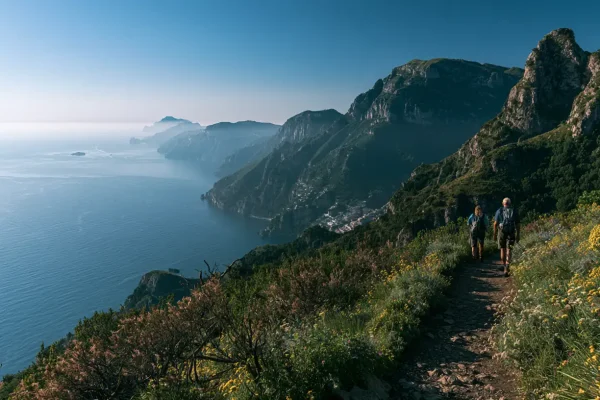
Take the SITA bus from Amalfi to Bomerano (40 minutes) and walk the Sentiero degli Dei ridge trail to Nocelle, then bus or walk down to Positano. Four to five hours total. Best in May, September, or early October. Not recommended in July or August heat.
Getting Around Without a Car
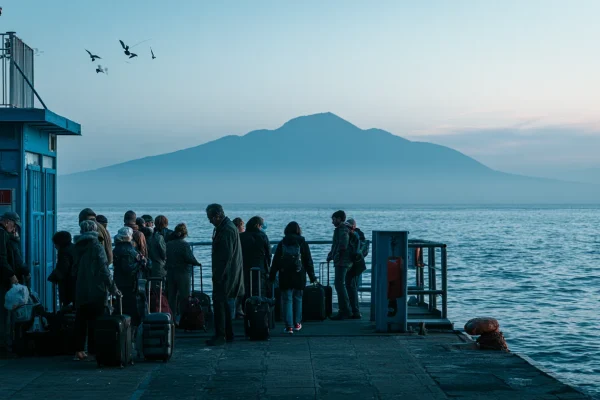
Ferries: The most pleasant way to travel between Positano, Amalfi, and the other towns. Operate April through October. Tickets 8-20 EUR depending on route. Book at the harbor or online. Check schedules the night before — they change with season and weather.
SITA buses: Cover the entire coast road and connect inland villages like Ravello and Agerola (Bomerano for the Path of the Gods). Tickets 1.50-3 EUR. Always crowded in high season. Buy tickets at tobacconists or bars before boarding. Validate immediately. Get on at the first stop for the best chance of a seat.
Bus tip: On the SS163 coast road, the seats on the right side (going west toward Positano from Amalfi) have the sea views. The left side faces the cliff. Same applies in reverse going east.
Water taxis: Available in Positano and Amalfi for short hops between beaches. More expensive than ferries — 20-40 EUR for a short transfer — but convenient for direct beach-to-beach movement.
Suggested topic — How to Get Around Amalfi Coast
Practical Tips
Arrive early at everything. The difference between 8:30 AM and 10:30 AM in Positano or Amalfi in July is the difference between a pleasant morning and a crowd simulation. Most restaurants, attractions, and beaches become noticeably better before 10 AM and after 4 PM.
Book accommodation and popular restaurant tables well in advance for July and August. The better places in Positano fill months ahead for summer dates.
Wear comfortable shoes. The Amalfi Coast is vertical. Every town involves stairs. The scenic views are earned.
Pack light for day excursions. Small backpacks are much easier on crowded buses and narrow ferry gangways. Leave larger bags at your hotel.
Carry cash for buses, kiosks, and small bars. Not every village shop along the coast has a card reader, and the cuoppo di mare seller at the harbor definitely does not.
Download the Moovit or Google Maps app for real-time bus information. SITA bus times are broadly correct but individual buses run late. The app helps you decide whether to wait or walk.
FAQ
What is the best base for 3 days on the Amalfi Coast?
Amalfi town for practicality — central position, ferry and bus connections in both directions, slightly lower accommodation costs than Positano. Positano for romance and atmosphere but at a significant price premium.
Can you visit the Amalfi Coast without a car?
Yes. Ferries (April-October) and SITA buses cover all the main towns. The coast is designed for non-drivers — the road is so narrow that having a car often creates more problems than it solves.
How much time should I spend in Positano?
A full day is ideal. Half a day is enough to see the town and swim. Two nights lets you experience the village without the day-trip crowds, but accommodation is expensive.
Is 3 days enough for the Amalfi Coast?
Enough to see the three main towns and do one or two activities (hike, boat trip, Capri). Not enough to see everything. Three focused days beats a week of trying to cover everything and feeling rushed. The Amalfi Coast works best when you resist the urge to see all of it and instead give yourself permission to sit on a beach for three hours doing nothing useful.
When is the best time to visit for 3 days?
May, early June, and September are the ideal windows — pleasant weather, ferries and restaurants running, crowds manageable. July and August are possible but crowded and expensive.