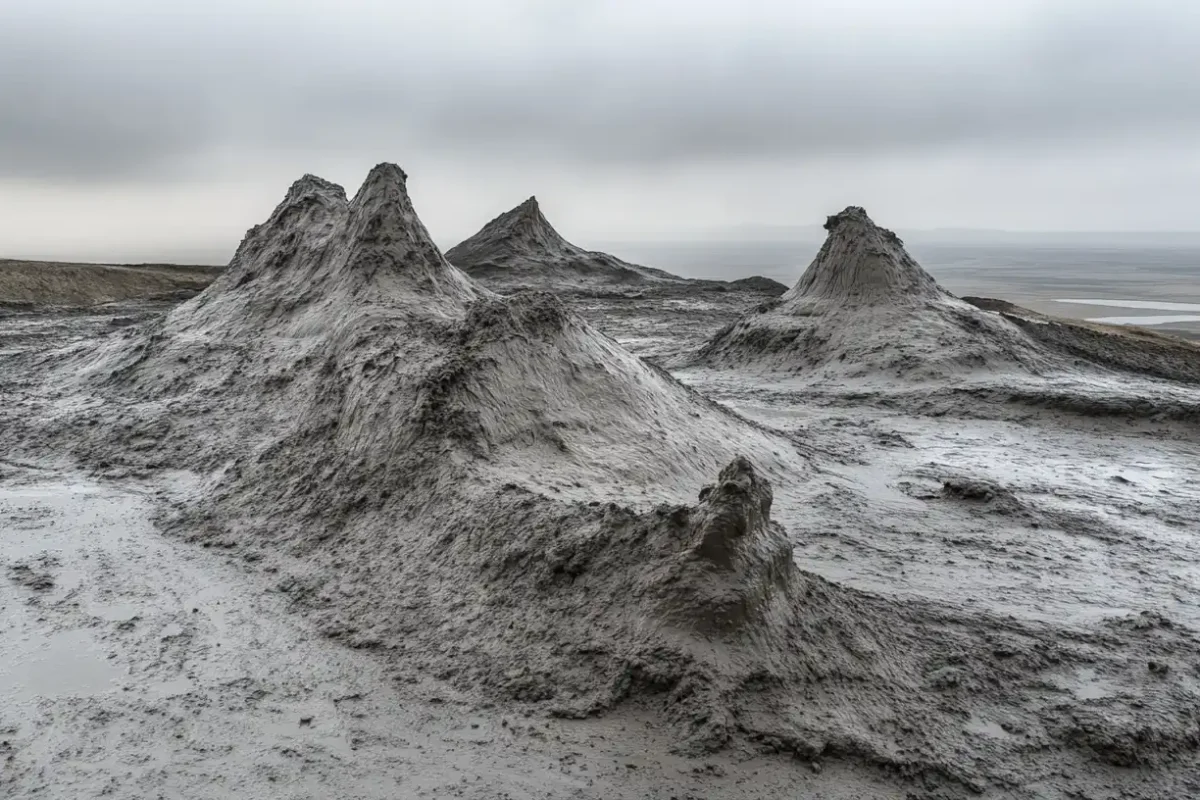
About 67km south of Baku, along the Caspian coast, the landscape turns post-apocalyptic: flat-top mountains hammered into shape by a retreating inland sea, oil derricks on the horizon, and then — in a field that looks like the surface of Mars — hundreds of small mud cones burbling cold grey mud in slow eruptions, like the earth digesting something. Gobustan holds about 300 mud volcanoes and is home to roughly half the world’s supply. It also contains 6,000 petroglyphs carved into limestone over the last 40,000 years — the oldest showing people, animals, and boats that predate the pyramids by 35,000 years. The combination makes Gobustan one of the stranger and more fascinating half-day trips available anywhere in the Caucasus.
| Distance from Baku | 67km south; ~1 hour by tour or taxi |
|---|---|
| Best way to visit | Organized day tour from Baku (strongly recommended) |
| Tour cost | $54 group / $82 private per person (Bag Baku tours); local alternatives cheaper |
| Full day option | Add Ateshgah Fire Temple + Yanar Dag (Burning Mountain) — all three in one day |
| Best time | October–April; avoid after rain (mud volcanoes road becomes impassable) |
Is Gobustan Worth the Day Trip?
Yes — as part of a combined Baku day that also includes the Ateshgah Fire Temple and Yanar Dag burning mountain. All three together make one of the most geologically and historically bizarre days in the Caucasus: you’ll see mud that bubbles without heat (the geology involves methane and deep tectonic pressure, not magma), 40,000-year-old human drawings, a Zoroastrian temple where fire burns from natural gas seeping through the ground, and then a hillside that has been continuously on fire for at least 4,000 years. Azerbaijan calls itself the Land of Fire, and on this day trip you understand why.
Going independently to the mud volcanoes specifically is not recommended: the road off the main highway to the volcanic field is a rough off-road track through unmarked terrain, the volcanoes are genuinely impossible to find without guidance, and the Gobustan area is confusing to navigate. Most tour operators use Soviet-era Lada Niva 4WDs for the volcano section — this is itself entertaining. The road condition is also highly weather-dependent; after rain it becomes dangerously slippery. Don’t go the day after rain.
The Petroglyphs
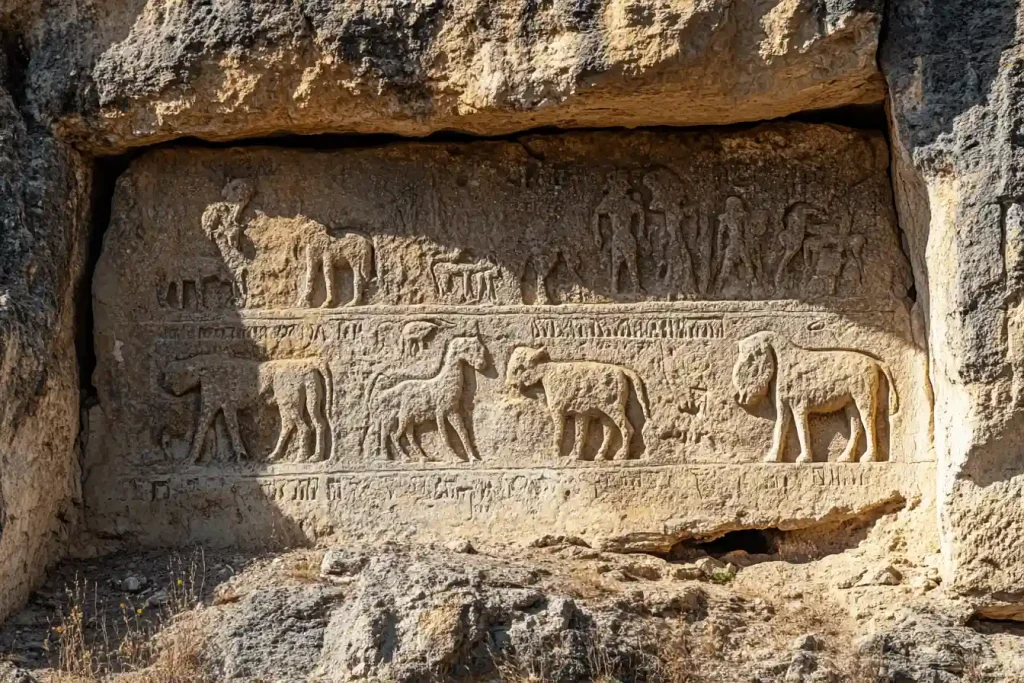
The Gobustan National Museum, well-signed from the main highway, contains an excellent modern interpretive center followed by the open-air rock art site itself — limestone outcrops covered in incised drawings accumulated over 40,000 years. The oldest images show hunting scenes, dancing figures, and reed boats; later carvings add cavalry, agricultural scenes, and Arabic inscriptions from the medieval Islamic period. The boats are the most discussed: some resemble the reed vessels still made by the Marsh Arabs of Iraq, and Thor Heyerdahl visited Gobustan and identified the boat petroglyphs as evidence for his ancient Atlantic crossing theories. Whether or not you agree with his interpretations, the images are extraordinary — 6,000 drawings on exposed rock under the Caspian sky.
Entry to the Gobustan museum and petroglyphs: 8 AZN ($4.70 USD). Allow 90 minutes. Most tours include this site.
The Mud Volcanoes
The field of mud volcanoes is about 20 minutes further south on an off-road track that requires a proper 4WD. The volcanoes are cold — the mud erupts from geological pressure and methane gas, not heat — and range from quiet burbling to occasional eruptions that can throw mud several meters. Approach them at a reasonable distance and stay on the marked paths. The mud is reportedly healing (people do plaster themselves in it, and the tradition has existed for centuries) and the scene is genuinely surreal — dozens of cones in a flat, grey, featureless plain with nothing else visible. The smell is faintly sulphurous. The Caspian appears as a grey line at the horizon. It looks like a different planet.
Admission to the mud volcano area: 30 AZN ($17.65 USD) per vehicle — this is a mandatory off-road transport supplement paid to the local Lada drivers, even on organized tours. Budget for it.
The Ateshgah Fire Temple
Ateshgah (House of Fire) is a Zoroastrian and Hindu fire temple on the Absheron Peninsula, about 30km east of Baku, built in the 17th–18th centuries by Indian traders on a site where natural gas burning from underground seeps had been venerated for centuries. The compound is a caravanserai-style square with shrines at each corner and a central altar where fire burns continuously from the natural gas below. Indian pilgrims traveled here for religious observance; Zoroastrians worshipped the eternal flame. The gas seeps that once fed the altar have diminished (modern Baku’s industrial development has affected the underground pressure), and the current flame is now supplied by municipal gas line — an honest sign at the site acknowledges this. The architecture and history remain compelling regardless. Entry 2 AZN ($1.18 USD).
Yanar Dag: The Burning Mountain
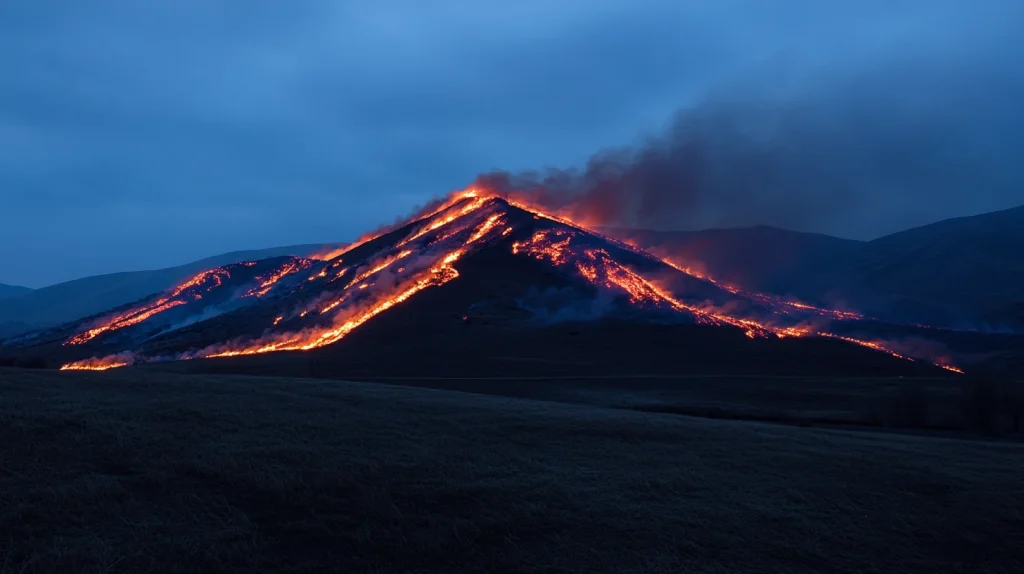
Yanar Dag (“Burning Mountain”) is a hillside on the Absheron Peninsula that has been continuously on fire since at least the 1950s — possibly for 4,000 years, as ancient travelers documented fire burning here. The hillside burns at a continuous 500–1,000°C as underground natural gas seeps through the permeable surface. The spectacle is best at dusk: a 15-meter curtain of flame running across the hillside with the Absheron landscape behind. It is extremely hot to approach even at viewing distance. Entry about 2 AZN ($1.18 USD).
Getting to Gobustan and Back
The most recommended option: Bag Baku tours, which run daily group tours covering Gobustan petroglyphs, mud volcanoes, Ateshgah, and Yanar Dag for $54 per person group or $82 private. They arrange an English-speaking guide, transport, and the Lada Niva transfer for the volcano section. Book in advance through their website. Alternatively, many local tour operators in the Baku bazaar area sell similar tours for $30–45 per person — quality varies; ask your hotel for recommendations.
Independent option for just the petroglyphs: Bus 195 from Baku toward Alat passes near the Gobustan turn; combined with a local taxi for the final stretch. The mud volcanoes independently are not navigable without a guide.
Practical Tips
Wear clothes you don’t care about for the mud volcano section. The volcanoes have a tendency to erupt without announcement — one erupted mid-shot on my camera a meter closer than expected. The mud doesn’t wash out of light clothing easily.
Combine all three sites in one day — Gobustan petroglyphs + mud volcanoes in the morning, Ateshgah in the early afternoon, Yanar Dag at dusk. This is the standard full-day tour format and works perfectly. Return to Baku by 7pm for dinner in the old city.
Frequently Asked Questions
How do I visit the Gobustan mud volcanoes from Baku?
Book a guided day tour — this is strongly recommended. The mud volcano road is an unmarked off-road track impossible to navigate independently, and the field itself requires a 4WD with an experienced driver. Bag Baku offers the most reputable English-language tours ($54 group, $82 private per person). Your hotel in Baku can also arrange local tours for less. The Gobustan National Museum (petroglyphs) can be visited independently by bus from Baku, but the mud volcanoes require a guide.
What is the Gobustan Rock Art Cultural Landscape?
Gobustan Rock Art Cultural Landscape is a UNESCO World Heritage Site containing over 6,000 rock engravings (petroglyphs) carved into limestone by successive civilizations from the Mesolithic period (approximately 40,000 years ago) through the medieval period. The images document human life, hunting, boats, dances, and animals across 40 millennia. A modern interpretive museum at the site provides archaeological context. Entry 8 AZN ($4.70 USD).
Are the Gobustan mud volcanoes safe to visit?
Yes, with a guide and normal caution. The mud is cold (not magma), and while occasional eruptions can throw mud several meters, they’re slow enough to avoid easily with attentive positioning. Stay on designated paths, follow your guide’s instructions, and don’t approach the cones at point-blank range. After recent rain, the approach road becomes dangerous for vehicles — a good guide will not take you on wet days.
What is Yanar Dag?
Yanar Dag (“Burning Mountain” in Azerbaijani) is a hillside on the Absheron Peninsula near Baku where natural gas seeps through the surface and has been burning continuously for an unknown period — possibly thousands of years. It is mentioned by Marco Polo and other medieval travelers. The fire burns at 500–1,000°C along a 15-meter front. It is most dramatic at dusk. Entry 2 AZN and it’s included on most Gobustan day tours.
How long does the Gobustan day trip take from Baku?
The combined Gobustan + Ateshgah + Yanar Dag day tour takes about 8–9 hours door-to-door from Baku. Gobustan petroglyphs alone is about 3 hours return. Most organized day tours leave Baku around 9am and return by 6–7pm. Book an evening restaurant in Baku’s Icheri Sheher (Old City) for after — you’ll be hungry and the contrast between the desolate petroleum landscape and the medieval walled city makes for a good narrative day.