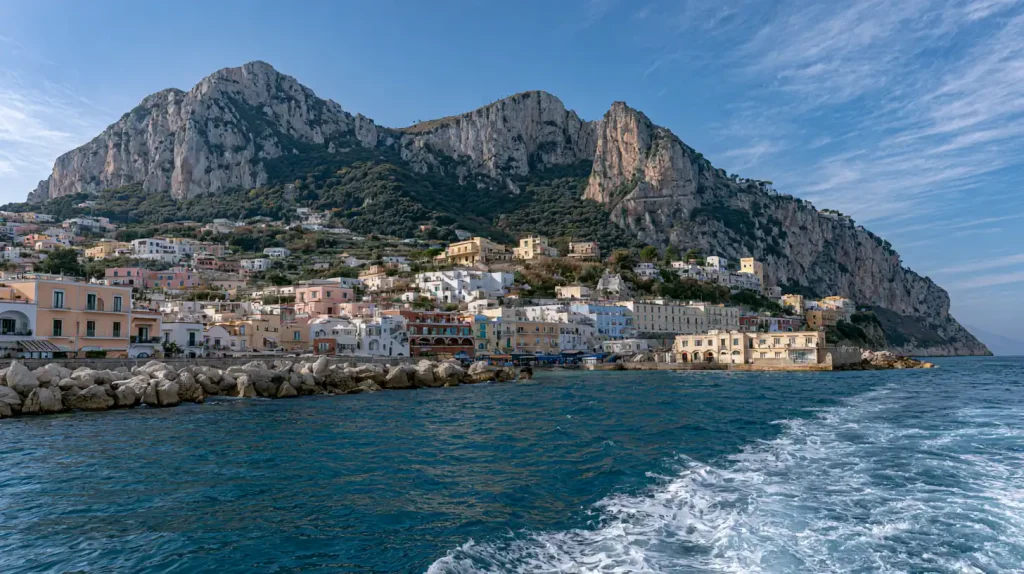
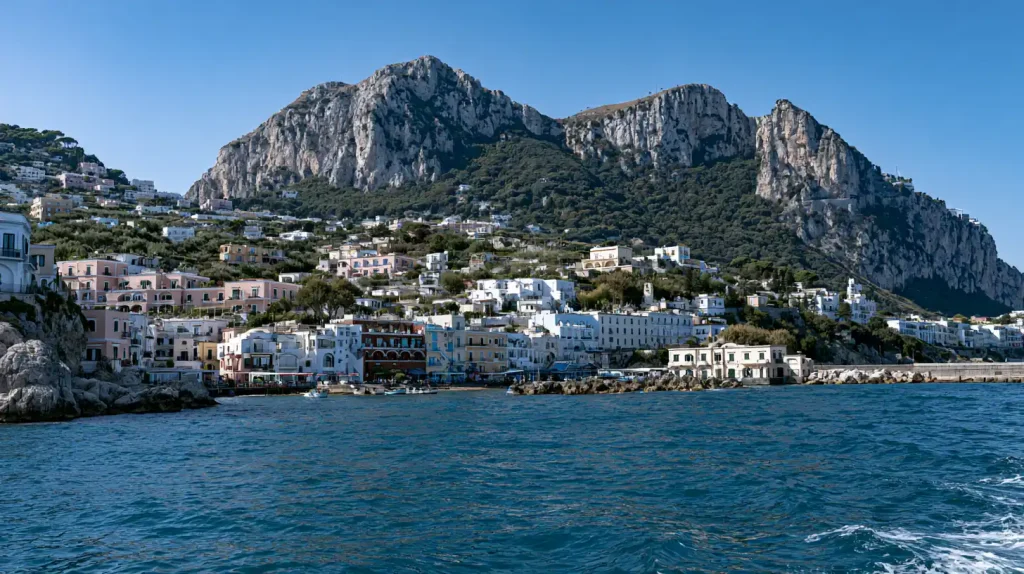
The ferry from Amalfi pulls into Marina Grande and Capri hits you like a rumor that turned out to be true. The rock face rises straight from the water. Shops and restaurants tumble down the hillside. The Faraglioni stacks stand offshore in a haze. And then you join the queue for the funicular with five hundred other people and the spell briefly breaks. Capri rewards planning. Without it, you spend half the day waiting.
A day trip to Capri from the Amalfi Coast is entirely doable, and for most visitors it is the right call financially — staying on the island is very expensive. Six to eight hours is enough to do the Blue Grotto, see the Piazzetta, explore Anacapri, and eat a proper lunch. You just need to move with some purpose.
Getting to Capri from the Amalfi Coast
Ferries to Capri run from Amalfi, Positano, Sorrento, and Naples. The route and departure point you choose depends on where you are based.
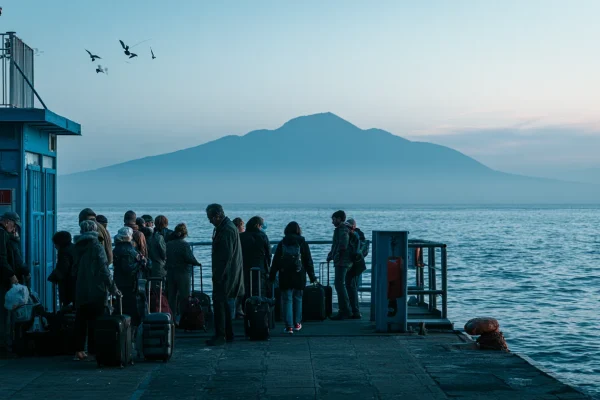
From Amalfi: Fast ferry (catamaran) to Marina Grande, journey time around 50-60 minutes. Multiple companies operate this route in season, including Alicost and Alilauro Gruson. Tickets cost from around 28 EUR one way. Up to 10 daily crossings in high season, with the first departure around 8:25 AM.
From Positano: Similar journey time, slightly shorter. Tickets in the same price range.
From Sorrento: The most frequent route, with multiple operators and departures roughly every 30-60 minutes in high season. Journey time is about 25-30 minutes. Slightly cheaper than the Amalfi route. Good option if you are basing yourself in Sorrento.
From Naples: About 1 hour 15 minutes by fast ferry, or around 80 minutes by slower boat. Good connection but the city handling can eat time.
Buy return tickets in advance in July and August. The last ferries back fill up fast, and missing the final departure is an expensive problem — you will need a hotel or a very costly water taxi. Book outward and return tickets as a pair before you board the first boat.
The Blue Grotto: Worth It?
This is the question everyone asks before visiting Capri. The honest answer is: sometimes.
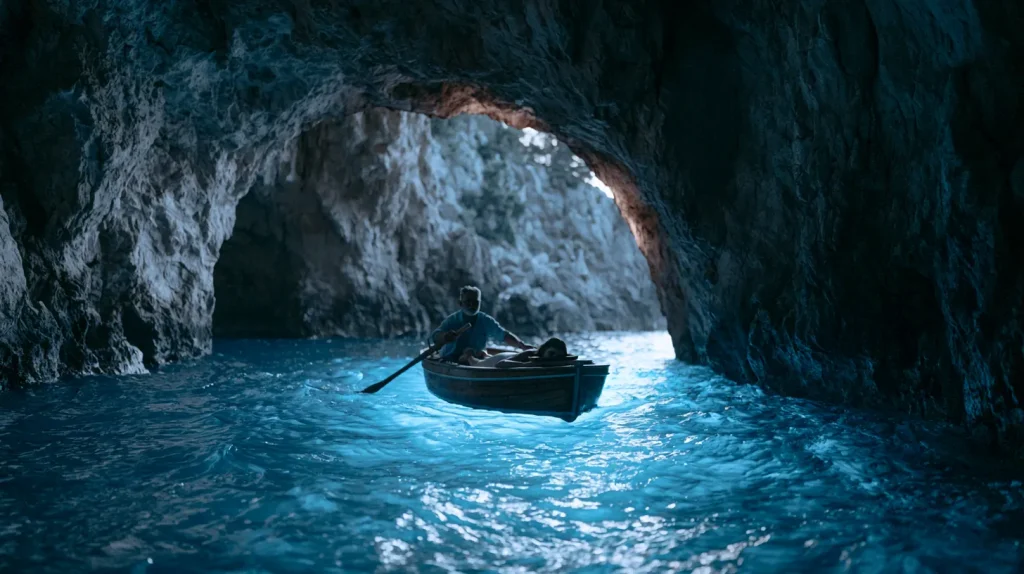
The Blue Grotto (Grotta Azzurra) is a sea cave on the northwest coast of the island where light enters through a submerged opening and refracts through the water to create an intense electric blue glow. The effect is genuinely remarkable. The five minutes you spend inside the cave are unlike most things you will see on a European trip.
Here is the catch: the entrance fee is 18 EUR per person, the visit lasts about five minutes, the approach involves transferring from your boat into a tiny wooden rowboat in open water, and the queue in July and August can easily exceed one hour of waiting in the sun on a rocking boat.
Whether that trade-off works depends on how you feel about queuing and whether you get seasick on stationary boats.
When to visit the Blue Grotto:
Go first thing in the morning. The best approach is to be at the grotto entrance by 9:00-9:30 AM at the latest — which means catching one of the first ferries from the mainland and going straight from Marina Grande by boat rather than stopping in town first. The difference between a 30-minute wait and a 90-minute wait is almost entirely about what time you arrive.
When the Blue Grotto is closed:
The grotto closes when sea conditions are rough — the entrance is only 1 meter high at sea level, and even moderate swell makes entry impossible. There is no way to guarantee it will be open on the day you visit. If you arrive to find it closed, the rowboat operators (who take a cut of the entry fee) will tell you to wait. Sometimes conditions improve. Sometimes they do not. Have a backup plan.
Alternative to queuing: Several boat tours of the entire island include a pass by the Blue Grotto from the water outside — you see the cave entrance and the blue glow through the opening without the queue or the additional fee. Not the same experience as going inside, but worth knowing if queues are very long.
The Piazzetta and Capri Town
The funicular from Marina Grande runs to the center of Capri town and costs around 2.20 EUR each way. The Piazzetta — Piazza Umberto I — is the social center of the island. Small, surrounded by cafes and designer boutiques, famous for people-watching. The coffee at a Piazzetta table costs around 5-7 EUR because you are not paying for coffee, you are paying for the seat.
For a better look without the premium, get a coffee standing at the bar inside any of the cafes. Same coffee, 1.50 EUR. Then walk out and admire the same view for free.
The shopping along Via Camerelle and Via Vittorio Emanuele leans toward luxury — Prada, Gucci, Hermès — but there are also shops selling limoncello, local ceramics, and the leather sandals that Capri has made since the 1950s (Amedeo Canfora on Via Camerelle is the most famous cobbler). The sandals are genuinely made to measure and cost 60-100 EUR for a custom pair. One of the more defensible purchases on the island given what most things cost here.
Anacapri and Monte Solaro
Anacapri is the upper village of Capri, quieter and less touristy than the main Capri town. Buses connect the two — about 15 minutes, 2 EUR — or you can take a taxi (fixed prices on the island, typically 15-20 EUR for the ride).
The main draw in Anacapri is the chairlift to Monte Solaro, the highest point on the island at 589 meters. A one-way ticket (up only) costs around 11-15 EUR, with the option to walk back down the mountain path. Return tickets are also available. The chairlift runs from roughly 9:30 AM to 5:30 PM, March through October.
The summit view covers the entire Bay of Naples — Capri spread below, Vesuvius across the water, the islands of Ischia and Procida visible in the middle distance, and on a clear day the Amalfi Coast ridge behind you. It is the best single view on the island and often overlooked by day-trippers who never make it past the Piazzetta. Allow 20-30 minutes at the top before heading back down.
suggested topic — Positano visit guide
Boat Tours Around the Island
A boat tour circling the island is the other way to see Capri properly, and arguably more satisfying than queuing for the Blue Grotto.
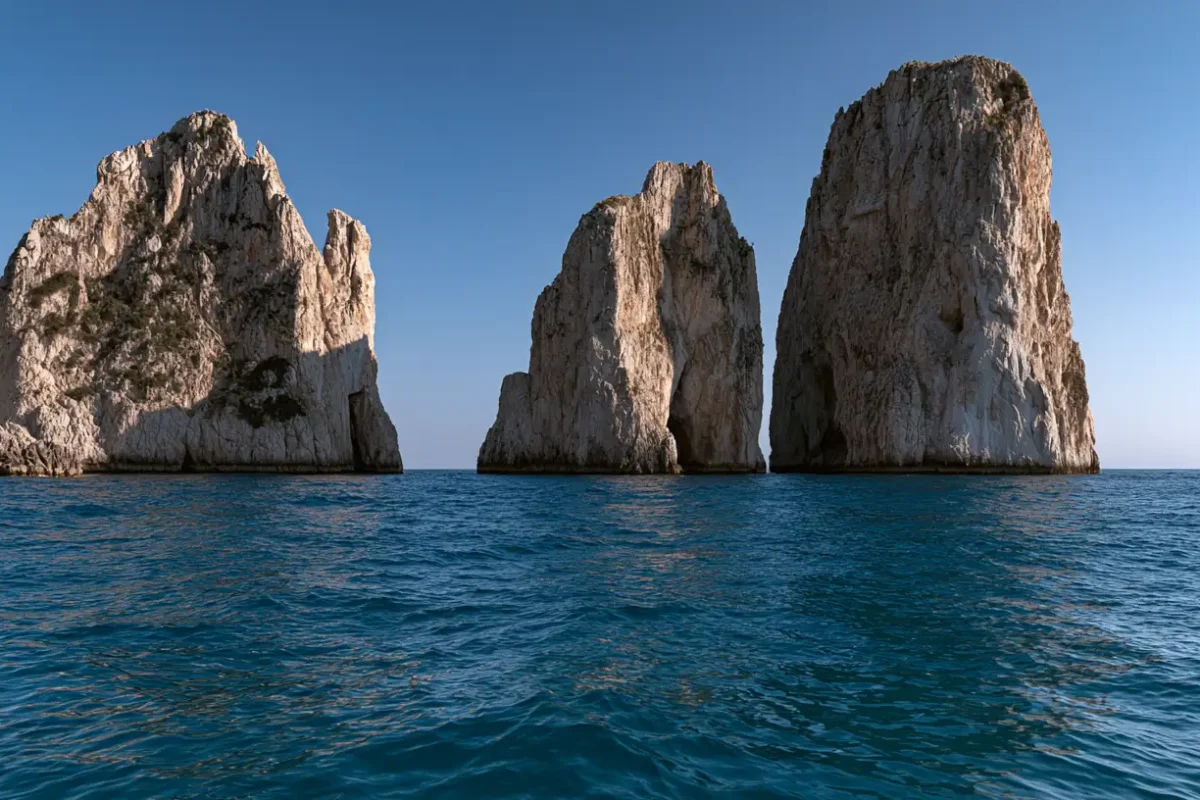
Shared group tours departing from Marina Grande run about 19-25 EUR per person for a two-hour circuit. The route passes the Faraglioni rock stacks — three limestone pillars rising from the sea that have become the symbol of the island — several sea caves, the natural arch at Arco Naturale, and the Green Grotto (Grotta Verde), which is less famous than the Blue Grotto but has no queue. Swimming stops are included on some tours.
Private boat tours start at around 160 EUR for two hours for up to six passengers. Expensive but gives you complete control over pace and stops.
If you can only choose one activity on Capri beyond walking the town, the boat tour is the more satisfying option than the Blue Grotto queue for most people. You see more, you move, and the Faraglioni from a small boat at water level is one of the better things you will see in southern Italy.
Villa Jovis
Villa Jovis is the best-preserved of the twelve Roman villas built on Capri by Emperor Tiberius, who effectively ran the Roman Empire from this island for the last decade of his life (27-37 AD). The historian Suetonius writes some lurid things about what happened here. Take them with some skepticism. The ruins sit at the northeast tip of the island, a 45-minute walk from the Piazzetta. The views from the cliff edge are extraordinary — a 300-meter drop straight to the sea.
Open from 10 AM to 7 PM in summer; closed Tuesdays. The walk there and back takes 90 minutes plus time at the site, so budget half a day if you want to include it. On a short day trip with other priorities, it is the first thing to cut. Come back if you have more time.
A Suggested Day-Trip Plan
Here is a realistic schedule for a day trip from Amalfi or Positano:
7:30 AM: Catch the first or second ferry from your base. Get to Marina Grande by 9:00 AM at the latest if the Blue Grotto is a priority.
9:00-10:30 AM: Go straight to the Blue Grotto by boat from Marina Grande. Queue, enter, experience. Return to town.
10:30 AM – 12:30 PM: Funicular to Capri town, walk the Piazzetta and Via Camerelle, coffee at a bar. Optional: walk to Arco Naturale (45 minutes each way from the Piazzetta).
12:30-2:00 PM: Lunch in Capri town or Anacapri. Budget 20-35 EUR per person for a sit-down meal.
2:00-4:00 PM: Bus to Anacapri, chairlift to Monte Solaro. Walk back down or chairlift back.
4:30 PM: Return to Marina Grande for the ferry back. Check your return departure time. Do not miss it.
This plan is tight. In July and August with queues, the Blue Grotto alone can eat two to three hours. You may need to choose between Blue Grotto and Monte Solaro if time is short. Blue Grotto is the more famous experience. Monte Solaro is the better one.
suggested topic — 3 Days in Amalfi Coast
Marina Grande: Arriving and Getting Your Bearings
Marina Grande is where every visitor lands, and it is busy in a way that can feel disorienting. Boat taxis, tour operators, ferries loading and unloading, souvenir shops, restaurants — all of it compressed into a narrow harbour. Do not stop here longer than you need to.
The key decision point is at the dock: do you go up to Capri town by funicular (turn left toward the funicular station), go directly to the Blue Grotto by small motor boat (turn right, buy a ticket from the rowboat operators at the dock), or board a group island tour departing from the harbour?
Make that decision before you step off the ferry. Walking around the harbour uncertain and getting approached by tour sellers wastes twenty minutes and depletes goodwill fast.
There are luggage storage facilities at Marina Grande if you are day-tripping with bags you do not want to carry. Small fee per bag, useful if you want to move freely.
One practical note about money: ATMs exist at Marina Grande and in Capri town. Cards are accepted nearly everywhere. Cash is still handy for small purchases, boat tickets bought at the dock, and the rowboat operators who take you inside the Blue Grotto. They prefer cash and the tip jar after the cave visit is entirely your call — though given how hard they row in a cramped wooden boat, they earn it.
FAQ
How much does a day trip to Capri cost?
Ferry from Amalfi: around 28 EUR each way (56 EUR return). Blue Grotto: 18 EUR. Funicular: 2.20 EUR each way. Boat tour: 19-25 EUR. Chairlift to Monte Solaro: 11-15 EUR. Lunch: 20-35 EUR. Total day budget: 130-180 EUR per person, not including accommodation.
When is the best time to visit Capri?
May and September offer the best balance of good weather, manageable crowds, and fair prices. July and August are the busiest months with the highest accommodation costs and longest queues at the Blue Grotto.
Is the Blue Grotto worth the money?
The experience inside is genuinely special — five minutes of glowing blue water unlike anything else on the coast. Whether it is worth 18 EUR plus potential queue time depends on your patience. In peak season with a 90-minute wait, many visitors conclude it was not worth it. In shoulder season with a 20-minute wait, most say yes.
Do I need to book ferry tickets to Capri in advance?
In July and August, yes — particularly for return journeys in the late afternoon when boats fill up. In shoulder season, tickets are usually available at the port. Book online or at the ferry company offices at the dock.
Can I do Capri as a day trip from Naples?
Yes. Fast ferry from Naples is about 1 hour 15 minutes. Multiple operators run frequent services. Naples is actually a convenient base for Capri, especially if you are combining it with Pompeii.