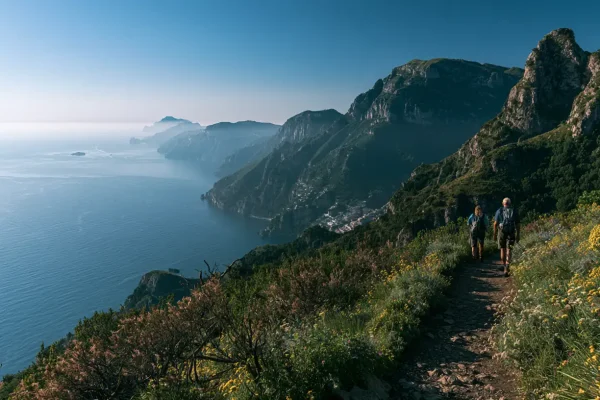
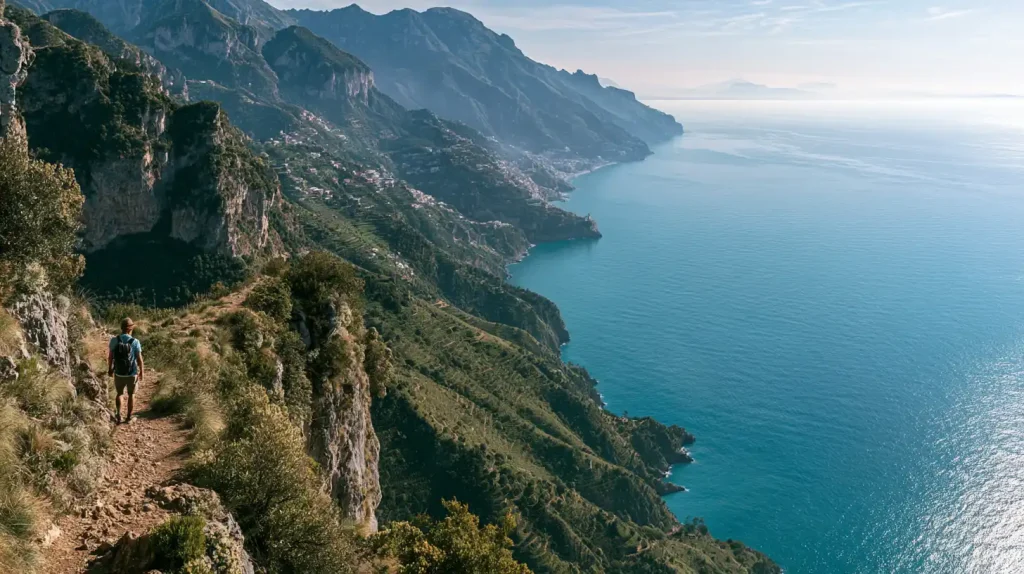
The ridge comes into view about forty minutes into the hike, when the trail rounds a corner and the Amalfi Coast suddenly appears below — all of it at once, from Positano to the islands, with the sea flat and blue and the villages looking like they were placed there by someone with very good taste. At that moment, even if your legs already ache from the climb up to Bomerano, you understand why people call this the most beautiful hike in Italy.
The Sentiero degli Dei — Path of the Gods — is a ridge-top trail that runs along the mountains above the Amalfi Coast between Bomerano in the Agerola municipality and Nocelle, a hamlet above Positano. It is roughly 7.8 km of trail, plus up to 1,800 steps if you descend to Positano at the end. The views are consistently stunning. The difficulty is more variable than most guides admit. Let us break it down properly.
The Route Options
There are two main ways to approach this hike, and they are meaningfully different.
Classic route: Bomerano to Nocelle
This is the core trail. You start in Bomerano at the upper end, walk the ridge to Nocelle, and take the bus or arrange a taxi for the return. Distance: 7.8 km. The trail goes gently downhill overall — about 235 meters of ascent and 780 meters of descent from Bomerano. Time: 2.5 to 3.5 hours at a relaxed hiking pace with stops for photos (faster estimates you will see online ignore the photo stops, and the photo stops are the point).
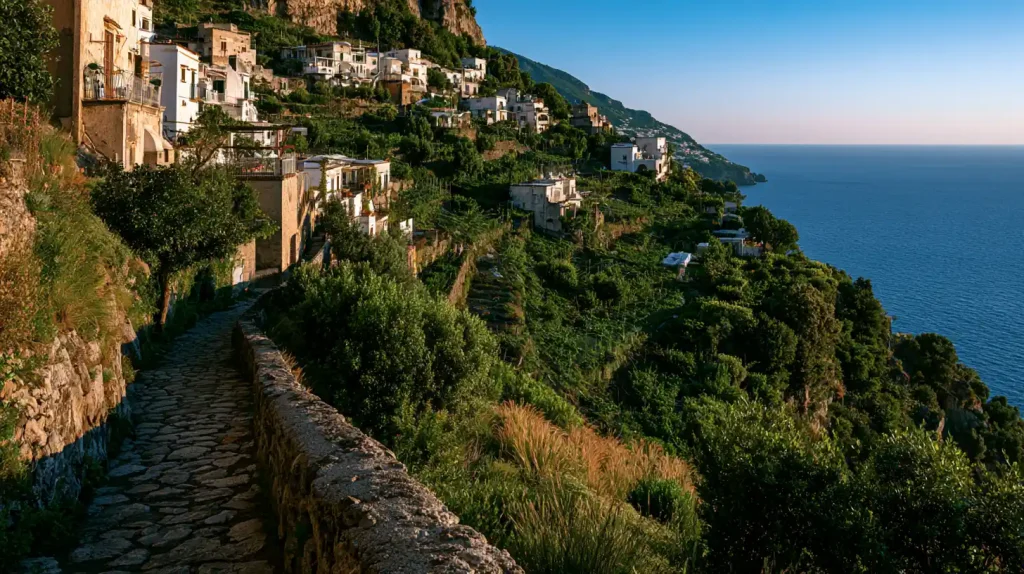
From Nocelle you can either take the SITA bus down to Positano or walk down the 1,800 steps of stone staircase that connect Nocelle to the coast. The bus is the sane option. The stairs are doable but punishing on the knees, especially in the afternoon heat.
Full route: Bomerano to Positano on foot
Same trail, but you descend the stairs from Nocelle all the way to Positano at the end. Total distance around 9.2 km. Total time: 4.5 to 5.5 hours. The 1,800-step descent adds significant stress to your knees and calves regardless of fitness level. Use hiking poles if you have them.
Reverse route: Nocelle to Bomerano
Starting from Nocelle means climbing up from Positano (all those stairs in reverse) or taking the bus up to Nocelle. The trail is then walked west to east, ending at Bomerano. Some people prefer this because you end at the higher point with easier bus access. Think of it as the classic route walked in reverse.
Suggested topic — Positano visit guide
Difficulty: The Honest Version
The trail from Bomerano to Nocelle is rated easy to moderate. On a cool spring morning with good footwear, that is accurate. The path is well-maintained, the drops have handrails in the more exposed spots, and the elevation change is manageable.
However.
The descent to Positano at the end is a different animal. Eighteen hundred steps of uneven stone, some slippery when wet, all of them steep. Your knees will register a complaint by step 800 and file a formal grievance by step 1,400. This section is what people mean when they say the Path of the Gods is harder than they expected. It is not the ridge trail. It is the stairs.
The trail is also not suitable for anyone with a serious fear of heights. Several sections run along exposed ridgeline with significant drops below. The falls are fenced or marked, but the exposure is real. If heights make you freeze up, consider this before committing.
And in July and August, the exposed ridge sections get very hot. The direct sun, the lack of shade, and the reflected heat from the rock can push the effective temperature well above 35 Celsius. People have had heat exhaustion on this trail in summer. It is officially recommended to avoid hiking during the hottest months if you can.
Getting to the Trailhead in Bomerano
The trailhead is in Bomerano, a small village on the Agerola plateau above the coast. The official starting point is Piazza Paolo Capasso, from where you follow Via Sentiero degli Dei for about 15-20 minutes to reach the actual trail entrance.
By bus (recommended)
SITA bus line 5080 departs from Amalfi town and reaches Bomerano in about 40 minutes. Early buses start around 6:00-7:00 AM depending on the season. This is by far the easiest approach — no parking issues, no narrow mountain road to navigate, and you arrive at the trailhead relaxed.
A small bar near Piazza Paolo Capasso is usually open in the morning and is the last place to buy water before you start. Use it. The trail has no water sources along its entire length.
By car
Drive the SP41/SP21 mountain road from Amalfi — about 16 km and 35 minutes. The road is narrow and winding. Small rental cars manage it fine. Larger vehicles will have difficulty at some bends. Free parking is available on white-lined street spaces near the trailhead, but fills fast in peak season. A paid car park near the stadium charges around 5 EUR per day.
If you drive to Bomerano and hike one way to Nocelle, you face the logistical problem of getting back to your car. One option: drive to Nocelle, take the bus to Bomerano, hike back east. Another: hike to Nocelle, get the bus back to Amalfi, then taxi back to Bomerano to collect the car. Both work.
Best Time to Hike
April and May are the best months. The flowers are out across the hillside — wild orchids, rosemary, broom, poppies — the temperatures are mild, and the spring light makes the sea color especially vivid. You will share the trail with some other hikers but not with crowds.
September and October run a close second. The summer heat has dropped, the water is warmest for a post-hike swim, and the early autumn light on the coast is beautiful.
June is good but getting busier and warmer. The trail is manageable with an early start — aim to be walking by 7:30 or 8:00 AM at the latest.
July and August: possible but not ideal. The exposed sections get genuinely hot in the middle of the day. If you must hike in peak summer, start at first light (6:00-6:30 AM), carry extra water, and plan to be off the ridge by 11 AM. Many guides will not say this directly but the recommendation to avoid summer is real and grounded in actual heat risk.
November through March: the trail can be muddy and some sections carry a landslide risk after heavy rain. The Agerola plateau is higher and colder than the coast. Check conditions before you go. The trail is sometimes closed after serious storms.
What to Bring
Water: 1.5 to 2 liters minimum per person. The trail has no water sources, no cafes, and no resupply points between Bomerano and Nocelle. In summer, bring more.
Food: Pack a lunch or substantial snacks. There is a small bar-restaurant in Nocelle village at the end of the trail, and the bar in Bomerano at the start. Nothing in between.
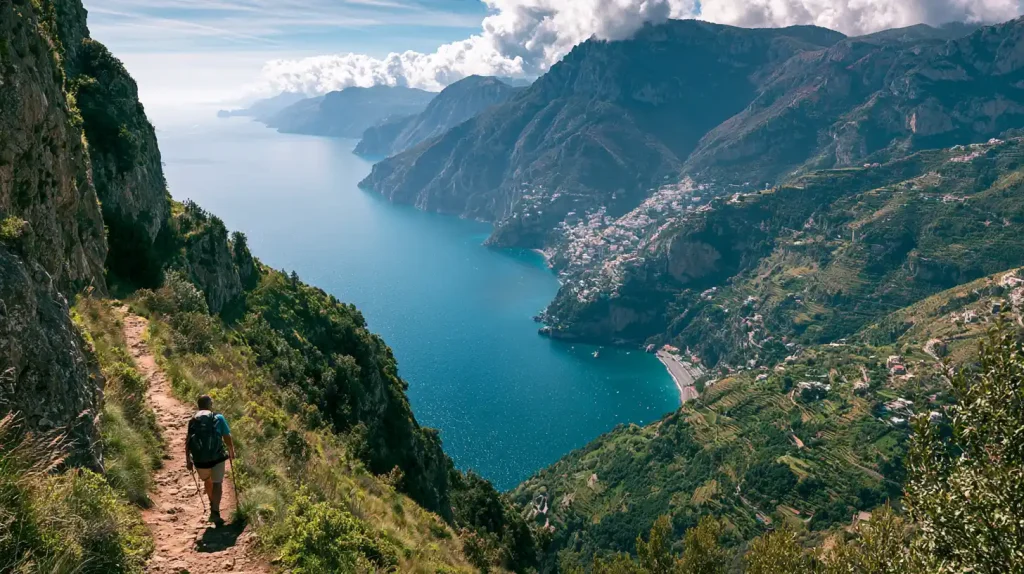
Footwear: Proper hiking shoes or trail runners with grip. The path has loose rocks in places and the descent to Positano is particularly demanding on slippery stone. Sandals and flat sneakers are a genuine mistake here.
Hiking poles: Optional for the ridge section. Strongly recommended for the Nocelle to Positano descent if your knees are at all sensitive.
Sun protection: Hat, sunscreen, sunglasses. The exposed ridge has no shade.
Getting Back
From Nocelle: The SITA bus runs back to Positano and on to Amalfi. Check the timetable before you start — missing the last bus means the stairs are your only option. The last bus in high season departs in the early evening.
From Positano: Ferry or SITA bus back to Sorrento or Amalfi, depending on your base.
Suggested topic — 3 Days in Amalfi Coast
The Trail Experience Section by Section
Most guides describe the Path of the Gods as a single continuous experience. In reality, the trail has three distinct phases, each with its own character.
Phase 1: Bomerano to the ridge (0-2 km)
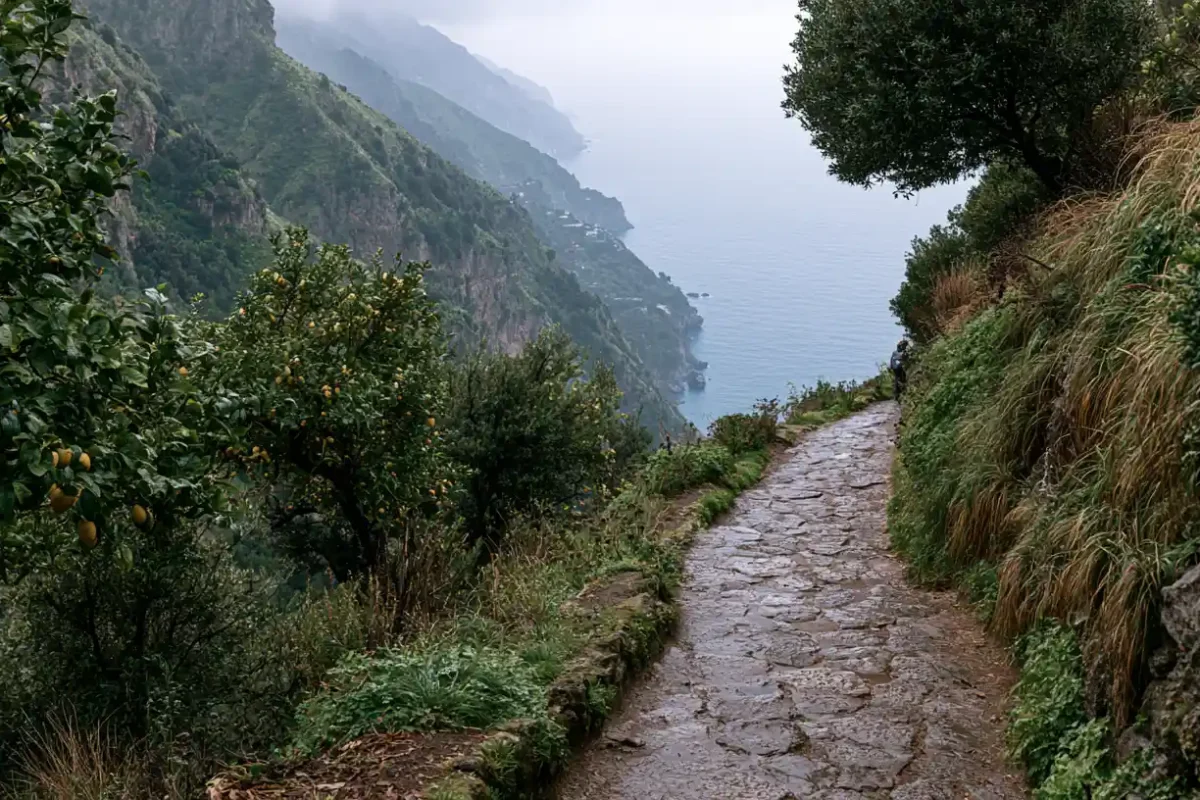
This is the initial climb from the Bomerano trailhead. The path heads uphill through terraced lemon groves and Mediterranean scrub before gaining the main ridge. It is the most physically demanding section of the hike despite being the shortest. This is where you find out if your footwear is up to the task.
Phase 2: The ridge traverse (2-6 km)
This is what you came for. The trail follows the ridge line with the Amalfi Coast spread below on one side and the mountains of the Lattari range above on the other. The path dips and rises gently, never dramatically. The views are constant, shifting with each curve of the trail. You will stop here many times. Build that into your time estimate.
Some sections of the ridge are exposed — the path is narrow and the drop on the seaward side is real. Handrails exist at the most precarious points, but there are stretches where you need to be paying attention. Keep children close. Do not reverse onto the edge for a photo.
Phase 3: Nocelle and the descent (6-7.8+ km)
The trail ends in Nocelle. The village has a small bar-restaurant — Trattoria Santa Croce — where most hikers stop for a cold drink and a rest before deciding what to do next. From here the choice is: bus to Positano, or the 1,800-step stone staircase.
The staircase is the part that earns the Amalfi Coast its reputation for being harder than it looks. The steps are old, irregular, and steep. They go down to Arienzo Beach first, then continue on separate paths to the main Positano area. If your knees are solid and you have hiking poles, it is a legitimate and scenic continuation. If you are already tired and your knees are not great, take the bus. There is no shame in this. The bus is also faster.
Accommodation Near the Trailhead
Staying in Bomerano or Agerola is an option that almost no guide suggests but makes a lot of sense if you want a very early start. The Agerola plateau sits 650 meters above sea level, which means it is significantly cooler than the coast in summer — a genuine advantage if you are hiking in June or early July.
A small number of agriturismo farms and B&Bs operate in the Agerola area. Prices are considerably lower than anything on the coast below, and the experience of waking up early in the mountains and walking to the trailhead in the cool morning air is genuinely different from taking the bus up from Amalfi.
The flip side: Agerola has very little evening life and limited restaurant options. If you want to combine the hike with the Amalfi Coast experience, staying at the coast and taking the early bus is still the standard approach.
FAQ
How difficult is the Path of the Gods?
The ridge trail from Bomerano to Nocelle is easy to moderate — manageable for most reasonably fit people with proper shoes. The descent from Nocelle to Positano (1,800 steps) is significantly harder on the knees. Not for people with a serious fear of heights.
How long does it take to hike the Path of the Gods?
Bomerano to Nocelle: 2.5 to 3.5 hours at a relaxed pace. Full hike to Positano including the stair descent: 4.5 to 5.5 hours.
Can I hike it in July or August?
Technically yes. In practice, the exposed ridge gets very hot in summer. Start very early — before 7 AM — carry extra water, and be off the ridge before midday. Many experienced guides recommend choosing April-June or September-October instead.
How do I get to Bomerano without a car?
SITA bus 5080 from Amalfi, about 40 minutes. Early buses start around 6:00-7:00 AM. This is the standard approach for visitors staying on the coast.
Is the Path of the Gods suitable for children?
The ridge trail is manageable for older children who are comfortable with heights and can handle 3-4 hours of walking. The exposed sections and the Positano descent make it unsuitable for young children or anyone not steady on their feet.