Most places on the Amalfi Coast compete on beauty. Ravello competes on quiet. It sits 350 meters above the coastline on a ridge that puts the whole arc of the bay below you, and the village at the top is calm in a way that Positano and Amalfi town rarely are. There are no beaches here. The crowds that pile off the ferries do not come up this far. The people who do come up tend to stay awhile.
Two villas are the reason most people make the climb: Villa Rufolo, right in the town center near the main piazza, and Villa Cimbrone, a fifteen-minute walk further through the village. They are genuinely different from each other, and which one you prioritize depends on what you are after.
Villa Rufolo
Villa Rufolo dates to the 13th century. The family that built it was one of the most powerful trading dynasties in medieval southern Italy. What remains today is a combination of architectural fragments — a Moorish cloister, a Norman tower, terraced gardens — set on a clifftop with views that drop straight down to the coast.
Richard Wagner visited in 1880 and declared the gardens the inspiration for the magic garden of Klingsor in his opera Parsifal. That connection became the seed of what is now the Ravello Festival, an annual classical music series that has run for decades and is today one of Italy’s most respected summer music events.
Tickets and hours
Adult admission is 8 EUR. Seniors and children aged 5-12 pay 6 EUR. Groups of 15 or more pay 7 EUR per person. Tickets are sold at the gate — no online booking is available or needed. The villa opens at 9:00 AM and typically closes at 17:00, extended to 20:00 during the Ravello Festival period (4 July to 5 September 2026).
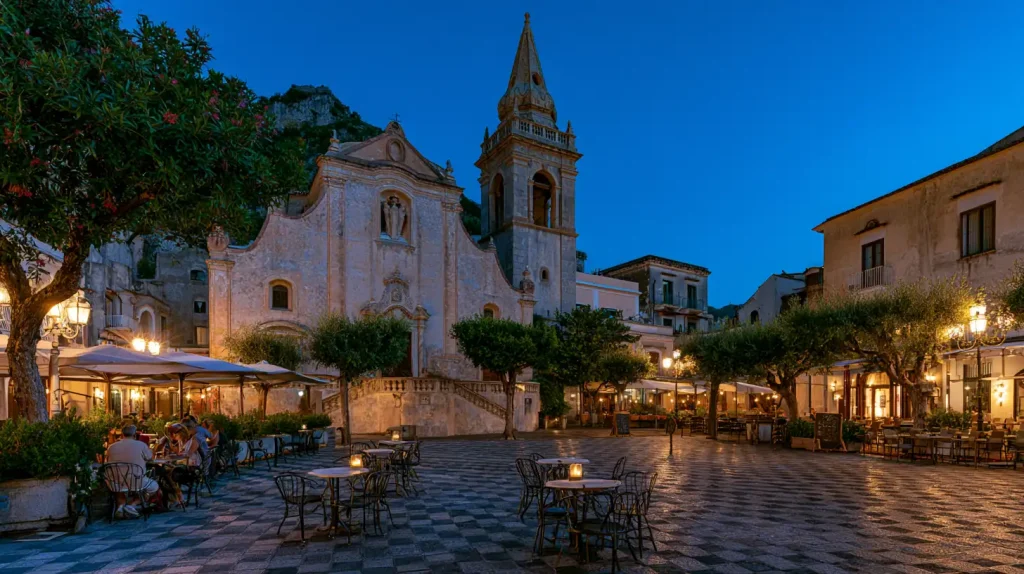
If you are visiting during the festival, the outdoor concert stage on the belvedere terrace is one of the most dramatic performance venues in Europe. The stage is set with the sea behind the performers and the hills fading into distance on both sides. Even if you cannot get tickets for a specific concert, the garden experience during festival season has a different energy — there are more people, but also more life.
What to see inside
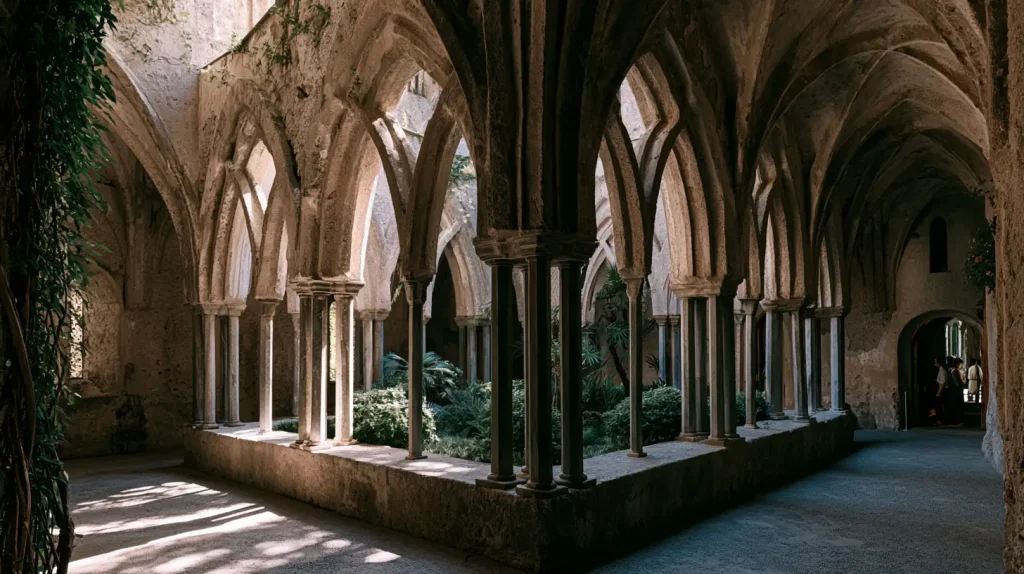
The Moorish cloister is the architectural highlight — interlaced arches and a central courtyard that would not look out of place in Cordoba. The Tower of Nebbia (Tower of Mist) gives a good elevated perspective over the gardens. The terraced gardens themselves are smaller than people expect, but the positioning above the coast means the views compensate.
suggested topic — 3 Days in Amalfi Coast]
Villa Cimbrone
Villa Cimbrone is the one with the Terrace of Infinity. That name is not marketing — standing at the balustrade with the marble busts beside you and the sea below and nothing between you and the horizon except blue air, you understand why people have been coming here for over a century.
The villa was rebuilt in the early 20th century by an English aristocrat, Ernest Beckett (later Lord Grimthorpe), who bought the ruins in 1904 and spent decades restoring and expanding the gardens. Virginia Woolf stayed here. Greta Garbo hid here from the press in 1938 with her lover Leopold Stokowski. The place has that particular quality of somewhere that attracted unusual people in unusual circumstances.
Tickets and hours
Admission to Villa Cimbrone gardens is 7-10 EUR per person (verify the current rate before visiting — prices have varied between sources). Gardens are open daily from 9:00 AM to sunset, with last entry around 7:30 PM in summer. The hotel that now occupies the main villa building is private, but the gardens are publicly accessible and well worth the price of admission.
What to see inside
The Terrace of Infinity is the main event — eighteen classical marble busts lined along a stone balustrade, with the sea spread below. Get there in the morning before the tour groups arrive and it feels like you have the coastline to yourself. The Buddhist-influenced temple of Bacchus, the crypt garden, and the path through the rose garden all reward slower walking.
The villa also contains a small museum of archaeological finds. Easy to overlook. Worth a few minutes.
Villa Rufolo or Villa Cimbrone?
Both, if you have time — the combined admission is around 15-17 EUR and you can see both in three to four hours with a coffee break in between. If you only have time for one: Villa Cimbrone for the Terrace of Infinity and the romantic garden atmosphere. Villa Rufolo for the medieval architecture and festival context.
Getting to Ravello
Ravello is reached by road — there is no ferry or train. The easiest and cheapest option is the SITA bus from Amalfi town.
By bus from Amalfi
The SITA bus departs from Amalfi’s main piazza and takes 25-30 minutes to climb the switchback road up to Ravello. The ticket costs around 1.50 EUR. Buses run roughly every 30-60 minutes throughout the day. The last bus back down to Amalfi in high season departs around 22:00. In low season, check the timetable — the last bus can be as early as 20:00.
This is genuinely the most practical way to visit. The road up is winding and narrow, and driving it yourself does not add much to the experience.
By car
The Amalfi Coast road (SS163) operates an alternating plate restriction from March 30 through September 30, 2026 in the 10:00-18:00 window. Odd-numbered dates restrict vehicles with odd final plate digits; even dates restrict even-ending plates. If you are renting a car, check your plate number against the calendar before driving. Getting caught at a checkpoint is expensive and entirely avoidable.
Parking in Ravello is limited. There is a small paid car park near the entrance to town. In peak summer, spaces fill early.
By private driver or taxi
From Amalfi, a private driver costs around 30-50 EUR one way. From Positano or Sorrento, significantly more. Comfortable option if you are traveling with a group or have luggage.
Best Time to Visit Ravello
Ravello rewards the same seasonal logic as the rest of the coast — May, early June, and September are the best windows. The weather is good, the crowds are manageable, and the gardens at both villas are at their most photogenic.
July and August bring peak visitors and peak heat. The Ravello Festival (4 July to 5 September 2026) adds a musical dimension that many visitors specifically come for, but also adds crowds around the festival schedule. If you want to see a concert at Villa Rufolo, book well in advance — program and tickets are available on the festival’s official website.
April and October are viable. The gardens are still maintained and the views are unchanged, though some restaurants and small hotels reduce their hours. A quieter and often more rewarding experience.
Avoid arriving in Ravello between 11am and 2pm in July or August without a plan. That is when day-tripper buses from cruise ships and organized tours arrive simultaneously. The piazza in front of Villa Rufolo can feel genuinely overrun. Arrive at 9am when the gates open, or after 3pm when the coach tours start heading back down.
The Ravello Festival
The Ravello Festival is one of Italy’s oldest and most respected classical music events. It has run in various forms since 1953. The outdoor concerts held on the belvedere terrace of Villa Rufolo — with the sea as backdrop — are unlike almost anything else in European cultural life.
The 2026 programme runs from early June through late September. Tickets and the full schedule are available from the festival’s official website, typically from early in the year. Evening concerts often start around 9pm as the light fades over the bay. Dress for a cool evening even in summer — the breeze at 350 meters is real.
Beyond the Villas
The Ravello Duomo (Cathedral of Santa Maria Assunta) stands in the main piazza and is free to enter. The interior holds two 12th-century marble pulpits with mosaic decoration — the one on the left features an eagle lectern considered one of the finest pieces of medieval Italian craftsmanship in the south. Most visitors walk past it to get to Villa Rufolo. That is their loss. The pulpits alone make the five minutes worthwhile.
The adjacent Museo del Duomo holds treasures from the cathedral, including a collection of Roman and medieval artifacts. Admission is modest. The museum is often empty, which in Ravello passes for a recommendation.
The main piazza, Piazza Duomo, is genuinely one of the better town squares on the Amalfi Coast for simply sitting. The cafe tables face the cathedral and the fountain, the WiFi works, and the coffee is good. After two hours in villa gardens, sitting with an espresso and watching the village breathe is its own reward.
The road from Ravello toward Scala — the next village over on the ridge — offers some of the best walking on the coast above the tourist circuit. A two-hour loop through Scala and back via the old mule paths gives you forested hillside, small stone churches, lemon groves, and virtually no other tourists. Scala is one of the least visited hill villages in the area and genuinely lovely for that reason. The track is well marked. Bring water.
Where to Eat in Ravello
Ravello’s restaurant scene leans toward the mid-range and above. The location commands premium prices, and most places know it. That said, a few stand out for quality.
For a full meal, restaurants along Via Roma and around Piazza Duomo serve the classic dishes of Campania — pasta with local clams, grilled fish, buffalo mozzarella with local tomatoes, the sgroppino lemon sorbet drink that you find all over the Amalfi Coast. Budget 25-40 EUR per person for lunch with wine at a mid-range trattoria.
For something lighter: the alimentari (small grocery shops) near the piazza sell local cheeses, cured meats, and fresh bread for putting together a picnic. Take it to the belvedere at Villa Rufolo if you have a ticket, or find one of the public viewpoints in the village. A picnic with that view costs you very little.
One thing worth knowing: coffee and pastry in Ravello are notably cheaper if you order at the bar rather than at a table. The terrace premium is standard across the Amalfi Coast, and Ravello is no exception.
Suggested topic — Path of the Gods Hike
FAQ
How much are tickets for Villa Cimbrone and Villa Rufolo?
Villa Rufolo: 8 EUR adults, 6 EUR seniors and children 5-12. Villa Cimbrone: around 7-10 EUR (verify before visiting). Tickets for both villas are sold at the gate.
Do I need to book in advance?
No advance booking is needed for either villa on a standard visit. For Ravello Festival concerts at Villa Rufolo, tickets should be booked well in advance through the festival website.
How do I get to Ravello from Amalfi?
SITA bus from Amalfi’s main piazza — about 25-30 minutes, 1.50 EUR. Buses run roughly every 30-60 minutes. Last bus back in high season departs around 22:00.
How long do I need in Ravello?
Three to four hours covers both villas at a relaxed pace with coffee and lunch in the piazza. If you are attending a festival concert, plan for a full day and evening.
Is Ravello worth the detour from Positano or Sorrento?
Yes. The altitude and quiet make it feel genuinely separate from the rest of the coast. Most first-time visitors wish they had budgeted more time here. The combination of both villas plus the Duomo and a long lunch gives a full, rewarding day.
Can I visit Ravello as a day trip from Naples or Sorrento?
Yes, though it makes for a long day. From Naples: train or ferry to Amalfi, then SITA bus up to Ravello. From Sorrento: bus or ferry to Amalfi, then SITA bus up. Total travel time each way is roughly 1.5-2 hours. Start early and plan to be on the last bus back by 21:00 in high season.
Is Ravello suitable for visitors with limited mobility?
Partially. The road from the bus stop into the village is manageable on flat ground. Villa Rufolo has some slopes and steps but is generally navigable. Villa Cimbrone has a longer walking path and some uneven terrain. The Terrace of Infinity itself is accessible, but the route there involves some inclines. Contact the villas directly if you have specific mobility questions before visiting.