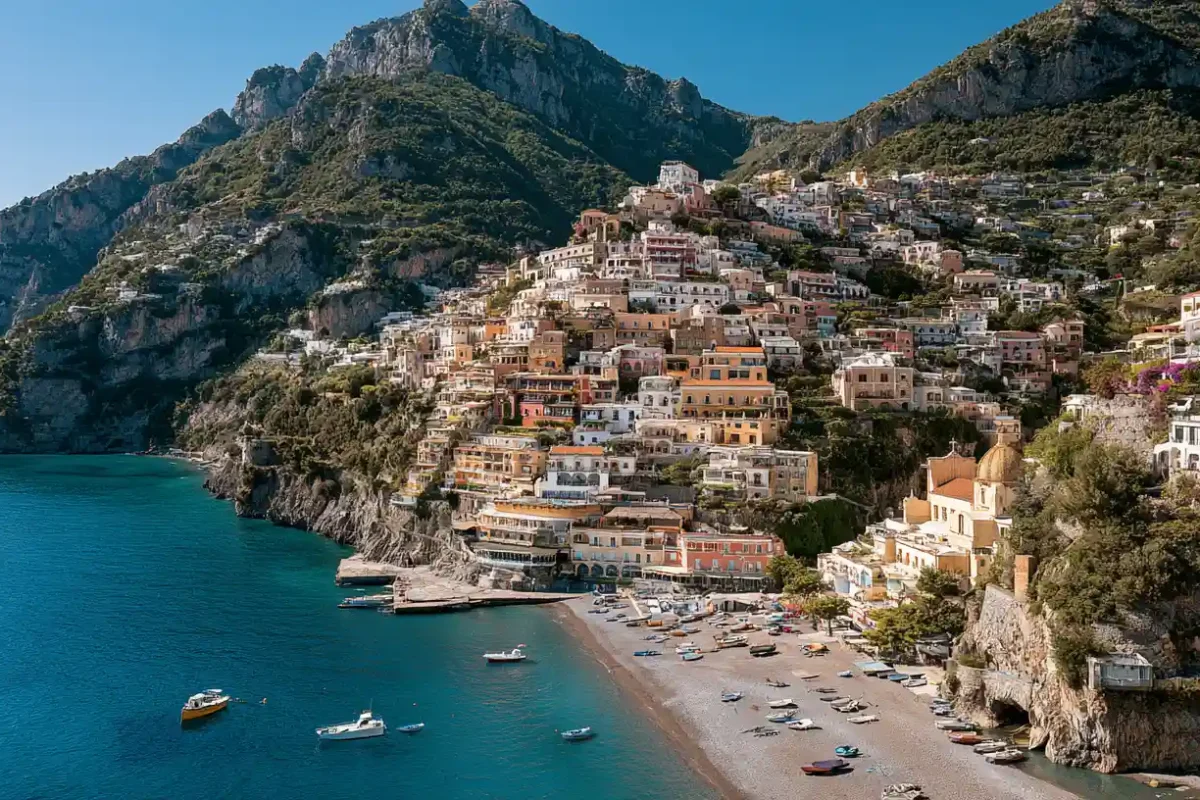
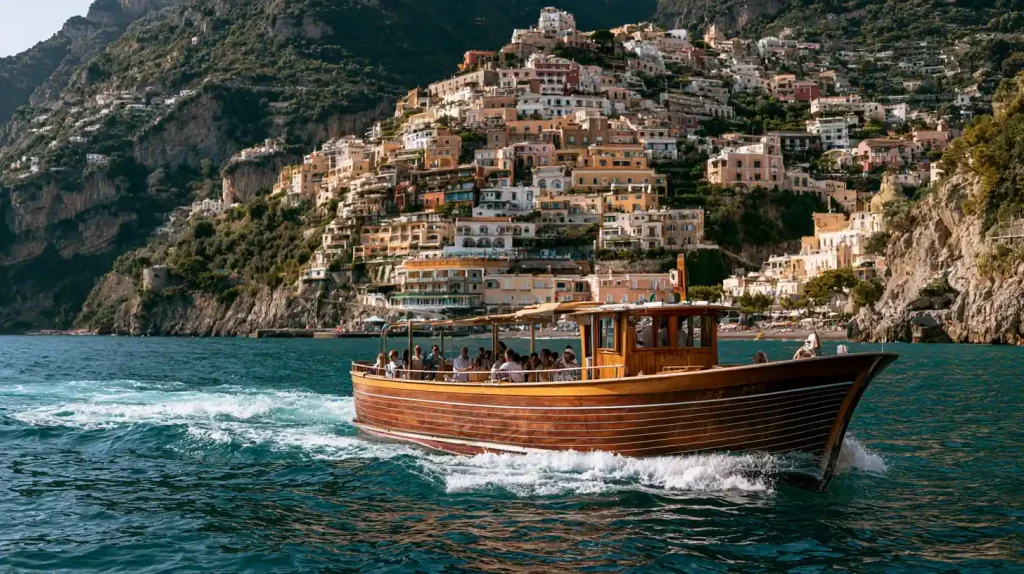
You see the photo ten thousand times before you get there — a cascade of pink and white houses spilling down a cliff toward a blue-green sea. Then you arrive and realize: yes, it actually looks like that. Positano is one of those rare places that delivers on its reputation. The catch is figuring out what to do once the initial wow fades, because the town itself is small. Very small. And the stairs will humble you within the first fifteen minutes.
Positano clings to a near-vertical hillside on the southern stretch of the Amalfi Coast between Sorrento and Amalfi town. Everything in it is either up or down. Streets are not really streets — they are staircases, and the main thoroughfare, Via Cristoforo Colombo, is a zigzag of steps from the top of town to the beach. If you have limited mobility or are traveling with young children, keep this in mind before committing to a full day here.
What to Do in Positano
The honest answer is that Positano rewards wandering more than ticking off a list. The town itself is the attraction. That said, there are a few things worth pointing your time at.
Church of Santa Maria Assunta
The town’s main church sits at the foot of the main staircase near the beach. The ceramic-tiled dome in majolica blue and yellow is what you see in most aerial photos of Positano. Inside, the church holds a Byzantine Black Madonna brought here, according to local legend, by a ship whose crew heard a voice saying “Posa, posa” — put it down here — which is also how the town got its name. Entrance is free. Worth the ten minutes even if you are not especially interested in churches. The building is genuinely old and the interior is cool and quiet, which is a relief after the midday heat on the stairs.
Next to the church, there is a Roman archaeological site: the remains of a seaside villa with frescoes similar in style to those found in Pompeii. The museum is open all year for guided visits. Not everyone knows it is there, which makes it one of the few quiet spots in town and worth the short detour.
Marina Grande Beach
The main beach at the bottom of the village. It is a mix of pebbles and coarse sand — not the soft white sand of tourist brochure fantasy. Still very beautiful, and the color of the water makes up for the texture. Sunbed and umbrella rentals cost around 15-25 EUR per pair depending on the season and position. The water is remarkably clear and the swimming is good from late May onward.
Fornillo Beach
A smaller, quieter alternative accessible by a cliff path from Marina Grande in about ten minutes, or by water taxi. The locals-to-tourists ratio here is noticeably better. A beach bar and a couple of restaurants sit at the back. If you want to actually swim without feeling like you are in a sports stadium, start here.
Arienzo Beach
Tucked into a cove south of Fornillo, accessible via about 300 steps down from the road or by water taxi. Worth it if you want to escape the crowds entirely. Take water and something to eat — there is a beach bar, but options are limited.
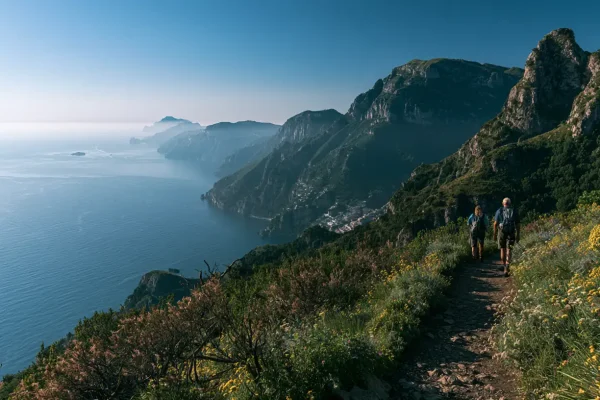
suggested topic — Path of the Gods Hike
Getting to Positano
The Amalfi Coast road is one of the most spectacular and chaotic drives in Europe. If you are renting a car, know that the SS163 coastal road is extremely narrow, often clogged in summer, and parking in Positano itself is nearly impossible. Most visitors are better off leaving the car behind.
By Ferry (recommended in season)
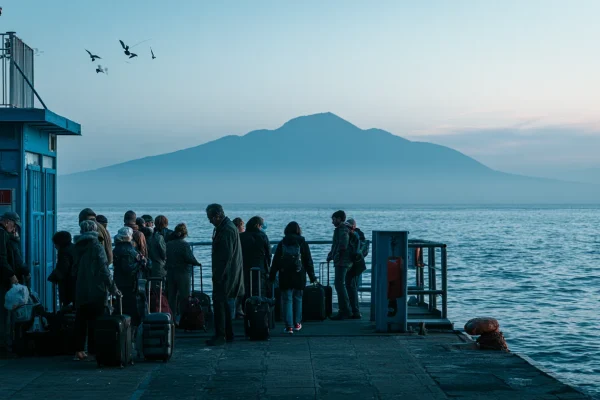
Ferries run from Naples, Sorrento, Amalfi, and Salerno from April through October. A ticket from Naples costs around 27-30 EUR one way. From Salerno, around 16 EUR. From Sorrento, around 12-15 EUR and about 35 minutes by sea. Arriving by sea gives you the full cinematic approach to the village that arriving by road simply cannot match. Book ahead in July and August — popular routes sell out.
By SITA Bus
The SITA bus runs along the Amalfi Coast road connecting Sorrento, Positano, Amalfi, Ravello, and Salerno. A single-ride ticket costs 1.80-6.80 EUR depending on distance. The bus stops at the top of Positano, from where you walk (or descend, rather) into town. Getting back up is the workout part. Buy tickets at bars and tobacco shops along the route — not on the bus. Validate them as you board.
By Private Transfer
From Sorrento, a private taxi costs roughly 50-70 EUR one way. Comfortable, but the road is still narrow and winding regardless. If you are prone to carsickness, the ferry is a better option.
Best Time to Visit Positano
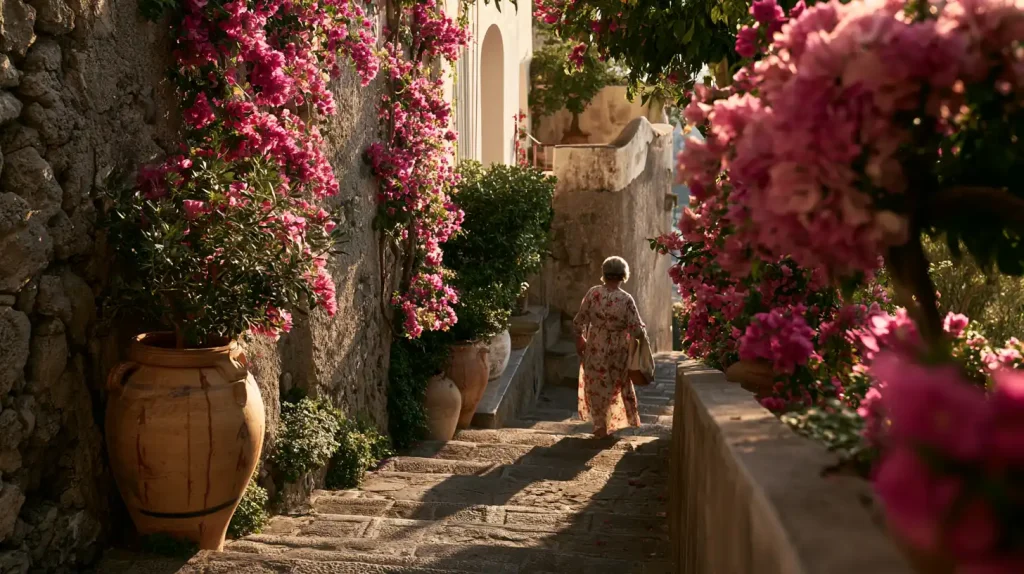
May is the sweet spot. The flowers are out, temperatures are pleasant — mid-20s Celsius — the water is warm enough to swim, and the July-August crowds have not yet arrived. Restaurants are open, ferries are running, and you can walk along the beach without negotiating for space.
June is still good but noticeably busier. July and August bring peak crowds, peak prices, and ferries running late from demand. If you visit in high summer, arrive before 9am. Marina Grande at 8am is a different experience from Marina Grande at noon.
September is a strong runner-up to May. The water is at its warmest, crowds thin slightly, and the afternoon light turns golden and flattering for the village.
April and October are cooler and quieter. Some restaurants and ferries reduce their schedules. Still valid, especially for walking the coast.
November through March: Positano mostly closes down. A handful of hotels and restaurants stay open and the village feels completely different — quieter, more honest, genuinely beautiful in a different way.
What to Eat in Positano
Eating in Positano is expensive. This is not a complaint — it is geography. Everything arrives by boat or narrow road, and the setting commands a premium. A sit-down lunch at a terrace restaurant with a sea view will cost 30-50 EUR per person with a glass of wine. That is the reality.
For something lighter on the wallet: buy a fresh slice of sfogliatella or a cone of gelato from one of the pasticcerias along the main staircase. Bar Internazionale and a few other cafes near the church do a solid espresso for around 1.50 EUR if you stand at the bar rather than sit at a table. The moment you take a seat facing the sea, you are paying a view surcharge whether it is listed on the menu or not.
The best value on the beach is Fornillo, where prices are noticeably lower than the restaurants on Marina Grande. Il Grottino Azzurro and La Fontelina at Fornillo Beach serve straightforward seafood at prices a step below the main village. Nothing is cheap in Positano, but there is a range.
Boat Tours from Positano
If you have a full day and the budget for it, a boat tour from Positano is worthwhile. Group tours covering Positano to Amalfi with stops at the Emerald Grotto and coves around Furore start at around 50 EUR per person. Private boat hire starts at around 500 EUR for the whole boat — splits well among a group of four to six.
The sea caves, coves, and rock formations accessible only by water are part of what makes this coastline special. The view of Positano from a boat anchored 200 meters offshore is better than any view from land.
Music on the Rocks, a nightclub built inside a cave at the base of the cliff on the main beach, has been running since 1972. If nightlife is part of your plan, it is one of the few spots on the Amalfi Coast with a real scene.
How Long Do You Need?
Half a day is honestly enough for most visitors who want to see the town, swim, and eat lunch. A full day allows time for Fornillo Beach, a boat trip, and a long dinner. Two nights lets you experience the quieter morning and evening atmosphere after the day-trippers leave.
The risk with staying longer is that Positano is beautiful but not especially varied. Once you have walked the staircases, swum from the beaches, and eaten at a few restaurants, you have covered most of it. Which, honestly, is kind of the point. You came to feel something. This place delivers that.
Where to Stay in Positano
Budget is a relative word here. Mid-range accommodation starts around 250-400 EUR per night and goes up sharply from there. Luxury properties run into the thousands. It is among the most expensive places to sleep on the entire Amalfi Coast.
For most visitors on a realistic budget, staying in Sorrento or Praiano makes more sense financially. You can visit Positano as a day trip and spend what you save on better food and boat trips.
If you do want to stay in Positano: book months in advance for any summer dates. The better hotels fill in January or February for July and August. Last-minute availability in peak season is rare and never cheap.
suggested topic — 3 Days in Amalfi Coast
Getting Around Within Positano
Once you are in the village, the main options are your feet, the internal bus, and the water taxi.
The orange internal bus (called the filobus by locals, though it is diesel) runs a short circuit connecting the top of town near the main SS163 road with the lower village and the beach. A single journey costs around 2.50 EUR. It is surprisingly useful — the hill from the beach back up to the SITA bus stop or the upper parking area is steep, and by the end of a hot afternoon, most people regret the decision to “just walk back up.” The internal bus saves you that regret.
Water taxis operate between the three main beaches — Marina Grande, Fornillo, and Arienzo. A ticket between Marina Grande and Fornillo costs around 7-10 EUR. Between Marina Grande and Arienzo, slightly more. If you want to visit multiple beaches in a day without the stair-climbing, this is how locals and repeat visitors do it. The boats leave from the beach area and run frequently during season.
A practical tip most guides skip: when you arrive in Positano by ferry, the tender boat drops you on the beach at Marina Grande. If you want to explore the upper village first — the shops, the church, the viewpoints — start by walking up immediately and saving the beach for later in the day. Trying to come back down to the ferry after a full day on the beach and several hours of stair-climbing is more exhausting than you expect.
For shopping: Positano is famous for its sandal makers, ceramic shops, and linen clothing. Several artisan cobblers on the main staircase will make leather sandals to measure while you wait — typically 50-80 EUR for a custom pair. This is one of the few shopping experiences in Positano that offers genuinely good value compared to buying the same item in a city boutique.
FAQ
Do you need tickets to visit Positano?
No. Positano is an open village with no entry fee. The Church of Santa Maria Assunta is free. The Roman archaeological site nearby charges a small fee for guided visits. Beaches are free to access; sunbed rentals cost 15-25 EUR per pair.
How do I get to Positano without a car?
Ferry from Sorrento, Naples, Amalfi, or Salerno (April-October), or SITA bus along the Amalfi Coast road. The ferry is the better arrival experience. The bus is cheaper. Both work well.
Is Positano worth visiting for just one day?
Yes. A half to full day covers the main sights. Staying overnight lets you experience it without day-trip crowds, but it is very expensive. A day trip from Sorrento is the standard approach for budget-conscious visitors.
When should I avoid Positano?
Mid-July through August is peak congestion. Arrive before 9am in high season if you can — it makes a real difference.
How steep is Positano?
Very. The town is built on a cliff and movement between the upper village and the beach is almost entirely via staircases. There are no escalators or lifts. Wear shoes with grip.